
ISO 9001 Factory · CE & RoHS Compliant DC-DC Power · OEM / ODM Welcome

English USD [email protected]
Shenzhen Eltrum Electronic Co., Ltd. RS485 controlled DC-DC converters and smart power solutions
Smart Digital Power · Modbus RTU Protocol

RS485 Controlled DC-DC Converter Solutions for Smart Automation & AI Microgrids

Digitally programmable voltage, current limiting, and real-time power telemetry for industrial automation, renewable energy, and mobile systems by Shenzhen Eltrum Electronic Co., Ltd.

Explore RS485 Converters Contact Us
RS485 Modbus
Digital serial telemetry & control
0+
Standard & programmable power models
ISO 9001
Certified factory · CE / RoHS
0 pcs
Low MOQ for OEM validation
Engineering Insight & B2B Procurement Authority

Navigating the Transition to RS485 Controlled DC-DC Converters in Next-Generation Systems

In modern industrial, automotive, off-grid renewable, and artificial intelligence microgrid deployments, traditional analog power converters with fixed resistive feedback dividers are rapidly reaching their functional limitations. Today's global system integrators and power electronics engineers require dynamic, real-time control over voltage rails, current limits, and operational states. An RS485 Controlled DC-DC Converter fulfills this requirement by pairing high-efficiency power topologies (Buck, Boost, Buck-Boost, and Galvanically Isolated) with an industrial-grade RS485 differential bus running the standard Modbus RTU protocol.

By integrating a digital microcontroller (MCU) directly into the power stage feedback loop, Shenzhen Eltrum Electronic Co., Ltd. engineered power modules that allow central Programmable Logic Controllers (PLCs), edge AI computers, or SCADA gateways to perform active remote configuration, monitor critical operating parameters, and execute automated safety shutdowns across long distances in high-EMI environments.

Why Engineers Choose RS485 Modbus RTU over Analog or CAN Bus Control

When selecting digital communication interfaces for power conversion modules, electrical engineering teams frequently weigh RS485 (Modbus RTU) against CAN bus, PMBus, or traditional 0–10V/4–20mA analog controls. Here is why RS485 controlled DC-DC converters stand out in global industrial procurement:

  • Superior Noise Immunity over Extended Distances: RS485 utilizes differential signal transmission (A and B lines), enabling error-free telemetry over distances up to 1,200 meters (4,000 feet) in noisy industrial settings near heavy motors, switches, and high-frequency inverters.
  • Multi-Drop Network Topology: A single RS485 master bus can orchestrate up to 32 (or up to 256 with unit-load transceivers) power converter slave modules without requiring complex network switches or costly multi-channel analog input modules.
  • Rich Telemetry & Software-Defined Control: Rather than merely adjusting output voltage, an RS485 interface allows real-time polling of input voltage, output current, internal temperature, fault registers (over-voltage, under-voltage, over-temperature, short-circuit), and operational duty cycle.
  • Universal Hardware Interoperability: Modbus RTU is an open standard natively supported by nearly every industrial PLC (Siemens, Schneider, Omron, Mitsubishi), Raspberry Pi/Arduino industrial shields, and off-the-shelf edge gateways, dramatically lowering software development overhead.

Engineering Design Tip from Shenzhen Eltrum Electronic Co., Ltd.: Always specify a 120-ohm termination resistor at both physical ends of the RS485 differential bus and ensure that the RS485 transceiver ground is referenced correctly—or utilize our Galvanically Isolated RS485 Converter Series to prevent ground loop currents from damaging control hardware.
Product Lineup

Recommended RS485 Controlled DC-DC Converters & Power Topologies

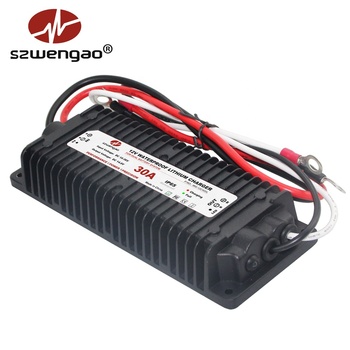
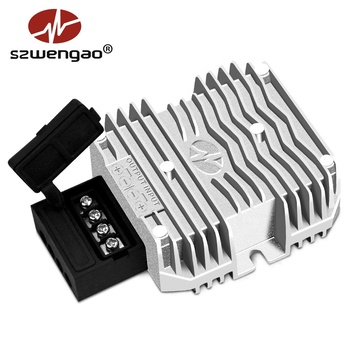
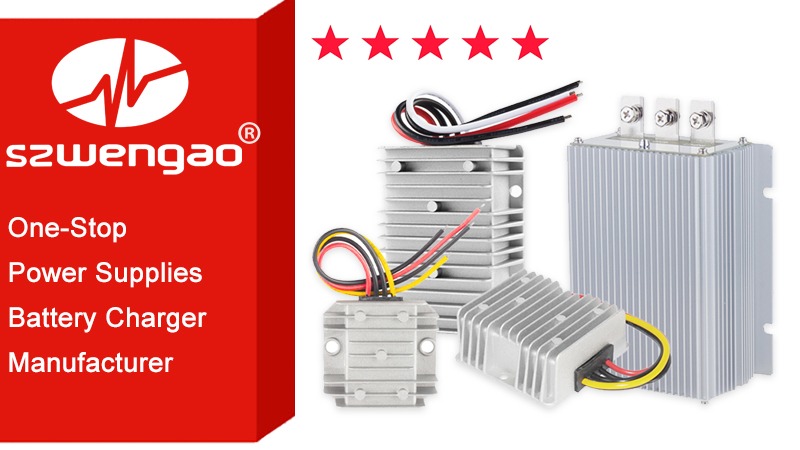
Engineered by Shenzhen Eltrum Electronic Co., Ltd. for extreme reliability, waterproof sealing (IP65/IP67 option), and seamless Modbus RTU integration.

Technology & Development Trends: The Evolution of Digitally Controlled Power Converters

As industrial equipment and commercial transportation transition toward smart digitalization, power electronics are evolving from static components into active hardware nodes on the Internet of Things (IoT). Key technological breakthroughs shaping the future of RS485 Controlled DC-DC Converters include:

  1. Wide Bandgap (SiC & GaN) Semiconductors Integration: By incorporating Silicon Carbide (SiC) and Gallium Nitride (GaN) switching FETs, next-generation RS485 converters achieve switching frequencies exceeding 500 kHz. This reduces planar transformer sizes, boosts thermal density, and delivers thermal conversion efficiencies beyond 97%.
  2. Dynamic Charging & Adaptive Battery Profiles: Modern lithium chemistry packs (including LiFePO4, NMC, and LTO) require dynamic absorption voltages depending on real-time cell temperatures and state-of-health (SoH). RS485 communication allows central BMS controllers to modify the DC-DC charger's CC/CV parameters on-the-fly.
  3. Edge AI Predictive Maintenance & Fault Diagnostics: By analyzing streaming telemetry data (ripple voltage trends, temperature rise rates, load step responses) collected over Modbus RTU, AI algorithms predict component aging, thermal stress, or wiring degradation long before a catastrophic system failure occurs.
  4. Hybrid Power Routing in Smart Microgrids: RS485 controlled buck-boost converters dynamically manage bidirectional or multi-source energy transfer between solar PV arrays, auxiliary high-voltage batteries (48V–90V), and low-voltage control buses (12V/24V).

Global Procurement Trends for Industrial B2B Power Buyers

Procurement teams and engineering directors from North America, Europe, Australia, and Asia-Pacific are restructuring their power module sourcing strategies to prioritize flexibility, resilience, and software integration:

  • Shift Toward Software-Defined Power Architecture (SDPA): Rather than ordering 10 different fixed-voltage converter SKUs for different regional equipment models, B2B buyers now procure standardized RS485 controlled DC-DC converters and configure required operating voltages via firmware during final assembly.
  • Consolidation of Custom OEM Hardware Sourcing: Global buyers favor direct factory partners like Shenzhen Eltrum Electronic Co., Ltd. who offer end-to-end design, custom PCB layout, potting, Modbus firmware customization, and localized compliance certifications (CE, RoHS, ISO 9001).
  • Focus on Total Cost of Ownership (TCO) & Rapid Sample Testing: Purchasing decision-makers look for manufacturers offering low minimum order quantities (from 5 units for sample validation) to fast-track prototype testing while minimizing inventory risk.
Topology Matrix

RS485 Controlled DC-DC Converter Selection Matrix

Compare standard digitally controllable power topologies produced by Shenzhen Eltrum Electronic Co., Ltd.

Need a custom Modbus register configuration or dynamic voltage range? Contact [email protected] for engineer consultation.
Topology Input Range Output Regulation RS485 Capabilities Ideal Application Inquire
BUCK-BOOST 10–60V DC 12V / 24V / 28V / 48V (Program) Voltage/Current setting, Temp telemetry, Fault logs Smart Solar Microgrids, Variable Battery Storage, Marine Contact Us →
BUCK (STEP-DOWN) 18–36V / 30–90V 5V / 12V / 24V (Program) Output Enable/Disable, Real-time Amperage monitoring Heavy Trucks, Electric Buses, Forklifts, AGVs Contact Us →
BOOST (STEP-UP) 10–30V DC 24V / 36V / 48V / 56V (Program) CC/CV dynamic control, Soft-start ramp tuning Mobile Robotics, LED Light Arrays, 48V Telecom Backup Contact Us →
ISOLATED DC-DC 18–90V Ultra-Wide 5V / 12V / 24V Isolated Galvanically isolated RS485 bus, Zero ground loops Industrial PLCs, Medical Electronics, Telecom Stations Contact Us →
Procurement & Technical FAQ

Frequently Asked Questions About RS485 Controlled DC-DC Converters

Direct answers for electrical engineers, system architects, and supply chain managers.

How does an RS485 controlled DC-DC converter work with Modbus RTU?
An RS485 controlled DC-DC converter integrates an onboard microcontroller and an RS485 differential transceiver operating on the Modbus RTU slave protocol. System controllers (such as PLCs, IoT gateways, or central Energy Management Systems) issue standard Modbus register read/write commands over a 2-wire serial bus. This enables real-time tuning of output voltage setpoints, dynamic current limit adjustments, remote power stage enable/disable toggling, and continuous polling of operating metrics including input/output wattage, thermal status, and protection trip codes.
What are the key advantages of RS485 digital control compared to traditional analog power supplies?
Traditional analog power converters rely on fixed resistive feedback or 0–10V/4–20mA external signals, which are highly susceptible to voltage drops, EMI noise, and line degradation over long wire runs. RS485 digital communication provides immunity against heavy noise over distances up to 1,200 meters, supports up to 32+ drop modules on a single serial cable, eliminates expensive multi-channel analog output cards on PLCs, and supplies rich diagnostic feedback impossible with standard analog modules.
Can Shenzhen Eltrum Electronic Co., Ltd. customize Modbus RTU register mapping and firmware for OEM clients?
Yes, full OEM/ODM firmware customization is a core competence of Shenzhen Eltrum Electronic Co., Ltd. Our engineering team can adapt Modbus register maps, modify default baud rates (from 9600 bps up to 115200 bps), customize parity/stop-bit settings, implement specialized soft-start ramping profiles, and create custom safety protection thresholds tailored specifically to your master controller's software specs.
When should I specify a Galvanically Isolated RS485 DC-DC converter?
Galvanic isolation (separating input, output, and RS485 communication grounds) is critical whenever input and output circuits operate across high potential differences (e.g., 48V–90V battery traction packs feeding sensitive 12V control logic), in setups with long physical wiring prone to ground loops, or in marine and heavy industrial environments where electrical noise and transients could damage expensive master PLCs.
What is the typical minimum order quantity (MOQ) and lead time for standard vs customized RS485 power modules?
For standard RS485 controlled converters, our factory supports low sample MOQs starting at 5 units to allow engineering teams to perform rapid bench and field validation. Samples are typically ready for dispatch within 3 to 7 days. For custom OEM enclosure design, modified voltage ranges, or specialized firmware builds, batch lead times generally range between 2 to 3 weeks following specification lock.
What quality control and certification standards are maintained by Shenzhen Eltrum Electronic Co., Ltd.?
All converter and charger models are manufactured in our ISO 9001 certified facility in Shenzhen, China. Products undergo 100% automated SMT inspection, full thermal and electrical burn-in testing, potting sealing checks, and comply strictly with CE and RoHS standards. Certified test reports and compliance documentation are available upon request by emailing [email protected].
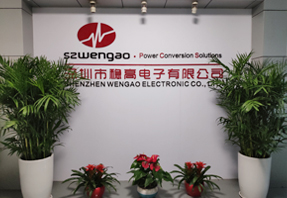
Shenzhen Eltrum Electronic Co., Ltd. Advanced DC-DC Power Manufacturing Line 2015Established
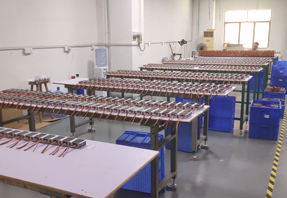
Quality Control Testing and Burn-in Station at Eltrum Factory
Precision Testing & QC
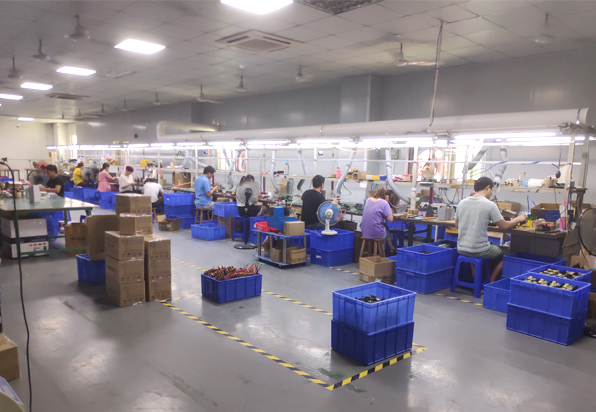
Eltrum Industrial Plant Facility
Shenzhen Production Facility
Enterprise Strengths & Authority

Engineered in Shenzhen · Trusted by Global Industry Leaders

Shenzhen Eltrum Electronic Co., Ltd. is a premier manufacturer specializing in high-performance DC-DC converters, RS485 digitally controlled power supplies, LiFePO4 battery chargers, and custom power modules. Operating out of our modern facility in Sanwei Community, Hangcheng Street, Shenzhen, our enterprise combines dedicated R&D expertise with rigorous ISO 9001 quality management systems.

Our comprehensive product portfolio exceeds 500 standard and custom models deployed across 130+ countries in North America, Europe, Australia, and Asia-Pacific. From isolated digital DC-DC conversion to high-power IP65 waterproof buck-boost regulators, our onsite-verified facility delivers exceptional reliability under the core tenet: customer first, best service.

0+Power Models
0+Countries Exported
51–100Skilled Staff
ISO 9001Certified QC
CEEU Safety
Conformity
RoHSEnvironment
Compliant
ISO 9001Quality
Management
OEM / ODMCustom Design
& Labeling
Verified Factory Operations

Inside Our Shenzhen Power Electronics Plant

Take an online tour of our automated SMT lines, precision magnetic winding, vacuum resin potting stations, and automated high-temperature burn-in test benches. See how Shenzhen Eltrum Electronic Co., Ltd. maintains zero-defect quality standards for global OEM power buyers.

Shenzhen Eltrum Electronic Co., Ltd. Factory Video Preview Factory Overview & SMT Line Tour · 1 min 44 s

Accelerate Your Project with Custom RS485 DC-DC Power Solutions

Send your input voltage range, target output parameters, and Modbus communication requirements to our application engineering team. Receive technical datasheets and sample quotes within 24 hours.