ISO 9001 Factory · CE & RoHS Compliant DC-DC Power · OEM / ODM Welcome

English USD [email protected]
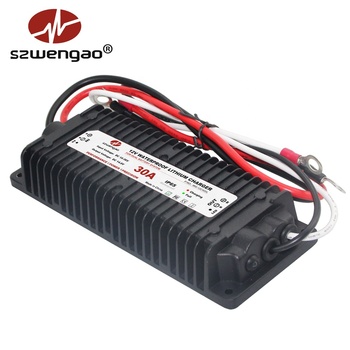
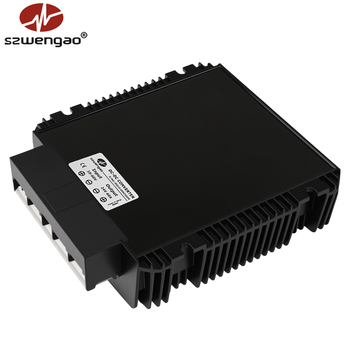
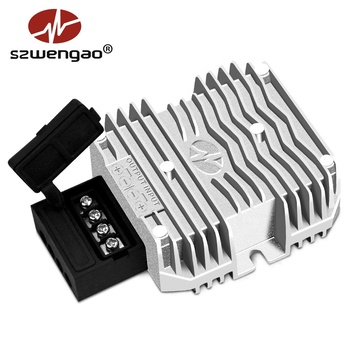
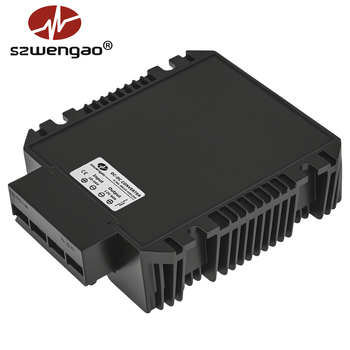
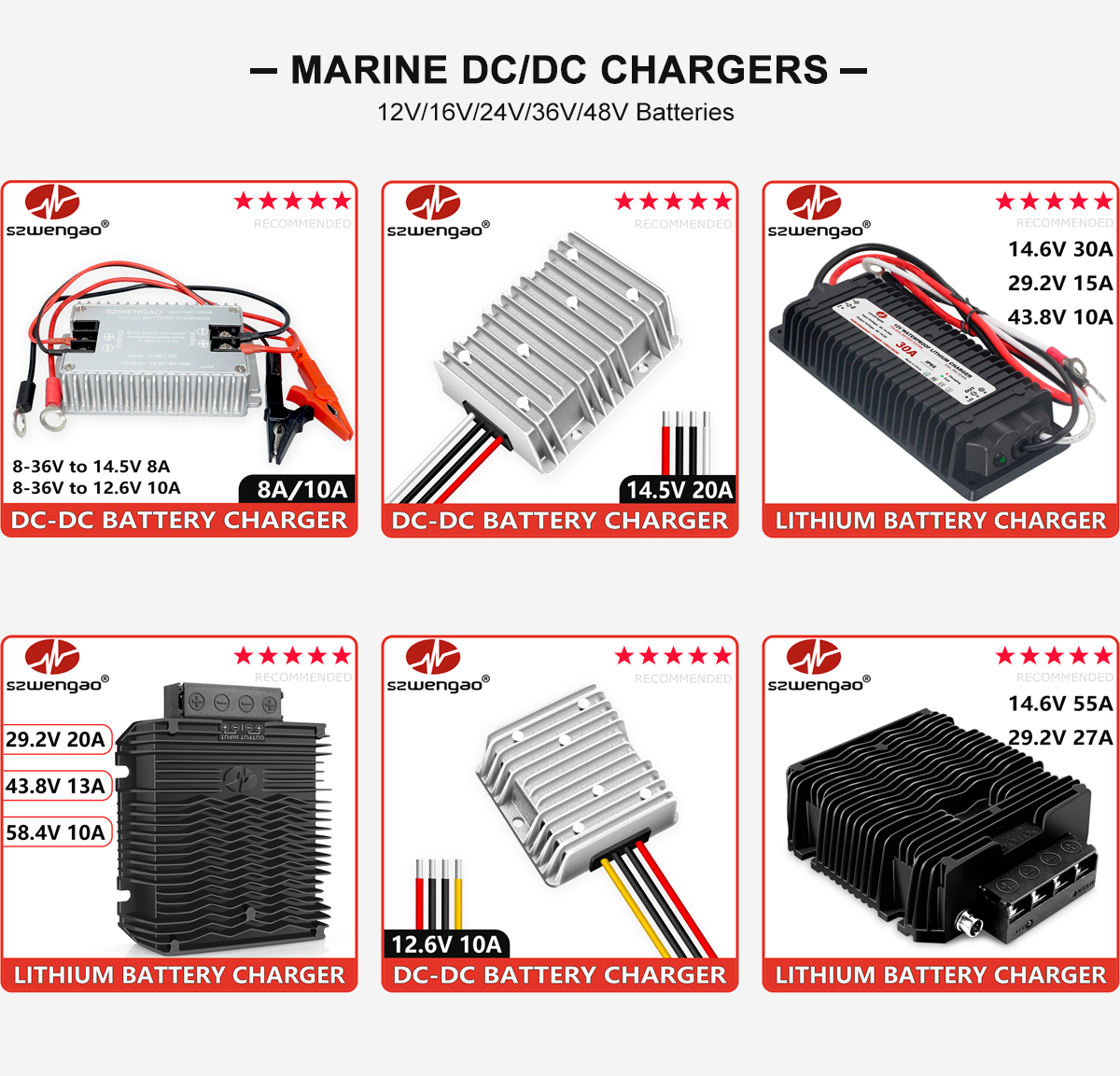
Industrial Grade DC-DC Battery Charger and Power Conversion Assembly
OEM / ODM Manufacturing Hub · Shenzhen Eltrum Electronic Co., Ltd.

Next-Gen DC-DC Battery Charger Engineering: How Smart Alternator Integration, Multi-Chemistry LiFePO4 Algorithms, and Galvanic Isolation Solve Commercial Dual-Battery Power Challenges

The complete engineering and B2B procurement handbook for Tier-1 automotive upfitters, marine systems integrators, and off-grid utility equipment manufacturers worldwide.

500+
Standard & Custom Converters
130+
Countries & OEM Partners Served
ISO 9001
CE, RoHS & Comprehensive QC
5 pcs
Low Prototype Evaluation MOQ
Engineering Insight & Root Cause Analysis

The Physics Behind Dual-Battery Charging: Why Traditional Split-Charge Relays and Direct Alternator Feeds Fail

Modern electrical balance in commercial vans, expedition overlanding rigs, marine vessels, and utility fleets has reached a critical inflection point. Legacy methods of directly bridging the starter battery to secondary house batteries via electromechanical Voltage Sensitive Relays (VSR) or high-amp continuous solenoids are no longer viable. Here is why system designers face catastrophic failure without a dedicated DC-DC battery charger:

Smart Alternator Voltage Collapse

Modern Euro 5, Euro 6, and EPA-compliant commercial prime movers incorporate smart ECU-controlled alternators. To satisfy rigorous carbon emission mandates, internal vehicle computers actively modulate field coil excitation, intentionally dropping the starter alternator voltage to as low as 12.2V to 12.4V during cruising, and surging above 15.0V solely during regenerative engine braking. A secondary LiFePO4 house battery requires an uninterrupted absorption voltage of 14.2V to 14.6V for proper cell saturation. A direct connection results in house batteries remaining perpetually depleted or discharging back into the chassis starting loop.

  • Euro 6 Compatible
  • Regenerative Braking Sync
  • Smart Ignition Sensing

Alternator Stator Overheating & Thermal Runaway

Lead-acid starter batteries possess relatively high internal resistance that naturally chokes current draw as voltage equalizes. Conversely, lithium iron phosphate (LiFePO4) chemistry exhibits an exceptionally flat discharge plateau and nearly negligible internal series resistance (ESR). When a depleted 200Ah–400Ah lithium bank connects directly across an alternator at low idle engine speeds, it acts as a virtual short circuit, drawing maximum instantaneous current. Because standard automotive alternators rely on mechanical fan cooling tied directly to engine RPM, continuous 90A–140A draws at idle cause stator windings to exceed insulation ratings, culminating in catastrophic alternator coil burnout.

  • Current Limiting Control
  • Thermal Foldback Protection
  • Zero Stator Burnout

Voltage Sag & Cross-Chemistry Profile Mismatch

Auxiliary auxiliary house batteries in specialty utility vehicles and recreational trailers are typically placed several meters away from the vehicle engine bay. Massive voltage drops across long copper cable runs mean a nominal 14.0V engine alternator output may degrade to 12.8V at the secondary battery terminals under heavy current. Furthermore, traditional starter lead-acid alternators never execute the precise 3-stage or 4-stage Constant Current / Constant Voltage / Float / Equalization charge profiles demanded by LiFePO4, AGM, and GEL packs. A dedicated DC-DC charger integrates active buck-boost topologies, boosting line-sagged voltages up to the exact threshold demanded by your secondary BMS.

  • Active Buck-Boost Topology
  • Multi-Stage CC/CV Curves
  • Voltage Drop Compensation
Topology & Architecture Reference

Comparative Engineering Architecture: Non-Isolated vs. Galvanically Isolated DC-DC Chargers

Choosing between non-isolated buck-boost topology and galvanically isolated architectures directly dictates electrical noise immunity, ground loop isolation, and system reliability.

Engineering topology overview compiled by the technical design team at Shenzhen Eltrum Electronic Co., Ltd.
Evaluation Vector Non-Isolated Synchronous Buck-Boost Galvanically Isolated Flyback / Forward / LLC Direct Relay / Alternator Feed (Obsolete)
Ground Return Loop Shared Common Ground (Negative chassis bridge) Fully Isolated (>1500V DC Galvanic Barrier) Shared Direct Ground (No Filtering)
Smart Alternator Compatibility 100% Compatible via active buck-boost regulation 100% Compatible across extreme input shifts Incompatible; causes voltage collapse and back-drain
Peak Conversion Efficiency 94% – 97% (Ultra-low thermal generation) 89% – 93% (Transformer core & copper losses) Apparent 99% (Transforms no voltage, destroys cells)
Electromagnetic Immunity Industrial Level; requires proper chassis bonding Superior; breaks ground loops and RF interference Zero filtering; passes engine noise to audio/sensors
Typical Target Applications Recreational RVs, commercial vans, work trailers Marine steel/aluminum hulls, telecommunications, AGVs Vintage lead-acid setups (Discontinued)
Thermal Dissipation Profile Conduction through extruded aluminum casing Planar magnetics potted with thermal resin External heat concentrated on vehicle alternator
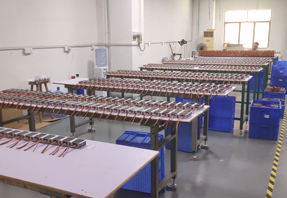
Shenzhen Eltrum Electronic Co., Ltd. Production Line and High Speed SMT Assembly 2015Established
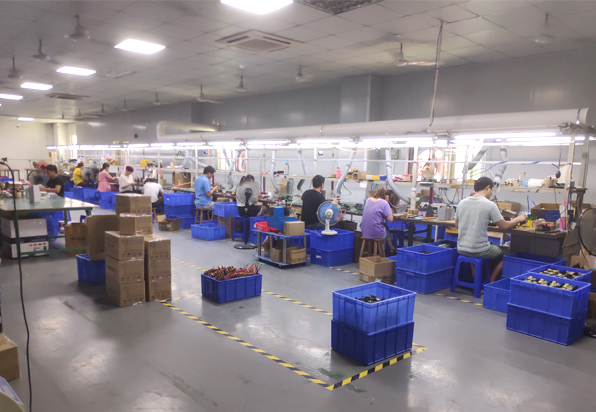
Shenzhen Eltrum Electronic Co., Ltd. Power Supply Testing and Quality Control Facility
Burn-in Testing & Rigorous QC
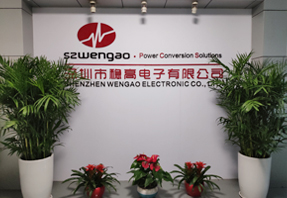
Shenzhen Eltrum Electronic Co., Ltd. Headquarters and Manufacturing Plant
Shenzhen Manufacturing Center
Manufacturing Authority & E-E-A-T Excellence

Why Global Tier-1 Upfitters Partner with Shenzhen Eltrum Electronic Co., Ltd.

Founded in 2015 in Shenzhen, China's high-tech manufacturing center, Shenzhen Eltrum Electronic Co., Ltd. has grown to become an authoritative engineering powerhouse specializing in high-reliability DC-DC converters, intelligent DC-DC battery chargers, waterproof LiFePO4 battery charging modules, and custom switch-mode power systems.

With a comprehensive facility spanning up to 3,000 square meters, our ISO 9001 certified production lines integrate state-of-the-art automated Surface Mount Technology (SMT), automated optical inspection (AOI), robotic planar magnetics winding, vacuum potting encapsulation, and 100% full-load thermal burn-in chambers. Every single DC-DC battery charger that rolls off our production line undergoes rigorous electrical stress testing, high-voltage dielectric insulation tests, and thermal cycle screening to ensure failure rates below 0.1% under demanding field operating conditions.

Our long-term commercial relationships span across North America, Europe, Australia, Japan, and Southeast Asia. As an onsite-verified manufacturer whose corporate and legal standing has been authenticated by independent third-party international inspection bodies, we strictly adhere to our core philosophy: customer first, engineering excellence, uncompromising reliability.

500+Proven Models
130+Countries Served
51–100Skilled Specialists
3,000m²Advanced Facility
CEEuropean
Compliance
RoHSHazardous
Free
ISO 9001Certified
Quality
OEM/ODMCustom
Engineering
Agile Turnkey Execution

Custom OEM & ODM Engineering Workflow

From initial circuit simulation to high-volume production delivery, Shenzhen Eltrum Electronic Co., Ltd. simplifies procurement for industrial project leaders.

Architecture Review

Engineers analyze battery chemistry, nominal/peak voltages, vehicle alternator profiles, and environmental ingress criteria.

Rapid Prototyping

Prototypes dispatched within 7–10 days with tailored CC/CV firmware, wire harness lengths, and communication parameters.

SMT & Encapsulation

Automated pick-and-place surface mount assembly followed by vacuum compound potting to ensure complete moisture and shock resistance.

Burn-in & QC Audit

100% burn-in stress testing at maximum ambient temperature, followed by surge, ripple, and thermal cycle testing.

Global Logistics

Custom private-label packaging, barcoding, palletization, and EXW/FOB customs clearance dispatched directly to global ports.

Procurement Knowledge Base

Frequently Asked Questions: DC-DC Battery Charger Engineering & Sourcing

Addressing the core technical, compliance, and logistical inquiries submitted to our engineering support team by procurement officers worldwide.

Why is a dedicated DC-DC battery charger mandatory when charging LiFePO4 batteries from a vehicle alternator?
Directly coupling an auxiliary lithium iron phosphate (LiFePO4) pack to a vehicle alternator presents two critical engineering hazards. First, LiFePO4 chemistry has exceptionally low internal resistance, causing it to draw excessive amperage from the alternator at low engine RPMs, which rapidly induces thermal runaway and burns out standard stator windings. Second, Euro 5/Euro 6 and newer Tier 4 commercial vehicles utilize smart alternators controlled by ECU regenerative braking algorithms that frequently drop terminal charging voltage down to 12.2V-12.4V. This voltage level is entirely insufficient to saturate a 12.8V-14.6V lithium bank. A multi-stage DC-DC battery charger acts as a regulated buck-boost power firewall, boosting sagged input voltages, capping maximum alternator draw, and synthesizing precise Constant Current/Constant Voltage (CC/CV) profiles.
Can Shenzhen Eltrum Electronic Co., Ltd. customize charging algorithms and communication protocols?
Yes. Shenzhen Eltrum Electronic Co., Ltd. provides comprehensive OEM/ODM engineering. We calibrate hardware and MCU firmware to match bespoke battery cell profiles, including multi-stage CC/CV curves for LiFePO4, NMC, AGM, and Gel chemistries. We also integrate CAN bus (CANopen, J1939), RS485 (Modbus RTU), or LIN bus physical layers for real-time telemetry exchanges with master Battery Management Systems (BMS) and vehicle telematics.
What thermal management and environmental ratings do Eltrum DC-DC chargers provide for harsh environments?
Our chargers feature high-grade aluminum alloy extrusion heat-sink chassis vacuum-potted with thermally conductive, flame-retardant silicone or polyurethane resin compounds. This delivers an ingress rating of IP65 to IP68, rendering the units completely impervious to mechanical shock, continuous vibrations up to 5G, salt-spray corrosion, and dust ingress. Integrated thermal throttle firmware dynamically derates output current if internal junction temperatures exceed +85°C, ensuring reliable operation without sudden shutdowns.
What is the typical Minimum Order Quantity (MOQ) and production turnaround for OEM orders?
Shenzhen Eltrum Electronic Co., Ltd. maintains an agile, engineer-friendly procurement model. Standard baseline sample orders for bench evaluation and field prototyping start from just 5 units. For customized OEM/ODM projects involving custom silkscreening, customized wiring harnesses, or proprietary firmware curves, baseline production runs generally start from 50 to 100 units with typical mass production lead times of 15 to 25 business days.
How do Eltrum isolated DC-DC battery chargers mitigate common electrical noise and ground loops in marine and industrial equipment?
In marine vessels with aluminum or steel hulls, as well as industrial materials handling equipment like forklifts and automated guided vehicles (AGVs), non-isolated shared ground pathways introduce galvanic corrosion, ground-loop interference, and severe sensor communication jitter. Our isolated DC-DC chargers integrate high-frequency toroidal planar transformers providing galvanic isolation exceeding 1500V DC between input and output stages, completely severing return ground loops and shielding sensitive onboard electronics.
What payment structures and international commercial trade terms are supported?
We accept payments via T/T bank transfer, PayPal for prototype sample development, and secured Escrow in USD or CNY currencies. Trade shipping terms supported include EXW factory, FOB Shenzhen/Hong Kong, and CIF/DAP air or sea freight consolidation to any global commercial destination. Direct engineering inquiries can be directed to [email protected].

Accelerate Your Project with Custom DC-DC Battery Charger Engineering

Submit your electrical requirements—input voltage thresholds, chemistry charging voltages, target current ratings, communication requirements, and annual volume. Our senior power electronics engineers will provide a verified technical proposal and quotation within 24 business hours.