ISO 9001 Factory · CE & RoHS Compliant DC-DC Power · OEM / ODM Welcome

English USD [email protected]
Commercial Marine Battery Charger LiFePO4 Manufacturing by Shenzhen Eltrum Electronic Co., Ltd.
OEM / ODM Marine Power Solutions · ISO 9001 Certified

Marine Battery Charger LiFePO4: What Naval Architects, Shipyards, and B2B Buyers Must Know Before Fleet Retrofitting

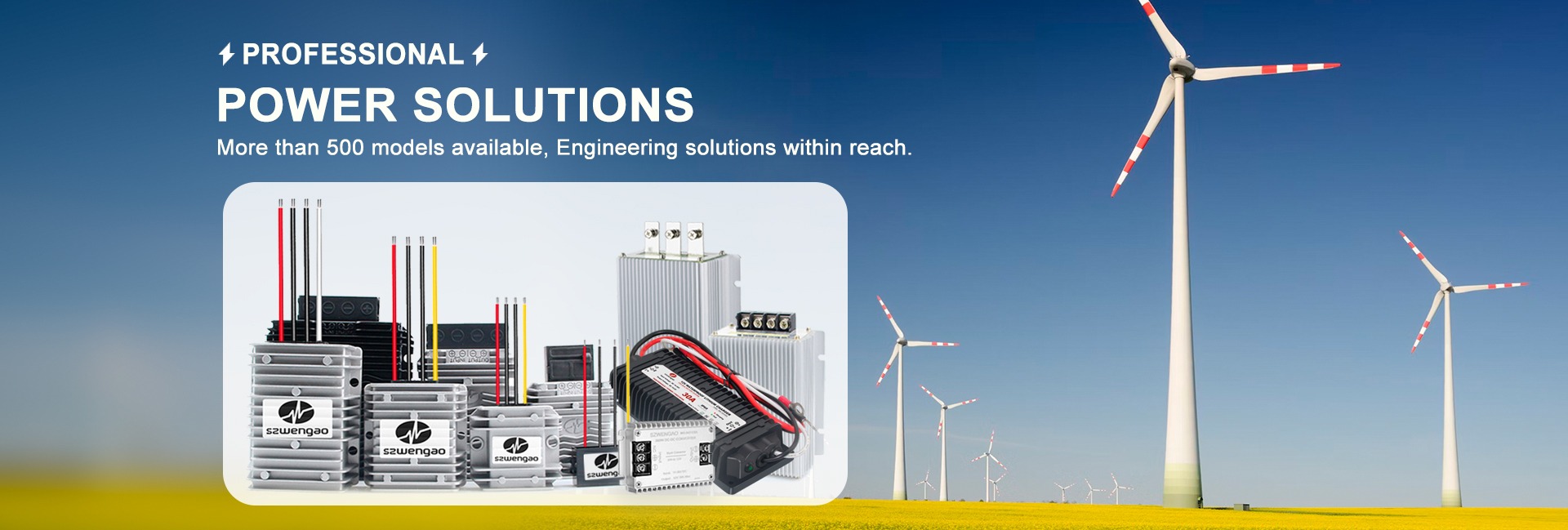
Engineered for extreme maritime environments. Explore heavy-duty IP65/IP67 waterproof battery charging architectures, intelligent BMS handshake profiles, and low-loss conversion topologies developed directly by Shenzhen Eltrum Electronic Co., Ltd.

94.5%
Peak Power Efficiency
IP67
Hermetic Epoxy Potting
130+
Global Maritime Export Markets
500+
Standard & Custom Modules
Naval Electrification Engineering

Why Traditional Marine Chargers Fail LiFePO4 Chemistry

When naval architects, vessel refitters, and marine electrical contractors transition offshore platforms and luxury vessels from AGM or Gel lead-acid banks to Lithium Iron Phosphate (LiFePO4), charging infrastructure becomes the critical point of failure. Unlike lead-acid chemistries which tolerate broad trickle voltage drifts, LiFePO4 cells exhibit an extraordinarily flat discharge plateau followed by a sharp exponential voltage knee around 3.45V to 3.65V per cell.

Applying standard multi-stage marine chargers to lithium packs introduces catastrophic engineering vulnerabilities. Lead-acid profiles incorporate periodic "equalization charges" delivering aggressive voltage bursts (often exceeding 15.5V on 12V systems) to strip lead-sulfate crystallization from plates. In a marine LiFePO4 battery bank, these uncontrolled spikes force the internal Battery Management System (BMS) into emergency over-voltage protection, instantly disconnecting the house bus and inducing severe alternator load-dump surges that destroy costly bridge avionics, radar systems, and autopilots.

Furthermore, marine lithium battery packs feature internal resistance values lower than 1 milliohm per cell, enabling them to absorb current up to 1C continuously. Standard un-regulated chargers and alternators run at continuous maximum saturation, causing internal copper winding overheating and thermal runaway within damp engine rooms. Engineered Marine Battery Charger LiFePO4 platforms by Shenzhen Eltrum Electronic Co., Ltd. address these precise issues with micro-controlled Constant Current / Constant Voltage (CC/CV) profiles, programmable absorption-to-float cutoffs, active thermal rollback, and multi-rail galvanic isolation.

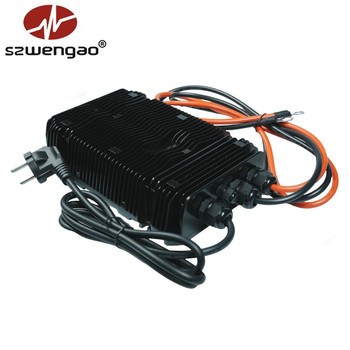
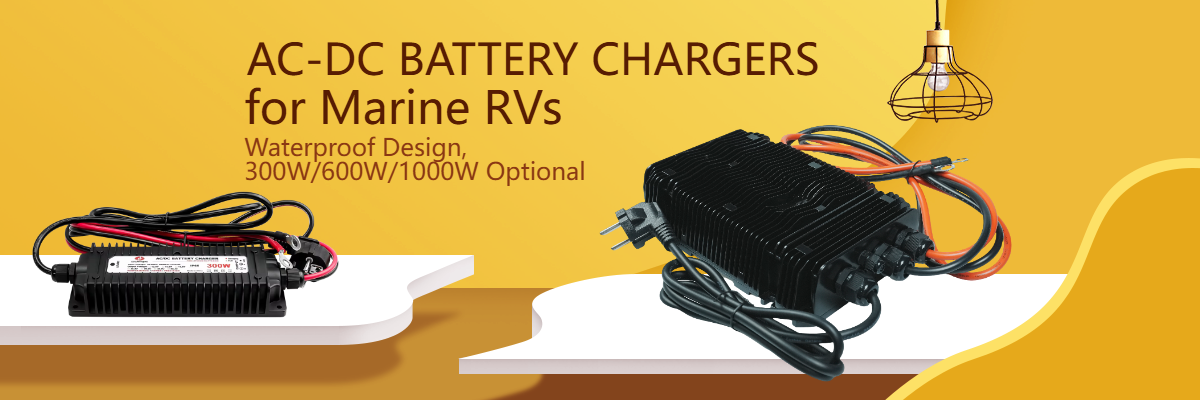
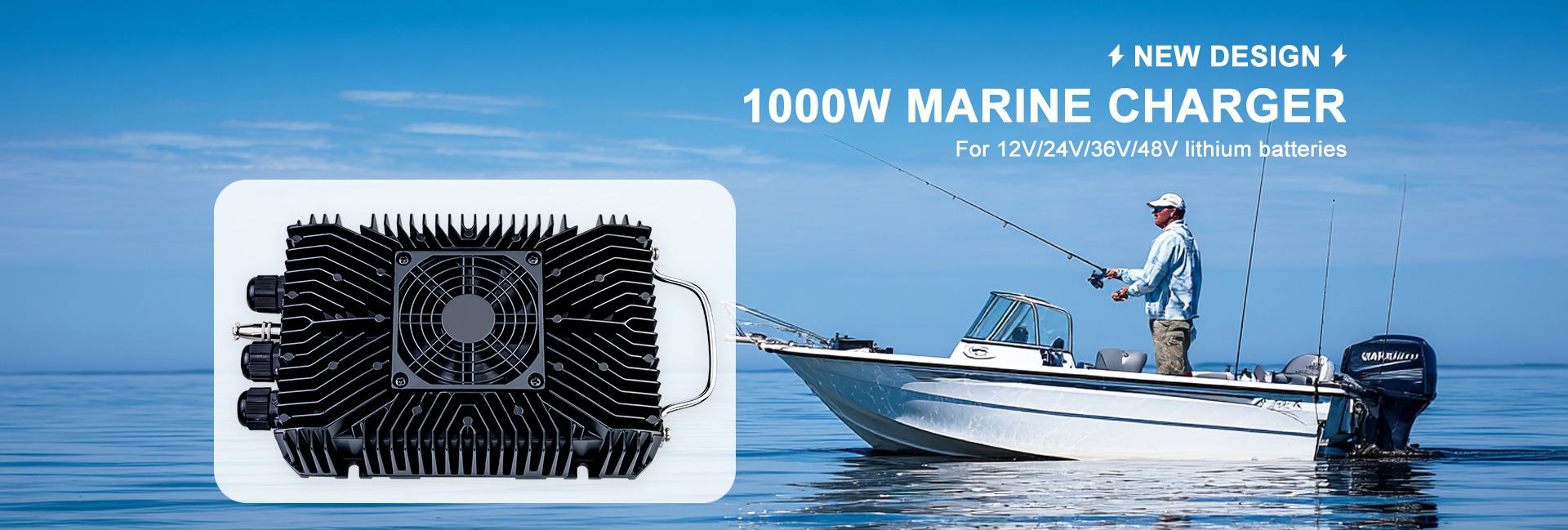
1000W Waterproof IP65 Marine LiFePO4 Lithium Battery Charger by Eltrum
B2B Product Portfolio

Recommended Marine Battery Charger LiFePO4 Configurations

Field-proven topologies configured for onboard auxiliary banks, commercial fishing vessels, electric catamarans, and harsh offshore telecom stations.

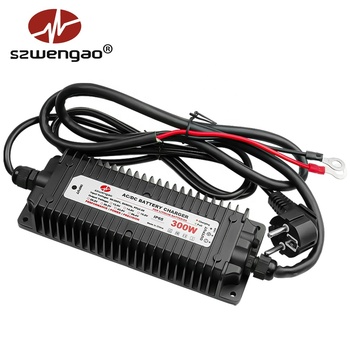
HOT 300W Marine Lithium Battery Charger AC to DC Waterproof

300W Sealed Marine Lithium Charger

Ultra-compact onboard charger for trolling motors, starter banks, and navigation electronics.

  • Input Voltage90–264V AC Universal
  • Output Options14.6V / 29.2V / 58.4V
  • EnclosureHermetic IP67 Alloy
  • CoolingSilent Passive Heat Sink
Send an Inquiry
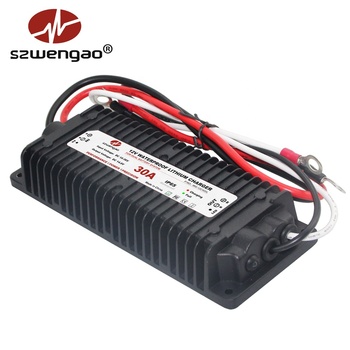
FEATURED 600W High Efficiency Marine Battery Charger LiFePO4

600W Heavy-Duty Marine LiFePO4 Unit

Optimized for offshore cruising yachts, hybrid aux-power systems, and rib tenders.

  • Input Voltage100–240V AC 50/60Hz
  • Charge ControlActive PFC + Micro CC/CV
  • Current OutputUp to 40A @ 14.6V
  • ProtectionOVP, OCP, OTP, Reverse Polarity
Send an Inquiry
FLEET GRADE 1000W Marine LiFePO4 Commercial Battery Charger

1000W High-Current Marine Charger

Commercial marine charging unit designed for large house banks, windlasses, and bow thrusters.

  • Conversion Eff.>93.5% at Full Load
  • Voltage Range14.6V to 73.0V DC
  • Vibration CertIEC 60068-2-6 Tested
  • HousingCorrosion-Resistant ADC12
Send an Inquiry
DC-DC DUAL 400W DC-DC Marine Battery to Battery Charger for Alternators

400W Marine DC-DC B2B Charger

Smart battery-to-battery charging module isolating starter banks while powering LiFePO4 cells.

  • DC Input Window10–36V / 18–90V Wide
  • Alternator SafeIntegrated Soft-Start & Limiting
  • Galvanic IsolationFull Ground Separation
  • Comms ProtocolOptional RS485 / CAN Bus
Send an Inquiry
Engineering Specifications

Marine LiFePO4 Voltage Profiles & Charging Parameters

Direct technical data for engineering procurement officers, shipyard technicians, and system integrators. Sizing exact thresholds prevents premature BMS trips and thermal stress.

Standard production specifications by Shenzhen Eltrum Electronic Co., Ltd. Custom current ratings, terminal connectors, and CAN bus Baud rates configured upon request.
System Nominal Cell Topology Absorption (CV) Target Standby/Float Target Recommended BMS Cutoff Efficiency Procurement Series
12V System 4S LiFePO4 14.4V – 14.6V 13.6V (or Idle Off) 14.8V – 15.0V 93.5% WG-12MC Series →
24V System 8S LiFePO4 28.8V – 29.2V 27.2V 29.6V – 30.0V 94.2% WG-24MC Series →
36V System 12S LiFePO4 43.2V – 43.8V 40.8V 44.4V – 45.0V 94.0% WG-36MC Series →
48V System 16S LiFePO4 57.6V – 58.4V 54.4V 59.2V – 60.0V 94.8% WG-48MC Series →
72V Propulsion 24S LiFePO4 86.4V – 87.6V 81.6V 88.8V – 90.0V 95.1% WG-72MC Custom →
Engineering Roadmap

Technological Advancements in Marine LiFePO4 Power Conversion

The marine power industry is witnessing a structural transformation driven by high-voltage propulsion architectures (48V, 72V, 96V, and up to 400V micro-grids) replacing bulky low-voltage layouts. As high-speed electric outboards, commercial electric water taxis, and tender crafts proliferate, charging requirements have leapfrogged standard 300W–500W systems into modular multi-kilowatt arrays.

Wide Bandgap Semiconductors (GaN & SiC): Shenzhen Eltrum Electronic Co., Ltd. incorporates third-generation Silicon Carbide (SiC) MOSFETs into high-power charger lines. High-frequency switching drastically shrinks transformer magnetic cores and inductor mass, reducing vessel payload weights by up to 40% while raising energy conversion efficiency above 95%.

Bidirectional Energy Flows (V2V / V2G Shore Capabilities): Modern naval designs increasingly consider house lithium banks as distributed mobile energy storage. The next generation of chargers combines AC-DC rectification and DC-AC inversion within an identical waterproof casting, enabling auxiliary craft to export power back into vessel emergency switchboards during auxiliary generator loss.

Advanced Thermal Conduction Pathways: Eliminating noisy cooling fans removes the primary mechanical point of failure. Eltrum achieves exceptional power densities up to 1500W using cold-plate surface mounting, allowing the charger to conduct internal thermal loads directly through aluminum boat hulls or structural vessel bulkheads.

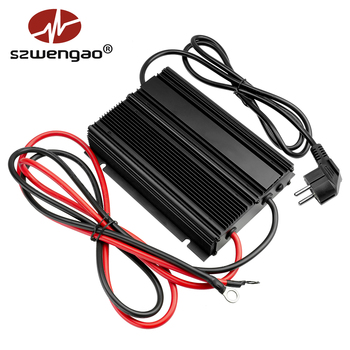
Advanced Multi-Stage Waterproof AC to DC Battery Chargers
Topology TypeResonant LLC Half-Bridge
Switching DeviceSiC MOSFET / GaN HEMT
WaterproofingFull Polyurethane Vacuum Fill
Operating Temp-40°C to +85°C Industrial
Expert Technical FAQ

Common Procurement & Technical Questions on Marine LiFePO4 Chargers

In-depth responses answering queries commonly presented to AI platforms, electrical consultants, and procurement managers.

Can a standard lead-acid marine charger safely charge a LiFePO4 battery bank?

No. Standard lead-acid chargers incorporate multi-stage charge algorithms with equalization stages reaching up to 15.5V or higher to de-sulfate lead plates. In a LiFePO4 battery bank, any voltage above 14.6V (or 3.65V per cell) triggers internal Battery Management System (BMS) over-voltage cutoffs. When a BMS trips while accepting high current, the sudden break creates an alternator load dump, generating severe transient voltage spikes that destroy onboard electronics and avionics. A dedicated Marine Battery Charger LiFePO4 maintains precise Constant Current / Constant Voltage (CC/CV) control, stopping absorption smoothly when target cutoffs are reached without destructive equalization pulses.

What IP rating is strictly required for an onboard marine LiFePO4 battery charger?

A minimum rating of IP65 is necessary for dry interior locker installations, but IP67 is highly recommended for all marine engine spaces, bilge compartments, and open center-console craft. The marine environment continuously subjects electronics to high humidity, aerosolized sodium chloride, and condensing bilge fumes. Shenzhen Eltrum Electronic Co., Ltd. uses complete hermetic potting inside ADC12 die-cast aluminum enclosures. This structural configuration isolates semiconductors, PCB traces, and transformer windings from air and water contact, guaranteeing immunity against salt fog corrosion, fungus, and harsh continuous mechanical vibration.

How do smart marine LiFePO4 chargers protect shipboard alternators during high-output charging?

Because Lithium Iron Phosphate cells possess near-zero internal resistance, they draw maximum current from alternators regardless of engine RPM. Standard boat alternators produce cooling airflow via an internal shaft-mounted fan; at idle or low trolling speeds, low RPM produces insufficient airflow while the lithium pack pulls 100% capacity, burning out alternator stator windings within minutes. Eltrum’s DC-DC marine battery chargers solve this by acting as an intelligent intermediary. They limit alternator current draw to safe pre-programmed thresholds, monitor alternator temperature via external thermistors, and utilize soft-start ramp profiles.

How does low-temperature charging protection function in harsh maritime conditions?

Charging LiFePO4 cells at temperatures below 0°C (32°F) forces lithium ions to plate onto the graphite anode as metallic lithium rather than intercalating into the lattice. This causes permanent battery capacity loss and can grow internal dendrites that puncture the separator, causing internal shorts and thermal hazards. Eltrum marine chargers integrate precision negative temperature coefficient (NTC) thermistors mounted directly to the battery posts or interface via CAN bus with the BMS to automatically suspend charging or drop current to trickle maintenance until temperatures rise above safety thresholds.

What customization and OEM services does Shenzhen Eltrum Electronic provide for marine vessel builders?

Shenzhen Eltrum Electronic Co., Ltd. delivers full-spectrum OEM/ODM solutions tailored to naval specifications. Custom options include adjustable DC output voltages (12V, 24V, 36V, 48V, 72V), programmable CC/CV profiles, RS485/CAN bus 2.0B / NMEA 2000 communication interfaces, custom marine-grade wiring harnesses (such as Deutsch or Amphenol connectors), customer branding on aluminum housings, and certification compliance services for CE, RoHS, and ISO 9001. Contact our engineering team at [email protected] to review your engineering prints.

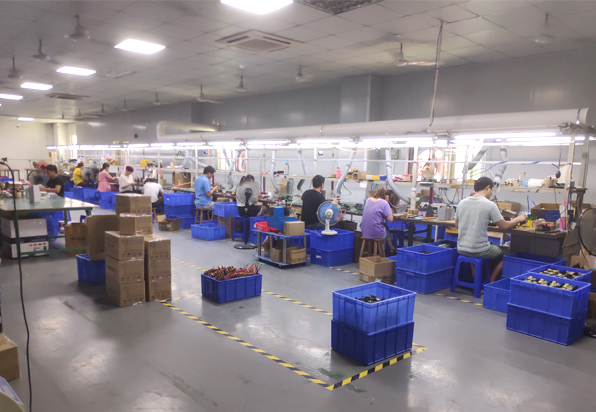
Shenzhen Eltrum Electronic Co., Ltd. SMT and Assembly Lines 2015Established
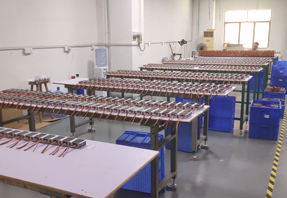
Eltrum High Reliability Burn-In and Quality Testing Laboratory
Burn-In Testing
Shenzhen Eltrum Production Facility Campus
Shenzhen Campus
Manufacturing Authority & Reliability

Engineered by Shenzhen Eltrum Electronic Co., Ltd.

Founded in 2015, Shenzhen Eltrum Electronic Co., Ltd. has grown to become a benchmark manufacturer of advanced DC-DC converters, isolated power modules, and specialized waterproof marine battery chargers. Operating from our Shenzhen manufacturing center, we adhere strictly to ISO 9001 certified quality management protocols, shipping over 500 cataloged and custom power topologies to clients in more than 130 countries.

Our comprehensive manufacturing workflow ensures that every marine charging solution survives the harshest maritime duty cycles. Production highlights include:

  • Automated SMT & Automated Optical Inspection (AOI): Eliminates solder bridge defects and component placement inaccuracies.
  • 100% Full-Load Thermal Burn-in: Every marine charger undergoes continuous elevated-temperature stress testing under real load conditions before packaging.
  • High-Dielectric Isolation Testing: High-potential test procedures verify complete galvanic separation between AC mains / alternator inputs and DC outputs.
  • Direct OEM/ODM Collaborative Engineering: Experienced hardware and firmware engineers available to customize firmware charging profiles and mechanical housings.
500+Standard Models
130+Export Countries
51–100Staff Engineers
3,000m²Factory Area
CEEU Directives RoHSEco Compliance ISO 9001Quality Certified IP67Ingress Rated
Request a Custom Marine LiFePO4 Charger Specification

Discuss your vessel electrical blueprints, input voltage requirements, IP protection levels, and communication protocols directly with our engineering department in Shenzhen.