Waterproof

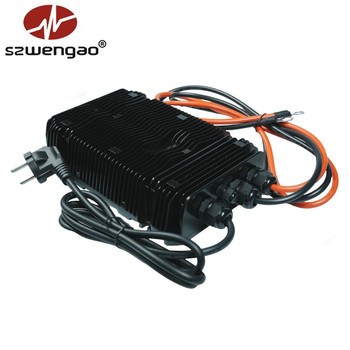
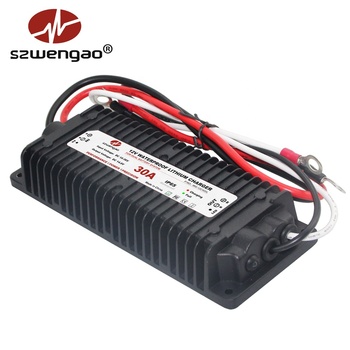
Smart 36V Lithium Charger 12V to 43.8V 13A
- TopologyDC-DC Step-Up CC/CV
- Input Voltage9V - 16V DC
- Full Absorption43.8V DC (12S LiFePO4)
- Ingress RatingIP67 Sealed Housing
Pre-engineered buck, boost, buck-boost, and isolated DC-DC modules designed to thrive under erratic generation, extreme tropical humidity, and demanding duty cycles in coastal and off-grid Haiti.



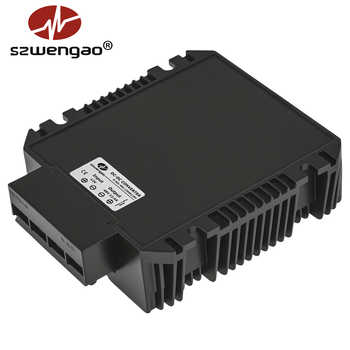
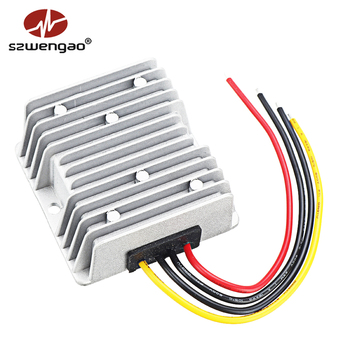
In Cap-Haïtien (Okap) and across the Nord Department of Haiti, electrical system design faces unique operating conditions characterized by extreme power fluctuations, high solar irradiance, high relative humidity (>80%), and maritime salt-fog exposure from the Atlantic coast. Decentralized power generation relies heavily on hybrid configurations consisting of diesel gensets, fluctuating photovoltaic (PV) string arrays, and emerging lithium iron phosphate (LiFePO4) storage banks. Standard narrow-input DC-DC converters frequently experience gate-driver failure, capacitor rupture, or excessive thermal degradation under these dynamic loads.
When charging or stabilizing DC buses from unstable renewable inputs, battery terminal voltage can sag dramatically under high instantaneous draw and spike when solar inverters ramp rapidly. A 12V nominal system frequently experiences swings from 9.2V (under heavy inverter load) up to 14.8V (during equalized solar absorption). Conventional step-down (buck) converters fail into dropout when the source falls below the nominal threshold, starving critical telemetry, navigation, and telecommunications loads. Our 4-switch synchronous buck-boost topology continuously regulates a rock-solid target voltage (12V, 24V, or 48V) irrespective of whether input voltage swings above or below the regulated rail.
Furthermore, coastal commercial enterprises operating around the Port of Cap-Haïtien require galvanic isolation. In multi-battery industrial vessels, commercial tugs, telecom repeater sites on Morne Jean, and localized healthcare facilities, differences in ground potential easily induce severe circulating ground currents. Eltrum's isolated series deploys planar and toroidal transformers rated for ≥1,500V DC breakdown isolation, entirely decoupling the primary battery bank from sensitive electronics, marine VHF/radar systems, and PLCs.
Real-world integration points where our ruggedized power conversion hardware ensures zero-downtime performance across northern Haiti's critical sectors.
Stabilizing unregulated solar battery buses (24V/48V) down to clean 12V/24V instrumentation rails for hospitals, commercial compounds, and micro-utilities operating in urban Cap-Haïtien and Limonade.
Fully potted IP67/IP68 waterproof converters and battery-to-battery chargers powering depth-sounders, radar systems, and communications on fishing and cargo fleets anchored in the Bay of Cap-Haïtien.
18V–90V wide-input isolated converters deployed on high-elevation cell towers across the Nord Department, running directly off 48V nominal battery banks while suppressing lightning-induced surges.
Transforming 48V, 60V, and 72V traction battery packs down to regulated 12V auxiliary power for lighting, signals, and USB telematics on electric trikes and cargo carriers navigating urban transit routes.
Buck-boost modules handling starting current surges (up to 4x nominal) for 12V/24V direct-drive DC compressors used in food distribution and medical storage throughout rural agricultural cooperatives.
Ensuring alternator-safe charging for service trucks traversing rugged corridors (Route Nationale 1) with intelligent CC/CV profiles preventing alternator diode burn-out when charging secondary lithium banks.
The energy paradigm in Cap-Haïtien is transitioning rapidly away from volatile lead-acid chemistry toward lithium iron phosphate (LiFePO4). While lithium chemistry offers thousands of duty cycles at 80% to 90% Depth of Discharge (DoD), it lacks the internal resistance tolerance of flooded lead-acid batteries. Direct alternator connection causes alternator burnout because LiFePO4 cells accept maximum charge current without tapering. System integrators across northern Haiti now universally specify DC-DC battery-to-battery chargers configured with precise Constant Current / Constant Voltage (CC/CV) algorithms and low-temperature cutoff protection.
Simultaneously, commercial users are moving from basic unsealed aluminum shells to vacuum-epoxy potted units boasting IP67/IP68 ingress ratings. In coastal tropical climates, ambient temperature regularly reaches 35°C with near-saturated atmospheric humidity. Moisture combined with airborne sea salts rapidly corrodes open-frame electronics. By choosing industrial solid-potting solutions, local contractors eliminate internal condensation, thermal hot-spot failures, and vibration fatigue caused by rough road transit and engine bay resonance.
Combining Shenzhen’s precision electronics engineering with end-to-end quality assurance certified to international standards for seamless export logistics.
Our 3,000m² Shenzhen manufacturing facility executes fully automated surface-mount assembly, vacuum potting, and 100% full-load burn-in testing under elevated thermal conditions.
We empower independent power contractors, engineering researchers, and regional wholesalers with low trial MOQs (5 units on standard series), reducing inventory risk prior to bulk shipments.
Need custom charging profiles, non-standard voltage calibration (e.g., 19V, 28V, 58.4V), specific plug terminations (Anderson, XT60), or RS485 communication protocols? Our design team delivers turnkey prototypes.
Decades of international trade capacity facilitating freight forwarding, consolidated cargo handling, robust export packaging, and flexible payment options (T/T, PayPal, Escrow in USD or CNY).
Technical guidance covering power specifications, shipping practicalities, and installation best practices for buyers in Cap-Haïtien.
Consult with our technical sales engineers to review electrical topologies, request custom voltage configurations, or receive full datasheets and volume export quotes for Cap-Haïtien.