Specialized Marine LiFePO4 Charging Units & DC-DC Regulators
Precision-engineered with marine-grade silicone potting, galvanic ground isolation, and calibrated Constant Current / Constant Voltage (CC/CV) lithium algorithms for rugged sea conditions.

Smart 36V LiFePO4 Charger DC 12V to 43.8V 13A
- Input Architecture: DC 10–36V Boost
- Output Profile: 43.8V CC/CV (12S Pack)
- Continuous Amps: 13A Maximum
- Protection Rating: IP68 Hermetic Potting
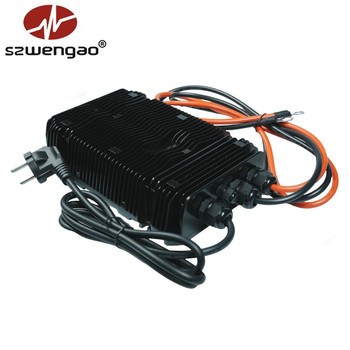
600W Waterproof AC-DC Marine Shore Charger
- AC Input: 90–265V AC (47–63Hz)
- Output Choices: 14.6V, 29.2V, 58.4V
- Conversion Rate: > 93.5% Efficiency
- Casing: Anodized Marine Alloy
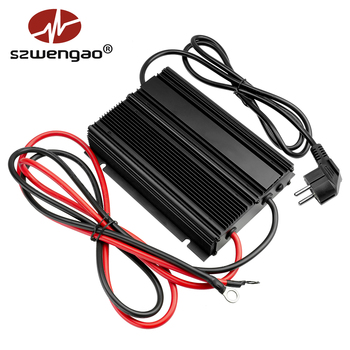
12V/24V/36V/48V 600W Universal Yacht Charger
- Application: Yacht Trolling & House Bank
- Chemistry Modes: LiFePO4 / Li-Ion / AGM
- Protection: OVP, OCP, OTP, Reverse
- Enclosure: IP66 Salt-Resistant
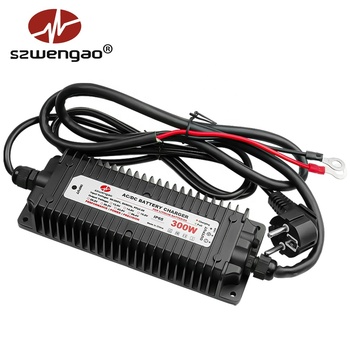
300W Marine LiFePO4 Compact AC Charger
- Nominal Volts: 12V (14.6V) / 24V (29.2V)
- Shore Plug: Standard Euro Schuko / UK
- Cooling: Fanless Passive Conduction
- Weight: 1.45 kg Lightweight Form
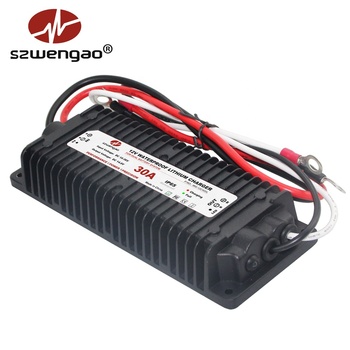
400W Waterproof DC-DC Dual-Bank Marine Charger
- Input Voltage: DC 10–36V Inboard Engine
- Output LiFePO4: 14.6V / 29.2V Regulated
- Alternator Safe: Stops Overheating Draw
- Ingress Guard: IP67 Fully Sealed Epoxy

1500W Marine Buck-Boost LiFePO4 Power Station
- Wide Input: DC 10–60V Variable Span
- Adjustable Out: 12V / 24V / 48V High Power
- Digital Bus: RS485 Modbus Telemetry
- Peak Amps: Up to 60A Output Stream
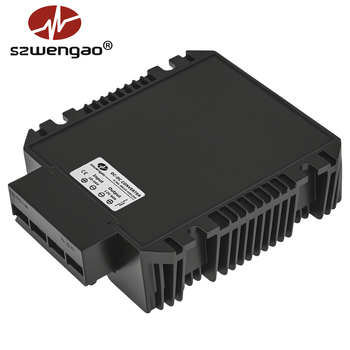
10–44V to 12V 50A/60A Marine Stabilizer
- System Input: 12V / 24V / 36V Fluctuating
- Clean Output: 12V DC ± 1% Stable Rail
- Continuous Watt: 720W Max Nav Electronics
- EMI Suppress: Clean Audio / Radar Audio
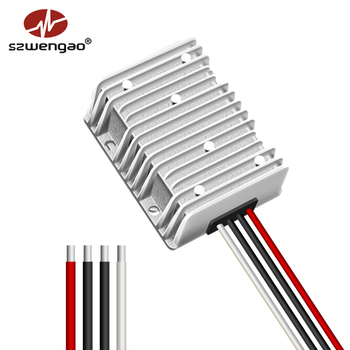
8–40V to 13.8V 30A Marine LiFePO4 Float Buffer
- Dynamic Range: 8–40V Step-Up / Step-Down
- Buffer Bus: 13.8V Comms & Bilge Load
- Max Output: 414W Continuous Run
- Thermal Shell: Ribbed Extruded Aluminum
Maritime LiFePO4 Charging Topologies in Portuguese Coastal Waters
Navigating the transition from traditional flooded lead-acid and AGM service banks to Lithium Iron Phosphate (LiFePO4 / LFP) in marine environments requires a fundamental rethinking of charging architecture. Across Portugal's extensive Atlantic shoreline—spanning over 1,790 kilometers including the archipelagos of the Azores and Madeira—marine vessels face harsh environmental realities: hyper-saline oceanic atmospheric moisture, constant hydrodynamic vibrations, wide marina shore-power voltage variance, and severe engine-bay thermal loads.
Unlike standard automotive or stationary energy storage applications, marine lithium chargers operating in Portuguese ports such as Porto de Leixões, Doca de Belém (Lisbon), Marina de Cascais, and Marina de Portimão must handle strict thermal derating profiles and advanced galvanic safety standards. Because LiFePO4 cells maintain a remarkably low internal resistance (often under 0.5 milliohms per cell), directly connecting a depleted lithium house bank to a marine inboard engine alternator without an active DC-to-DC current-limiting charger will cause thermal avalanche in standard alternators within 15 minutes of departure.
1. The Three-Stage Marine LiFePO4 CC/CV Charging Profile
Lithium Iron Phosphate batteries do not require the equalization or prolonged high-voltage absorption phases required by legacy lead-antimony or gel batteries. In fact, prolonged elevated voltages degrade the cathode matrix and electrolyte solvents. Our marine charging units execute a mathematically tailored three-stage lithium curve:
- Bulk Stage (Constant Current - CC): The charger supplies maximum rated continuous current (e.g., 13A, 30A, 50A) while tracking battery voltage rising smoothly from cut-off (typically 10.0V–11.0V on a 12.8V 4S nominal pack) up to the target absorption threshold (14.2V to 14.6V). Efficiency during this stage exceeds 94%, ensuring minimal internal thermal build-up inside engine-bay mounting enclosures.
- Absorption Stage (Constant Voltage - CV): As cell voltages reach 3.55V–3.65V per cell, the charger locks the target rail voltage precisely within ±0.05V while current naturally decays exponentially. Once charging current tapers below a calibrated tail-current threshold (typically 0.03C to 0.05C), absorption terminates immediately to protect cell longevity.
- Maintenance / Standby Mode (Float Disconnect): Unlike lead-acid chargers that cook batteries indefinitely at 13.8V, our units drop to a gentle cell-resting voltage of 13.3V–13.4V (3.325V–3.35V/cell) or shut off completely until parasitic hotel loads cause bank voltage to drop below 13.1V, at which point an automatic re-bulk cycle is initiated.
- 0V BMS Wake-Up Pulse: When an internal Battery Management System (BMS) enters low-voltage disconnect protection (LVD), standard smart chargers read 0.0V and refuse to output. Eltrum chargers incorporate an active micro-injection pulse that safely unlatches the BMS MOSFETs without creating arcing or over-voltage spikes.
2. Combating Atlantic Salt Fog and Galvanic Electrolysis
In coastal Portugal, salt aerosol penetration is relentless. Salt deposits create conductive saline bridges across non-sealed electrical terminals, resulting in catastrophic PCB track corrosion, tracking fires, and galvanic electrolysis that rapidly eats away copper cabling and aluminum hull fittings. Convection-cooled chargers relying on open internal fans pull moist, iodine- and salt-laden air directly across energized components, causing early dielectric breakdown.
Eltrum solves this by utilizing vacuum-injected thermally conductive organosilicon potting (UL 94V-0 certified flame retardant). The entire internal circuit—encompassing toroidal chokes, MOSFET switching banks, planar transformers, and control logic—is hermetically sealed from atmospheric intrusion. This achieves true IP65 to IP68 waterproof ratings, capable of continuous operation in saturated engine compartments, transom lazarettes, and wet anchor lockers.
| Eltrum Marine Model Series | Input Dynamic Window | Target Output / Chemistry | Peak Output Amperage | Cooling & Ingress Rating | Target Marine Application |
|---|---|---|---|---|---|
| Smart 36V-13A Series | 10V – 36V DC (Step-Up) | 43.8V CC/CV (LiFePO4 12S) | 13A (570W continuous) | Conduction Potting / IP68 | Electric Outboards, Bow Thrusters, E-Tenders |
| Marine 600W AC-DC Pro | 90V – 265V AC (Shore Power) | 14.6V / 29.2V / 58.4V LFP | Up to 40A @ 14.6V | Passive Extrusion / IP65 | Catamarans, Luxury Yachts, Berth Charging |
| Marine 300W AC-DC Entry | 180V – 260V AC Single Phase | 14.6V / 29.2V (4S / 8S Pack) | 20A @ 12V / 10A @ 24V | Silent Fanless / IP65 | Day Cruisers, Sailboats, Navigation Auxiliaries |
| B2B 400W DC-DC Series | 10V – 36V Alternator Bus | 14.6V / 29.2V Selectable | Up to 28A charging feed | Solid Silicone Seal / IP67 | Smart Euro-6 Alternators, Dual-Bank Cruisers |
| 1500W Buck-Boost Station | 10V – 60V Continuous DC | 12V, 24V, 28V, 48V Regulated | Up to 60A Current Flow | Heavy-Duty Ribbed / IP66 | Commercial Fishing Winches, Oceanographic Rigs |
| NavStabilizer 50A/60A | 10V – 44V Wide DC Swing | 12.0V or 13.8V Ultra-Clean | 50A – 60A Transient Filtered | Epoxy Encapsulated / IP67 | Simrad/Garmin Multifunction Displays, Radar, AIS |
Engineered for Portugal’s Coastlines, Marinas & Commercial Harbors
From high-end yacht basins along the Lisbon Riviera to the rough, demanding waters of the Azores and the Douro eco-cruises, Eltrum provides mission-critical power conversion.
Algarve & Vilamoura Leisure Yachting
Marina de Vilamoura, Marina de Lagos, and Portimão host high-density charter fleets, catamarans, and luxury motor yachts. Intense summer heat coupled with continuous air-conditioning and galley loads strains house banks. Eltrum 600W–1000W AC-DC marine chargers keep 24V and 48V LFP service packs replenished quickly during short port stopovers without overheating.
Cascais & Lisbon Atlantic Regattas
Sailing yachts operating out of Marina de Cascais face unpredictable swell and powerful northerly coastal winds ("Nortada"). Modern raceboats and offshore cruisers rely heavily on precision navigation, carbon-mast wind transducers, and autopilot systems. Our galvanically isolated buck-boost converters filter out voltage spikes and protect sensitive Raymarine and B&G instrumentation.
Peniche & Matosinhos Fishing Fleets
Portugal's traditional sardine and coastal trawlers in Peniche, Matosinhos, and Setúbal operate 24V dual-battery systems under brutal spray. Heavy hydraulic haulers and high-draw deck searchlights produce massive battery sag. Eltrum high-amp 24V-to-12V buck converters supply steady power to transponders and communication equipment without brownouts.
Azores & Madeira Offshore Ocean Passages
Ponta Delgada, Horta, and Funchal represent prime Atlantic crossing hubs. Yachts embarking on trans-ocean journeys require robust energy redundancy combining solar arrays, wind generators, and engine alternators. Eltrum wide-voltage B2B chargers (8–90V input ranges) accept unstable DC generation and output pure, ripple-free CC/CV profiles to deep-cycle lithium banks.
Douro River Inland Eco-Tourism Cruisers
In the UNESCO-listed Douro valley, environmental policies incentivize silent, zero-emission electric passenger catamarans and hotel boats. Eltrum 48V–72V high-efficiency step-down converters and multi-bus charging modules deliver pristine auxiliary power for onboard hospitality, lighting, and propulsion telemetry with zero acoustic or electrical noise.
Decarbonization, Fundo Azul & Portuguese Maritime Standards
Portugal is aggressively pushing marine sustainability through EU Recovery programs, modernizing port infrastructures and regulating onboard electrical safety.
The Portuguese "Fundo Azul" and European Green Deal Mandates
Under the European Union’s Fit for 55 package and Portugal’s dedicated national blue economy funding vehicle, O Fundo Azul, shipyards and commercial vessel operators are receiving targeted capital subsidies to phase out fossil-fuel auxiliary generators. The installation of high-density LiFePO4 battery banks paired with zero-emission solar and shore-charging systems is expanding across recreational charter operators and coastal artisanal fishermen alike.
However, accessing these public subsidies and acquiring commercial passenger vessel certifications from Portugal's maritime authority—DGRM (Direção-Geral de Recursos Naturais, Segurança e Serviços Marítimos)—requires stringent documentation. Charging systems must hold verifiable CE Declaration of Conformity and comply rigorously with EU directives including the Recreational Craft Directive (2013/53/EU).
Critical Regulatory Standards for Marine Chargers in Portugal
- EN 60335-2-29: Harmonized European standard strictly dictating safety requirements for commercial and residential battery chargers, governing insulation resistance, clearance distances, and fail-safe overcharge control.
- ISO 8846 Marine Ignition Protection: Electrical components located in engine spaces containing petrol or hydrogen-venting batteries must be certified ignition-protected. Eltrum’s fully potted housings ensure zero electrical sparks escape into ambient engine compartments.
- EN 60945 (Maritime Navigation Equipment EMC): Ensures that high-frequency switching noise (typically 100kHz to 500kHz in DC-DC converters) does not radiatively or conductively leak into VHF marine radios, AIS transponders, GPS antennae, or marine radar receivers.
- Low-Voltage Directive (LVD) & Electromagnetic Compatibility (EMC): Mandatory for seamless custom clearance through Portuguese ports of entry such as Lisbon (PTLIS) and Leixões (PTLEI).
Shenzhen Eltrum Electronic Co., Ltd. – Engineered for Ocean Reliability
Founded in 2015, Shenzhen Eltrum Electronic is a specialized ISO 9001 certified manufacturer of advanced DC-DC power conversion modules and waterproof battery chargers serving tier-1 marine and vehicular distributors across 130+ countries.
Why European Marine Integrators Rely on Eltrum
Isolated DC-DC power conversion is where our core engineering division established its foundational patents. That high-frequency magnetic expertise directly informs our heavy-duty marine battery chargers. Every product that rolls off our automated SMT assembly lines undergoes rigorous environmental and electrical validation:
- 100% Full-Load Burn-In Chamber Testing: Every unit is tested under continuous 100% thermal and current load for 4 hours prior to packaging, identifying early-life component infant mortality.
- Vacuum Potting Technology: Unlike hand-poured potting methods that leave destructive air pockets, our automated vacuum-injection lines guarantee zero voids, maximizing dielectric insulation and thermal dissipation to the aluminum shell.
- Flexible Low Sample MOQ (From 5 Units): We empower Portuguese marine engineering firms, naval architecture consultancies, and refit shipyards to validate working engineering samples in their hulls before signing volume procurement contracts.
- OEM / ODM Bespoke Capability: Need custom CC/CV voltage thresholds for 16S 48V or 24S 72V packs? Custom marine Deutsch connectors or Anderson SB50 terminals? RS485 communication curves? Our Shenzhen R&D team delivers tailored pre-production prototypes in under 15 working days.
Frequently Asked Questions by Portuguese Marine Integrators
Straightforward, engineering-backed answers addressing voltage variations, customs delivery, BMS compatibility, and salt mist protection in Portugal.
Q1: Can your AC-DC chargers handle unstable shore-power voltages in smaller Portuguese ports?
Yes. In older marinas along the coast—such as Sesimbra, Viana do Castelo, or the Azores—shore-power pedestals can sag down to 180V AC or surge up to 255V AC when neighboring yachts turn on chillers. Our 600W and 1000W AC-DC marine chargers incorporate ultra-wide universal power factor corrected (PFC) stages operating smoothly between 90V and 265V AC without cutting out or throttling output current.
Q2: Why is a DC-DC charger required between a marine alternator and a LiFePO4 bank?
Marine alternators are designed to charge lead-acid batteries, which offer high internal resistance as they absorb charge. LiFePO4 batteries have almost zero resistance and will attempt to pull 100% of an alternator's peak current indefinitely. At idle or low yacht displacement speeds, alternator internal fans cannot cool the stator, causing catastrophic burnouts within minutes. Our B2B DC-DC chargers electronically limit current to safe thresholds while delivering a precise CC/CV charging profile.
Q3: Do your chargers generate high-frequency radio interference that disturbs marine VHF or AIS?
No. All Eltrum marine chargers and DC-DC converters comply with stringent EN 60945 and CE EMC standards. Our multi-stage EMI suppression filter banks eliminate conducted and radiated electrical hash across 156–162 MHz maritime frequencies, ensuring crystal-clear VHF radio reception, zero AIS GPS loss, and clean radar display sweeps.
Q4: How does your vacuum potting protect against harsh Atlantic salt fog corrosion?
Standard marine chargers with internal fans suck humid, salt-saturated sea air across high-voltage MOSFETs and surface-mount resistors, creating conductive green copper carbonate tracking and short circuits. Eltrum chargers utilize solid vacuum-potted organosilicon resin. Air, moisture, and saltwater never touch energized circuits, resulting in full IP67/IP68 ingress ratings and prolonged operational lifespans in marine lazarettes.
Q5: What are the lead times and delivery logistics for shipping to Lisbon or Porto?
Standard sample orders (5 to 20 units) are dispatched via DHL, FedEx, or UPS air express from our Shenzhen factory directly to your facility in Portugal within 5–8 business days. For volume commercial maritime contracts (100+ units), we arrange sea freight shipments directly to Porto de Lisboa (PTLIS) or Porto de Leixões (PTLEI) under CIF, FOB, or DDP terms.
Q6: Can your chargers wake up a "sleeping" LiFePO4 pack when the BMS triggers Low-Voltage Disconnect?
Yes. If a yacht sits unoccupied at an Algarve mooring and parasitic bilge pumps completely drain the house bank, standard lithium BMS units isolate the battery terminals via internal solid-state MOSFETs (reading 0.0V). Traditional smart chargers refuse to charge a 0V terminal. Eltrum marine units feature an active low-current initiation pulse that reactivates the BMS and resumes full bulk charging safely.
Q7: Do you offer private label (OEM) branding and custom connectors for Portuguese shipbuilders?
Absolutely. As an onsite-verified ISO 9001 direct manufacturer, Shenzhen Eltrum Electronic provides comprehensive buyer-label services, custom laser-etched aluminum casings, client part numbering, and specific wiring harness integrations (such as IP68 waterproof quick-connectors, ring lugs, or marine plug configurations).
Q8: Are your marine charging systems compatible with both 12V and 24V marine house banks?
Yes. We produce dedicated 12V (14.6V CV), 24V (29.2V CV), 36V (43.8V CV), and 48V (58.4V CV) units, as well as wide-input multi-bus buck-boost converters that can take an incoming 12V engine bus and charge a 24V or 48V auxiliary lithium thruster pack with over 93% efficiency.
Accelerate Your Marine Lithium Electrification in Portugal
Connect directly with Shenzhen Eltrum’s power engineering team. Request comprehensive marine technical datasheets, CE/RoHS certification packs, custom charging curves, and wholesale B2B pricing for sample evaluation.