
Smart 36V LiFePO4 DC-DC Waterproof Marine Charger 13A
- Input Vector: 12V Engine System
- Absorption Point: 43.8V CC/CV
- Chassis Ingress: IP65 Sealed Potted
Tailored for fast-watercraft, offshore support vessels, and eco-tourism fleets navigating Muara Harbour, Brunei Bay, and the historic waterways of Kampong Ayer.
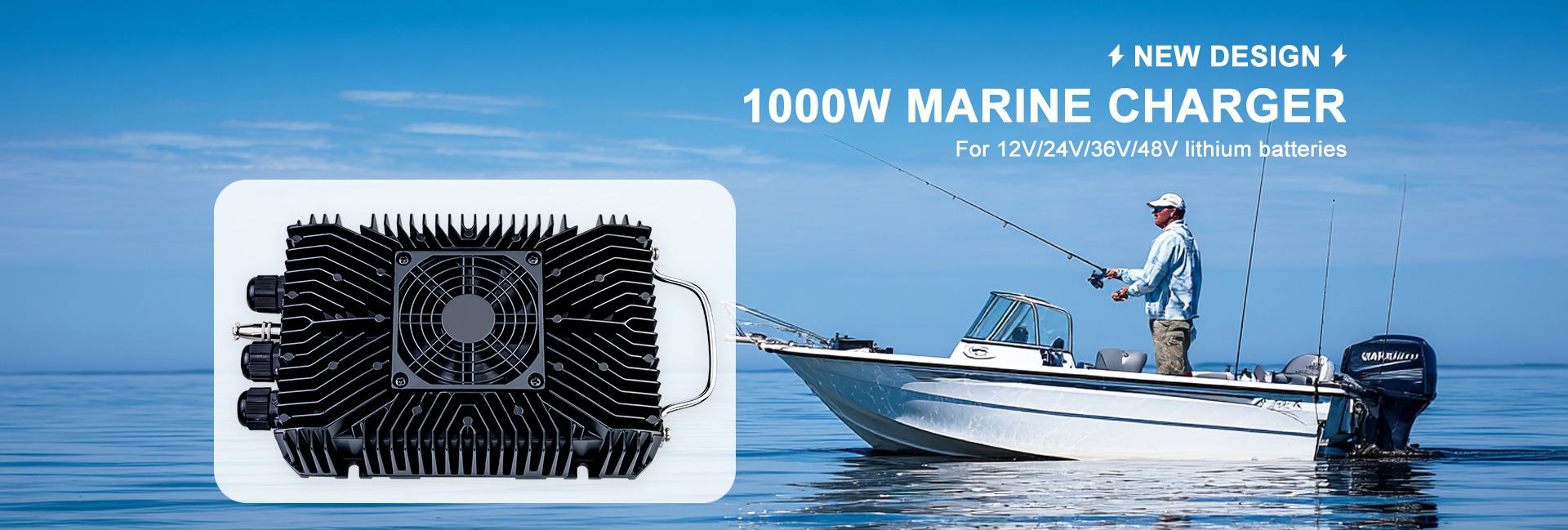
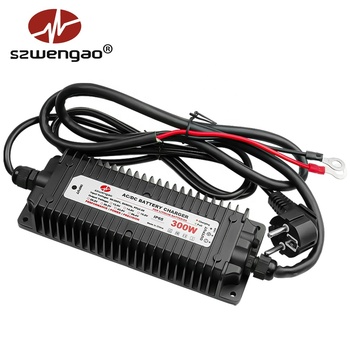
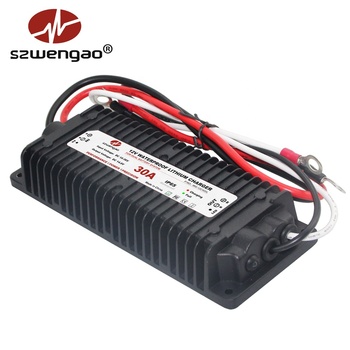
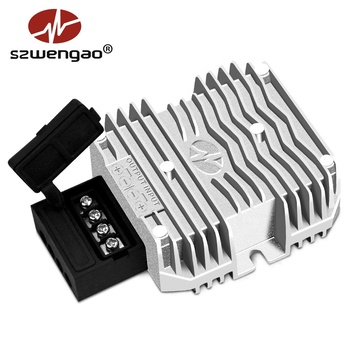
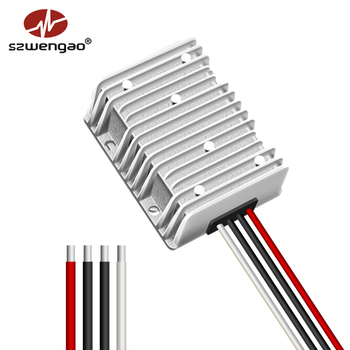
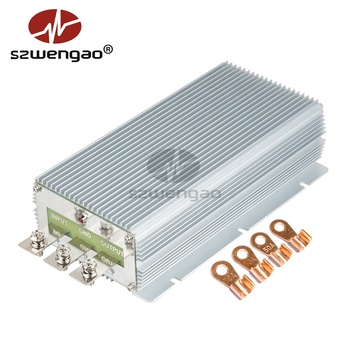

Operating in the maritime zones of Bandar Seri Begawan—stretching from the brackish waters of the Sungai Brunei and Kampong Ayer to the high-salinity shipping channels of Muara Port—places extreme mechanical, electrochemical, and thermal stress on electrical power conversion equipment. For decades, traditional marine operators throughout Brunei Darussalam relied on lead-acid starter banks and vented wet-cell storage. However, the comprehensive regional transition toward Lithium Iron Phosphate (LiFePO4) chemistry demands fundamentally different power charging mechanics.
A primary challenge in the equatorial Bruneian maritime ecosystem is the combination of ambient temperatures hovering between 30°C and 38°C with relative humidity regularly exceeding 85% to 95%. When conventional non-sealed switch-mode chargers cycle in such environments, salt mist penetrates internal transformer windings, driving chloride-induced galvanic corrosion across copper traces and promoting rapid electrochemical dendrite growth. Shenzhen Eltrum Electronic Co., Ltd. resolves these systemic vulnerabilities by utilizing vacuum-injected thermally conductive polyurethane resin encapsulation within anodized aluminum heat-sink enclosures. This engineering design yields full IP65 to IP68 hermetic ingress protection while facilitating direct conductive heat rejection through the hull mounting brackets without relying on salt-vulnerable cooling fans.
Furthermore, modern marine craft built for commercial transport, governmental patrol, and offshore oilfield logistics frequently deploy smart alternators alongside multi-stage house battery banks. Directly tying a high-capacity LiFePO4 bank across an outboard or inboard engine alternator leads to two catastrophic failure modes: first, the low internal resistance (ESR) of uncharged LiFePO4 cells pulls continuous maximum amperage, overheating the alternator windings at idle or trolling speeds; second, when the onboard Battery Management System (BMS) initiates an emergency High Voltage Disconnect (HVD) due to a single unbalanced cell, the resulting inductive "load dump transient" spikes beyond 80V–120V, instantaneously frying onboard chart plotters, radar arrays, and radios. Eltrum’s isolated DC-DC chargers and smart buck-boost regulators act as absolute electronic buffers, absorbing stator fluctuations and supplying mathematically calibrated Constant Current / Constant Voltage (CC/CV) absorption algorithms tailored explicitly for 12.8V, 25.6V, 38.4V, and 51.2V prismatic lithium setups.
High-frequency river logistics requiring rapid intermediate CC/CV replenishment. Units withstand heavy vibrations from high-speed twin outboard operations while safeguarding onboard navigation systems against alternator brownouts during low-RPM docking.
Severe duty offshore auxiliary power networks requiring isolated DC-DC converters (18V–90V input) to prevent cathodic hull degradation, isolating critical radar, Sonar, AIS, and GMDSS transceivers from diesel generator inductive noise spikes.
Mangrove safari and coastal game-fishing vessels running dedicated 24V or 36V electric trolling motors, charged seamlessly off 12V primary engine stators using Eltrum wide-voltage step-up smart boost-charging micro-architectures.
National sustainability targets are accelerating electrification across water-borne transportation in the capital district. Commercial operators are retiring sulfurous auxiliary generators in favor of sealed 48V LiFePO4 battery banks backed by high-yield shore power and high-amperage DC buck-converters.
Commercial fleet owners in Muara are transitioning away from heavy lead-acid configurations to shave up to 60% of hull deadweight, translating into reduced fuel consumption on daily transits. This shifts procurement demand entirely toward chargers with exact, non-sulfating 14.6V/29.2V cutoffs.
Offshore energy contractors demand digital connectivity across all internal power nodes. Chargers equipped with isolated RS485 and Modbus interfaces allow central SCADA and multifunction display (MFD) consoles to monitor individual pack charge stages, cell temperatures, and charging currents in real time.
Established in 2015, Shenzhen Eltrum Electronic Co., Ltd. operates a comprehensive modern production facility encompassing automated Surface Mount Technology (SMT), transformer winding lines, automated precision potting systems, and full-load burn-in environmental test chambers. Specializing in buck, boost, buck-boost, and transformer-isolated topologies, our engineering department provides world-class OEM/ODM capabilities trusted by tier-1 marine integrators worldwide.
Every marine converter and charger series is fabricated under certified ISO 9001 quality management protocols. Factory-floor verification includes 100% full-load electrical testing, dielectric breakdown validation, and elevated-temperature thermal soak checks.
We produce the industry's broadest array of standard DC-DC converters and AC-DC multi-chemistry chargers. With power outputs ranging from compact 30W isolated rail adapters to 1500W microprocessor-directed power conversion modules, our portfolio covers every marine challenge.
We support system integrators, shipyards, and marine distributors with a low standard MOQ of just 5 units for testing and validation. Our dedicated R&D division delivers turnkey OEM/ODM customization covering proprietary housing molds, bespoke connectors, and custom firmware profiles.
Key technical considerations for sourcing, integrating, and maintaining LiFePO4 marine chargers in high-humidity tropical marine conditions.
Lead-acid chargers utilize three-stage equalization profiles that feature periodic high-voltage desulfation spikes (often exceeding 15.5V–16V), which trigger the overvoltage protection thresholds of LiFePO4 Battery Management Systems (BMS), shutting down downstream loads. Furthermore, lead-acid chargers taper off too early or sit on continuous trickle float voltages that degrade lithium cathode structures over time.
In maritime environments like Muara Port, non-isolated converters allow common ground loops between house electronics, shore power lines, and seawater through underwater transducers and outboard casings. Galvanically isolated converters break electrical continuity between input and output grounds using high-frequency magnetic transformers, eliminating stray DC galvanic currents that destroy sacrificial anodes and aluminum hull plates.
Brunei Darussalam uses a nominal 240V single-phase alternating current standard at 50Hz, typically terminating in British Standard (BS 1363) 3-pin receptacles or blue industrial IEC 60309 plugs at marina docks. Eltrum's AC-DC marine chargers feature universal auto-switching inputs (90V–265V AC, 47–63Hz) equipped with standard UK plugs, ensuring seamless operation without step-down transformers.
Our waterproof series are enclosed in heavy finned aluminum alloy castings and encapsulated in high-grade thermal polyurethane potting. This design eliminates mechanical cooling fans that draw in moisture and fail due to salt accumulation, while internal thermal foldback circuits intelligently derate charging currents during extreme ambient heat waves to protect both charger and battery cells.
Yes. Using an Eltrum Step-Up DC-DC Boost Charger (such as our 12V to 43.8V series), the 12V engine alternator rail is stepped up dynamically into a true constant-current/constant-voltage charge curve for 24V or 36V lithium packs, letting boaters recharge trolling systems while running their primary combustion motors across Brunei Bay.
We regularly ship to Brunei Darussalam via air courier (DHL/FedEx/UPS) for fast sample turnarounds (typically 4–7 business days to Bandar Seri Begawan) and consolidated ocean freight to Muara Port for volume commercial production batches. Standard commercial terms include FOB, CIF Muara, and EXW with settlement in USD via T/T, PayPal, or Escrow.
Whether you are engineering a custom electric ferry fleet in Kampong Ayer, upgrading offshore platform service craft in Muara, or seeking reliable OEM marine charger manufacturing, our Shenzhen power engineering team is ready to configure your system.