Verified Buck-Boost Voltage Regulators & Battery Chargers
Continuous stabilization against cold-cranking brownouts, dynamic renewable voltage swings, and marine battery line sag. Standard models ready for OEM volume deployment across Norway.

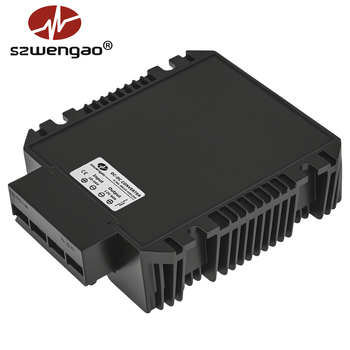
1500W High-Power Buck-Boost Module
- Input Window DC 10V–60V
- Output Rail 12V / 24V / 28V / 48V
- Telemetry RS485 Bus Enabled
- Protection IP67 Fully Sealed
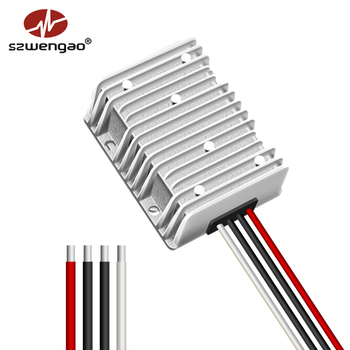
10–44V to 12V 50A/60A Stabilizer
- Input Window DC 10V–44V Wide
- Output Current 50A – 60A Cont.
- Max Output Up to 720W
- Application Heavy Maritime Aux
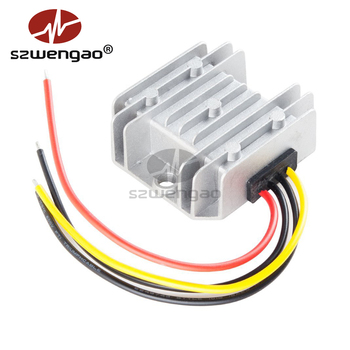
8–40V to 13.8V 30A Voltage Regulator
- Input Window DC 8V–40V
- Regulated Out 13.8V @ 25A–30A
- Efficiency Up to 96%
- Use Case Marine Comms & Radar
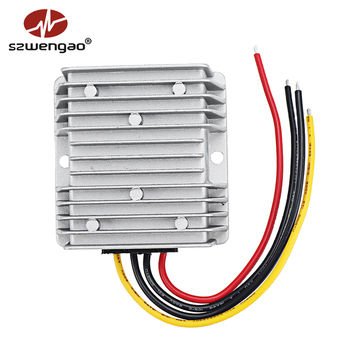
8–40V to 12V Compact Stabilizer
- Input Window DC 8V–40V Ultra-Wide
- Nominal Out 12V DC (1A–6A)
- Operating Temp -40°C to +85°C
- Standard CE / RoHS Compliant
9–40V to 24V 10A Boost-Buck Unit
- Input Window DC 9V–40V
- Output Current 24V @ 6A–10A
- Rated Output 144W – 240W
- Housing Die-cast Aluminum IP68
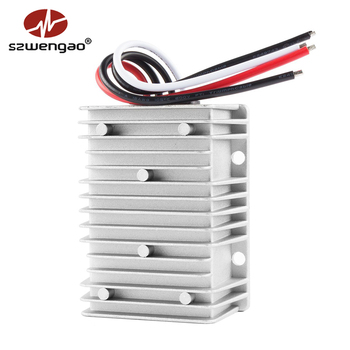
9–40V to 19V 15A Buck-Boost Converter
- Input Window DC 9V–40V
- Fixed Out 19V @ 15A (285W)
- Ripple & Noise < 50mVp-p
- Application Offshore IPCs & Displays
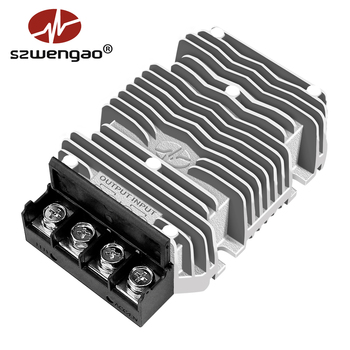
9–40V to 28V 20A Power Regulator
- Input Window DC 9V–40V
- Output Rail 28V @ 15A–20A (560W)
- Conversion Synchronous Switching
- Target Avionics & Fjord Ferries

Smart 12V to 43.8V 13A LiFePO4 Charger
- Source Input 12V DC Vehicle Bus
- Target Battery 36V LFP (43.8V CC/CV)
- Output Current 13A Controllable
- Enclosure IP65 Anodized Waterproof
Engineering Overview: High-Efficiency Buck-Boost Topologies in Norwegian Industrial Ecosystems
Industrial electronics, mobile machinery, and maritime installations across Norway face unique operational stress profiles that exceed the baseline requirements of continental European markets. The combination of persistent Arctic cold, severe salt-mist exposure in coastal fjords, isolated grid topologies, and early adoption of battery electrification requires high-integrity power conversion circuitry. DC-DC Buck-Boost Converters play a mission-critical role: maintaining an uncompromised, tightly regulated output voltage rail regardless of whether the source battery or input DC bus voltage is higher, lower, or equal to the designated load setpoint.
Peak Synchronous Rectification Efficiency
Certified Arctic Cold-Start Operating Threshold
Hermetic Polyurethane Vacuum Potting Rating
Single Module Continuous Regulated Power
Technical Anatomy of Our Synchronous Non-Inverting Buck-Boost Modules
Traditional SEPIC and single-inductor inverting buck-boost architectures historically suffered from poor conversion efficiency (typically 78%–83%), high thermal dissipation, and inverted polarity ground systems that complicate automotive and marine installation. Eltrum's advanced industrial buck-boost platforms utilize four independent, low-RDS(on) N-channel trench MOSFETs driven by high-speed digital controllers to seamlessly transition across three distinctive operational modes:
- Synchronous Buck Mode (Vin >> Vout): Switches Q1 and Q2 operate as a high-efficiency step-down converter, while Q3 remains permanently OFF and Q4 remains continuously ON, reducing switching losses to sub-1.5% margins.
- Synchronous Boost Mode (Vin << Vout): Switches Q1 remains permanently ON and Q2 stays OFF, while Q3 and Q4 modulate dynamically to step-up voltage rails cleanly without subharmonic oscillation.
- Buck-Boost Transition Region (Vin ≈ Vout): Proprietary interleaving control algorithms orchestrate four-switch modulation, eliminating the destructive ripple and jitter commonly encountered at equalized voltage intersections.
This design methodology preserves battery life in offshore microgrids and maintains steady clean power to mission-critical navigation computers, PLC networks, and satellite comms without intermediate energy buffers.
Localized Industrial Application Scenarios Across Norway
Norway is recognized worldwide as a pioneer in rapid transport electrification, remote green energy integration, and sustainable coastal maritime exploitation. Designing power supplies for this region necessitates addressing four demanding deployment environments:
1. Electric Fjord Ferries & Coastal Workboats
In maritime transport hubs like Bergen, Stavanger, and Tromsø, hybrid and full-electric vessels utilize 24V or 48V auxiliary battery lines alongside main propulsion packs. High surge pumps, winches, and thrusters cause instantaneous voltage drops. Our IP68 waterproof buck-boost modules hold critical 12V and 24V lines ultra-stable for bridge radar, sonar, DNV-certified voyage data recorders, and electronic engine control units.
2. Aquaculture Feed Barges & Marine Robotics
Norwegian open-sea salmon farming relies heavily on autonomous underwater vehicles (AUVs), remotely operated vehicles (ROVs), and robotic feeding barges. Power distributions span long umbilical lines subject to substantial I²R drop. Buck-boost stabilizers mounted inside tethered subsea capsules adjust for dynamic input swings (from 18V up to 75V) delivering clean 24V or 48V to HD imaging sensors and thruster controllers.
3. Arctic Mountain Telecom & Off-Grid Hytter
Telenor and private telecom infrastructure stations situated across Finse, Hardangervidda, and northern latitudes depend on off-grid hybrid solar-wind installations coupled with Lithium Iron Phosphate storage. With extreme seasonal solar variation and freezing conditions, battery voltages wander widely. Our 8–40V to 13.8V and 10–60V converters protect telemetry, microwave backhaul radios, and emergency repeaters from voltage-induced failure.
4. Cold-Climate Commercial Vehicles & Snowplows
Municipal utility fleets, emergency rescue vehicles, and heavy snow removal trucks face extreme battery cold-soak down to -40°C. Cold starts drop system rails dangerously low while auxiliary high-output alternators cause transient spikes up to 36V. Our die-cast aluminum encased modules stabilize 12V camera, telemetry, spreader controls, and GNSS navigation networks, preventing intermittent restarts.
5. Mining Automation & Heavy Electrification
Underground mining operations in northern Norway utilize battery-electric load-haul-dumpers (LHDs) and mobile drilling rigs. Rapid acceleration of heavy electric equipment induces massive electromagnetic interference and line voltage fluctuation. Potted converters with multi-stage input PI filters attenuate switching ripple, maintaining uncorrupted DC buses for mission-critical industrial PLCs.
6. Scientific Fjord Hydrological Monitoring Buoys
Long-term environmental monitoring platforms in the Oslofjord and western fjords rely on small wave generators and solar cells to charge small battery banks. Our low-quiescent-current buck-boost converters draw minimal idle power (< 15mA), extracting every milliwatt of harvested energy while delivering clean 5V, 12V, or 19V to water salinity probes, spectrometers, and satellite uplinks.
Key Energy & Industrial Trends Transforming Norway’s DC Power Sector
Procurement teams and electrical systems engineers in Norway are managing a massive industrial paradigm shift driven by governmental environmental legislation, international maritime decarbonization targets, and aggressive electrification deadlines:
1. Mandated Zero-Emission Fjord Regulation (2026 Directive)
The Norwegian Parliament (Stortinget) mandated that the West Norwegian Fjords World Heritage sites must achieve zero emissions from tourist ships and ferries by 2026. This regulation has spurred a rapid transition toward battery-electric coastal propulsion. Vessel refitters are stripping out traditional diesel generator auxiliaries in favor of centralized DC microgrids. DC-DC buck-boost converters are essential to isolate, regulate, and step down DC distribution buses to standardize bridge electronics and safety equipment without bulky AC inverters.
2. Transition to Advanced LiFePO4 & Solid-State Batteries
Across commercial workboats, RVs, and remote solar stations, legacy lead-acid and AGM batteries are being phased out in favor of high-energy-density LiFePO4 chemistry. Lithium batteries operate over a distinct charging curve with very low internal resistance. Connecting an unregulated charging source directly can quickly damage the alternator or trigger high-voltage BMS lockouts. Norwegian integrators increasingly mandate battery-to-battery (B2B) buck-boost chargers that precisely output multistage CC/CV charging curves regardless of dynamic alternator speeds.
3. Rigorous EMI / EMC Immunity Standards
Because Norwegian vessels rely heavily on sensitive GNSS navigation, AIS, VHF radio, and satellite telemetry, converters must exhibit superior electromagnetic compatibility. Low-cost switching power supplies frequently flood the RF spectrum with harmonic noise, blinding bridge communications. Norwegian industrial buyers now specify CISPR 25 Class 3/4 or EN 55032 Class B compliance, necessitating advanced internal shielding, toroidal inductors with low leakage flux, and integrated common-mode choke filtering.
| Topology | Input Range | Regulated Output | Norwegian Core Application | Key Environmental Feature |
|---|---|---|---|---|
| Synchronous Buck-Boost | 10V – 60V DC | 12V, 24V, 48V (Up to 1500W) | Hybrid Fjord Vessels / Aquaculture Feed Barges | RS485 Control, Full IP67 Marine Potting |
| Automotive Voltage Stabilizer | 8V – 40V DC | 12V / 13.8V DC (25A – 30A) | Electric Utility Fleets, Commercial Snowplows | Cold-Crank Cranking Immunity down to -40°C |
| Isolated DC-DC Buck Module | 18V – 90V DC | 12V, 24V (100W – 300W) | Offshore Telecom, Heavy Forklifts & AGVs | 1500V Galvanic Input/Output Isolation |
| Smart Battery-to-Battery Charger | 10V – 36V DC | 14.6V, 29.2V, 43.8V CC/CV | Dual-Battery Campervans, Marine House Banks | LiFePO4 Optimized 3-Stage Smart Algorithm |
Why Norwegian System Integrators Partner Directly with Eltrum
Shenzhen Eltrum Electronic Co., Ltd. has established an international reputation as an engineering-driven power supply manufacturer. Operating out of our certified production facility in Shenzhen since 2015, we design, manufacture, and validate high-reliability power modules that are deployed across more than 130 countries worldwide.
Our Core Manufacturing & Quality Advantages:
- Proven Field Experience Since 2015: Nearly a decade of specialized R&D dedicated to isolated and non-isolated DC-DC topologies, high-current buck regulators, step-up boost converters, and intelligent waterproof LiFePO4 battery chargers.
- Comprehensive 500+ Model Catalog: We support power conversion from 5V up to 90V DC inputs with continuous output ratings from 30W to 1500W, meeting off-the-shelf and custom project specifications.
- ISO 9001 Certified Factory: Our manufacturing plant is independently verified onsite, with strict multi-stage quality assurance covering incoming component inspection (IQC), automated surface-mount technology (SMT), 100% full-load burn-in testing, and thermal chamber cycling.
- CE & RoHS International Conformity: Fully compliant with European Directives, simplifying technical file submissions and CE conformity markings for Norwegian distributors and end-market builders.
- Low Evaluation MOQ (From 5 Units): We empower system designers, naval architects, and electrical engineers in Norway to validate physical prototypes rapidly on benchtop rigs and field trial vehicles before transitioning to volume production.
- Full OEM/ODM Engineering Customization: We offer tailored input/output voltage windows, custom wire harness connector terminations (including Deutsch, Anderson, and Amphenol connectors), specialized CC/CV charging algorithms, and RS485 / CANbus serial communication integration.
Procurement & Technical FAQ for Norwegian Buyers
Common questions asked by engineering leads, purchasing managers, and naval systems integrators when sourcing DC-DC converters for Norway:
How do Eltrum buck-boost modules handle Arctic cold-start conditions down to -40°C?
Are your converters compliant with CE, RoHS, and European electrical safety directives for sale in Norway?
What is the difference between your isolated and non-isolated buck-boost modules?
Can your DC-DC battery chargers safely recharge LiFePO4 house banks from Euro 6 / Smart Alternators?
What are your lead times and logistics arrangements for shipping to Norway (Oslo, Bergen, Stavanger)?
Do you support OEM branding and custom housing or wiring configurations for Norwegian manufacturers?
Request Complete Technical Catalogs & OEM Pricing for Norway
Whether you require standard 12V/24V/48V marine stabilizers or custom-engineered RS485-monitored converters for Arctic field trials, our senior application engineering team is ready to assist.