
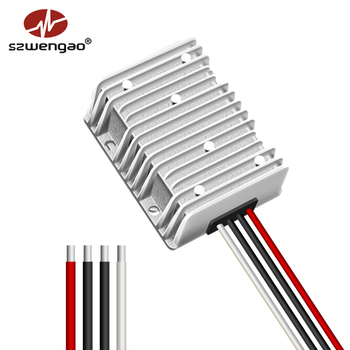
Smart 36V Lithium Battery Charger DC 12V to DC 43.8V 13A
- TopologyBoost DC-DC Step-Up
- Input / Output12V DC → 43.8V 13A
- EnclosureIP68 Potted Aluminum
Precision-engineered multi-stage charging and conversion topologies built to withstand vibration, rapid condensation, thermal deltas, and corrosive environmental exposure.
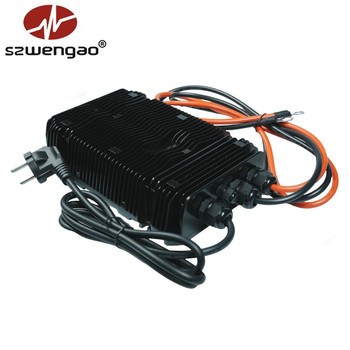
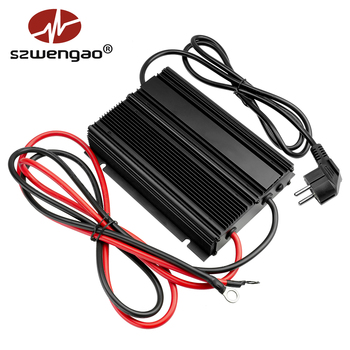
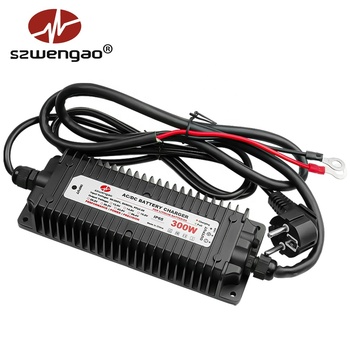
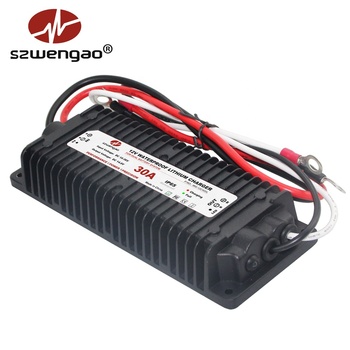


Baguio City, situated at an elevation of roughly 1,470 meters (4,820 feet) within the Cordillera Central mountain range of Northern Luzon, represents a distinctive, highly demanding micro-market for commercial power electronics and marine battery charging infrastructure. While Baguio itself is landlocked, it serves as the primary economic capital, commercial warehousing epicentre, and regional technical staging corridor for Northern Luzon. Commercial transport operators, aquatic adventure fleet outfits, engineering contractors, and government disaster-response teams based in Baguio procure and configure power equipment destined for immediate deployment in both the high-altitude interior waterways (such as Ambuklao and Binga reservoirs) and the adjacent coastal expanses of La Union, Pangasinan, and the Lingayen Gulf.
Crucial Technical Factor: The atmospheric pressure in Baguio averages ~85 kPa compared to 101.3 kPa at sea level. The resulting thinner air reduces convective thermal dissipation in power electronics by 12% to 18%, mandating higher-grade synchronous rectification, specialized aluminum extrusion fins, and precise temperature-compensated algorithmic charging curves.
When selecting marine and boat battery chargers within this hub, procurement managers must account for three interlocking environmental stresses: rapid elevation deltas, severe relative humidity with condensation, and mixed chemical battery topologies. Equipment purchased in Baguio often experiences high-load transport down Naguilian Road or Kennon Road, moving in less than ninety minutes from the crisp, cool mountain plateau directly into the salt-fog saturated, tropical marine environments of San Fernando or Dagupan. Chargers lacking conformal vacuum potting, hermetic IP68 seals, and advanced thermal-runaway protection degrade rapidly under these violent environmental transitions.
As maritime vessels across the Philippines transition rapidly from antiquated flooded lead-acid and AGM batteries toward Lithium Iron Phosphate (LiFePO4) systems, the technical criteria for chargers have evolved from simple bulk/float transformers to highly regulated multi-stage Constant Current / Constant Voltage (CC/CV) switch-mode units. Direct alternator-to-lithium connections without a dedicated DC-DC regulator invariably cause excessive heat build-up, rotor drag, and premature stator burn-out due to the ultra-low internal resistance of lithium cells. Eltrum's line of isolated and non-isolated DC-DC chargers, exemplified by the 12V-to-43.8V step-up booster series, guarantees continuous absorption limit controls, eliminating battery management system (BMS) disconnect trips caused by transient overvoltage spikes.
Baguio-headquartered operators manage charter yachts, recreational game-fishing catamarans, and passenger vessels stationed throughout the Ilocos and Pangasinan shorelines, requiring robust multi-bank charging.
Maintenance and hydrographic surveying boats traversing high-altitude reservoirs require fully encapsulated, waterproof charging hardware that resists persistent drizzle, thick fog, and morning frost.
Cordillera disaster-mitigation units deploy ruggedized emergency rescue boats and amphibious vehicles featuring dual-battery DC-to-DC converters capable of stabilizing wide-swing generator inputs.
The maritime conversion ecosystem anchored around the Baguio trade axis is navigating a pronounced technological shift. Historically, local boat owners relied on basic silicon-controlled rectifier (SCR) chargers with unsealed sheet-metal enclosures. However, maritime operators, municipal rescue groups, and commercial fisheries are actively adopting modular, solid-state switch-mode power supplies (SMPS). This transition is propelled by three distinct structural evolutions:
Clean-energy initiatives spearheaded across Luzon encourage tourist-boat fleets operating on eco-tourism waterways and national park preserves to adopt electric outboards and hybrid-propulsion catamarans. Electric propulsion systems demand operating rails of 36V, 48V, or 72V. Chargers engineered by high-reliability exporters must deliver synchronous buck-boost flexibility, enabling seamless integration with intermittent rooftop monocrystalline PV arrays and shore-based single-phase microgrids experiencing unstable AC voltage swings (ranging from 170V up to 260V).
Traditional fan-cooled open-frame chargers suffer catastrophic failures across Northern Luzon due to high-altitude humidity during the typhoon season (June to November), where relative air humidity frequently exceeds 95% in Baguio's pine plateaus. Forced-air cooling introduces airborne moisture, pine resins, and corrosive marine salinity straight into delicate transformer windings. Modern industry specifications mandate vacuum-infused thermal silica or epoxy resin encapsulation, dissipating heat passively through rugged alloy heat sinks while sealing internal circuit boards completely against moisture ingress, vibration, and thermal shock.
Fleet operators no longer accept black-box chargers. In high-stakes commercial, research, and luxury vessels, battery chargers must broadcast continuous operational telemetry—including internal MOSFET temperature, instantaneous state of charge (SoC), ampere-hour delivery, and fault logs. Eltrum's RS485-enabled buck-boost and AC-DC platforms interface directly with modern marine Multi-Function Displays (MFDs), PLCs, and off-grid remote cellular gateways, giving maintenance superintendents in Baguio real-time oversight of auxiliary banks operating anywhere along the Luzon coastline.
Traditional transformers generate excessive acoustic hum, weigh between 18–35 kg, feature poor efficiency (typically 65–75%), and lack dynamic impedance correction. In contrast, Eltrum's high-frequency planar transformer switch-mode chargers achieve power densities exceeding 95.5% efficiency in an ultra-compact, vibration-proof footprint weighing under 4 kg. This dramatic weight reduction boosts vessel payload capacity and cuts alternator parasitic mechanical load, driving down operational fuel expenditures.
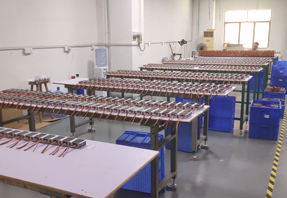
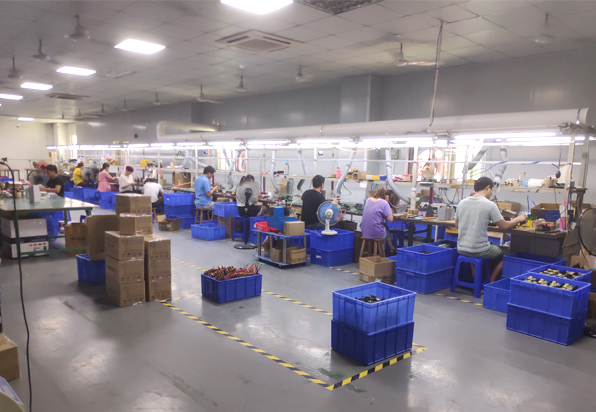
Established in 2015 with over 3,000 square meters of high-precision manufacturing space in Shenzhen's Hangcheng industrial district, Shenzhen Eltrum Electronic Co., Ltd. has grown into an international leader in specialized switch-mode power conversion, non-isolated and isolated DC-DC modules, and marine waterproof battery charging units.
We solve the critical failure points encountered by industrial clients: electrical ground loops, voltage brownouts during engine cranking, marine electrolytic corrosion, and severe altitude heat throttling. Every series in our catalog is engineered in-house, manufactured on high-speed SMT lines, vacuum potted, and subjected to 100% full-load burn-in cycles before dispatch.
Operating with low MOQ thresholds starting from 5 units for sample testing, Eltrum equips regional distributors, marine electrical contractors, and government fleet procurement directors in Baguio with rapid customization services: bespoke input/output voltages, application-tuned CC/CV curves, unique Anderson or Deutsch marine pinouts, and custom OEM private branding.
Whether you require standard 12V/24V IP68 waterproof chargers or specialized high-power DC-DC converters for heavy marine platforms across Northern Luzon, our Shenzhen engineering center is ready to deliver.