
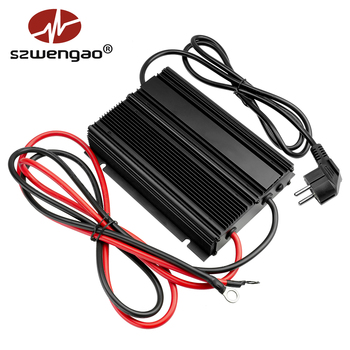
Smart 36V Lithium Battery Charger DC 12V to 43.8V 13A
- Input Voltage10V – 16V DC
- Output Charging43.8V @ 13A CC/CV
- EnclosureIP67 Sealed Alloy
From Trondheimsfjorden aquaculture workboats to zero-emission construction machinery in Trøndelag, Eltrum provides heavy-duty, temperature-resilient, and intelligent charging topologies.
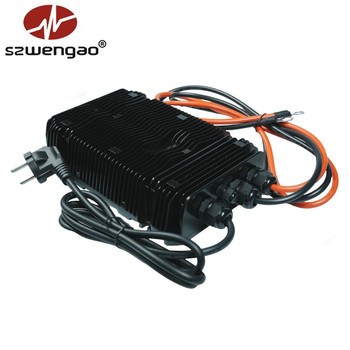
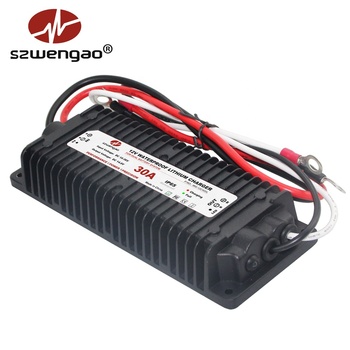
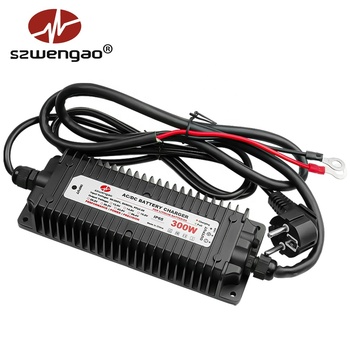

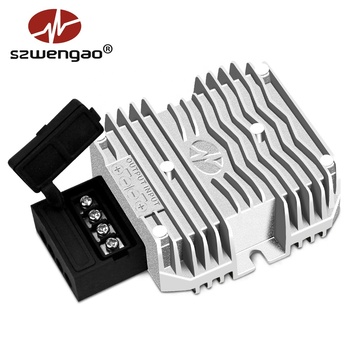

The Trøndelag county, anchored by the engineering capital of Trondheim, is globally recognized as the focal point for Scandinavian maritime technology, autonomous oceanic research, and electrification. Operating electronic power conversion equipment in central Norway presents severe environmental challenges that standard off-the-shelf modules fail to handle. Designers face sustained sub-zero ambient temperatures, aggressive maritime saltwater fog along the Trondheimsfjord, broad voltage fluctuations caused by regenerative energy on small grid ties, and high vibrational profiles from commercial aquaculture workboats and electrified utility machinery.
Shenzhen Eltrum Electronic Co., Ltd. fills this mission-critical gap. With over a decade of dedicated research into isolated DC-DC topology, high-voltage stepping, and multi-stage constant current/constant voltage (CC/CV) battery regulation, our modules are engineered to thrive where ordinary commercial electronics fail. Whether integrating a Smart 36V Lithium Battery Charger DC 12 Volt to DC 43.8 Volt Waterproof Charger 13A into an electric runabout or engineering a distributed 48V telecom back-up bank in an unheated mountain cabinet near Oppdal, Eltrum supplies tier-one components built to international maritime and industrial standards.
A widely recognized vulnerability of Lithium Iron Phosphate (LiFePO4) chemistry is its physical inability to accept continuous charge currents at temperatures below 0°C without suffering severe lithium dendrite plating, which irrevocably damages cell internal impedance and introduces thermal runway hazards. For OEMs operating out of Trondheim, charging house batteries or propulsion packs in sub-zero winter conditions requires sophisticated multi-stage algorithm execution.
Eltrum's advanced DC-DC and AC-DC battery charger modules feature optional temperature telemetry integration via negative temperature coefficient (NTC) probes or RS485/CAN-Bus digital handshakes. When integrated with intelligent battery management systems (BMS), our chargers automatically throttle terminal charge rates to a trickle current or trigger external silicon pre-heating blankets before ramping into full Constant Current (Bulk) phase. Our potted alloy housings provide superior thermal mass, dispersing heat efficiently during full-load high-efficiency switching (typical efficiency exceeds 93–96%), ensuring system reliability during freezing sea sprays and extreme Nordic wind chills.
A frequent field failure encountered in Norwegian maritime retrofits and hybrid utility vehicles is alternator burnout when connecting a LiFePO4 auxiliary battery directly to an internal combustion engine's standard starter alternator. Traditional alternators are designed to charge lead-acid batteries, which possess inherently higher internal resistance that naturally restricts current acceptance as voltage climbs. LiFePO4 cells have nearly zero internal DC resistance, soaking up all available current from the alternator even at idle RPMs where the engine fan cannot adequately cool the alternator coils.
Eltrum's Battery-to-Battery (B2B) DC-DC Chargers resolve this fundamental vulnerability. Operating with broad input windows (such as 10V–36V or 18V–90V), the charger acts as a galvanic barrier or precise switching current buffer, drawing only a calibrated, regulated current from the starter battery/alternator network while outputting the exact tailored CC/CV curve (e.g., 14.6V for 12V LiFePO4, 29.2V for 24V packs, and 43.8V for 36V packs). This keeps commercial engines operating cleanly while guaranteeing rapid, safe house battery replenishment.
Choosing the correct power architecture is vital for system lifetime and operational stability. The table below illustrates the critical parameters analyzed by marine electrical contractors and automation engineers when sourcing Eltrum power conversion hardware.
| Topological Structure | Standard Input Range | Nominal Outputs | Target Trøndelag Application | Efficiency Benchmark |
|---|---|---|---|---|
| Buck-Boost (Voltage Stabilizer) | 8V – 40V / 10V – 60V DC | 12V, 13.8V, 24V, 48V | Campervans, trawlers, fluctuating solar buffers | 92% – 95% |
| Isolated Step-Down DC-DC | 18V – 75V / 36V – 75V DC | 5V, 12V, 24V | Marine sonar, subsea sensors, telecom racks | 88% – 92% |
| High-Current Buck (Step-Down) | 24V, 48V, 72V, 90V DC | 12V (up to 100A), 24V | Heavy forestry equipment, electric bus auxiliary | 95% – 97% |
| Step-Up Boost Converter | 10V – 16V / 18V – 30V DC | 24V, 36V, 48V | 48V hybrid electric thrusters, high-power deck lights | 93% – 96% |
| AC-DC Waterproof Charger | 90V – 265V AC Universal | 14.6V, 29.2V, 43.8V, 58.4V | Dockside shore power, electric marina chargers | 91% – 94% |
From university research vessels testing in the ocean laboratory to heavy-duty industrial transport traversing mountain corridors, Eltrum supplies rugged power modules built for Nordic conditions.
Trondheim's leading salmon farming and marine logistics fleets demand robust IP67-rated power gear. Eltrum's potted AC-DC chargers and 24V-to-12V heavy-duty buck converters power onboard telemetry, fish-feeding actuators, navigational radars, and lithium house packs without succumbing to humid, salty sea spray.
Expedition campers and tradesmen operating in Norway face severe battery sagging during cold starts. Our B2B DC-DC chargers and voltage stabilizers maintain an unyielding 13.8V or 14.6V rail to sensitive heating pumps, satellite communication, and auxiliary battery banks while engine alternators cycle.
Trondheim Municipality's aggressive green procurement criteria mandates fossil-free construction sites. Eltrum's 48V to 12V and 72V to 24V high-power modules step down heavy traction pack power to supply auxiliary lights, safety PLCs, hydraulic controllers, and electric cabin climate controls.
Remote cabins (hytter) and environmental monitoring stations across Trøndelag rely on wind and solar DC microgrids. Our wide-input buck-boost converters bridge seasonal fluctuations, ensuring stable voltage output to high-precision environmental sensors and remote radio relays year-round.
Collaborating with local technology clusters and academic innovators like NTNU, Eltrum supplies lightweight, isolated DC-DC converters for autonomous surface vessels (ASVs) and subsea exploration drones requiring galvanic isolation to eradicate high-frequency motor noise and eliminate ground loop interference on sensitive sonar.
The transition toward absolute zero emissions across Central Norway is accelerating the requirements for next-generation DC-DC power electronics and smart charging topologies.
With strict emission controls entering Norwegian fjords, commercial ferries, supply boats, and fishing cutters are retrofitting hybrid battery power. This transition demands high-amperage IP65 battery chargers capable of accepting erratic shore power variations while managing precision absorption profiles to maximize cycle life.
OEMs in Trondheim are pushing for higher power densities within ultra-compact form factors. The adoption of Gallium Nitride (GaN) and Silicon Carbide (SiC) semiconductors in DC-DC converters is enabling Eltrum to achieve switching efficiencies beyond 96%, drastically reducing enclosure footprint and passive thermal heat sink bulk.
Modern Norwegian fleet managers expect real-time diagnostic reporting. Converters are no longer passive black boxes; our advanced models feature embedded RS485 Modbus RTU communication, allowing remote logging of input voltage health, continuous amperage throughput, thermal status, and automated fault alerts.
Shenzhen Eltrum Electronic Co., Ltd. combines rigorous ISO 9001 quality management with direct engineering agility, delivering proven reliability across international markets.
All converter and charger architectures strictly adhere to European electromagnetic compatibility (EMC) standards and low-voltage directives. Safety certifications, component tracing, and test declarations are provided directly with pre-production samples.
Need a dedicated 43.8V LiFePO4 charging curve, custom Anderson connectors, IP68 vacuum potting, or tailored aluminum extrusion dimensions? Our in-house R&D engineering department handles full hardware, firmware, and buyer-label customizations.
To support early-stage bench testing and marine pilot trials, standard and semi-custom catalog models are accessible with an introductory MOQ starting from just 5 units. Engineers can thoroughly validate hardware before committing to full container batches.
Share your target voltage input, required load parameters, environmental constraints, or custom CC/CV curve specifications. Our Shenzhen technical team will respond with a tailored proposal and complete datasheet package within 24 business hours.
Direct technical answers to common questions raised by electrical contractors, shipwrights, and industrial purchasing managers across Norway.