Active Power Models
Peak Synchronous Efficiency
Export Destinations
CE & RoHS Certified Factory
Featured Industrial DC-DC Converters & Chargers
Precision-engineered conversion modules built with heavy-duty aluminum die-cast housings, multi-stage overcurrent protection, and ultra-low standby dissipation.
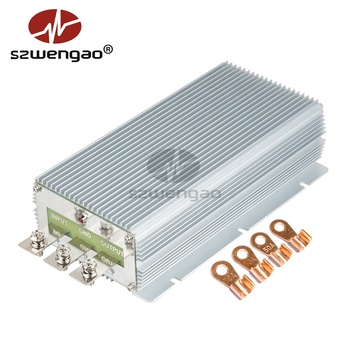
24V to 12V 85A/100A Truck & Fleet Buck Converter
- Input Voltage Range18–35V DC
- Nominal Output12V DC (Adjustable)
- Rated Output Current85A – 100A Max
- Thermal ManagementDie-cast Heat Fins
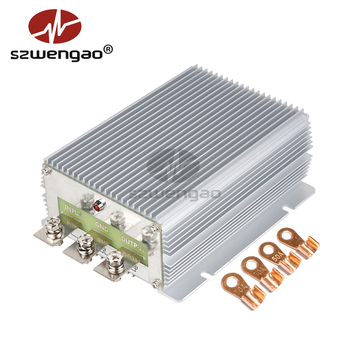
48V to 24V 40A 1000W Step-Down Module
- Input Voltage30–60V DC
- Continuous Power1000 Watts
- Conversion TopologyNon-Isolated Buck
- Housing ProtectionIP68 Epoxy Sealed
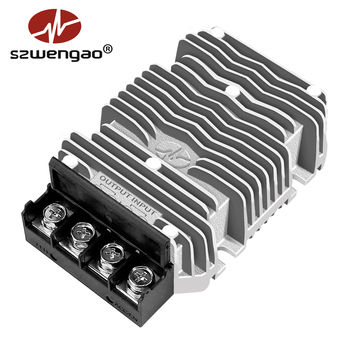
48V to 12V 50A/60A Step-Down Voltage Regulator
- Input Flexibility30–60V DC Extended
- Output Current50A Continuous (60A Peak)
- System ProtectionOVP / OCP / OTP
- ApplicationForklifts & AGV Fleets
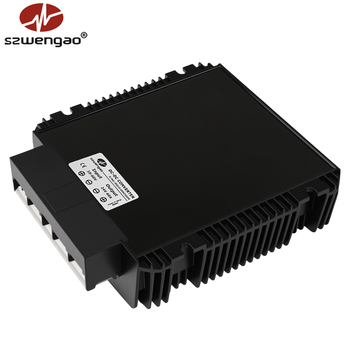
1500W Buck-Boost Converter with RS485 Port
- Dynamic Input10–60V Wide Swing
- Configurable Output12V / 24V / 28V / 48V
- Telemetry InterfaceRS485 Modbus RTU
- EfficiencyUp to 97.2% Synchronous
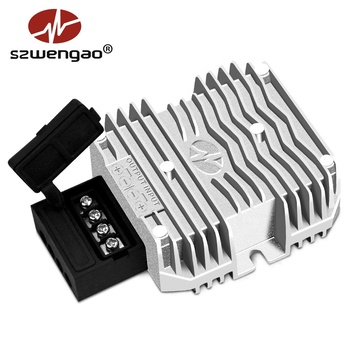
Isolated 18–90V to 12V 10A Waterproof Module
- Isolation Barrier1500V DC Galvanic
- Ultra-Wide Input18–90V Continuous
- Output Regulation12V DC ±1.0% Load Reg
- Noise FilteringIntegrated Low-EMI Choke
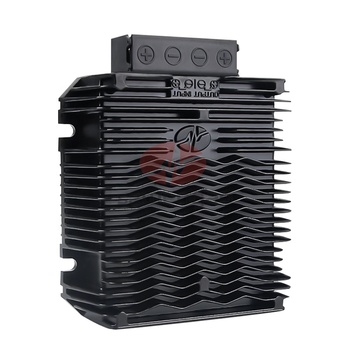
12V to 24V/48V Synchronous Boost Converter
- Low-Rail Input9–16V DC Native
- High-Rail Output24V @ 50A / 48V @ 20A
- Thermal Class-40°C to +85°C Operating
- Inrush ProtectionIntegrated Soft-Start
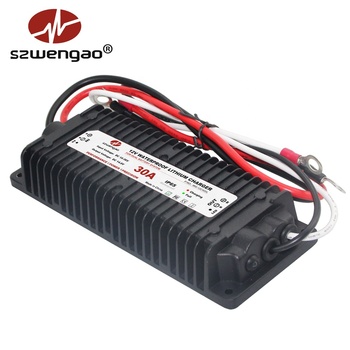
400W Multi-Stage Waterproof LiFePO4 DC Charger
- Alternator Input10–36V DC Auto-Detect
- CC/CV Charge Profiles14.6V / 29.2V Chemistry
- Ingress RatingIP67 Solid Enclosure
- Smart FeaturesAlternator Overload Safeguard
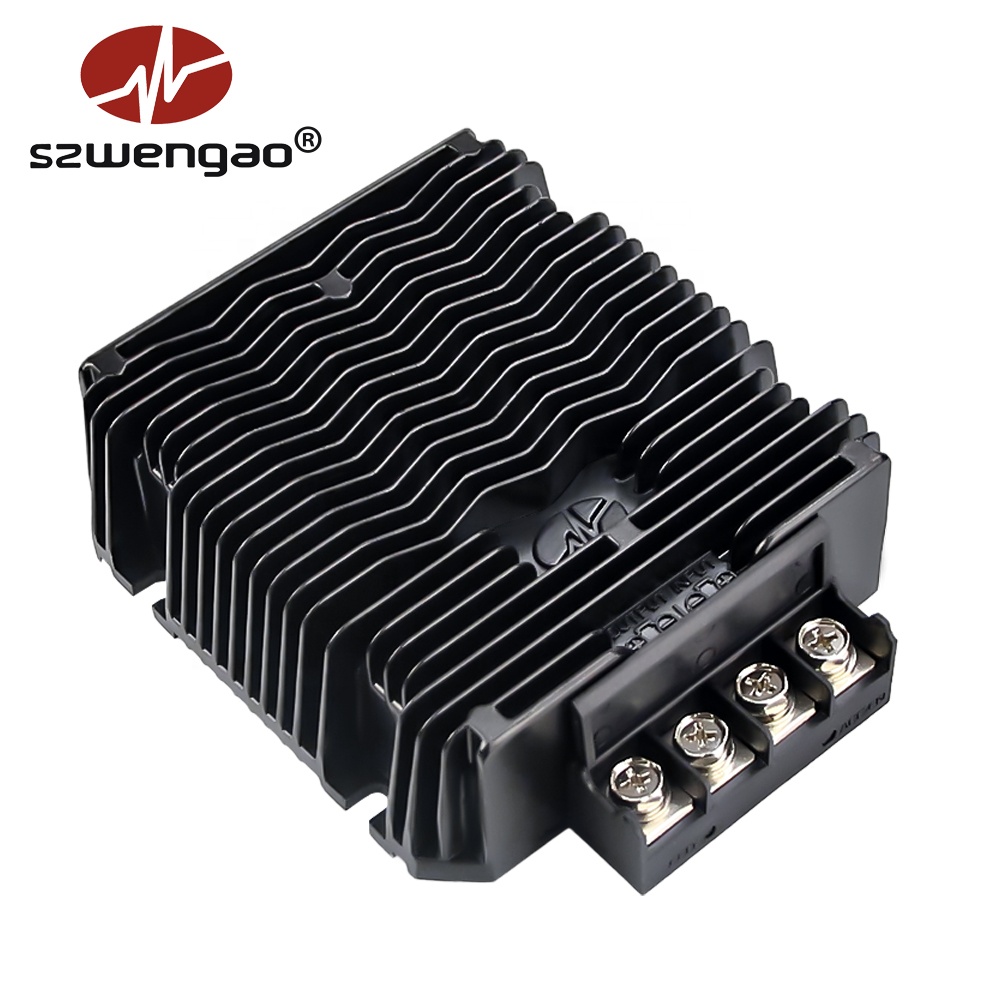
Smart 36V Lithium Battery Charger (DC 12V to 43.8V 13A)
- Input Source12V DC Starter / House Bus
- Target Voltage43.8V LiFePO4 Profile
- Charging Current13A True Constant-Current
- End ApplicationEV Cart, RV, & E-Bike Packs
Architecting Modern 24V-to-12V Power Topologies for Jacksonville's Industrial Hub
Why standard commercial linear regulators fail in coastal logistics corridors and how synchronous rectification ensures zero downtime across multimodal supply chains.
As the logistics capital of the American Southeast, Jacksonville, Florida, occupies an unmatched nexus of rail intermodal facilities, maritime shipping channels via JAXPORT, and expansive freight distribution corridors traversing the I-95, I-10, and I-295 beltways. Modern industrial electrification within this maritime region demands exceptional power resilience. When integrating cutting-edge commercial telematics, sub-GHz communications, radar monitoring, and 12V refrigeration control systems into modern 24V heavy commercial vehicles or workboats, engineers cannot afford thermal dissipation losses or line transients that compromise electrical system reliability.
A genuine 24V to 12V DC-DC buck converter is not merely a static step-down transformer; it is an active high-frequency switching regulator operating under continuous feedback stabilization. Our high-efficiency power architectures exploit synchronous rectification, substituting standard lossy Schottky flyback diodes with low-RDS(on) N-channel power MOSFETs. By mitigating the intrinsic 0.5V forward voltage drop of passive rectification to single-digit millivolt losses across the MOSFET channel, operational conversion efficiency routinely surpasses 95% to 97%. This efficiency differential equates to dozens of watts preserved per vehicle—mitigating parasitic battery drain, eradicating localized heat traps within enclosed electrical cabinets, and maximizing equipment uptime.
Localized Jacksonville Application Scenarios
JAXPORT Maritime & Commercial Tugs
Operating along the St. Johns River and open Atlantic sea lanes subjects electronics to relentless moisture and airborne sodium chloride. Marine workboats utilize 24V DC auxiliary battery banks to power ultra-sensitive 12V navigational suites, thermal chartplotters, and VHF radio transceivers. Our fully potted, IP68 hermetically sealed buck modules eliminate galvanic corrosion, providing clean DC bus isolation without common-mode ground noise.
Heavy Intermodal Freight & Drayage
Drayage fleets cycling through Jacksonville’s intermodal terminals experience harsh load-dump spikes (SAE J1113 standard) whenever high-output alternators cycle off under sudden load disconnects. Eltrum’s buck regulators feature bidirectional transient voltage suppressor (TVS) diodes and ceramic smoothing arrays capable of withstanding voltage spikes up to 60V, shielding sensitive 12V GPS telematics and weigh-station bypass units.
Cold-Storage Warehouses & AGVs
Northeast Florida hosts several of the East Coast’s largest refrigerated cross-dock facilities. Automated Guided Vehicles (AGVs) and electric industrial forklifts operating on 24V or 48V power packs require drop-down 12V rails for optical LiDAR scanners and warehouse management tablets. Our converters sustain operation across rapid thermal swings from -30°C deep freeze to +45°C ambient loading docks without output drift.
Key Technological Trends Driving Northeast Florida Electrification
The commercial transportation and terminal ecosystem in Duval County is undergoing a structural paradigm shift toward decarbonization and operational intelligence. The following macro dynamics are directly influencing how commercial system integrators and fleet operators procure DC-DC power conversion hardware:
- Rapid Adoption of Hybrid 24V/48V Auxiliary Electrical Architectures: Modern commercial workboats and Class 7-8 long-haul vehicles are adopting secondary higher-voltage battery banks to power auxiliary heating/cooling and hydraulic lifts. Synchronous buck regulators are becoming the standard gateway bridge to feed legacy 12V sub-buses from these high-density batteries.
- Stringent Ingress & Environmental Protections (Subtropical Salt Fog): In Jacksonville's humid marine atmosphere, convective air cooling fans introduce corrosive salt air directly onto printed circuit boards, triggering dendritic copper growth and premature field failures. Potted, fanless, die-cast aluminum conduction-cooled converters with integrated silicone gels have become mandatory technical requirements for major public-sector and enterprise contracts.
- Digital Telemetry and RS485 Fieldbus Interfacing: Beyond blind power delivery, Jacksonville's automated container depots demand actionable intelligence. Fleet maintenance managers require real-time current telemetry, thermal alerts, and load-monitoring through Modbus RS485 communication lines to schedule predictive maintenance and prevent unexpected line cutouts.
- Transition from Flooded Lead-Acid to LiFePO4 Traction Reservoirs: LiFePO4 cells exhibit much flatter discharge curves, accompanied by higher terminal voltages during float charging (up to 29.2V on 24V strings). Buck converters must maintain precise ±1% voltage stabilization across wide continuous input swings without entering hiccup protection modes.
Engineering Matrix: Synchronous Buck vs. Conventional Topologies
| Performance Criterion | Eltrum Synchronous Buck | Standard Non-Synchronous | Linear Voltage Dropper |
|---|---|---|---|
| Typical Conversion Efficiency | 95% – 97.5% | 82% – 86% | 45% – 50% |
| Thermal Dissipation (at 50A Load) | ~18W (Minimal warm-up) | ~95W (Hot casing) | ~600W (Unmanageable heat) |
| Enclosure Protection | Full Vacuum Silicone Potted (IP68) | Vented Fan Mesh (IP20/IP44) | Massive Open Heatsink |
| Input Transient Protection | 60V TVS + Active Suppression | Basic MOV Protection | Zero Surge Defense |
| Noise & Ripple (Peak-to-Peak) | < 50mV RMS | 150mV – 300mV RMS | < 10mV (Low power only) |
Why Global Buyers & Distributors Partner with Eltrum
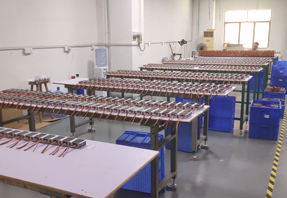
Established in 2015, Shenzhen Eltrum Electronic Co., Ltd. is an onsite-verified high-tech power hardware manufacturer. From high-power isolated converters to custom battery charging platforms, our hardware operates across 130+ nations under the most punishing ambient circumstances.
- Factory-Direct Engineering: Over 500+ commercial power designs; fully equipped SMT, selective soldering, and automated thermal burn-in facilities.
- Low Initial Evaluation Barriers: Flexible sample orders from as low as 5 units allow rapid prototype validation by engineering teams prior to high-volume procurement.
- Full OEM/ODM Capabilities: Customized output voltages (e.g., 13.8V radio float rails), tailored wire harness pinouts, custom housings, and buyer-label branding.
- Rigorous Standard Compliance: Manufactured under ISO 9001 quality frameworks with comprehensive CE, RoHS, and internal surge compliance verifications.
Jacksonville Procurement & Engineering FAQ
Direct answers to the most common technical questions posed by fleet managers, marine electricians, and industrial purchasing agents.
Why is synchronous rectification essential for marine and commercial fleets in Jacksonville?
Can a standard non-isolated 24V to 12V buck converter be used in marine vessels along the St. Johns River?
What are the MOQ terms and sample lead times for buyers in Florida?
How do your converters cope with extreme automotive alternator load dump spikes?
Can you customize the output to 13.8V instead of a strict 12.0V?
Are Eltrum products protected against coastal salt corrosion and moisture?
Ready to Engineer Your 24V to 12V Power Architecture?
Whether you require standard 10A to 100A stock models or engineered OEM customizations for commercial fleets, port logistics, or marine systems, our senior technical engineering team is on hand to supply datasheets, cad models, and competitive production pricing.
Get a Quote