Featured Solar DC-DC Power Modules & Charging Systems
Engineered for extreme ambient resilience, ultra-wide input voltage spans, and high-efficiency lithium/LiFePO4 battery integration across demanding European renewable deployments.

Smart 36V Lithium Battery Charger DC 12V to 43.8V 13A
- Input Nominal12V DC System
- Output CC/CV43.8V DC (LiFePO4)
- Max Current13A Continuous
- EnclosureIP67 Waterproof Potted

1500W High Power Buck-Boost Converter 10-60V
- Wide Input10V – 60V DC
- Output Rails12V / 24V / 28V / 48V
- Control BusRS485 Telemetry
- EfficiencyUp to 96.5%
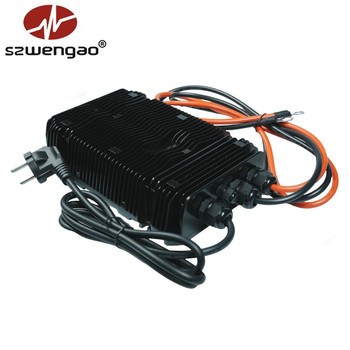
600W AC to DC 14.6V-58.4V LiFePO4 Charger
- Grid Input90V – 265V Universal AC
- Target ChemLiFePO4 / NMC Packs
- Power Rating600W Continuous
- Safety StandardCE, LVD, RoHS Verified
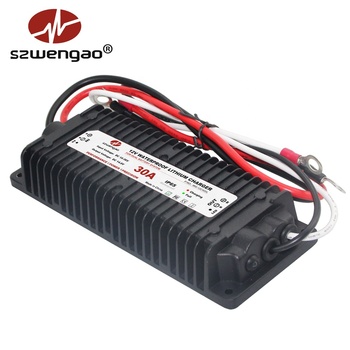
400W DC-DC Battery-to-Battery LiFePO4 Charger
- DC Range10V – 36V Wide Input
- Charging Rails14.6V / 29.2V / 43.8V
- ApplicationsSolar RV / Dual Battery
- ProtectionReverse Polarity, OVP, OTP
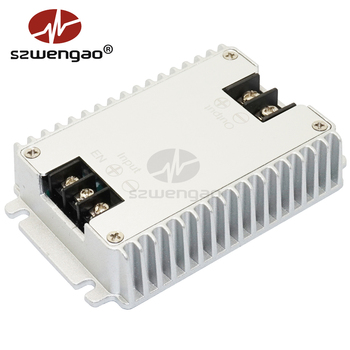
Industrial Galvanic Isolated Converter 36-75V to 24V
- Telecom Input36V – 75V DC
- Regulated Out24V DC @ 5A (120W)
- Galvanic Barrier1500V DC Isolation
- Noise SuppressionLow Ripple < 50mVp-p
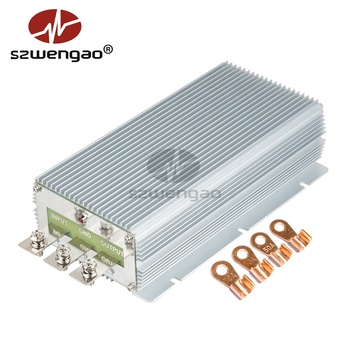
24V to 12V 85A/100A High-Current Buck Regulator
- Step-Down24V to 12V Heavy Load
- Output Amperage85A – 100A Surge
- Peak Efficiency95.8% Synchronous Buck
- ChassisFinned Extruded Aluminum
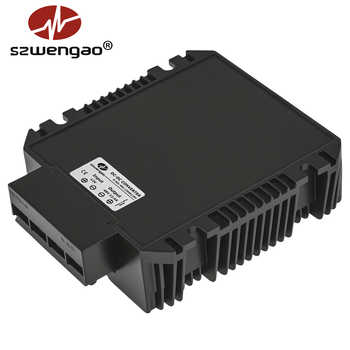
12V to 48V Step-Up Boost Converter 15A/20A
- Input Span11V – 16V Low Voltage
- Boosted Rail48V DC Regulated Bus
- Power DeliveryUp to 960W Peak
- Thermal DefenseFull Encapsulated Thermal Gel
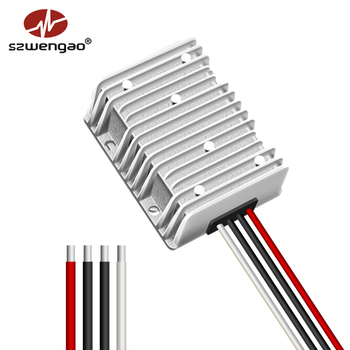
8-40V to 13.8V 25A/30A Buck-Boost Stabilizer
- Dynamic Range8V – 40V Fluctuation
- Float Voltage13.8V Lead-Acid / LiFePO4
- Continuous WattageUp to 414W Sustained
- Protection MatrixShort Circuit & Auto Recovery
Synergizing Chinese Manufacturing Hubs with Slovenia's Distributed Photovoltaic Infrastructure
As the European Union intensifies its decarbonization targets under the REPowerEU program and the revised Slovenian National Energy and Climate Plan (NEPN), the technical requirements placed upon distributed DC microgrids, battery energy storage systems (BESS), and specialized balance-of-system (BOS) components have reached unprecedented stringency. Solar DC-DC converters are no longer mere static regulators; they serve as the vital cognitive bridge managing thermal disequilibrium, dynamic irradiance swings, and strict voltage compliance across volatile intermediate buses.
Navigating this shifting market necessitates a nuanced understanding of global supply chain architecture. Procurement engineers and project developers in Central Europe are increasingly evaluating dual-track sourcing matrices: leveraging the agility, vertical component density, and volume economics of Top China Solar DC DC Converter Factories based in Shenzhen and Guangdong, while synchronizing with European system integrators, testing entities, and specialized manufacturing plants in Slovenia. This whitepaper analyzes the core engineering topologies, localized Alpine-to-Adriatic operational environments, regulatory mandates, and supply-chain structures that dictate procurement success.
Topological Analysis: Buck, Boost, Buck-Boost, and Galvanic Isolation in Solar Architectures
Selecting the correct power topology is vital in preventing premature transistor breakdown, thermal runaway, and system derating under seasonal Alpine temperature extremes. The primary challenge in solar integration is managing the non-linear curve of photovoltaic output combined with varying battery states-of-charge (SoC).
| Topology | Input Voltage ($V_{in}$) vs Output ($V_{out}$) | Conversion Efficiency | Ground Loop Mitigation | Primary Solar/Industrial Use Cases |
|---|---|---|---|---|
| Synchronous Buck | $V_{in, min} > V_{out} + 2.5V$ headroom | 94% – 97.5% | Shared Common Ground (Non-isolated) | 48V/72V Commercial solar arrays stepping down to 12V/24V telemetry, cameras, and IoT sensors. |
| Step-Up Boost | $V_{in, max} < V_{out}$ | 92% – 96% | Shared Common Ground (Non-isolated) | 12V/24V off-grid residential battery banks stepping up to 48V DC for localized inverter drives or pumps. |
| 4-Switch Buck-Boost | $V_{in}$ dynamic overlap with $V_{out}$ | 90% – 95% | Shared Common Ground (Non-isolated) | Wide-spectrum solar panels (9-40V) feeding stabilized 12V/24V battery systems through irradiance variations. |
| Galvanic Isolated | Configurable wide ranges ($18-36V, 36-75V, 18-90V$) | 88% – 93% | Full Magnetic Isolation (≥1.5kV) | Telecom towers, grid-tied substations, marine solar craft where floating ground or zero loop noise is mandatory. |
Engineering Use Cases Across Slovenia's Diverse Microclimates
From sub-zero Alpine telecommunication arrays to saline Mediterranean coastal logistics, power hardware must endure extreme geographic stress while sustaining maximum solar yield.
High-Alpine Microgrids & Mountain Huts
In the Julian Alps and Karawanks, hundreds of high-altitude mountain refuges (Planinske koče) rely exclusively on off-grid PV arrays paired with LiFePO4 storage. Eltrum's fully encapsulated buck-boost converters and smart chargers operate reliably down to -40°C, maintaining regulated DC lines for satellite links, automated meteorological sensors, and safety infrastructure without cold-soak startup failure.
Adriatic Maritime & Port of Koper Solar Logistics
Slovenia’s coastal maritime hub at Koper represents a primary gateway for clean electrified freight and marine applications. Salt-fog atmospheric corrosion poses high failure risks for standard switch-mode supplies. Eltrum’s IP67/IP68 potted DC-DC chargers and converters prevent electrolytic corrosion, supplying stabilized auxiliary DC power for solar-assisted electric workboats, yacht house-banks, and shore-to-ship hybrid solar battery installations.
C&I Rooftop BESS in Central Urban Hubs
Industrial parks surrounding Ljubljana, Maribor, and Celje are deploying massive rooftop commercial solar setups to mitigate rising peak power tariffs. Integrating Eltrum's 1500W high-power buck-boost units equipped with RS485 communication protocols allows SCADA systems to dynamically command voltage trim, manage battery equalization, and stabilize internal low-voltage DC microgrids across fluctuating industrial loads.
Agrivoltaic DC Irrigation & Vineyards
Slovenia's wine-growing regions in Podravska and Posavska are increasingly implementing agrivoltaic dual-use installations. Eltrum step-down and isolated converters supply galvanic separation between elevated solar trackers, deep-well variable-speed DC water pumps, and automated environmental drip-feed control electronics, eliminating common-mode soil surge damage during summer thunderstorms.
E-Mobility & Recreational Solar Caravans
Slovenia serves as one of Europe's premier transit routes for overlanding and caravan tourism between Central Europe and the Balkan Peninsula. Battery-to-battery (B2B) chargers (such as Eltrum's 12V-to-12V and 12V-to-43.8V series) allow campervan builders to smoothly pull surplus solar rooftop power and vehicle alternator current simultaneously, charging auxiliary LiFePO4 batteries without risking alternator overheating.
Telecom Relay Towers in Remote Karst Terrain
The Kras plateau's challenging terrain relies heavily on remote solar-powered 5G and emergency radio repeaters. Galvanic isolated DC-DC modules (18-90V wide inputs down to regulated 12V or 24V) break ground loops caused by uneven earth conductivity across porous limestone bedrock, ensuring clean signal-to-noise ratios and lightning surge attenuation for critical communications.
Evaluating Top China Solar DC-DC Converter Factories & Slovenian Local Manufacturing
Procurement directors and chief technology officers frequently face the strategic dilemma: Should they source standard power modules directly from Shenzhen's specialized industrial base, or commission localized custom production within Slovenia? An in-depth evaluation reveals that the optimal competitive posture lies in a hybrid co-development model.
Shenzhen Scale & Speed
Unmatched component density, tier-1 silicon allocation (Infineon, TI, onsemi MOSFETs), low-cost rapid tooling, and high-capacity Surface Mount Technology (SMT) lines producing millions of units annually.
Slovenian Local Testing
Institutes like the Slovenian Institute of Quality and Metrology (SIQ) provide rigorous localized CE, EMC, and safety certification testing for European grid compliance and institutional tenders.
Logistical Gateway
Direct oceanic container lines from Shenzhen and Ningbo discharge directly at the Port of Koper, slicing up to 7-10 transit days compared to Northern European ports (Rotterdam/Hamburg).
Agile Customization
Eltrum bridges the divide by offering low minimum order quantities (MOQs starting from 5 units for sample runs) alongside bespoke voltage trimming, custom potting formulations, and localized branding.
Engineering Capabilities of Shenzhen Eltrum Electronic Co., Ltd.
Founded in 2015, Eltrum operates an advanced manufacturing facility dedicated exclusively to high-reliability switch-mode conversion and intelligent battery charging systems.
ISO 9001 Quality System
Every converter, from compact 1A step-down regulators to 1500W C&I stabilizers, is assembled following certified ISO 9001 procedures. High-precision automated optical inspection (AOI) inspects every solder joint, eliminating cold-solder risks across intense thermal cycles.
100% Full-Load Burn-In
Unlike commercial-grade power suppliers who conduct statistical sampling, Eltrum subjects 100% of outgoing DC-DC and AC-DC modules to elevated-temperature burn-in chambers under maximum continuous load, ensuring infant mortality failure rates remain strictly below 0.05%.
Deep OEM & ODM Customization
Our in-house R&D team can adapt existing hardware topologies to match bespoke European specifications within 15-20 business days. Modifications include customized charging curves for emerging lithium chemistries, custom cable harnesses, and tailored conformal potting resins.
Frequently Asked Questions: Sourcing & Integration
Direct technical answers addressing regulatory compliance, thermal derating, ground-loop elimination, and logistics for European project developers.
What European compliance certifications do Eltrum solar DC-DC converters carry for deployment in Slovenia? +
How do Eltrum converters handle the thermal derating required during summer heatwaves in Continental Slovenia? +
When is it mandatory to specify a Galvanic Isolated DC-DC converter over a cheaper Synchronous Buck module? +
What are the lead times and shipping routes for volume deliveries into Slovenia? +
Can your DC-DC battery chargers be directly connected to high-voltage solar strings without a primary MPPT controller? +
What payment, Incoterms, and warranty coverage are provided to European engineering clients? +
Initiate Your Engineering Sample Run or Request Custom Topology Specs
Speak directly with our senior power electronics development engineers. Whether you need an off-the-shelf 12V-to-43.8V LiFePO4 charger or a bespoke 1500W wide-input buck-boost platform for Slovenian microgrid integration, our technical desk is ready to assist.