Top 8 Heavy-Duty Step-Down Converters & Power Units
Engineered by Shenzhen Eltrum Electronic Co., Ltd. for extreme ambient temperatures, unpredictable solar battery swings, and continuous commercial duty cycles across Haiti.
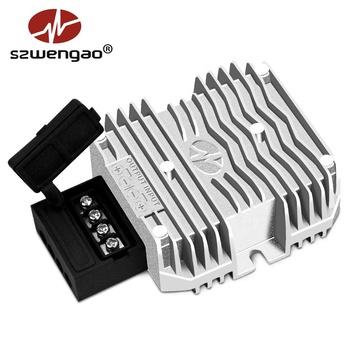
18–75V to 5V 20A Industrial Isolated Buck Module
- Input Range:18V–75V DC (Wide)
- Regulated Output:5.0V @ 20A (100W)
- Isolation:Galvanic Opto-Coupled
- Ingress Rating:IP68 Hermetic Resin
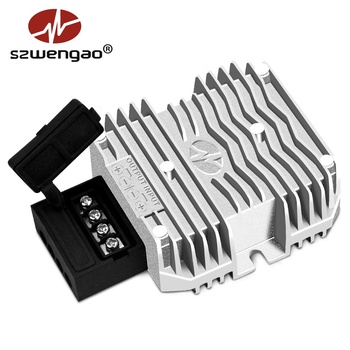
24V to 5V 20A High-Current Isolated USB Supply
- Input Voltage:18V–36V Nominal 24V
- Output Power:5V 20A Continuous
- Protection:OCP, OVP, Short-Circuit
- Cooling:Integrated Aluminum Fin
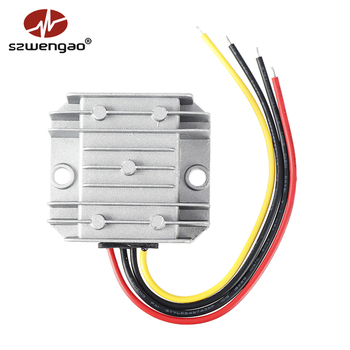
18–90V Ultra-Wide Input Step-Down Voltage Regulator
- Input Compatibility:24V / 36V / 48V / 72V
- Output Efficiency:Up to 94.5%
- Thermal Range:-40°C to +85°C
- Housing:Die-Cast Sealed Alloy

24V to 12V 85A/100A Heavy-Duty Fleet Buck Regulator
- Application:Trucks, Buses, Tap-Taps
- Output Power:1200W Maximum
- Surge Suppression:TVS Load-Dump Clamp
- Certificates:CE, RoHS, ISO 9001
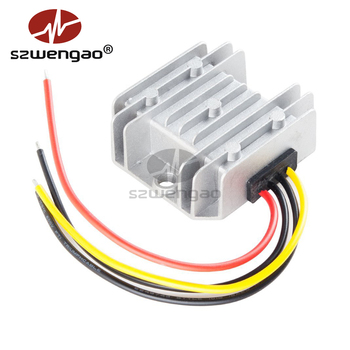
8–40V to 12V Car & Solar Battery Voltage Stabilizer
- Topology:Buck-Boost Automatic
- Operating Input:8V–40V Dynamic
- Regulation:±1% Output Precision
- Vibration:Anti-Shock Potted Base
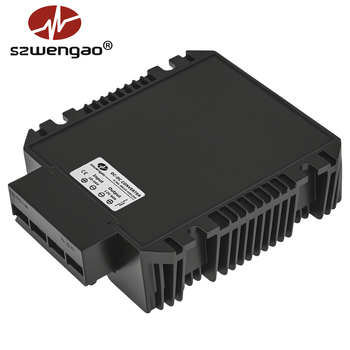
10–44V Multi-Source 720W High-Amperage Stabilizer
- Input Voltage:10V–44V DC
- Rated Output:12V @ 60A Max
- Efficiency:Synchronous MOS 95%
- Application:Micro-Grid Battery Buffer
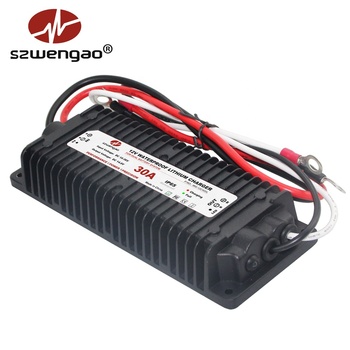
400W Waterproof DC-DC Dual Battery System Charger
- Charging Profile:Multi-Stage CC/CV
- Compatible:LiFePO4, AGM, GEL
- Alternator Safe:Built-In Soft-Start
- Enclosure:IP67 Submersible

Smart 36V Lithium Battery Charger 12V to 43.8V 13A
- Input Rating:12V DC Battery Input
- Charging Output:43.8V Constant 13A
- Target Use:Solar E-Bikes, EV Trikes
- Waterproofing:Full Epoxy Potting
The Physics of Step-Down Voltage Conversion in Haiti's Challenging Electrical Ecosystem
Across the Republic of Haiti—from the bustling commercial terminals of Port-au-Prince, Delmas, and Carrefour to the off-grid mountainous settlements of the Central Plateau and Grand'Anse—reliable electrical power remains an acute operational challenge. Because the national utility grid (EDH - Électricité d'Haïti) experiences chronic intermittency, residential, vehicular, and commercial infrastructures rely predominantly on 12V and 24V distributed battery banks energized by solar photovoltaic arrays, decentralized diesel gensets, and automotive alternators.
Within this off-grid reality, stepping down 12V or 24V direct current to a regulated 5V USB output is not merely a convenience for mobile phone charging; it is a critical lifeline for telecommunications, point-of-sale micro-transactions (MonCash, Natcash), GPS fleet tracking, LED emergency lighting, and humanitarian fieldwork. However, ordinary commercial-grade step-down regulators imported without rigorous industrial safeguards suffer catastrophic failure rates in Haiti. As an established China manufacturing leader, Shenzhen Eltrum Electronic Co., Ltd. has engineered a resilient family of DC-DC buck converters specifically optimized to survive the compounding environmental and electrical stresses of the Haitian market.
1. Mitigating Severe Voltage Swings and Load-Dump Spikes
In standard automotive theory, a 12V battery nominally operates between 12.6V and 14.4V, while a 24V commercial vehicle sits between 25.2V and 28.8V. In Haiti, however, battery banks are frequently subjected to deep-discharge cycles below 9.5V, alternating with aggressive overcharging by uncalibrated solar charge controllers exceeding 16.5V or 33V. Furthermore, in Haiti's iconic "Tap-Tap" public transit buses and rebuilt delivery trucks, loose starter terminals and failing alternator diodes generate violent inductive kickback voltages (load dump spikes) that peak between 65V and 110V for tens of milliseconds.
Eltrum's 12V/24V to 5V step-down converters integrate multi-stage transient voltage suppression (TVS) diodes, ultra-low ESR solid-state electrolytic capacitors, and high-voltage synchronous buck ICs with rated breakdown tolerances up to 40V, 60V, or 90V. When severe inductive spikes strike the input rail, our circuitry safely clamps the overvoltage, preventing destructive shoot-through that would otherwise fry connected USB smartphones, satellite radios, or biometric field tablets.
2. Synchronous Rectification vs. Archaic Diode Clamping
Legacy linear regulators (such as the LM7805 series) and obsolete asynchronous buck converters rely on Schottky diodes that dissipate significant heat during step-down conversion. When converting 24V down to 5V at a high current of 5A (25W delivered), a traditional diode or linear architecture can waste more than 30W to 95W as pure thermal heat. In Haiti's ambient tropical temperatures, which routinely exceed 35°C (95°F) with 85% relative humidity, such heat generation triggers rapid thermal runaway.
Shenzhen Eltrum Electronic utilizes advanced Synchronous Rectification MOSFET architectures. By replacing lossy freewheeling diodes with high-frequency, ultra-low RDS(on) N-channel power transistors driven by an intelligent PWM controller, our converters achieve electrical efficiencies exceeding 93% to 96%. Heat dissipation is reduced by more than 80%, allowing continuous full-amperage USB fast charging without thermal degradation.
3. Full Epoxy Potting & Maritime Salt-Mist Defense
Urban centers such as Saint-Marc, Les Cayes, and Gonaïves expose power electronics to airborne maritime saline mist combined with fine particulate dust from unpaved transit corridors. Unsealed circuit boards develop dendritic dendrite growth and electrolytic corrosion within months. Eltrum's step-down converters utilize automated vacuum-injection potting with thermally conductive polyurethane/epoxy elastomer meeting IP68 ingress protection. This monolithic encapsulation prevents moisture ingress, cushions surface-mount components against violent road vibration, and conducts internal heat evenly into the extruded aluminum heatsink casing.
Mission-Critical Use Cases Across Haiti's Industrial & Commercial Landscape
From mobile fleet electrification to municipal solar hubs, our step-down converters solve critical power distribution challenges across varied operating conditions.
"Tap-Tap" Public Transit & Intercity Buses
Haiti's vibrant customized buses and passenger pickups ("Tap-Taps") provide essential public transportation. Fleet owners install our dual and quad 12V/24V to 5V USB step-down converters in passenger compartments, offering premium onboard smartphone charging. The ruggedized TVS input protection easily withstands rough starts and poorly regulated 24V dual-battery alternator systems.
Off-Grid Solar Kiosks & MonCash Agents
Throughout provincial towns like Hinche and Jacmel, micro-entrepreneurs operate independent solar recharge booths. Fed by 12V or 24V solar lead-acid or LiFePO4 battery banks, our high-amperage 5V step-down converters power multi-port charging stations, barcode scanners, and wireless receipt printers essential for financial remittance transactions without voltage drops.
Motorcycle Taxi (Moto-Taxi) USB Hubs
Two-wheel moto-taxis navigate congested urban alleys across Carrefour and Cité Soleil. Drivers require uninterrupted 5V navigation power for mobile GPS apps. Eltrum's ultra-compact, fully potted buck regulators wire directly into 12V scooter magnetos and small starter batteries, withstanding extreme monsoonal downpours and engine heat.
Humanitarian Field Stations & NGOs
Disaster response teams, mobile medical clinics, and international organizations operating in remote departments require reliable power for satellite terminals, cold-chain temperature monitors, water filtration controllers, and diagnostic testing units powered from emergency 24V solar setups or vehicle auxiliary taps.
Telecom Cell Towers & Wireless ISP (WISP) Relays
Telecommunications operators (such as Digicel and Natcom) and regional microwave internet providers manage remote hill-top repeater sites powered by 24V or 48V battery systems. Our isolated step-down modules cleanly power 5V microcontrollers, environmental sensors, cooling fans, and security IP cameras without introducing RF ground loops.
Maritime Fishing Fleets & Coastal Transport
Small wooden and fiberglass cargo boats traversing the Gulf of Gonâve rely on 12V marine batteries to run navigation lanterns, GPS sounders, and marine radios. Eltrum's IP68 vacuum-potted step-down converters eliminate salt-air corrosion, delivering uninterrupted 5V USB output for crew communications and emergency distress positioning devices in heavy sea spray conditions.
Emerging Trends in Haiti's Low-Voltage DC Infrastructure (2025–2030)
Understanding shifting procurement dynamics in Port-au-Prince and northern industrial centers empowers importers, wholesale distributors, and fleet assemblers to source the most profitable and durable hardware. Three fundamental shifts are redefining the market:
1. The Rapid Transition from Lead-Acid to LiFePO4 Chemistry
Due to high ambient heat that degrades flooded and gel lead-acid batteries within 12 to 18 months, Haitian solar installers and fleet operators are aggressively transitioning to Lithium Iron Phosphate (LiFePO4) chemistry. While LiFePO4 batteries offer 3,000+ charge cycles, their discharge curve is extraordinarily flat (hovering around 12.8V–13.2V) before terminating abruptly. During charging, voltages reach 14.6V (or 29.2V for 24V banks). Step-down converters must handle these dynamic profiles without oscillating or dropping out when the battery management system (BMS) suddenly disconnects input power during protection trips.
2. USB Power Delivery (USB-PD) and Type-C Dominance
While standard 5V USB-A (1A and 2.1A) ports still represent a sizable segment of legacy replacement demand, consumer electronics across the Caribbean have rapidly converged on USB-C fast-charging protocols (QC 3.0, QC 4.0+, and USB-PD). Commercial kiosk operators in Haiti now demand dual-output modules: a robust 5V fixed bus alongside intelligent step-down protocols capable of negotiating 5V, 9V, and 12V profiles up to 30W–65W to fast-charge modern Android and iOS devices, portable power banks, and POS smart terminals.
3. Commercialization of Street-Level Mobile Charging Enterprises
In municipal markets such as Marché Salomon and Marché En Fer, phone charging has evolved into a lucrative micro-utility business. Operators no longer tolerate cheap consumer-grade car chargers that melt under 12 hours of continuous load. Sourcing directors are prioritizing industrial-grade step-down modules rated for 100% duty cycle at 50°C internal enclosure temperatures, fitted with terminal block connections or rugged aviation plugs rather than fragile automotive cigarette lighter springs.
Comparative Parameters: Standard vs. Haiti-Optimized Converters
Review the comprehensive electrical tolerances engineered into Shenzhen Eltrum Electronic's specialized product lines.
| Performance Metric | Generic Commercial Buck | Eltrum Industrial Potted Buck | Eltrum Isolated Telecom Series |
|---|---|---|---|
| Nominal Input Voltage | 12V or 24V Fixed | 12V / 24V Universal (9V–36V) | 18V–75V Ultra-Wide Dynamic |
| Transient Spike Tolerance | Clamps at < 35V (Blows fuses) | TVS Rated to 65V / 100ms | Galvanic Isolation 1500VDC / 1 min |
| Conversion Efficiency | 78% – 84% (High thermal loss) | 93% – 96% (Synchronous MOS) | 89% – 92% (High-Efficiency Core) |
| Thermal Operating Range | -10°C to +45°C | -40°C to +85°C (Full Derating Curve) | -40°C to +85°C Aluminum Shell |
| Enclosure & Seal | Vented Plastic (IP20) | Epoxy-Potted Die-Cast Alloy (IP68) | Hermetic Aluminum Extrusion (IP67) |
| Short-Circuit Protection | Hiccup mode or permanent burn | Continuous Auto-Recovery | Foldback Current Limiting |
| Salt-Mist & Dust Resistance | None (Corrosion within 90 days) | ASTM B117 Salt Spray Tested (96 hrs) | Full Conformal & Potted Layer |
| Recommended Haiti Application | Not recommended for tropical duty | Tap-Taps, Solar Kiosks, Moto-Taxis | Telecom Racks, Solar Microgrids |
Why Tier-1 Caribbean Importers Partner with Shenzhen Eltrum Electronic
Combining decade-long power design mastery with flexible volume manufacturing and direct B2B export support.
Dedicated R&D Since 2015
Founded in Shenzhen's electronics manufacturing hub, our facility houses specialized surface mount technology (SMT) lines, automated magnetics winding stations, and custom burn-in load chambers. We specialize in isolated DC-DC converters, heavy-duty buck/boost systems, and waterproof battery chargers built to stringent ISO 9001 standards.
100% Full-Load Burn-In Quality Control
Unlike trading brokers who conduct superficial batch testing, every single Eltrum step-down converter undergoes a rigorous 4-hour full-load thermal burn-in test before potting. We track output ripple, load regulation, and thermal equilibrium to guarantee a field defect rate under 0.18% across international shipments.
B2B Flexibility: Low Sample MOQ & Custom OEM
We empower distributor validation by offering a minimum order quantity (MOQ) from just 5 units on standard models. For OEM/ODM clients, our engineering team customizes input voltage windows, output voltages (e.g., 5.1V or 5.2V to compensate for long cable drops), custom wiring harnesses, and laser-etched buyer branding.
Frequently Asked Questions: Sourcing Step-Down Converters for Haiti
Direct answers from our senior power electronics engineering team addressing local logistics, technical sizing, and commercial terms.