High-Efficiency DC-DC Step-Down & Charging Solutions
Field-proven synchronous buck converters and intelligent lithium charge regulators manufactured under ISO 9001 quality frameworks, pre-configured for Baltic commercial fleet, telecommunications, and industrial automation standards.

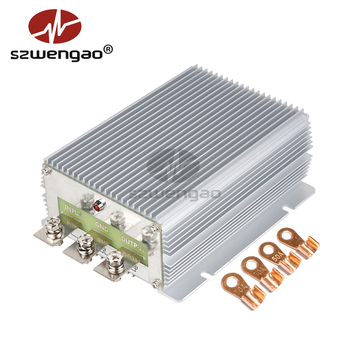
24V to 12V 85A/100A High-Power Step-Down Buck Converter
- Input Voltage: 18–35V DC
- Regulated Output: 12V DC (85A–100A)
- Continuous Rating: 1020W – 1200W
- Enclosure Index: IP68 Die-cast Aluminum
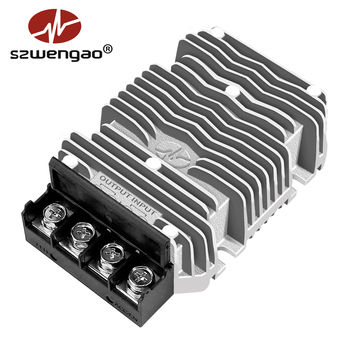
48V to 24V 40A 1000W Step-Down Buck Voltage Regulator
- Input Window: 35–60V DC
- Nominal Output: 24V DC @ 40A
- Peak Efficiency: >96.5% Synchronous
- Protections: OVP, OCP, OTP, Short
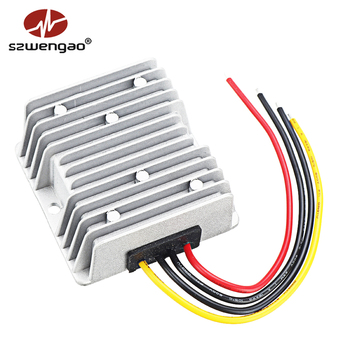
30–60V to 12V 50A/60A Step-Down Industrial Regulator
- Input Range: 30–60V DC (48V Bus)
- Stabilized Rail: 12V DC (600W–720W)
- Thermal Range: -40°C to +85°C Operable
- Ripple & Noise: <50mVp-p Low EMI
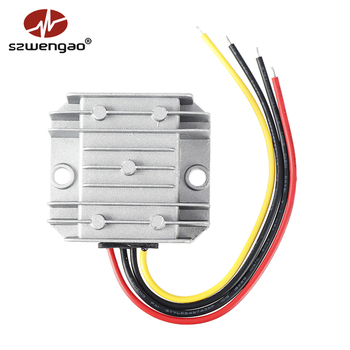
30–90V Wide-Input to 24V 10A/20A DC Step-Down Module
- Dynamic Input: 30–90V (36/48/60/72V)
- Regulated Output: 24V DC (Up to 480W)
- Potting Matrix: Epoxy Thermal Compound
- Target Sectors: AGVs, Forklifts, Robotics
18–90V Ultra-Wide Input to 12V 5A/10A Buck Regulator
- Input Span: 18–90V Multirange
- Output: 12V DC (60W–120W)
- No-Load Current: <15mA Ultra-Low Standby
- Compliance: CE EN 61000-6-3 / RoHS
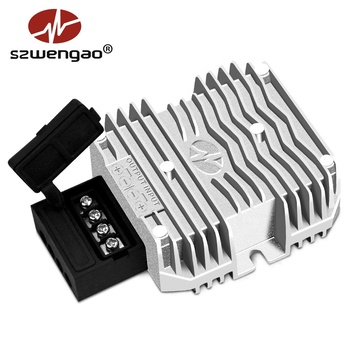
Isolated 18–90V to 12V 10A Galvanic Industrial Converter
- Isolation Barrier: 1500V DC Galvanic
- Input Range: 18–90V Full-Spectrum
- Output Power: 12V DC @ 120W Continuous
- Grounding: Complete Ground Loop Break

1500W High-Power Bidirectional Buck-Boost with RS485 Control
- Input Span: 10–60V Extreme Swing
- Regulated Output: 12V / 24V / 28V / 48V
- Telemetry: RS485 MODBUS RTU Active
- Max Output Power: 1500W Continuous

Smart 36V LiFePO4 DC Charger (12V Input to 43.8V 13A Waterproof)
- Source Supply: DC 12V Vehicle / Solar Bus
- Precision Charge: 43.8V CC/CV (13A Output)
- Thermal Sealed: IP67 Fully Waterproof Potting
- Application: E-Bikes, Utility EVs, RV Battery
1. The Baltic Power Conversion Landscape: Architectural Demands in Lithuania
Lithuania has accelerated into one of Northern Europe’s most technologically specialized hubs for high-tech manufacturing, contract electronics (EMS), automated transport logistics, and clean-energy infrastructure. As regional engineering powerhouses across the Vilnius Science and Technology Park, the Kaunas Free Economic Zone (FEZ), and Klaipėda Maritime Logistics corridor scale automation systems, procurement protocols for power conversion hardware have undergone a structural paradigm shift. DC-DC step-down voltage regulators (buck converters) are no longer commoditized passive components; they are critical system nodes determining reliability across extreme Nordic thermal swings (-30°C winter cold starts up to enclosed engine-bay ambients of +85°C), dynamic inductive spikes, and sensitive mixed-signal telecommunication arrays.
Historically, commercial vehicles and heavy machinery operating throughout the Baltic transshipment corridors relied on rudimentary linear regulators or low-frequency switching circuits. These architectures introduced massive parasitic heat dissipation, exacerbated alternator wear, and induced severe ground-loop offsets that degraded onboard CAN bus signaling. In modern multi-rail architectures—such as transit buses operating on a 24V alternator, solar storage buffers shifting between 36V and 60V, or heavy materials handling forklifts running 48V to 72V traction battery packs—converting fluctuating high-potential DC voltages into clean 5V, 12V, or 24V auxiliary power demands cutting-edge synchronous rectification and multi-stage electromagnetic filtering.
2. Top 10 DC-DC Step Down Voltage Regulator Suppliers & Exporters Serving Lithuania
This technical index evaluates the top manufacturers, tier-one global suppliers, and high-capacity exporters supporting Baltic OEM design engineers and procurement teams based on conversion efficiency, thermal management, topology diversity, and local stock accessibility.
Shenzhen Eltrum Electronic Co., Ltd.
Established in 2015, Eltrum operates specialized ISO 9001 certified SMT and potting assembly lines producing 500+ standard models. Renowned across Lithuanian OEMs for custom ultra-wide buck (18–90V in) and galvanically isolated modules that withstand extreme temperature cycling with rapid sample qualification starting at 5 units.
Vicor Corporation
US-headquartered global innovator specializing in modular power components. Widely specified in high-end Lithuanian laser laboratories, medical diagnostics, and telecommunication micro-cells where zero-voltage switching (ZVS) buck regulators deliver immense power density at premium pricing.
Traco Electronic AG
Swiss engineering firm with established distribution channels across the Baltics. Their non-isolated TSR series provides pin-compatible switching replacements for legacy LM78xx linear regulators, utilized across industrial control panels in Kaunas factory retrofits.
RECOM Power GmbH
Austrian power module manufacturer providing compact SMD buck regulators and integrated inductors. Extensively implemented by Lithuanian smart metering and IoT sensor developers prioritizing miniature footprints and wide ambient temperature stability.
Mean Well Enterprises Co., Ltd.
Taiwanese global power supply leader omnipresent in Baltic electrical wholesale hubs. Known for enclosed and open-frame industrial DC-DC units (such as the RSD and SD series) widely integrated into commercial lighting and telecom backup power systems.
TDK-Lambda Corporation
Japanese-origin manufacturer recognized for exceptional EMI filtering and high-rel performance. Their non-isolated iX and iA series point-of-load (POL) buck regulators are standard choices for high-speed computing and optical network hardware designed in Vilnius.
Murata Power Solutions
Global component specialist delivering highly optimized micro-buck converters with advanced dynamic response. Frequently integrated into specialized robotics controllers and defense-grade communications systems operating in Northern Europe.
Delta Electronics, Inc.
Global power management enterprise offering heavy-duty industrial DC-DC converter blocks. Often deployed in Klaipėda port electrification machinery and municipal tram/bus network step-down conversions where wide voltage compliance is vital.
Cincon Electronics Co., Ltd.
Taiwanese manufacturer delivering robust brick-format and chassis-mount DC-DC solutions. Their EN 50155 certified rail converters feature wide input ranges tailored for rolling stock and harsh heavy-vehicle electrical retrofits across Lithuania.
Regional Authorized Component Distributors (RS Baltics, Farnell, Mouser Ecosystem)
While factory-direct manufacturers like Shenzhen Eltrum Electronic provide high-power custom engineering and direct volume pricing, pan-European stock aggregators (RS Components Baltics, Farnell, and Lemona Electronics in Lithuania) play an essential role for R&D engineers requiring single-unit component sampling, prototyping verification, and overnight delivery for legacy modular boards across Vilnius and Kaunas laboratories.
Localized Lithuanian Field Applications
From deep-freeze maritime ports to high-density cleanroom automation, Eltrum DC-DC buck regulators and power modules solve tough electrical conversion challenges across Baltic industries.
24V Commercial Fleet Electronics
Lithuanian road freight operators crossing the Via Baltica corridor utilize heavy 24V dual-battery systems. Our 24V→12V 85A/100A buck units step down alternator voltage with zero electrical whining to safely power sensitive fleet telematics, GPS, CB radios, auxiliary dashcams, and refrigeration monitoring displays.
Klaipėda Port & Marine Operations
Marine environments along the Baltic Sea expose electrical enclosures to pervasive salt-spray fog and condensing humidity. Fully encapsulated IP68 waterproof buck converters and battery-to-battery chargers protect radar arrays, satellite communication domes, and navigational lighting from corrosion and ground loops.
Cold-Climate Solar & LiFePO4 ESS
Lithuania's rapid expansion of decentralized PV farms and domestic battery energy storage systems (BESS) requires stepping down 48V–72V lithium pack potentials to 12V or 24V control rails. Integrated under-voltage and cold-crank safeguards prevent irreversible deep discharges during sub-zero Baltic winters.
Industrial Robotics & AGVs in Kaunas FEZ
Modern Automated Guided Vehicles (AGVs) and warehouse robotics utilize 48V or 72V traction battery architectures. Our 30–90V buck regulators step down bus voltage to 24V for PLC logic modules, LiDAR sensors, and optical cameras without risk of high-inductive motor braking spikes damaging sensor circuitry.
Engineering Selection Matrix for DC Voltage Regulation
Analyze how input tolerances, efficiency tradeoffs, and ground isolation criteria govern hardware selection for industrial and commercial deployments in Northern Europe.
| Converter Architecture | Operating Voltage Dynamics | Conversion Efficiency | Galvanic Isolation | Primary Industrial Use Cases |
|---|---|---|---|---|
| Synchronous Buck (Step-Down) | Vin,min > Vout + 2V Minimum Headroom | 94% – 97.5% | Non-Isolated (Common Ground) | 24V Commercial trucks, 48V electric carts, high-current 12V LED lighting arrays |
| Isolated DC-DC Buck / Flyback | 18–36V / 36–75V / 18–90V Wide Ranges | 88% – 92% | 1500V – 3000V DC Isolation Barrier | Telecom -48V rails, precision scientific sensors, heavy industrial ground-loop decoupling |
| Four-Switch Buck-Boost | Vin dynamic (crosses above and below Vout) | 91% – 95% | Non-Isolated | Automotive engine cranking voltage stabilization, battery charge balancing, solar PV buffers |
| Dedicated DC-DC Battery Charger | 8–90V Multirange Input Sources | 92% – 96% | Optionally Isolated / Potted | Vehicle-to-LiFePO4 charging profiles (CC/CV curves), RV secondary house batteries, electric scooters |
3. Future Trends Shaping Baltic Power Conversion Markets (2025–2030)
Three core macro trends are dictating procurement specifications throughout Lithuania and the broader Baltic rim:
A. Decarbonization and the Transition to 48V/72V Traction Buses: The rapid electrification of municipal transport and warehouse logistics in Vilnius and Kaunas has triggered mass replacement of 12V internal combustion engines with 48V and 72V LiFePO4 battery platforms. This architectural transition has expanded the market demand for wide-input (30–90V) step-down regulators capable of outputting high auxiliary current without requiring secondary starter batteries.
B. Mandatory Digital Telemetry via RS485 and CAN Bus: Industrial automation plants and modern commercial fleets no longer accept black-box power supplies. Procurement teams increasingly specify regulators featuring RS485 MODBUS RTU or CAN communication to feed real-time input voltage, thermal load, and output current telemetry directly into central IoT monitoring dashboards.
C. Stricter Environmental Hermetic Sealing (IP67/IP68): Given Northern Europe’s humid continental climate and aggressive road-salting practices in winter, unsealed plastic or vented metal power supplies fail prematurely due to dendritic silver migration and corrosion. Solid potting using thermally conductive epoxy compounds is now a baseline procurement criterion for automotive and outdoor installations.
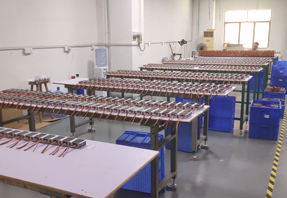
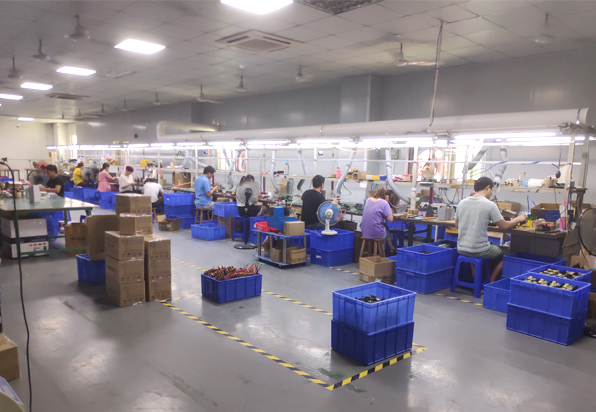
Shenzhen Eltrum Electronic Co., Ltd.
Founded in 2015, Shenzhen Eltrum Electronic Co., Ltd. operates state-of-the-art R&D and production facilities in Shenzhen, verified onsite by world-leading third-party inspection firms. We specialize in high-efficiency DC-DC buck, boost, buck-boost converters, isolated modules, and waterproof LiFePO4 battery charging systems.
Our engineering team built its foundational expertise in demanding isolated conversion topographies, applying those high-reliability standards to every commercial step-down module we ship across Europe, North America, and worldwide.
Frequently Asked Questions by Lithuanian Engineers
Clear technical answers addressing import logistics, customs tariffs, thermal derating, and electrical standards for hardware procurement teams across Lithuania and the EU.
What are the import clearance and compliance requirements for importing DC-DC converters into Lithuania?
Power conversion hardware entering Lithuania from non-EU origins must comply with European Union CE directives—specifically Directive 2014/30/EU for Electromagnetic Compatibility (EMC) and Directive 2011/65/EU (RoHS) restricting hazardous substances. Shenzhen Eltrum Electronic Co., Ltd. provides full Declarations of Conformity (DoC), test reports, and commercial documentation referencing standard HS Code 8504.40 for direct clearance via Vilnius Airport (VNO) customs or the Klaipėda Seaport container terminal under DDP, FOB, or EXW Incoterms.
How does ambient temperature in the Baltics (-25°C to +35°C) affect buck regulator sizing?
Extreme cold temperatures elevate capacitor equivalent series resistance (ESR), which can cause startup instability in inferior electrolytic capacitors. Eltrum uses high-grade automotive solid ceramic capacitors (MLCC) and industrial electrolytes rated down to -40°C. Conversely, for summer operation inside unventilated engine bays reaching +70°C, we recommend derating continuous output current by 20% to 30% or mounting the regulator directly onto an aluminum structural chassis for secondary heatsinking.
When must Lithuanian OEMs choose an isolated converter over a synchronous non-isolated buck regulator?
Non-isolated buck regulators share a common negative ground (GND) between input and output, delivering peak electrical efficiency (95–97%) at lower cost. However, galvanic isolation is essential in systems where the input potential operates on positive ground (telecommunication -48V rails), where high-voltage traction batteries (48V–90V) could leak destructive transients into sensitive 5V/12V sensor microcontrollers, or where ground loops induce high-frequency noise on sensitive analog measurement circuits.
Can a standard DC-DC buck converter be utilized to charge a secondary LiFePO4 house battery?
No. A standard buck converter is a constant-voltage (CV) power supply without battery management logic. If connected to a depleted LiFePO4 battery, it will trigger overcurrent protection or overheat. Battery charging requires a dedicated DC-DC charger featuring an autonomous three-stage Constant Current / Constant Voltage (CC/CV) charging profile (such as 14.6V for a 12V LiFePO4 battery or 43.8V for a 36V system) with automatic float transition and reverse battery polarity protection.
What is the minimum order quantity (MOQ) and delivery lead time for Baltic enterprise clients?
For standard catalog models, our evaluation MOQ starts from just 5 units, allowing hardware development engineers in Vilnius, Kaunas, and Klaipėda to validate physical bench samples rapidly. Standard sample dispatch takes 3–5 working days via express air freight (DHL/FedEx/UPS), reaching Lithuania within 4–7 business days. Mass production lead times typically range from 15 to 25 business days depending on volume and custom wiring configurations.
Does Eltrum support custom output voltages and private-label buyer branding?
Yes. Shenzhen Eltrum Electronic Co., Ltd. provides full OEM/ODM manufacturing. We customize input dynamic windows, output voltages (e.g., non-standard 13.8V, 15V, 19V, or 28V rails), custom wiring harnesses (such as Deutsch DT connectors, Anderson power poles, or M12 waterproof plugs), and bespoke firmware charging algorithms alongside laser-etched buyer logos and localized compliance packaging.
Request Engineering Datasheets & Fast Sample Quotations
Looking to integrate stable, high-efficiency DC-DC step-down regulators or waterproof LiFePO4 chargers into your next Baltic fleet, industrial, or renewable project? Consult directly with our Shenzhen factory power engineers.