Hot Model

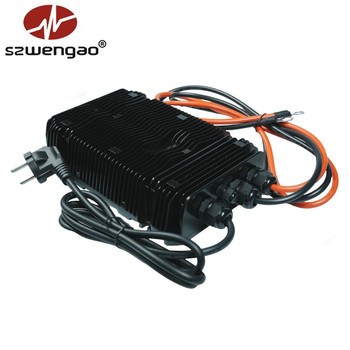
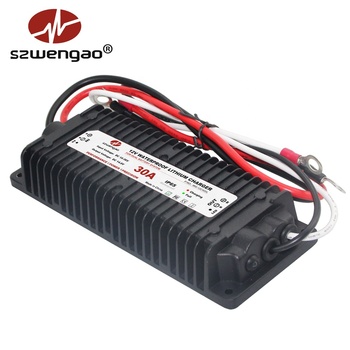
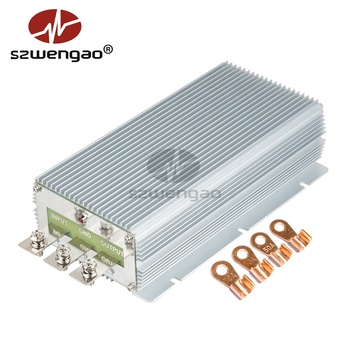
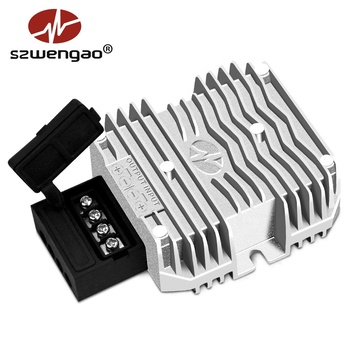
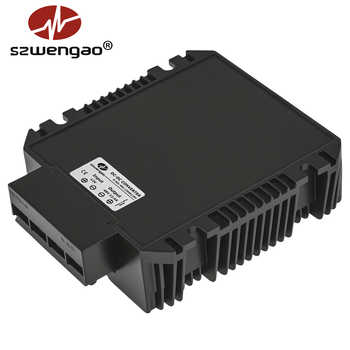
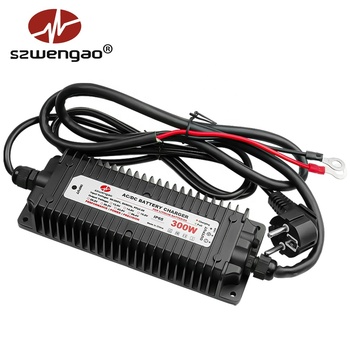
Smart 36V Lithium Battery Charger DC 12V to 43.8V 13A
- TopologyBoost DC-DC / CC-CV
- Input VoltageDC 12V Nominal
- Output Regulation43.8V / 13A Continuous
- Ingress RatingIP67 Waterproof Potted
Precision-built power electronics designed for dual-battery automotive fleets, marine hybrid systems, and bidirectional energy storage architectures operating across the Kansai grid network.

As Kyoto advances its legally binding mandate to achieve carbon neutrality by 2050 under the Kyoto City Global Warming Prevention Ordinance, the localized requirement for cutting-edge bidirectional battery chargers and regenerative DC-DC conversion hardware has reached unprecedented demand. Unlike standard unidirectional chargers, bidirectional topologies enable dual-quadrant energy flows: charging high-capacity energy storage systems (ESS) or electric vehicles (EV) from grid or renewable DC buses, and instantaneously reversing the flow back to stabilize the Kansai Electric Power Company (KEPCO) distribution grid or supply local critical infrastructure during peak grid disturbances.
Engineers and procurement teams in Kyoto’s industrial corridors—such as the Keihanna Science City (Kansai Science City) research clusters, Minami-ku precision manufacturing hubs, and Fushimi logistical centres—are navigating strict regulatory frameworks, notably the JET (Japan Electrical Safety & Environment Technology Laboratories) certification, PSE Mark standards under the Electrical Appliance and Material Safety Law (DENAN), and harmonic suppression guidelines conforming to IEC 61000-3-2. Bidirectional battery chargers serve as the critical hardware interface allowing vehicle-to-grid (V2G), vehicle-to-building (V2B), and distributed renewable microgrids to maintain power equilibrium without degrading sensitive battery chemistries like Lithium Iron Phosphate (LiFePO4) or Lithium Nickel Manganese Cobalt Oxide (NMC).
Utilizing high-frequency galvanic transformers flanked by primary and secondary H-bridge switching arrays. DAB enables seamless zero-voltage switching (ZVS) across varying voltage differentials, optimizing round-trip efficiency above 96.5% during rapid charge-to-discharge reversals.
Silicon Carbide (SiC) MOSFET implementations drastically cut switching and conduction thermal losses under high ambient temperatures. This is vital for enclosed compact housings deployed in Kyoto’s historic architectural retrofits where external mechanical ventilation is prohibited.
Equipped with phase-locked loop (PLL) firmware and sub-20ms transfer switches, chargers synchronize bidirectional energy discharge precisely to the Japanese 60Hz Western grid frequency, eliminating reactive current slumps and voltage sag across localized substation branches.
The following comparative index profiles leading international manufacturers and regional industrial suppliers engineering high-reliability bidirectional power converters, DC-DC stabilizers, and multi-chemistry LiFePO4 battery chargers compatible with Japanese technical standards and Kyoto municipal grid compliance.
| Manufacturer / Brand | Core Conversion Topologies | Power Output Range | Standard Compliances | Primary Application Focus in Kansai |
|---|---|---|---|---|
| Shenzhen Eltrum Electronic Co., Ltd. | Bidirectional Buck-Boost, Isolated DC-DC, CC/CV LiFePO4 | 300W – 1500W Modules (Scalable) | ISO 9001, CE, RoHS, Custom PSE Ready | AGVs, Robotics, Smart Fleet EV, Marine Hybrid, Custom OEM |
| Nichicon Corporation | V2H / V2G Tribrid Inverters, High-Voltage Bidirectional | 3.0kW – 9.9kW Systems | JET, PSE, CHAdeMO Standard | Kyoto Residential Microgrids, Commercial Emergency Power |
| Omron Social Solutions | Multi-String Bidirectional DC-DC Converters | 5.5kW – 10kW Integrated | JET, ECHONET Lite, JIS C 8955 | Regional Commercial Facilities, Factory ESS Interconnection |
| TDK-Lambda Corporation | High-Density Isolated Bidirectional DC-DC Modules | 500W – 11kW Rack Mount | UL62368-1, EN55032, PSE | Semiconductor Testing Equipment, Medical Automation Racks |
| GS Yuasa Corporation | Traction-Level Regenerative Chargers & Rectifiers | 10kW – 100kW+ Industrial | JIS Standards, ISO 14001, JET | Municipal Light Rail, Heavy Industrial Battery Charging |
| Delta Electronics Japan | Bi-directional V2X EV Chargers, Smart ESS Converters | 6kW – 22kW Fast DC | CHAdeMO, JET, CE, UL | Public Charging Hubs, Smart City Decarbonization Pilots |
| Panasonic Industry | Compact Bidirectional Battery Charge Regulators | 1kW – 5kW In-Cabinet | PSE, IEC 62109-1/-2 | Modular Building Automation, Telecommunications Buffering |
| Kyocera Corporation | Solid-State DC Coupled Storage Inverters | 3.2kW – 12kW Hybrid | JET, PSE, JIS Certified | Solar PV Peak Shaving in Traditional Kyoto Machiya Districts |
| Diamond Electric Mfg. Co., Ltd. | Ultra-Compact Vehicle-Integrated Bidirectional On-Board (OBC) | 3.3kW – 6.6kW Automotive | AEC-Q100, ISO 26262 ASIL-B | Next-Gen Light Commercial EVs, Delivery Fleet Platforms |
| Shindengen Electric Mfg. | Synchronous Rectification EV/HEV Power Converters | 1.5kW – 7.2kW Modular | ISO/TS 16949, PSE, DENAN | Material Handling Equipment, Forklifts, Off-Grid Logistics |
Deploying energy conversion technology within Kyoto requires adhering to strict architectural protection laws (Keikan-ho), dense historic urban landscapes, and specific seismic stability criteria. High-efficiency, low-noise bidirectional converters solve distinct municipal challenges:
Historic wooden townhouses (Kyo-machiya) cannot accommodate bulky, noisy transformers due to fire risk and vibration constraints. Compact, IP67-potted, fanless DC-DC chargers enable discreet lithium battery storage integration that back-feeds interior AC networks during blackouts without disturbing architectural aesthetics.
Automated Guided Vehicles (AGVs) and Autonomous Mobile Robots (AMRs) operating in Keihanna logistics corridors use isolated buck-boost bidirectional units. During deceleration, dynamic regenerative braking current charges onboard LiFePO4 packs; during fleet docking, the same unit facilitates rapid replenishment.
Electric tourist vessels operating along regional waterways mandate zero liquid leakage and silent operation. Waterproof 400W–1000W DC chargers protect marine house banks, stepping down 48V propulsion buses to 12V navigational equipment with absolute galvanic separation.
1. Convergence on ECHONET Lite and RS485 Fieldbus Protocols: Municipal smart-grid integration across Kyoto requires edge-level power electronics to communicate bidirectionally with Home Energy Management Systems (HEMS) and Factory Energy Management Systems (FEMS). Converters equipped with isolated RS485 Modbus RTU or CAN 2.0B interfaces are dominating institutional tender specifications, displacing closed, non-monitored hardware.
2. Transition to Solid-State LiFePO4 Multi-Stage Algorithms: Lead-acid chemistries have been virtually phased out of tier-one municipal procurements. Power converters must deliver adaptive CC/CV profiles capable of cold-temperature charging down to -10°C, a common ambient challenge in northern Kyoto mountain basins (Tamba and Tango regions).
3. Extreme High-Frequency Magnetic Integration: As spatial real estate across Kyoto commercial centers commands a premium, power density must exceed 1.8W/cm³. This is achieved by utilizing planar transformer windings and ferrite composite cores operating at 200kHz–500kHz switching frequencies, slashing enclosure mass by up to 45%.
Established in 2015, Shenzhen Eltrum Electronic Co., Ltd. operates modern production facilities verified onsite by international inspection agencies. Specializing in buck, boost, buck-boost, isolated DC-DC converters, and multi-stage waterproof battery chargers, Eltrum combines agile Chinese hardware innovation with rigorous quality management compliant with ISO 9001, CE, and RoHS standards.
Modify charging curves, customize input rails (up to 90V), incorporate RS485 communication protocols, or design custom extruded IP68 enclosures tailored to Japanese mechanical housing dimensions.
Every production batch undergoes 100% full-load burn-in testing, high-voltage withstand checks, and thermal imaging scans to ensure zero field infant mortality across mission-critical dual-battery installations.
Standard evaluation units ship with an industry-low minimum order quantity of just 5 units, allowing test bench validation and field trials before procurement teams commit to volume production schedules.
Provide your input voltage parameters, target charging profiles, environmental requirements, and volume forecasts for rapid quotation and custom technical review.