Premier DC-DC & Battery-to-Battery RV Power Systems
Industrial-grade, multi-stage CC/CV converters engineered specifically for custom camper vans, mobile expedition rigs, food trucks, and off-grid utility platforms operating under high-temperature Philippine environments.

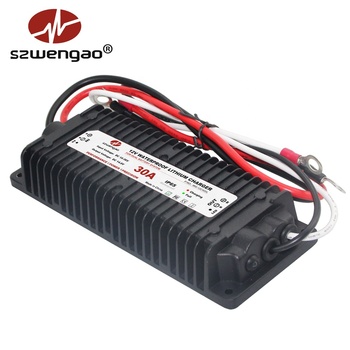

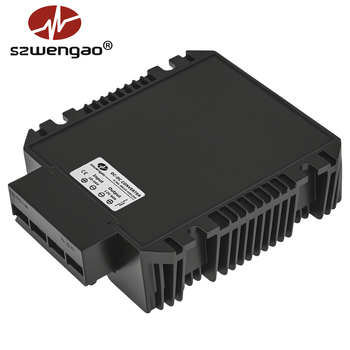
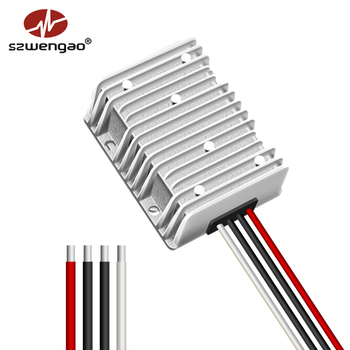
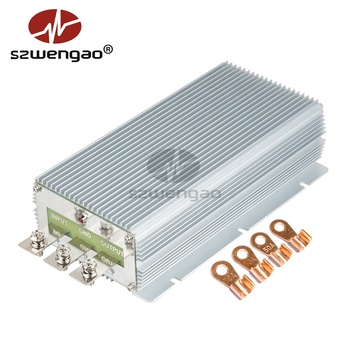
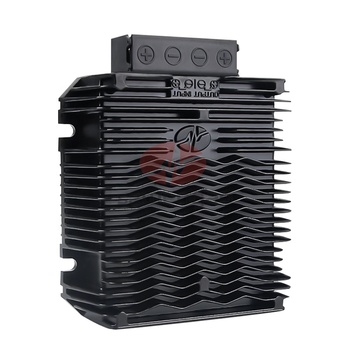
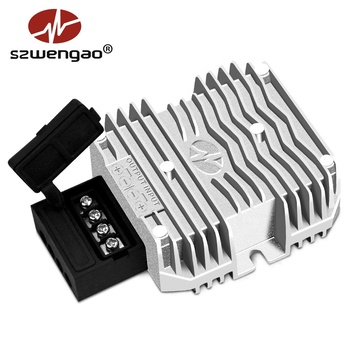
Navigating Auxiliary DC Power in Quezon City & the Greater Metro Manila Corridor
Quezon City has cemented itself as the industrial heart and central logistics node of recreational vehicle (RV) manufacturing, overland camper fabrication, and specialized commercial mobile conversions in the National Capital Region (NCR). From specialized fabrication workshops clustered around Novaliches, Fairview, and along the Commonwealth Avenue axis to bespoke boutique outfitters in New Manila and Diliman, the demand for sophisticated auxiliary power systems is expanding exponentially. At the absolute core of this modern off-grid electrical architecture lies the battery-to-battery (B2B) DC-DC charger.
Historically, overland builders in the Philippines relied upon basic mechanical continuous-duty solenoids or voltage-sensitive split-charge relays (VSRs). These primitive devices mechanically tied the starter battery to the auxiliary house bank while the engine was running. However, the modernization of vehicle platforms—notably the dominance of Euro 4, Euro 5, and Euro 6 compliant turbo-diesel platforms like the Toyota Hilux, Toyota Fortuner, Isuzu D-Max, Ford Ranger, Mitsubishi Strada, and Nissan Navara—has completely rendered passive relay systems obsolete. Modern internal combustion vehicles across Metro Manila are standardly fitted with variable-voltage smart alternators managed by Engine Control Units (ECUs). In dense Quezon City stop-and-go traffic along EDSA, Quezon Avenue, or Mindanao Avenue, the ECU proactively modulates alternator output from as low as 12.2V up to 14.8V based purely on regenerative braking requirements, engine load, and emissions mandates. Under such dynamic voltage swings, passive relays fail to push current into auxiliary batteries, frequently causing partial state-of-charge (PSOC) failure.
Furthermore, the systemic shift from heavy, low-density deep-cycle flooded lead-acid and AGM batteries toward Lithium Iron Phosphate (LiFePO4) chemistries demands uncompromising voltage and current regulation. A depleted 12V 200Ah LiFePO4 battery pack exhibits virtually non-existent internal impedance; if connected directly to an alternator via a standard relay, it will demand upwards of 120A to 160A continuously. Standard vehicle alternators are air-cooled and rated for high-output only at highway cruising RPM. In tropical Quezon City temperatures—where ambient engine bay temperatures regularly exceed 75°C to 90°C during prolonged urban congestion—unregulated current draw triggers catastrophic stator burnout and diode-plate melting. A micro-controller-driven B2B DC-DC charger solves this vulnerability entirely by acting as a galvanic or synchronous buck-boost current firewall, pulling an engineered current threshold from the starter circuit while synthesizing a surgically precise three-stage CC/CV profile (Bulk, Absorption, and Float) that ensures 100% capacity replenishment without thermal distress.
Top 10 Battery to Battery Charger Suppliers for the Quezon City Market
Selecting an auxiliary power vendor requires evaluating production scalability, conversion topologies, casing environmental ratings, customization latitude, and localized supply chain viability. Below is an exhaustive comparative engineering review of the top 10 suppliers serving fleet builders, system integrators, and RV fabricators across Quezon City and the Philippines.
| Rank / Supplier | Primary Topology | Input Voltage Window | Thermal & Ingress Rating | OEM Customization | QC Market Suitability |
|---|---|---|---|---|---|
| 1 Eltrum Electronic (Shenzhen) | Buck, Boost, Buck-Boost, Isolated | 8V – 90V Ultra-Wide | IP67 / IP68 Fully Encapsulated | High (Custom curves, RS485, private label) | Highest: Direct factory supplier, tropicalized potting, 5 pcs MOQ |
| 2 Victron Energy | Isolated & Non-Isolated Buck-Boost | 10V – 35V | IP43 (Enclosed Terminal IP22) | Low (Standard catalog only) | High: Premium brand cachet, high hardware cost, limited high-temp rating |
| 3 REDARC Electronics | Dual-Input DC-DC MPPT Hybrid | 9V – 32V | IP67 Sealed Casing | None (Proprietary locked firmware) | High: Ruggedized, extremely premium consumer price-point |
| 4 Renogy Power | Standard Buck-Boost B2B | 12V / 24V Dual-Platform | IP20 (Open Fan Cooled) | None (Retail focused) | Moderate: Susceptible to tropical humidity and dust ingress in unsealed areas |
| 5 Enerdrive (Dometic) | Multi-Stage DC2DC Charger | 10V – 32V | IP22 Chassis | Minimal (Corporate channel) | Moderate: Favored by Australian chassis imports, limited local B2B stock |
| 6 Sterling Power | Buck-Boost High-Current B2B | 11V – 30V | IP21 Open Fan Ventilated | Moderate (Custom presets available) | Moderate: Large physical footprint, fan noise noticeable in compact vans |
| 7 Projecta (Brown & Watson) | Multi-Chemistry DC-DC | 9V – 32V | IP67 Under-Hood Rated | None (Distribution only) | Moderate-High: Reliable 4WD target, imported via regional dealers |
| 8 CTEK Power | Buck-Boost Dual Source | 11.5V – 23V | IP65 Sealed Housing | None (Off-the-shelf) | Moderate: Limited to 20A outputs, undersized for 200Ah+ LiFePO4 banks |
| 9 TBB Power | Bi-Directional Smart B2B | 10.5V – 32V | IP20 Anodized Body | Moderate (OEM contracts) | Moderate: Good bus conversion logic, requires secondary IP enclosure |
| 10 Interline Manila Import Hubs | Generic Mixed Buck-Boost | 10V – 30V Standard | Mixed (Unverified) | Low (Broker dependent) | Variable: Low purchase cost, volatile batch reliability and zero warranty trail |
For system integrators, fleet managers, and upfitters based in Metro Manila, the comparison above illuminates a distinct engineering trade-off. While tier-one retail consumer brands deliver off-the-shelf convenience, they carry exorbitant markups (often exceeding 300% above production cost) and rely on open-frame, fan-cooled enclosures rated merely at IP20 to IP43. In the hyper-humid, dust-laden, and thermally unforgiving environment of the Philippines, forced-air cooling fans actively suck moisture, salt air, and airborne particulate into the PCB traces, provoking dendrite corrosion and thermal switch failure within 12 to 24 months. Shenzhen Eltrum Electronic bridges this critical market gap by delivering direct factory-level engineering, full thermal potting encapsulation (IP67/IP68), military-grade shock tolerance, and accessible minimum order quantities for Philippine B2B upfitters.
Localized Application Scenarios in Quezon City & NCR
From torrential monsoon flash floods to crushing tropical heat corridors, mobile electrical equipment deployed across the Philippine capital must conquer extreme mechanical and environmental vectors.
Monsoon Resilience & Flood Prone Chassis Mounting
Quezon City's low-lying drainage basins—such as areas surrounding Araneta Avenue, Talayan Village, and North Fairview—are notorious for sudden flash urban flooding during southwest monsoon (Habagat) events and super typhoons. Auxiliary chargers installed under the chassis, behind bumper covers, or inside low-set auxiliary battery boxes on converted Toyota HiAce vans and Mitsubishi L300 mobile business rigs must endure total temporary submersion. Eltrum's vacuum-potted polyurethane resin sealing ensures that internal MOSFETs, planar transformers, and logic controllers operate with zero moisture intrusion even when exposed to flooded street wading depths.
Thermal Derating During EDSA Idle Gridlock
A vehicle idling in dead-stop traffic along EDSA for three consecutive hours under 36°C ambient heat experiences radiant pavement temperatures exceeding 50°C and engine bay temperatures reaching 85°C. Under these conditions, lower-tier DC-DC chargers aggressively cut their charging current by 60% to 80% to protect their circuitry, leaving house batteries virtually untouched. Eltrum designs its buck-boost topologies with ultra-low Rds(on) power MOSFETs and oversized aluminum dissipation heatsinks, guaranteeing full-rated CC current delivery across ambient operating temperatures up to 65°C without premature thermal throttling.
Mobile Coffee & Food Truck Electrification
The entrepreneurial explosion of mobile coffee concepts, artisanal mobile food kitchens, and mobile veterinary clinics across Diliman, Maginhawa Street, and Tomas Morato has ignited massive demand for high-capacity 24V and 48V power banks. Standard commercial vehicles utilized for these conversions run 12V alternators. Installing Eltrum's 12V to 24V or 12V to 48V boost chargers allows mobile vendors to charge massive 5kWh to 10kWh house banks while en route between commissary hubs and trading locations, completely eliminating noisy, fume-emitting, and locally prohibited gas generators.
Emerging Power System Trends Across the Metro Manila Market
The rapid transformation of the Philippine leisure vehicle and commercial transport market is underpinned by three foundational macroeconomic shifts that are fundamentally altering component procurement:
1. The High-Voltage Bus Migration (12V to 24V/48V): Modern overland campers built on platforms such as the Fuso Canter 4x4, Isuzu NPR, and Ford Transit are breaking free from traditional 12V house systems. Modern travelers demand domestic comfort: 12,000 BTU inverter air conditioners, induction cooktops, espresso machines, and Starlink satellite terminals. Operating high-wattage inverters from a 12V bank produces massive current draws (e.g., 3000W at 12V demands >280A DC), requiring impractically thick, heavy, and costly copper cabling. By migrating house systems to 24V or 48V, system amperage drops by half or three-quarters. This evolution mandates dual-direction, high-efficiency boost B2B chargers that step up a standard 12V vehicle alternator rail to 29.2V or 58.4V LiFePO4 charging profiles.
2. Telematics & RS485 Modbus RTU Digital Integration: Commercial fleet operators across Quezon City managing refrigerated mobile pharmaceutical vans, telecommunication broadcast vehicles, and mobile emergency command units now mandate live remote telemetry. Simple "dumb" chargers with analog LED indicators are rapidly being phased out. Fleet managers require bidirectional communication over RS485 Modbus RTU protocols to stream input voltage, charge current, MOSFET operating temperature, and cumulative energy output straight into IoT vehicle telematics gateways. Eltrum's WG-12C800M and high-power series come factory-enabled with RS485 integration, enabling direct interfacing with vehicle central touchscreens and cloud monitoring dashboards.
3. Hybrid Charging Topology (Combined Alternator + Rooftop Solar): Space on an overland van's roof is severely constrained by recovery boards, roof decks, rooftop tents, and air conditioning units. As a result, Philippine campers rarely fit more than 300W to 500W of solar PV. Under heavy monsoon cloud cover or dense tropical tree canopies in northern Luzon camping destinations (such as Sagada, Benguet, or Baler), solar harvest can plummet to near zero. A robust 40A to 60A B2B charger ensures that just two to three hours of driving completely restores a 200Ah to 300Ah battery bank, providing total electrical autonomy irrespective of weather disruptions.
Quezon City B2B Procurement FAQ: Technical Clarifications
Clear, engineering-backed answers addressing the most common technical questions encountered by vehicle upfitters, fabricators, and equipment buyers in the NCR region.
Shenzhen Eltrum Electronic Co., Ltd. — Your Direct OEM/ODM Manufacturing Partner
Since 2015, Shenzhen Eltrum Electronic Co., Ltd. has stood at the cutting edge of industrial power conversion technology, manufacturing high-reliability DC-DC converters, battery charging systems, AC-DC power supplies, and high-power voltage stabilizers. Operating out of our certified production facility in the Hangcheng industrial corridor of Shenzhen, our engineering team manages an expansive catalog of more than 500 standard models deployed across alternative energy installations, marine vessels, commercial vehicle platforms, telecommunication towers, robotics, and medical mobile suites worldwide.
Unlike trading entities, drop-shippers, or retail resellers, Eltrum operates complete in-house Surface Mount Technology (SMT) production lines, automatic magnetics winding systems, specialized potting encapsulation vacuum chambers, and comprehensive full-load dynamic burn-in testing benches. Every power unit leaving our floor is manufactured strictly under rigorous ISO 9001 quality management procedures and conforms to CE and RoHS regulatory benchmarks.
For custom conversion shops, fleet bodybuilders, and electrical distributors across Quezon City, Pasig, Caloocan, and the broader Philippine market, Eltrum represents a uniquely accessible manufacturing partner. We recognize that specialized vehicle engineering requires flexibility; thus, we offer ultra-low sample evaluation minimum order quantities (MOQs starting from just 5 units for standard platforms), dedicated engineer-to-engineer technical consultation, full buyer-label branding, and rapid FOB/EXW air and sea dispatch directly to the Port of Manila or Clark Logistics Hub.
Engineer Your Mobile Power System with Eltrum Today
Speak directly with our power electronics engineering team to discuss custom voltage profiles, RS485 communication integration, bulk procurement pricing, and fast-track sample delivery for the Philippine market.
Send an Inquiry