Featured Telecom-Grade DC-DC Power Conversion Solutions
Precision-engineered, CE/RoHS certified buck, boost, buck-boost, and transformer-isolated power supplies engineered for extreme ambient endurance.

Smart 36V Lithium Battery Charger DC 12V to 43.8V 13A
- Input / Output:12V DC → 43.8V DC
- Current Rating:13A CC/CV
- Enclosure:IP67 Fully Potted
- Efficiency:> 94.5%
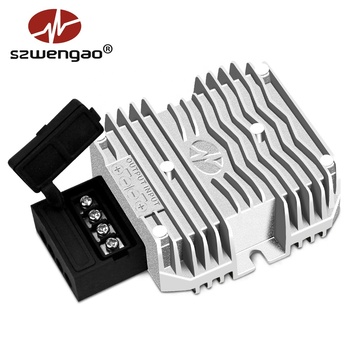
Isolated 18–75V to 24V 5A Industrial Converter
- Topology:Transformer Isolated
- Input Bus:18–75V DC Wide
- Regulated Out:24V @ 5A (120W)
- Isolation Rating:1500V DC Galvanic
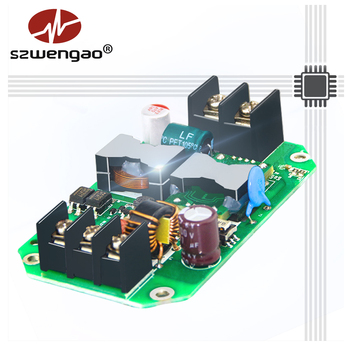
Standard -48V Bus to 12V 10A Isolated Supply
- Nominal Input:36–75V (Telecom -48V)
- Output Power:12V DC, 10A (120W)
- Protection:OVP / OCP / SCP / OTP
- Standard:Telcordia GR-1089

1500W Industrial Buck-Boost Converter w/ RS485
- Operating Range:10–60V Ultra-Wide
- Configurable:12V / 24V / 28V / 48V
- Control Bus:Modbus RTU via RS485
- Max Output:Up to 1500W Continuous
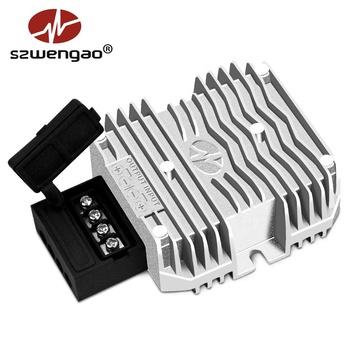
Wide-Rail 18–75V to 5V 20A Logic Module
- Application:Baseband & Controller Bus
- Isolation:Ground Loop Eliminator
- Continuous Output:5V DC @ 20A (100W)
- Sealing:IP68 Polyurethane Potted

Heavy-Duty 24V to 12V 100A Synchronous Buck
- Max Amperage:100A (1200W Output)
- Efficiency:Up to 96% Synchronous
- Thermal Sink:Extruded Aviation Alloy
- Certifications:CE / RoHS / ISO 9001
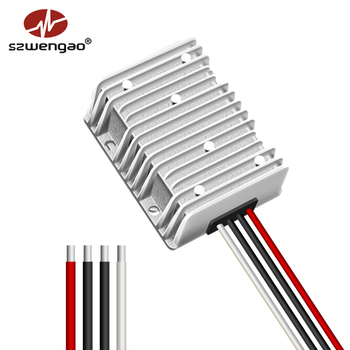
8–40V to 13.8V 30A Dynamic Voltage Stabilizer
- Target Loads:VHF/UHF Repeater Radios
- Regulation:Exact 13.8V Float Standard
- Transient Rejection:Surge & Crank Immune
- Cooling:Passive Heat Pipe Convection
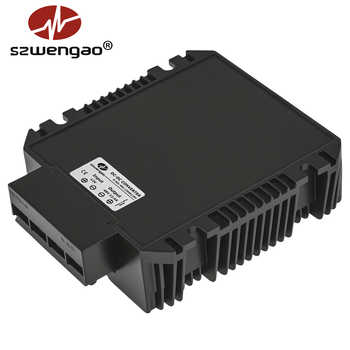
12V to 48V 20A (960W) Masthead Boost Converter
- Step-Up Ratio:12V In → 48V Fixed Out
- Amperage:20A Peak Output
- Enclosure Rating:Hermetic IP68 Aluminum
- Application:PoE & Remote Radio Heads
Engineering Isolated DC-DC Conversion for the Masaya Telecommunications Corridor
In the department of Masaya—encompassing dense urban distribution nodes, mountainous repeater heights near the Masaya Caldera, and peripheral edge towers serving Nindirí, Tisma, and La Concepción—the demands placed on direct-current power architectures are extraordinarily punishing. Network uptime requires continuous, ripple-free current despite erratic grid supplies, thermal spikes, atmospheric sulfur exposure, and prolonged relative humidity exceeding 85%. Shenzhen Eltrum Electronic Co., Ltd. delivers carrier-grade isolated and buck-boost power modules engineered specifically to eliminate ground loops, suppress lightning-induced surges, and decouple variable battery banks from sensitive base transceiver stations (BTS), fiber optical line terminals (OLT), and wireless backhaul hardware.
Modern telecommunication infrastructure throughout Western Nicaragua is aggressively migrating toward hybrid alternative setups where grid rectification is paired with secondary solar PV strings and modern lithium iron phosphate (LiFePO4) battery backup banks. While conventional non-isolated buck converters suffice for basic automotive tasks, carrier installations in the Masaya market mandate full galvanic isolation (≥1500V DC breakdown rating). This structural barrier protects microwave radios, edge routers, and backhaul transmission interfaces from high-voltage transient spikes, high common-mode noise, and accidental reverse-polarity conditions during emergency maintenance or lightning discharge events common along the Pacific volcanic chain.
Localized Application Scenarios Across Masaya’s Topography
Targeted electrical adaptations designed for distinct operational conditions across western Nicaragua’s telecommunications network.
Mountain Repeater Stations & Micro-Links
Elevated relay masts around the Masaya rim experience volatile DC voltage sags when switching between high-impedance utility feeds and solar-battery arrays. Our wide-input 10–60V buck-boost converters stabilize radio links at precisely 24.0V or 48.0V, eliminating link drops triggered by battery depth-of-discharge drops.
Urban Masaya Central Office & FTTH Hubs
Municipal POPs serving dense fiber nodes in Monimbó and San Jerónimo require high-density conversion from standard -48V DC telecom rectifiers down to 12V DC for cooling manifolds, network switches, and security servers. Our transformer-isolated 36–75V to 12V modules suppress electromagnetic interference (EMI) within dense rack enclosures.
Corrosive Atmosphere & Perimeter Mastheads
Continuous degassing from volcanic activity combined with seasonal tropical downpours rapidly destroys ventilated power converters. Eltrum’s IP67/IP68 potted aluminum chassis seal internal planar magnetics, MOSFETs, and SMD components against sulfur gas corrosion, high ambient humidity, and dust ingress.
Infrastructure Growth Trends Driving Conversion Upgrades in Masaya
Key technological vectors reshaping network power equipment procurement across the department.
Accelerated LiFePO4 Chemistry Replacement
Carriers across Masaya are systematically retiring toxic, high-maintenance lead-acid battery banks in favor of high-cycle 48V LiFePO4 packs. This shift requires DC-DC step-down modules capable of operating seamlessly with steep charging voltage curves and higher float thresholds.
Expansion of 4G/LTE-A & 5G Edge Densification
Bandwidth usage along the Managua-Masaya-Granada commercial arterial route has surged, compelling telecom providers to install high-frequency small cells and Remote Radio Units (RRU) on existing poles, requiring compact, highly ruggedized boost converters.
Active Remote Telemetry & RS485 Interfacing
Remote monitoring reduces costly on-site engineer visits. Procurement managers now demand smart DC-DC converters equipped with RS485 communication protocols to continuously stream real-time current draw, bus voltage, and thermal metrics to regional Network Operations Centers (NOC).
Stringent Total Cost of Ownership (TCO) Metrics
With soaring energy costs and complex logistics, Nicaraguan carriers prioritize power supplies exceeding 94% efficiency. Every watt shed in thermal loss lowers cabinet refrigeration demands and extends secondary reserve battery operational windows.

Shenzhen Eltrum Electronic: Direct Engineering & Manufacturing Power
Established in 2015, Shenzhen Eltrum Electronic Co., Ltd. operates modern, onsite-verified production lines spanning SMT placement, high-frequency planar transformer winding, robotic potting, and multi-tier burn-in load analysis. With an expansive portfolio covering more than 500 catalog configurations, our engineering team brings a deep specialization in galvanically isolated power architecture directly to Central American infrastructure stakeholders.
All power supplies adhere rigorously to ISO 9001 quality management standards, and each production run meets European CE and RoHS compliance metrics. Operating directly with our Shenzhen headquarters affords telecommunications engineers in Masaya zero broker markups, flexible prototype testing from 5 units, and tailored OEM/ODM adjustments—including custom output voltage rails, unique terminal interfaces, tailored charging curves, and customized heat dissipation profiles.
100% Full-Load Automated Burn-In
To eradicate early-life infant mortality in field-deployed telecom hardware, every single converter module undergoes multi-hour elevated-temperature burn-in cycles at 100% capacity before hermetic sealing.
Planar Transformer Technology
Replacing conventional wire-wound coils with multilayer planar magnetics provides superior power density, minimized parasitic leakage inductance, and exceptional thermal conductivity in compact spaces.
Direct Factory Traceability & OEM Agility
Every production lot includes traceable bill-of-materials tracking down to tier-1 semiconductors and Japanese electrolytic capacitors, guaranteeing unwavering repeatability over multi-year network expansion schedules.
Frequently Asked Questions by Telecom Buyers in Masaya
Practical electrical, logistical, and commercial inquiries answered by our application engineers.
Why is galvanic isolation critical for telecom installations across the Masaya plateau?
How do Eltrum DC-DC converters withstand volcanic fumes and severe tropical humidity?
What is the practical MOQ and delivery lead time for carriers operating in Nicaragua?
Can Eltrum converters accommodate wide-swing battery voltages between charging and discharge?
Do you support RS485 communication protocols for remote network telemetry?
What payment terms and transaction methods are supported for Nicaraguan enterprises?
Modernize Your Telecom DC Power Infrastructure
Consult with Shenzhen Eltrum’s power engineering team today to review specific conversion requirements, receive detailed technical datasheets, and arrange sample units for field testing in Masaya.