Industrial-Grade DC-DC Power Converters for Telecom Deployments
Engineered by Shenzhen Eltrum Electronic Co., Ltd. to comply with rigorous ETSI EN 300 132-2 power interface standards, Telcordia SR-332 MTBF specifications, and harsh outdoor operational environments across Metropolitan Bordeaux.

Smart 36V Lithium Battery Charger DC 12V to 43.8V 13A
- TopologyBoost CC/CV Charging
- Nominal In / Out12V DC / 43.8V DC (13A)
- ProtectionIP67 Waterproof, OVP/OCP
- Primary RoleSubstation / Off-Grid Backup
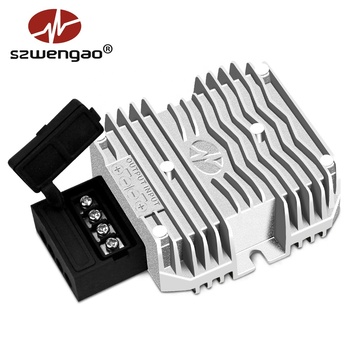
Isolated Telecom DC Converter 18–75V to 24V 5A (120W)
- Isolation Rating1500 Vrms Galvanic Barrier
- Input Window18–36V / 36–75V Wide Bus
- Efficiency94.5% Peak Synchronous
- Telecom StandardETSI EN 300 132-2 Class A
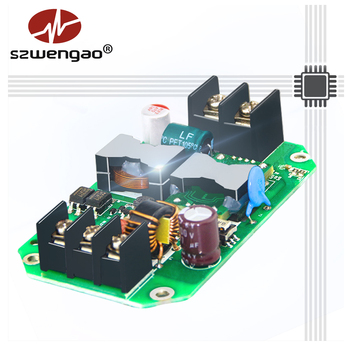
Telecom Isolated 36–75V to 12V 10A Power Module
- Input Bus-48V DC Telecom (36–75V)
- Regulated Output12V DC ±1.0% (120W)
- Noise / Ripple< 30mVp-p High Attenuation
- ApplicationBTS Baseband & Router Rail
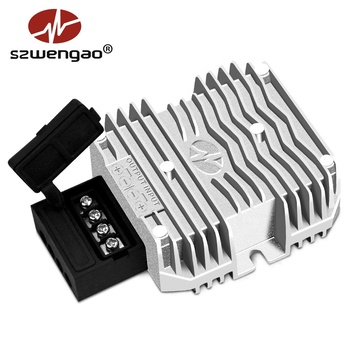
Ultra-Wide 18–90V to 12V 10A Isolated Converter
- Wide-Band Input18V to 90V Continuous
- EnclosureDie-Cast Sealed IP68 Chassis
- Thermal Rating-40°C to +85°C Baseplate
- ApplicationRemote Solar BTS / Edge Nodes

1500W High-Power Buck-Boost Converter with RS485
- Input / Output10–60V In / 12–48V Out Adj.
- Digital TelemetryRS485 Modbus RTU Voltage/Temp
- Current OutputUp to 50A Continuous
- ApplicationNRO Optical Central Exchange
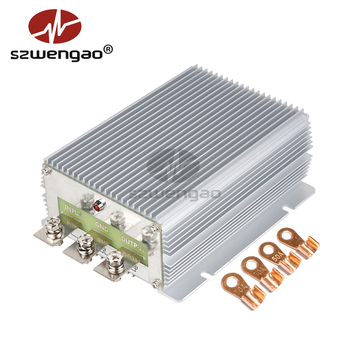
48V to 24V 40A 1000W Step-Down Buck Converter
- Conversion TopologyMulti-Phase Synchronous Buck
- Efficiency96.8% Thermal Optimization
- Output Power1000W Steady Dynamic Response
- ApplicationDatacenter DC Distribution Buses
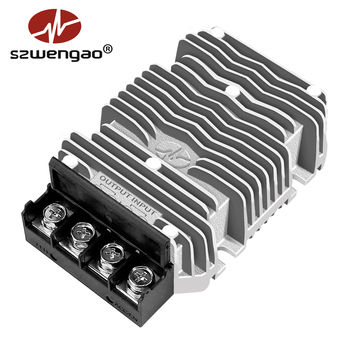
30–60V to 12V 50A/60A 720W High-Current Buck
- Input Voltage30V to 60V DC Nominal 48V
- Amperage50A Continuous / 60A Peak
- Cooling MethodExtruded Thermal Heat-Sink
- ApplicationHigh-Draw Microwave Radios
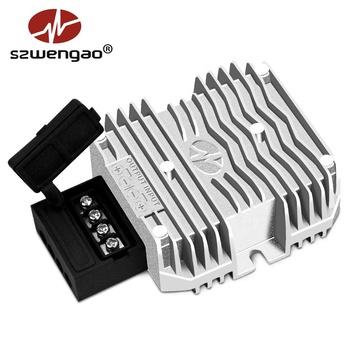
Isolated 18–75V to 5V 20A 100W Low-Voltage Module
- Primary Input24V / 48V Battery Backplanes
- Regulated Rail5.0V DC (20A) Micro-Logic Bus
- EMC ScreeningCISPR 22 / EN 55022 Class B
- ApplicationFiber Splice Hub Telemetry & SBCs
Architectural Imperatives: Direct Factory Sourcing for the Bordeaux Telecom Ecosystem
The telecommunications infrastructure across Bordeaux, the Gironde department, and the wider Nouvelle-Aquitaine region is undergoing an unprecedented modernization cycle. Driven by dense 5G New Radio (NR) standalone rollouts along the Garonne economic corridor, FTTH optical Point of Interconnect (NRO - Nœud de Raccordement Optique) consolidation, and edge datacenter expansions around Bordeaux-Euratlantique and Floirac, the demands on power conditioning hardware have escalated drastically. Network architects, telecom engineering contractors (such as SPIE, Circet, and Axians partners), and regional operators require DC-DC power conversion equipment that delivers ultra-high thermal efficiency, unmatched electromagnetic silence, and structural galvanic isolation.
Shenzhen Eltrum Electronic Co., Ltd. serves as an agile, direct-to-enterprise manufacturing partner for Bordeaux's telecom procurement managers. Unlike generic trading brokers, Eltrum controls the entire production lifecycle from surface-mount technology (SMT) pick-and-place placement to automated vacuum potting and full-load burn-in chamber qualification. By bridging high-capacity Shenzhen manufacturing directly with European integration standards (complying strictly with CE, RoHS, and ISO 9001:2015 frameworks), Eltrum eliminates unnecessary tier-markup layers, lowers bill-of-materials costs by 28% to 42%, and shortens lead times for custom voltage rail engineering from months to weeks.
Localized Telecom DC-DC Converter Applications in Greater Bordeaux
Precision power conversion topologies specifically adapted to the geographic, urban, and climactic operating environments of South-West France.
NRO & PM Optical POP Sites
Across Gironde Numérique's rural optical broadband initiative and urban fiber nodes in Pessac and Mérignac, NRO central distribution centers rely on continuous -48V DC float battery banks. Eltrum's isolated DC-DC converters step down -48V bus rails to regulated +12V DC, +24V DC, or +5V DC for optical line terminals (OLT), splice tray monitoring hardware, video surveillance systems, and environmental micro-telemetry.
5G Urban Micro-Cells & C-RAN
High-frequency 3.5 GHz and 26 GHz 5G massive-MIMO radios installed on historical stone facades in central Bordeaux require discreet, completely fanless power modules. Eltrum's fully potted, waterproof IP67/IP68 aluminum housing converters handle extreme summer surface heat (up to +75°C radiant enclosure temperatures) without airflow, preventing thermal throttling and silent acoustic pollution.
Solar-Assisted Off-Grid Shelters
Remote wireless repeaters and micro-wave backhaul links deployed in the vineyards of Saint-Émilion, the Médoc peninsula, and the pine forests of Les Landes frequently incorporate hybrid photovoltaic-battery systems. Our 10–60V wide-input buck-boost converters dynamically level swinging battery voltages, delivering ultra-stable 24V or 48V power regardless of state-of-charge fluctuations.
Edge Colocation & Edge Data Rooms
Facilities across Bordeaux-Euratlantique are introducing 380V HVDC and 48V DC bus architectures to eliminate double AC-to-DC conversion losses. Eltrum's high-efficiency step-down converters (up to 1000W per unit) bridge primary distribution lines directly to server rack management controllers, intelligent PDUs, and active security gate arrays with minimal thermal footprint.
Smart Vineyard Agro-Telecom Relays
The prestigious viticulture estates surrounding Bordeaux are scaling LoRaWAN, NB-IoT, and private LTE networks for soil-moisture telemetry, automated drone inspection, and frost-mitigation micro-sprinklers. Our compact 5–36V step-down and isolated units power these outdoor gateway boxes, resisting heavy pesticide exposure, maritime Atlantic salinity, and morning condensation.
Atlantic Subsea Cable Landing Telemetry
With high-capacity transatlantic optical cables landing along the Nouvelle-Aquitaine coastline (e.g., Le Porge interconnects), subsea station backhaul facilities require strict galvanic isolation. Eltrum isolated DC-DC modules safeguard optical repeaters and fiber monitoring gear from high ground-potential transients and lightning surges along the coastal corridor.
Nouvelle-Aquitaine & French National Trends Reshaping Power Architecture
Telecommunications design criteria in France have evolved under rigorous regulatory mandates issued by ARCEP (Autorité de régulation des communications électroniques, des postes et de la distribution de la presse) alongside French national environmental laws (such as RE2020 energy conservation guidelines). In Bordeaux, these macro dynamics translate into three mandatory procurement requirements:
1. Thermal Efficiency as a Scope 2 Carbon Lever: With electricity tariffs across the European Union remaining volatile, telecom operators can no longer accept linear drop or low-efficiency switching regulators that dissipate 10%–18% of their throughput as heat within outdoor shelters. Air conditioning energy consumption in telecom cabinets accounts for up to 35% of site operating expenditures. Eltrum's synchronous rectification circuits push conversion efficiency past 96.5%, dramatically cutting parasitic thermal loads inside sealed outdoor cabinets across the Gironde basin.
2. Transition from Lead-Acid to Lithium Iron Phosphate (LiFePO4) Battery Chemistries: French network providers are rapidly retiring legacy VRLA/AGM storage racks in favor of 48V LiFePO4 battery enclosures due to footprint constraints and cycle longevity. However, LiFePO4 cells exhibit much steeper charge/discharge voltage plateaus. Power supplies must feature intelligent CC/CV charging curves and buck-boost regulating circuits capable of operating stably down to deep discharge limits without dropping downstream carrier equipment.
3. Strict Electromagnetic Compatibility (EMC) Near Sensitive Optics: Dense WDM optical transport cards are extremely susceptible to high-frequency harmonic switching ripple. Eltrum integrates advanced common-mode filtering, multi-stage LC filters, and full 6-sided aluminum shielding into its telecom line, easily surpassing EN 55032 Class B radiated emission ceilings and preventing cross-talk with gigabit SFP+ and QSFP28 transceivers.
Telecom DC-DC Converter Selection Matrix for French System Integrators
Cross-referencing input topologies, power capacities, isolation ceilings, and compliance profiles for Bordeaux installations.
| Module Family | Input Voltage Bus | Output Voltage / Current | Galvanic Isolation | EMC / Safety Standard | Primary Bordeaux Telecom Role |
|---|---|---|---|---|---|
| TEL-ISO-4812 | 36V – 75V DC (-48V Nominal) | 12V DC @ 10A (120W) | 1500 Vrms / 1 min | ETSI EN 300 132-2 / EN 55032 | NRO Distribution, Baseband Line Cards |
| TEL-ISO-4824 | 36V – 75V DC (-48V Nominal) | 24V DC @ 5A (120W) | 1500 Vrms / 1 min | EN 62368-1 / CE / RoHS | Industrial Field Controllers & Microwave ODU |
| TEL-BB-1500M | 10V – 60V DC Wide Range | 12V / 24V / 48V Adj. (50A) | Non-Isolated Common GND | EN 61000-6-2 Immunity / RS485 | Solar Hybrid BTS Shelters & Battery Leveling |
| TEL-BK-4824-1K | 38V – 60V DC High Current | 24V DC @ 40A (1000W) | Non-Isolated High Eff. | CISPR 32 Class B / ISO 9001 | Bordeaux-Euratlantique Colocation Central Rack |
| TEL-ISO-1890-WP | 18V – 90V DC Extreme Range | 12V DC @ 10A (120W) | 3000 Vdc High Isolation | IP68 Waterproof / CE Certified | Vineyard Pole-Mounted Small Cells & Gateways |
| TEL-CHG-36V-WP | 10V – 36V DC Alternator/Solar | 43.8V CC/CV (13A Max) | Integrated Reverse Polarity | EN 55014-1 / CE / IP67 | Emergency Telecom Mobile Response Vans |
Why European Telecom Integrators Partner Directly with Eltrum
Founded in 2015, Shenzhen Eltrum Electronic Co., Ltd. delivers direct factory engineering rigor, eliminating intermediate supply friction.
ISO 9001 Certified Quality
Every single DC-DC unit undergoes automatic optical inspection (AOI), multi-stage testing, and full-load burn-in cycles in our dedicated Shenzhen facility before dispatch.
Full OEM & ODM Agility
Need custom DC inputs (such as 380V HVDC down to 48V), non-standard aluminum heatsink brackets, specific Deutsch connectors, or RS485 Modbus registers? Our R&D engineering team prototypes in days.
Accessible 5-Unit Pilot MOQ
We respect engineering validation lifecycles. Standard models can be ordered in pilot batches as small as 5 units, allowing Bordeaux engineering labs to validate thermal and EMC performance on bench rigs before container volume.
Seamless Logistics to Bordeaux
Direct DDP air freight via Bordeaux-Mérignac Airport (BOD) or consolidated sea freight into the Port of Bordeaux (Bassens) with full export documentation, CE declarations of conformity, and RoHS material disclosures.
Frequently Asked Questions by Bordeaux Telecom Procurement Teams
Direct technical answers addressing French regulatory compliance, electrical grounding, environmental durability, and commercial delivery terms.
Are Eltrum telecom DC-DC converters compliant with ETSI EN 300 132-2 and French electrical standards?
Why is galvanic isolation critical when converting -48V DC telecom rails to 12V or 24V equipment in Gironde?
How do Eltrum converters perform in fanless, outdoor sealed cabinets during hot Bordeaux summers?
Can we order small pilot quantities for lab benchmarking in Bordeaux before committing to volume rollout?
What are the Incoterms, payment terms, and delivery schedules for French telecom integrators?
Does Eltrum provide custom MTBF calculations and Telcordia reliability reports for project tenders?
Inside the Factory: SMT Precision, Burn-In Screening & Potting Integrity
The operational longevity of a telecom DC-DC converter in outdoor field cabinets depends entirely on structural manufacturing consistency. Shenzhen Eltrum Electronic Co., Ltd. operates a high-precision production infrastructure in Shenzhen's Hangcheng technology corridor, utilizing automated Yamaha and Panasonic SMT lines capable of placing passive 0402 components, high-density planar magnetics, and multi-pin power ICs with sub-micron alignment accuracy.
Following reflow and automated optical inspection (AOI), all high-current magnetic components and discrete power transistors receive automatic selective soldering to prevent dry joints and solder-void weaknesses that degrade performance under cyclic thermal stress. For our waterproof telecom range, assemblies are subjected to a two-part automated potting process using thermally conductive, UL94V-0 flame-retardant silicone. The vacuum-assisted degassing chamber extracts micro-air bubbles, guaranteeing 100% void-free encapsulation that prevents internal corona discharge, resists dielectric breakdown under high voltage spikes, and ensures completely uniform thermal dissipation throughout the aluminum chassis.
Crucially, 100% of finished converter modules pass through our elevated-temperature burn-in chambers under full electrical load for a minimum of 4 to 8 hours prior to final QC pack-out. This thermal stress screening actively triggers infant mortality failures inside our factory rather than on a remote cellular tower or optical hub in Nouvelle-Aquitaine, ensuring an outgoing defect rate well below 150 PPM (parts per million).