Precision Step-Up & Voltage Stabilizing Converters
Engineered for high-reliability field deployment: from Tanjung Perak marine auxiliary power and port gantry telemetry to SIER automated assembly lines and remote off-grid telecom installations.
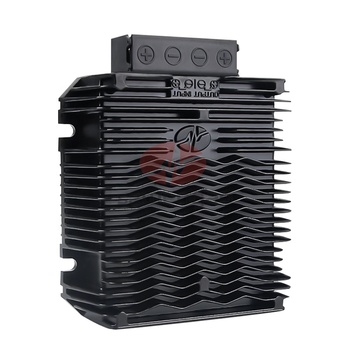
12V to 24V 50A Heavy-Duty Step-Up Boost Converter
- TopologySynchronous Boost
- Input / Output10-16VDC / 24VDC 50A
- Efficiency / Ingress>95% / IP68 Sealed
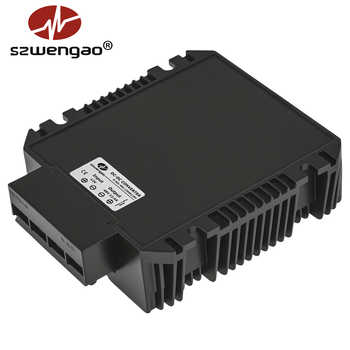
12V to 48V 15A/20A Marine Waterproof Boost Converter
- TopologyStep-Up Boost
- Input / Output10-18VDC / 48VDC 20A
- PottingThermobonding Silicon
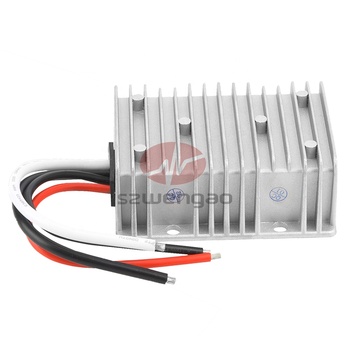
24V to 48V 15A Industrial DC-DC Step-Up Regulator
- TopologyBoost Conversion
- Input / Output18-32VDC / 48VDC 15A
- ProtectionsOVP, OCP, OTP, Short

1500W Buck-Boost Converter 10-60V with RS485 Control
- TopologyNon-Inverting 4-Switch
- Input / Output10-60VDC / 12-48V Reg.
- InterfaceModbus RTU / RS485
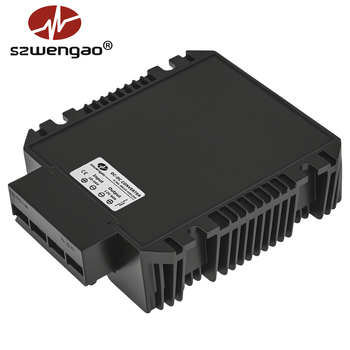
10-44V to 12V 60A Dynamic Voltage Stabilizer
- TopologyBuck-Boost Regulator
- Continuous Rating12VDC @ 60A (720W)
- Input SurgeHandles Cranking Sag <9V
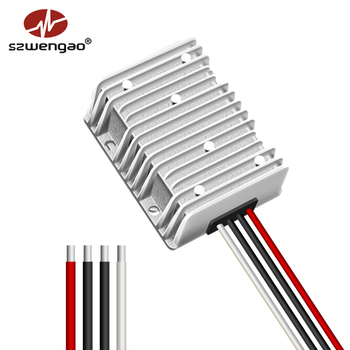
8-40V to 13.8V 30A Marine Communication Power Unit
- Nominal Rail13.8V Fixed (VHF / Radar)
- Max Power414W Continuous
- CasingFin-Extruded Aluminum

Smart 36V Lithium Battery Charger DC 12V to DC 43.8V 13A
- FunctionStep-Up CC/CV Charging
- Output Target43.8V (12S LiFePO4)
- EnclosureIP67 Fully Potted
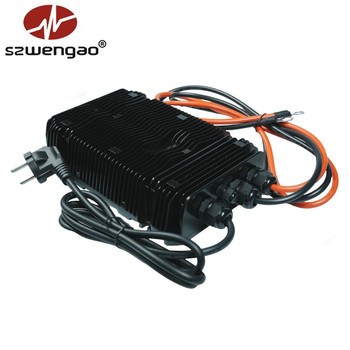
600W Waterproof LiFePO4 Station Charger (14.6V-58.4V)
- AC Range90-265VAC Universal
- Charging StagesPre-charge, CC, CV, Float
- CertificationsCE, RoHS, ISO 9001
Step-Up DC-DC Regulation Dynamics in Tropical Industrial Environments
A rigorous examination of synchronous boost topologies, wide-input buck-boost controllers, and thermal management architectures engineered specifically for Surabaya's coastal and heavy industrial challenges.
Synchronous Rectification & Inductor Saturation
Traditional non-synchronous boost converters utilize Schottky catch diodes that produce considerable forward voltage drop (0.45V to 0.75V), leading to massive dissipation losses at high current outputs (e.g., 20A to 50A). Our industrial-grade step-up voltage regulators leverage low RDS(on) N-channel power MOSFET switches with active synchronous rectification. Paired with powdered-iron toroidal core inductors exhibiting high saturation flux density, our modules maintain continuous conduction mode (CCM) across varying duty cycles, preserving over 96% operational efficiency and preventing core thermal runaway under sudden surge conditions.
Dynamic Input Sag Compensation (Buck-Boost)
Heavy machinery and starter motors in Surabaya's logistics terminals create severe DC bus dips. A standard 12V or 24V starter battery can collapse to 8V during internal combustion engine cranking. Where sensitive electronics (programmable logic controllers, maritime ECDIS, GNSS transponders) require constant 12.0V or 24.0V, standard boost circuits cannot regulate when input voltage fluctuates both above and below the setpoint. Our non-inverting 4-switch buck-boost voltage regulators bridge this gap seamlessly, switching automatically between buck, buck-boost, and boost operating modes without output glitching.
Galvanic Isolation & Noise Shielding
Ground loops, inductive kickback from heavy cranes, and electromagnetic interference (EMI) are major hazards in East Java's marine shipyard and power generation facilities. Our isolated step-up converter families utilize multi-layer planar transformers tested to 1500VDC input-to-output dielectric breakdown resistance. By separating noisy alternator or traction motor grounds from sensitive payload circuits, the regulator prevents harmonic current feedback, eliminates ground offset voltages, and adheres to stringent CISPR 25 Class 3 emissions standards.
Mission-Critical Power Deployment Across Greater Surabaya
How leading Indonesian naval architects, electrical contractors, factory automators, and telecom infrastructure providers implement our step-up voltage regulators.
Tanjung Perak Port & Maritime Vessels
Surabaya is Indonesia’s gateway to the eastern archipelago. In tugboats, cargo barges, and offshore supply vessels docking at Tanjung Perak, engine starter banks are universally 12V or 24V lead-acid. Our step-up boost converters elevate 12V/24V primary DC lines to precise 28V, 36V, or 48V outputs to drive satellite communications, searchlights, sonar, and hydraulic valve drivers without line drop over extended marine wiring harnesses.
SIER Automation & Robotic AGVs
Within the Surabaya Industrial Estate Rungkut (SIER) and Berbek industrial nodes, Automated Guided Vehicles (AGVs) and conveyor sorters run on decentralized 24V battery systems. Our step-up modules elevate this bus to 48VDC for high-torque servo motors and laser LiDAR sensors, sustaining continuous full-load output despite the heavy cyclic discharge profiles inherent to warehouse automation.
Gresik Petrochemical & Heavy Processing
The industrial belt extending into Gresik hosts fertilizer plants, cement kilns, and chemical refining facilities. These operating zones experience high ambient temperatures and aggressive chemical vapors. Our IP68 vacuum-potted step-up regulators ensure complete environmental isolation, shielding critical internal circuitry against corrosive airborne sulfur and salt mist drifting from the Madura Strait.
Off-Grid Solar Telecom in East Java
In rural telecom repeaters across East Java and outlying islands, fluctuating photovoltaic outputs cause severe DC bus volatility. Our wide-input 10-60V buck-boost regulators take raw output from varying battery chemistries (LiFePO4, Gel, AGM) and provide tight ±1% output regulation directly to 48V radio base transceiver stations (BTS), eliminating intermittent transmitter brownouts.
Engineering Selection Matrix for Surabaya Power Systems
Evaluate topologies based on conversion topology, electrical performance, thermal dissipation, and specific installation environments across Indonesian manufacturing hubs.
| Regulator Topology | Common Input Ranges | Regulated Outputs | Peak Efficiency | Galvanic Isolation | Recommended Surabaya Application |
|---|---|---|---|---|---|
| Non-Isolated Boost | 10 - 16VDC / 18 - 32VDC | 24V, 36V, 48V (Up to 50A) | 95.5% - 97.0% | No (Common Negative) | Tanjung Perak vessel LED floodlighting, 12V to 24V marine radar conversion, logistics truck tail-lifts. |
| Wide Buck-Boost | 8 - 40VDC / 10 - 60VDC | 12V, 13.8V, 24V, 28V | 92.0% - 94.5% | No (Common Ground) | Cranking voltage stabilization for trans-Java transport fleets, marine radio comms (13.8V), solar battery buses. |
| Galvanic Isolated | 18 - 36VDC / 36 - 75VDC | 5V, 12V, 24V (Regulated) | 89.0% - 92.5% | Yes (1500VDC Isolation) | Gresik chemical processing instrumentation, electric forklift traction isolation, ground-loop elimination in telecom. |
| Step-Up Charger | 10 - 36VDC Alternator | 29.2V (8S) / 43.8V (12S) LiFePO4 | 94.0% - 96.0% | Optional Model Spec | Auxiliary battery charging on diesel coastal vessels, electric bikes, mobile refrigeration backup power. |
East Java Power Conversion & Electrification Trends
Insights into shifting procurement requirements, chemical transitions, and regulatory demands shaping East Java's commercial industrial sectors.
Rapid Migration to LiFePO4 Chemistry
Heavy commercial logistics across the Trans-Java tollway and maritime operators based in Surabaya are rapidly phasing out traditional flooded and SLA batteries in favor of Lithium Iron Phosphate (LiFePO4). While offering superior cycle life and thermal stability in tropical heat, LiFePO4 requires exceptionally tight voltage clamping (e.g., 14.6V for 4S packs, 29.2V for 8S packs, 58.4V for 16S packs). Fluctuating alternator outputs are unacceptable for direct lithium connection. System integrators increasingly mandate precision step-up DC-DC battery chargers with dedicated constant-current/constant-voltage (CC/CV) profiles and programmable float cutoffs.
IoT Integration & Digital Telemetry
Smart factories throughout Sidoarjo, Pasuruan, and Surabaya now demand real-time diagnostics from every power module. Our step-up voltage regulators and buck-boost modules are increasingly equipped with RS485 communication ports implementing the Modbus-RTU protocol. Plant engineers can remotely interrogate real-time operating metrics—including input voltage, output current draw, internal junction temperature, and fault status codes—integrating this data directly into centralized SCADA platforms for predictive maintenance.
Ruggedization Against High Ambient Heat
Surabaya frequently experiences ambient daytime temperatures exceeding 34°C with relative humidity above 85%. Inside enclosed engine compartments, cargo vessel holds, or sealed industrial enclosures, internal temperatures regularly exceed 55°C. Traditional fan-cooled converters quickly fail due to salt accumulation, dust ingress, and bearing seizure. As a direct result, B2B procurement trends have moved decisively toward fanless, conduction-cooled, solid-potted IP67/IP68 units with engineered aluminum heat sink geometries capable of full-rated continuous output up to 60°C without thermal tripping.
Why Surabaya Engineers Partner Directly with Eltrum
Combining world-class Shenzhen power electronics manufacturing speed with stringent European and international quality standards for reliable field operations.
Established Manufacturing Expertise Since 2015
Shenzhen Eltrum Electronic Co., Ltd. operates a vertically integrated production facility in Shenzhen's Bao'an electronics manufacturing hub. From high-speed Surface Mount Technology (SMT) pick-and-place lines to precision automated transformer winding and vacuum resin dispensing, every assembly stage is governed under ISO 9001 quality management protocols. Our dedicated engineering department has logged over a decade of specialized R&D in high-density DC-DC switch-mode architectures.
Turnkey OEM/ODM Engineering Customization
We do not simply sell off-the-shelf modules. If your Surabaya project requires non-standard input-output voltage ratios (e.g., custom 16-36V to 52V step-up), custom physical dimensions to match existing machinery footprint cutouts, specialized Anderson, Deutsch, or M12 terminal connectors, or specific firmware-governed charging profiles with RS485 communication, our R&D engineering group delivers bespoke rapid prototypes with fast turnaround times.
100% Full-Load Burn-In & Rigorous QC
Reliability is critical when systems operate hundreds of nautical miles offshore from East Java or inside 24/7 continuous industrial production lines. Every single power converter produced in our plant undergoes automatic optical inspection (AOI), in-circuit parametric testing, and mandatory 100% full-load high-temperature burn-in testing prior to packaging. Every batch carries verifiable CE conformity, RoHS hazardous substances clearance, and traceable serial identification.
Frequently Asked Questions: Surabaya & East Java Engineering Buyers
Comprehensive technical and commercial answers addressing shipping, environmental protection, customization, and minimum order requirements for Indonesian enterprise clients.
How do Eltrum step-up regulators handle Surabaya's high humidity and coastal salt spray?
Our marine and heavy industrial series feature solid vacuum-injected thermal silicone potting inside die-cast aluminum enclosures, achieving true IP67 or IP68 ingress protection. This construction completely seals active components, inductors, and solder joints against moisture permeation, condensation, and corrosion from airborne coastal chlorides in areas like Tanjung Perak and the Madura Strait.
What is the typical Minimum Order Quantity (MOQ) and lead time for shipments to Surabaya?
We maintain an engineer-friendly policy: standard models carry a sample evaluation MOQ of just 5 units, allowing project engineers to conduct thorough bench testing and pilot installations. For volume production orders, standard lead times are 12 to 18 business days. We support direct air courier (DHL/FedEx/air freight) into Juanda International Airport (SUB) or ocean freight container consolidation directly into Tanjung Perak Port (IDSUB).
When should an engineer specify a buck-boost converter rather than a pure boost converter?
A pure boost (step-up) converter requires that input voltage strictly remains lower than the desired output voltage (Vin < Vout). If you are powering a 24V marine navigation device from a battery bank that sags to 18V under heavy load but spikes to 28.8V while engine alternators or solar arrays are actively charging, a standard boost converter will pass the over-voltage through uncontrolled. In this scenario, a 4-switch Buck-Boost converter is strictly required to clamp output precisely at 24.0V regardless of whether input is lower or higher.
Can your step-up converters charge 36V or 48V LiFePO4 batteries directly from a 12V vehicle alternator?
Standard DC-DC voltage regulators are constant-voltage power supplies and should not be connected directly to depleted lithium batteries without current-limiting protections, as doing so will trigger over-current shutdown. However, our specialized DC-DC Battery Charger series incorporates dedicated 3-stage Constant Current / Constant Voltage (CC/CV) control curves specifically designed to step up 12V alternator power to charge 24V, 36V, or 48V auxiliary lithium banks safely without tripping alternators or damaging battery cells.
How do you support custom engineering specifications and buyer labeling (OEM)?
Shenzhen Eltrum Electronic Co., Ltd. provides full OEM/ODM engineering support. We offer custom PCB layout tailoring, specialized voltage setpoints from 3V to 150VDC, selectable current thresholds, customized multi-pin waterproof wiring harnesses, laser-etched private branding, and bespoke packaging for Indonesian system integrators and distributors seeking proprietary market offerings.
What international test certificates and compliance reports accompany your products?
All converter and charger families conform strictly to European CE safety directives (Low Voltage Directive 2014/35/EU and EMC Directive 2014/30/EU) and RoHS environmental compliance requirements. Production operates under certified ISO 9001 quality management procedures. Full test reports, certificate copies, and technical datasheets are furnished upon request for compliance filing with Indonesian national standards (SNI) or engineering client audits.
Connect with Our Application Engineers for Surabaya Projects
Whether you require a standard 12V to 24V 50A synchronous boost module, a customized 1500W wide-input buck-boost stabilizer with RS485 communication, or an IP68 waterproof marine-grade converter, our engineering team will calculate your thermal dissipation requirements, verify voltage thresholds, and quote volume-tiered pricing within 24 hours.