High-Efficiency Step-Up Converters & Industrial Regulators
Direct factory procurement models validated for extreme ambient heat, heavy salt-air exposure, and variable renewable generation infrastructure in All Saints and surrounding territories.

Smart 36V Lithium Charger DC 12V to DC 43.8V 13A
- Input Window: 11.0V – 16.0V DC
- Boost Output: 43.8V DC (13A)
- Protection: IP68 Sealed / CC-CV
- Application: EV Carts / Utility Bikes

1500W Industrial Buck-Boost with RS485 Control
- Input Voltage: 10V – 60V DC
- Regulated Rails: 12V / 24V / 28V / 48V
- Peak Power: 1500W Continuous
- Interface: RS485 Telemetry
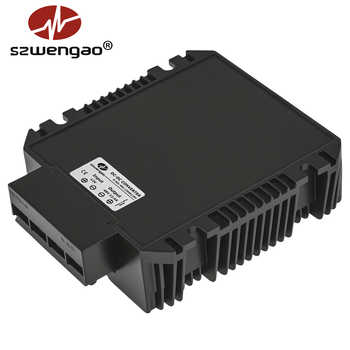
12V to 48V High-Current Step-Up Boost (12.5–20A)
- Primary Input: 10V – 15V DC
- Secondary Output: 48V DC (Up to 20A)
- Efficiency: >95.8% Synchronous
- Casing: Extruded Aluminum IP68
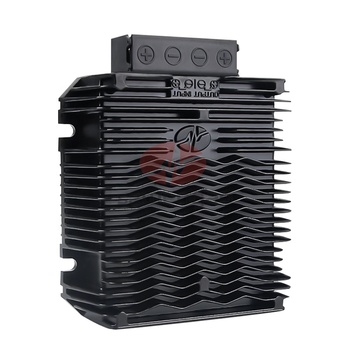
12V to 24V 50A High-Capacity Step-Up Module
- Input Tolerance: 9V – 20V DC
- Boosted Rail: 24V DC / 50A (1200W)
- Ripple Noise: <45mVp-p Max
- Certifications: CE / RoHS / ISO 9001
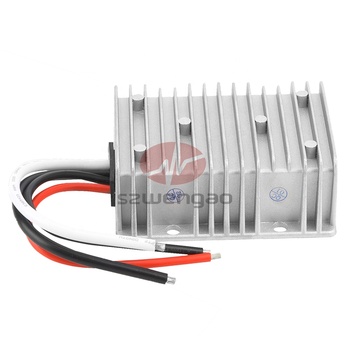
24V to 48V Step-Up Converter (10A / 15A Marine)
- Operating Range: 18V – 32V DC
- Output Power: 48V DC (Up to 720W)
- Thermal Range: -40°C to +85°C
- Protection: OVP / OCP / OTP / SCP
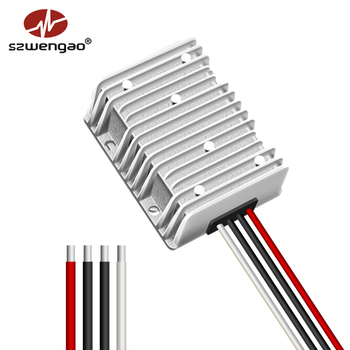
8–40V to 13.8V 30A Marine Voltage Stabilizer
- Wide Window: 8V – 40V Ultra-Wide
- Float Voltage: 13.8V DC (30A Peak)
- Cranking Ride: Cold-Crank Proof down to 8V
- Sealing: Hermetic Silicone Potted
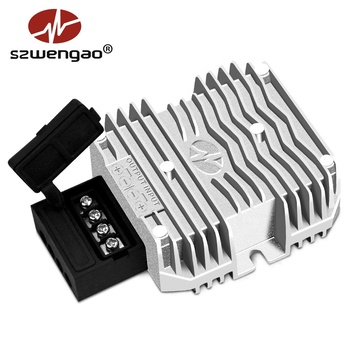
18–90V to 12V 10A Galvanic Isolated Converter
- Isolation Voltage: 1500V DC Hi-Pot
- Input Spread: 18V – 90V Continuous
- Regulated Output: 12V DC (120W Nominal)
- Application: Telecom Towers / AGV
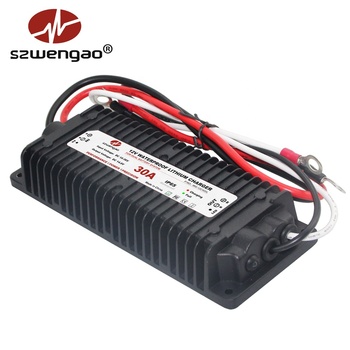
400W IP68 DC-DC Step-Up LiFePO4 Smart Charger
- Supply Input: 10V – 36V DC Alternator
- Target Chem: 14.6V / 29.2V / 43.8V
- Efficiency: 94.5% Active Rectification
- Safety Cutoff: Ignition Sense & Low-V
Topologies & Architectures of Step-Up Converters in High-Stress Island Environments
Industrial power conversion in insular and tropical regions such as All Saints requires an exhaustive reassessment of classical power stage mechanics. Unlike standardized grid-tied municipal applications with tight input windows, step-up (boost) and buck-boost power regulators deployed across the Caribbean microgrid and utility infrastructure operate across severe dynamic swings. Input sources, which routinely alternate between deep-cycle solar photovoltaic arrays, fluctuating starter battery alternators, and variable small-wind induction generators, demand step-up regulator architectures engineered to operate under high ambient humidity, elevated dew points, and severe saline galvanic attack.
At the fundamental semiconductor level, a conventional non-synchronous boost regulator relies on an active power switch (MOSFET) and an opposing freewheeling Schottky barrier diode. While functionally adequate for benign laboratory installations, the fixed forward diode drop (Vf ≈ 0.45V to 0.75V) converts catastrophic amounts of energy directly into parasitic heat when processing high currents (e.g., boosting a 12V primary source to a 24V or 48V auxiliary bus at 30A to 50A). In an ambient operating threshold of 35°C to 45°C—standard for field enclosures in All Saints—this thermal build-up causes junction temperatures (Tj) to breach the critical 125°C ceiling, initiating thermal runaway or severe duty-cycle throttling.
Shenzhen Eltrum Electronic Co., Ltd. circumvents this limitation through fully synchronous rectification. By substituting the secondary passive diode with an ultra-low RDS(on) N-channel power MOSFET driven by high-speed predictive gate logic, the internal conduction loss across the rectification phase is slashed by up to 82%. This architectural switch not only elevates end-to-end electrical conversion efficiency beyond 96%, but also ensures that heat generation remains minimal within the hermetically sealed, IP68 thermally conductive polyurethane potting compound.
| Regulator Topology | Input vs Output Relationship | Typical Efficiency | Isolation Level | Best Local Application in All Saints |
|---|---|---|---|---|
| Synchronous Boost BOOST | Vin strictly < Vout (e.g., 12V to 24V/48V) | 95.0% – 97.2% | Non-Isolated (Common Ground) | Electric mobility upgrades, high-voltage LED arrays, water pump drives |
| Automatic Buck-Boost 4-SWITCH | Vin crosses Vout (e.g., 9V–40V to 13.8V) | 93.5% – 96.0% | Non-Isolated (Common Ground) | Marine navigation consoles, unstable off-grid battery stabilization |
| Push-Pull / Forward ISOLATED | Wide inputs (18V–90V to 12V/24V) | 89.0% – 92.5% | Galvanic Isolation (>1500V DC) | Telecom radio masts, commercial marine transducers, positive-ground rigs |
| CC/CV Smart Step-Up CHARGER | Regulated 3-Stage Profile (12V to 29.2V/43.8V) | 94.0% – 96.5% | Chassis-Isolated Heat Sink | Direct LiFePO4 battery pack charging from 12V engine alternators |
Furthermore, high-voltage input transients caused by lightning-induced electromagnetic pulses and inductive inductive load disconnection (load dump) present continuous threats to field converters. Eltrum integrates multi-stage Transient Voltage Suppression (TVS) diodes, metal-oxide varistors (MOVs), and Pi-filter LC networks directly on the primary DC rail. These industrial hardening measures ensure that voltage spikes up to 100V do not propagate across the planar power magnetics to damage down-line programmable logic controllers (PLCs), satellite transmitters, or battery management systems (BMS).
Localized Applications Across All Saints & Regional Island Infrastructure
From central agricultural pumping stations to coastal charter operations and decentralized solar microgrids, discover how Eltrum step-up regulators stabilize critical services.
Solar-Battery Microgrid Voltage Harmonization
Central Antigua communities and rural farms surrounding All Saints rely heavily on hybrid photovoltaic arrays combined with 12V and 24V legacy lead-acid or decentralized LiFePO4 energy storage. When powering commercial-grade 48V submersible irrigation pumps, inverter banks, or aerators, our high-power 12V to 48V (up to 20A) boost regulators bypass the need for costly complete system rewire, stepping up existing lower-voltage battery banks with minimal conversion loss.
Marine & Inter-Island Vessel Auxiliaries
Vessels docking near English Harbour, Falmouth, and servicing All Saints' supply chains encounter severe marine corrosion and engine-cranking battery drops. When heavy auxiliary thrusters or engine starters crank, system bus voltage regularly collapses from 13.8V down to 8.5V. Eltrum wide-input (8–40V) buck-boost stabilizers ensure that critical marine radar, satellite navigation, and communication instruments receive a non-deviating 12V or 13.8V rail without reboots or data corruption.
E-Mobility & Resort Fleet Modernization
The hospitality corridors adjoining All Saints have rapidly shifted toward electric utility terrain vehicles (UTVs) and golf cart fleets running 36V, 48V, or 72V packs. Eltrum step-up and dual-mode converters provide direct charging solutions from 12V maintenance vehicles, while our ruggedized step-down converters allow 48V/72V traction batteries to feed 12V auxiliary lighting, audio, telematics, and USB fast chargers without cell-tapping imbalances.
Off-Grid Telecom & Microwave Repeaters
Cellular nodes and emergency VHF broadcast stations sited on high-elevation promontories around All Saints depend on autonomous solar-plus-storage platforms. Ground-loop interference and static discharge from thunderstorm fronts represent major failure vectors. Eltrum 18–90V isolated DC-DC regulators provide galvanic isolation up to 1500V DC, terminating ground hum and eliminating destructive transient propagation between battery chassis and RF transmitters.
Cold-Chain Agricultural Storage Monitoring
For local perishables and pharmaceutical storage requiring uninterrupted cold-chain logistics in All Saints, compressors and chillers cause massive inductive back-EMF spikes during cycle activation. Our wide-input step-up regulators stabilize sensitive digital logging electronics, IoT thermal sensors, and cloud-linked telemetry controllers against low-voltage sag during heavy compressor startup surges.
High-Lumen Perimeter & Municipal Solar LED Lighting
Solar street illumination and security perimeters require boosting standard 12V or 24V daytime stored energy to drive high-voltage series LED light engines running at 36V or 48V. Our step-up boost converters feature constant current (CC) capabilities, driving LED matrices with ripple-free, flicker-less illumination while maximizing battery energy extraction down to full discharge cut-off levels.
Technological Trends Transforming Caribbean Power Conversion
The electrical landscape across the West Indies is shifting away from centralized fossil-fuel reliance toward decentralized, resilient microgrids. In All Saints, rising imported fuel prices and climate vulnerability have accelerated the deployment of distributed energy resources (DERs). This transition dictates three prominent engineering and purchasing trends among commercial contractors, fleet operators, and government infrastructure engineers:
1. Rapid Migration to LiFePO4 Chemistry
Traditional flooded and AGM lead-acid batteries are being retired in favor of Lithium Iron Phosphate (LiFePO4) due to its high cycle life (>4,000 cycles at 80% DoD) and thermal stability. However, LiFePO4 demands an uncompromising, precision Constant Current / Constant Voltage (CC/CV) absorption profile (typically 14.6V for a 12V pack or 58.4V for a 48V pack). Crude unregulated alternator charging leads to immediate BMS over-voltage lockouts or stator burnout. Direct factory-sourced DC-DC smart chargers are now mandatory to mediate between power sources and sensitive lithium cells.
2. Demand for Complete Solid-State Potting
The convergence of humid air, persistent salt mist, and daytime ambient temperatures exceeding 38°C accelerates oxidation on exposed surface-mount technology (SMT) components. Mechanical fan cooling is an unacceptable vulnerability in All Saints, as fans draw in salt-laden air that precipitates corrosive conductive paths across high-voltage traces. Modern procurement specifications dictate fanless, fully encapsulated IP68 aluminum enclosures filled with thermally conductive silicone or epoxy resin, transferring heat purely via conduction and radiant casing dissipation.
3. Digital Telemetry via RS485 & CAN Bus
Remote maintenance is essential for decentralized infrastructure. Plant managers in All Saints cannot afford manual dispatch to verify the status of field regulators. The demand for smart DC-DC converters equipped with RS485 communication protocols (such as the Eltrum WG-12C800M architecture) has surged. Real-time logging of input voltage, output current, internal heatsink temperature, and fault alerts enables predictive maintenance schedules before systemic outages occur.
Procurement & Technical FAQ for All Saints Buyers
Addressing the technical, operational, and supply-chain questions posed by regional systems integrators, marine electricians, and project procurement directors.
Why is a dedicated DC-DC step-up charger required instead of direct alternator connection for LiFePO4 batteries?
How should engineers calculate thermal derating for step-up regulators deployed in All Saints?
When is galvanic isolation strictly necessary versus non-isolated common-ground converters?
What are the international shipping lead times and minimum order quantities (MOQ) for Eltrum converters to Antigua?
Are Eltrum step-up converters certified for maritime and commercial installations?
Why Procurement Teams Partner with Shenzhen Eltrum Electronic
Founded in 2015 in Shenzhen, China, Shenzhen Eltrum Electronic Co., Ltd. has grown into a premier specialized manufacturer of DC-DC conversion hardware, AC-DC smart chargers, and bespoke power modules. Our manufacturing facility spans modern surface-mount technology (SMT) placement halls, automated magnetic winding lines, vacuum-assisted potting bays, and high-temperature full-load burn-in laboratories. Serving enterprise clients across more than 130 countries, we combine the cost advantages of direct factory manufacturing with deep tier-one power engineering expertise.
100% 4-Hour Full-Load Burn-In
Every single step-up regulator undergoes a continuous 4-hour thermal burn-in chamber test under full rated current draw before sealing. This eliminates infant mortality failures in power semiconductors and guarantees field reliability.
Agile OEM & ODM Customization
Need non-standard voltages (e.g., 12V to 36V, 28V, or 54.6V)? We modify switching parameters, design bespoke aluminum extrusions, configure customized terminal blocks, and program application-specific CC/CV curves rapidly.
Automated Vacuum Potting
Our IP68 potted modules utilize two-component automated vacuum resin dispensing. This eliminates microscopic air bubbles, preventing internal corona discharge, condensation under temperature cycling, and corrosion from airborne salt.
Direct Engineering Support
Clients communicate directly with electrical and application engineers rather than third-party trading intermediaries. From circuit schematic analysis to line-loss wire gauge calculations, we support your project lifecycle from day one.
Connect with Our Engineering & Factory Team for All Saints Projects
Whether you require sample units for bench validation, customized voltage rails, or bulk procurement for public infrastructure, our engineers are prepared to assist.