
Smart 36V 13A LiFePO4 Step-Up & Down Charger
- Input Voltage12V DC nominal
- Output Voltage43.8V DC (CC/CV)
- Efficiency≥ 94%
- RatingIP68 Hermetic Potting
Tested under rigorous ISO 9001 and CE/RoHS standards. Guaranteed ultra-low ripple, continuous thermal dissipation, and waterproof ingress protection for Northern Portugal's coastal and industrial demands.

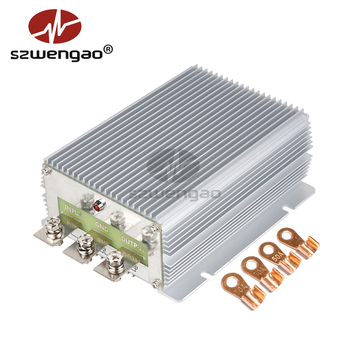
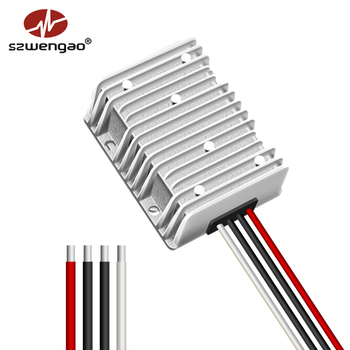

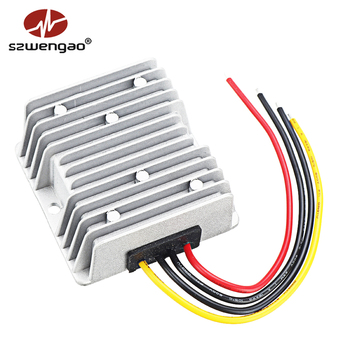

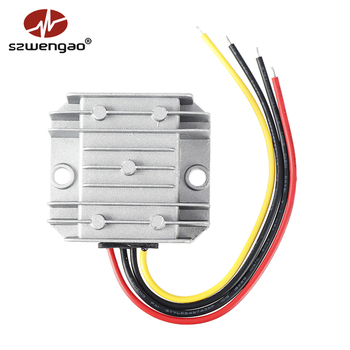
Standard Models
Countries Supplied
Certified Management
Flexible Prototype MOQ
Porto and the Norte Region represent a vibrant convergence of Atlantic maritime trade, modern urban transit networks, and high-tech industrial automation. Here is how our step-down converter topologies deliver deterministic stability locally.
Commercial fishing vessels, tugboats, and Douro river cruise liners operate 24V or 48V battery systems. Our step-down converters power delicate 12V navigation electronics, radar units, and sat-comm repeaters with zero ripple, wrapped in silicone-potted IP68 cases that withstand severe Atlantic salt-spray and galvanic corrosion.
As Porto aggressively transitions its municipal transit (STCP) to zero-emission electric buses and hybrid fleets, auxiliary systems such as digital ticketing, telemetry gateways, passenger Wi-Fi, and CCTV run on 12V or 24V. Our buck converters regulate noisy 600V or 24V/48V bus banks with over-voltage suppression.
Heavy manufacturing, warehouse automated guided vehicles (AGVs), and electric forklifts in northern logistics hubs utilize 48V, 72V, and 80V traction packs. Our step-down converters reliably step down high DC voltage to clean 12V/24V power for PLCs, barcode scanners, and optical guidance sensors without erratic thermal shutdown.
Modern electrical engineering teams across the Iberian peninsula face increasing pressure to adopt higher DC voltages (such as 48V, 72V, and 96V) to decrease copper conductor diameter and minimize distribution line loss. However, sensitive sensing, communication, and auxiliary loads remain strictly anchored to 12V, 5V, or 24V logic levels. Bridging these domains requires an uncompromising understanding of power conversion dynamics, switching topologies, and environmental hardening.
When selecting a step down converter manufacturer for integration in heavy mobile equipment or marine systems, the very first electrical architectural question is common-ground reference vs. galvanic barrier isolation. Standard non-isolated buck converters offer peak electrical efficiency exceeding 96% and smaller package footprints. They are the ideal choice for heavy automotive applications where the chassis serves as a unified negative ground.
Conversely, for Port of Leixões installations, telecommunication masts on coastal cliffs, or multi-string battery arrays, isolated DC-DC converters are mandatory. Galvanic isolation utilizing toroidal planar transformers prevents ground loops, protects logic processors from dangerous voltage surges originating on the prime battery pack, and eliminates destructive galvanic corrosion caused by stray DC currents running through boat hulls.
| Feature Parameter | Standard Non-Isolated Buck | Isolated DC-DC Step Down | Eltrum High-Spec Buck-Boost |
|---|---|---|---|
| Typical Conversion Efficiency | 94% – 97% | 88% – 92% | 92% – 95% |
| Ground Reference | Common Negative (Vin- shared with Vout-) | Fully Floating (> 1500V Isolation) | Common or Floating (Per Custom SKU) |
| Transient Immunity (ISO 7637-2) | Integrated TVS Diode Clamping | Physical Dielectric Separation | Bidirectional Active Suppression |
| Optimal Local Application | Porto Urban EV, Fleet Truck Accessories | Maritime Comms, Douro Cruisers, Telecom | Solar Off-Grid Microgrids, Wind Storage |
Porto experiences mild, humid oceanic conditions with frequent rainfall and salt-dense marine fog (nortada). Power supplies sealed purely with mechanical rubber gaskets frequently suffer micro-breathing cycles: as the unit heats up during heavy current draws and subsequently cools down, ambient air is sucked inside the chassis, condensing into moisture that precipitates trace galvanic short circuits.
Shenzhen Eltrum Electronic Co., Ltd. mitigates this hazard by employing full hermetic polyurethane or epoxy potting across our ruggedized step-down series. The potting matrix serves dual engineering objectives: it completely displaces ambient oxygen and moisture, achieving true IP68 liquid ingress impermeability, while simultaneously acting as a conductively uniform heat conductor transferring heat away from MOSFETs and inductors directly into the extruded aluminum alloy heat-sink chassis.
Portugal continues to lead southern Europe in renewable electricity integration, regularly achieving periods where wind, hydro, and solar satisfy 100% of mainland power demand. In parallel, Porto's municipal authorities are systematically electrifying harbour drayage operations, public transit networks, and urban delivery logistics. This transition is accelerating the demand for smart, high-density DC-DC step-down converters equipped with RS485 digital telemetry (Modbus RTU protocols) that provide battery state-of-charge reports, operating temperatures, and programmable current limiting.
Rooted in Shenzhen's advanced electronics ecosystem with direct factory oversight, Shenzhen Eltrum Electronic Co., Ltd. delivers institutional-grade manufacturing precision, rapid custom prototyping, and verified European compliance.
Eliminate middleman friction. Our Shenzhen engineering team collaborates directly with your R&D staff to adjust input voltage bands (such as 18–90V dynamic swings), customize PCB layouts, program specialized LiFePO4 absorption voltage thresholds, or install specific industrial connectors (Deutsch, Anderson, or waterproof marine glands).
Every single power conversion unit undergoes 100% full-load burn-in stress testing, multi-point thermal imaging, and high-potential dielectric breakdown validation before packaging. Our production systems operate under an ISO 9001 quality framework with full CE and RoHS documentation ready for EU customs clearing.
We actively support engineering pilots. While large conglomerates impose prohibitively high minimums, our standard evaluation threshold starts at just 5 units, allowing Portuguese system integrators and fleet builders to validate bench prototypes and field trials before committing to full containerized freight runs.
Essential technical and trade considerations for engineering leads, procurement managers, and technical importers in Porto and across Portugal.