
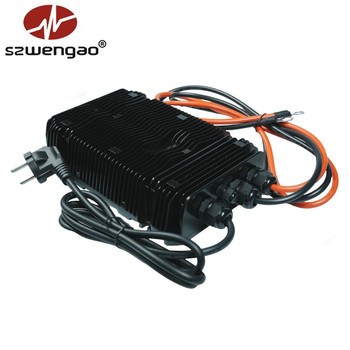
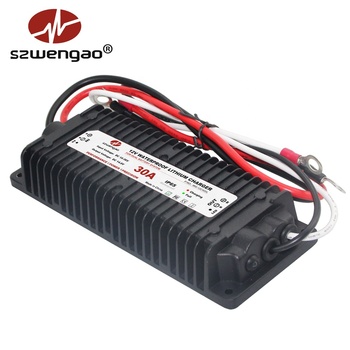
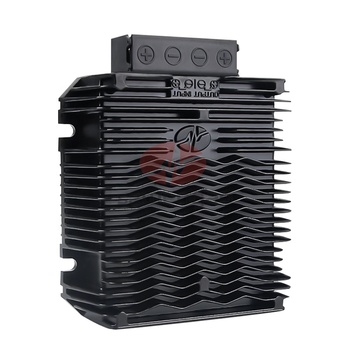
Smart 36V Lithium Battery Charger DC 12V to DC 43.8V Waterproof 13A
- Input Voltage: 12V DC Nominal
- Output Voltage: 43.8V (36V LiFePO4)
- Max Current: 13A (Continuous)
- Protection Rating: IP67 Sealed
Directly manufactured by Shenzhen Eltrum Electronic Co., Ltd. for OEM/ODM volume integration across Bruges, Zeebrugge maritime ports, and European renewable projects.

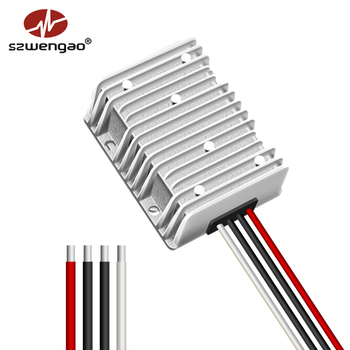
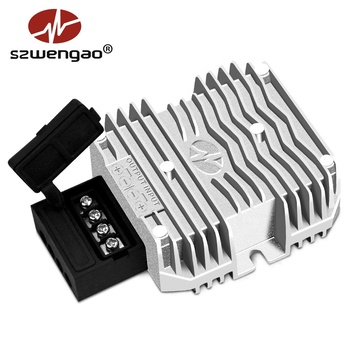

Empowering green transition integrators across West Flanders with certified electronics, ultra-low failure rates, and comprehensive technical customization.
The municipality of Bruges (Brugge)—a crucial logistics, cultural, and maritime hub in the Flemish Region of Belgium—presents a unique micro-environment for solar photovoltaic (PV) systems, electric canal navigation, commercial transport electrifications, and energy storage integration. Operating at the intersection of strict UNESCO World Heritage architectural preservation, proximity to the coastal North Sea marine environment of Zeebrugge, and stringent European Green Deal regulatory standards (EU 2030 targets), regional engineering teams require specialized DC-DC converter topologies to ensure power reliability, grid independence, and thermal durability.
As an OEM/ODM source factory, Shenzhen Eltrum Electronic Co., Ltd. supplies specialized power conversion hardware that overcomes localized voltage drop issues, unpredictable solar irradiance profile fluctuations, and salt-fog atmospheric corrosion characteristic of the West Flanders territory.
Traditional solar-plus-storage designs convert low-voltage DC from PV arrays or battery banks into AC via string inverters, only to rectify it back to DC for battery storage or localized 12V/24V equipment. This dual-stage conversion incurs cumulative efficiency penalties of 12% to 18%. Eltrum's high-efficiency Buck-Boost and Isolated DC-DC converters maintain direct DC bus coupling, achieving up to 96.5% end-to-end topology efficiency with reduced thermal dissipation.
Bruges’ famous canal network is transitioning toward zero-emission electric passenger boats and commercial barges. These vessels operate under 24V, 36V, 48V, or higher lithium-iron-phosphate (LiFePO4) traction banks. Eltrum's IP67/IP68 waterproof isolated DC-DC step-down converters step down high-rail propulsion voltages to stable 12V DC for navigation electronics, marine radar, bilge pumps, and LED lighting while preventing galvanic hull corrosion caused by ground loops.
Due to heritage preservation laws in central Bruges, traditional roof-mounted PV tilt frames are frequently restricted. Integrators utilize hidden low-profile or low-voltage BIPV slate tiles. These fragmented strings produce variable wide-range DC voltages (8V to 60V). Eltrum's Buck-Boost Voltage Stabilizers smooth these fluctuating input rails into constant 13.8V, 24V, or 48V battery-charging buses regardless of partial shading from surrounding medieval brick gables.
The Zeebrugge maritime port corridor relies heavily on commercial electric transport, automated guided vehicles (AGVs), and refrigerated trailer units. Our high-power 24V-to-12V (85A–100A) buck converters and 1500W RS485-controlled modules provide low-noise, regulated power to telemetry, IoT tracking modules, and auxiliary cooling compressors running directly off main battery packs.
Farming estates outside Bruges’ urban perimeter utilize off-grid solar microgrids paired with LiFePO4 storage. Eltrum's smart DC-DC battery chargers provide multi-stage CC/CV charging curves (14.6V to 58.4V), accommodating alternator output or solar DC buses to charge secondary house batteries safely without overstressing primary starter systems.
The energy landscape in Flanders is undergoing rapid decarbonization driven by regional incentives and EU mandates. Key trends shaping procurement requirements in Bruges include:
To assist system engineers in selecting the correct conversion architecture for localized deployments in Bruges, the following matrix outlines topologies, voltage boundaries, and recommended protection profiles:
| Topology Type | Input Range | Output Capability | Isolation Level | Optimal Local Application |
|---|---|---|---|---|
| Buck (Step-Down) | 24V / 48V / 72V DC | 5V, 12V, 24V up to 100A | Non-Isolated / Shared Ground | Heavy electric trucks, buses, port equipment in Zeebrugge |
| Boost (Step-Up) | 10V–18V DC | 24V, 36V, 48V up to 50A | Non-Isolated | Stepping up 12V solar/battery banks to 48V water pumps or LED arrays |
| Buck-Boost | 8V–40V / 10V–60V Wide | 12V, 13.8V, 24V, 48V Regulated | Non-Isolated Wide-Window | Historic building BIPV solar arrays, fluctuating alternator charge lines |
| Galvanic Isolated | 18V–90V High Rail | 5V, 12V, 24V Regulated | 1500V DC Galvanic Transformer | Canal electric boats, telecom towers, ground-loop sensitive sensors |
| DC-DC Smart Charger | 8V–90V DC Input | 12.6V–58.4V CC/CV Curve | Isolated / Non-Isolated Options | Secondary LiFePO4 auxiliary bank charging in commercial vans & boats |
Direct factory production, rigorous engineering quality management, and OEM customization capabilities.
Established in 2015, our 3,000 m² Shenzhen factory operates under strict ISO 9001 quality standards. Our product catalog carries full CE and RoHS certifications, ensuring compliance with European Electromagnetic Compatibility (EMC) directives (EN 61000-6-1/3) and Low Voltage Directives (LVD).
We maintain an extensive R&D portfolio covering over 500 converter models. We provide comprehensive OEM/ODM services—including custom input voltage windows, specific charging voltages (e.g., 14.6V LiFePO4), specialized waterproof connectors, custom extruded heat-sink housings, and RS485 communication protocols.
Every single DC-DC converter and battery charger unit leaving our production facility undergoes strict full-load thermal burn-in testing and automated electrical inspection. This rigorous protocol guarantees a field failure rate of less than 0.1%, protecting your systems against unexpected downtime.
Direct technical answers regarding order quantities, certifications, local shipping, and application compatibility.
For standard DC-DC converters and battery chargers, our Minimum Order Quantity starts at just 5 units. This allows engineering teams in Bruges and West Flanders to order evaluation samples for bench testing and prototyping before committing to high-volume commercial production. Selected high-power industrial units start at 1 to 2 units.
Yes. All converter and battery charger series supplied by Shenzhen Eltrum Electronic Co., Ltd. are manufactured in full compliance with European CE (LVD and EMC directives) and RoHS environmental directives under an ISO 9001 quality management framework. Declaration of Conformity (DoC) certificates and test reports are available upon request for import verification through Belgian customs.
Our marine and outdoor-grade converters feature full epoxy potting within die-cast anodized aluminum alloy enclosures (rated IP67 or IP68). This solid-state design renders internal components completely impervious to salt-air oxidation, high humidity, vibration, and water immersion—making them ideal for canal boats in central Bruges and maritime port infrastructure in Zeebrugge.
You should choose a Buck-Boost converter when your input DC source fluctuates both above and below your required regulated output voltage. For example, a 12V LiFePO4 battery bank or BIPV solar array can drop to 9V under heavy discharge/cloud cover and rise to 14.6V during peak charging. A Buck-Boost unit holds a rock-steady output (such as 12.0V or 13.8V) across this entire range, whereas a Buck converter only operates when the input remains strictly higher than the output.
Yes. Connecting a lithium house battery directly to a standard vehicle alternator or un-regulated solar bus can overheat the alternator and damage the lithium cells due to improper voltage levels. Our battery-to-battery (B2B) DC-DC chargers step up or step down the input voltage to deliver a precise multi-stage Constant Current / Constant Voltage (CC/CV) profile (e.g., 14.6V for 12V LiFePO4, 29.2V for 24V LiFePO4), protecting both the alternator and the battery bank.
Sample orders (5–20 units) are typically dispatched via express air freight (DHL/FedEx/UPS) within 3 to 7 working days, arriving in Belgium within 5 to 8 days. Volume commercial shipments are dispatched via air or ocean transport (FOB or EXW terms). We accept payment via T/T wire transfer, PayPal, and Escrow in USD or EUR currencies.
Partner directly with a certified Shenzhen manufacturer. Share your required input voltage window, output load profile, and environmental specifications—our application engineers will respond within 24 hours.