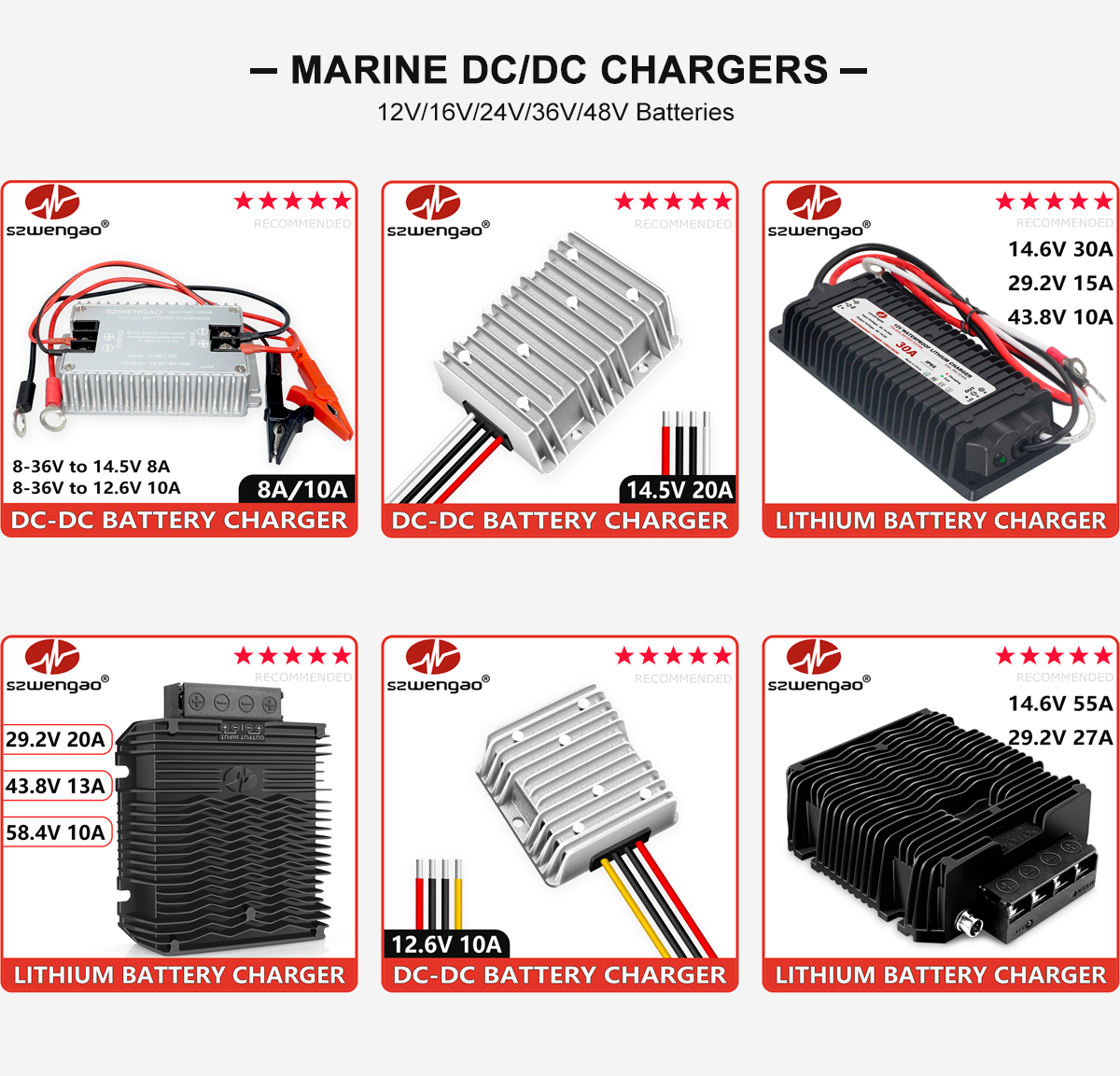
Featured Industrial RV Battery Chargers & Converters
Engineered for extreme operating environments: sealed against maritime salt fog, sulfur-rich geothermal vapors, and high ambient tropical temperatures with high conversion efficiency.
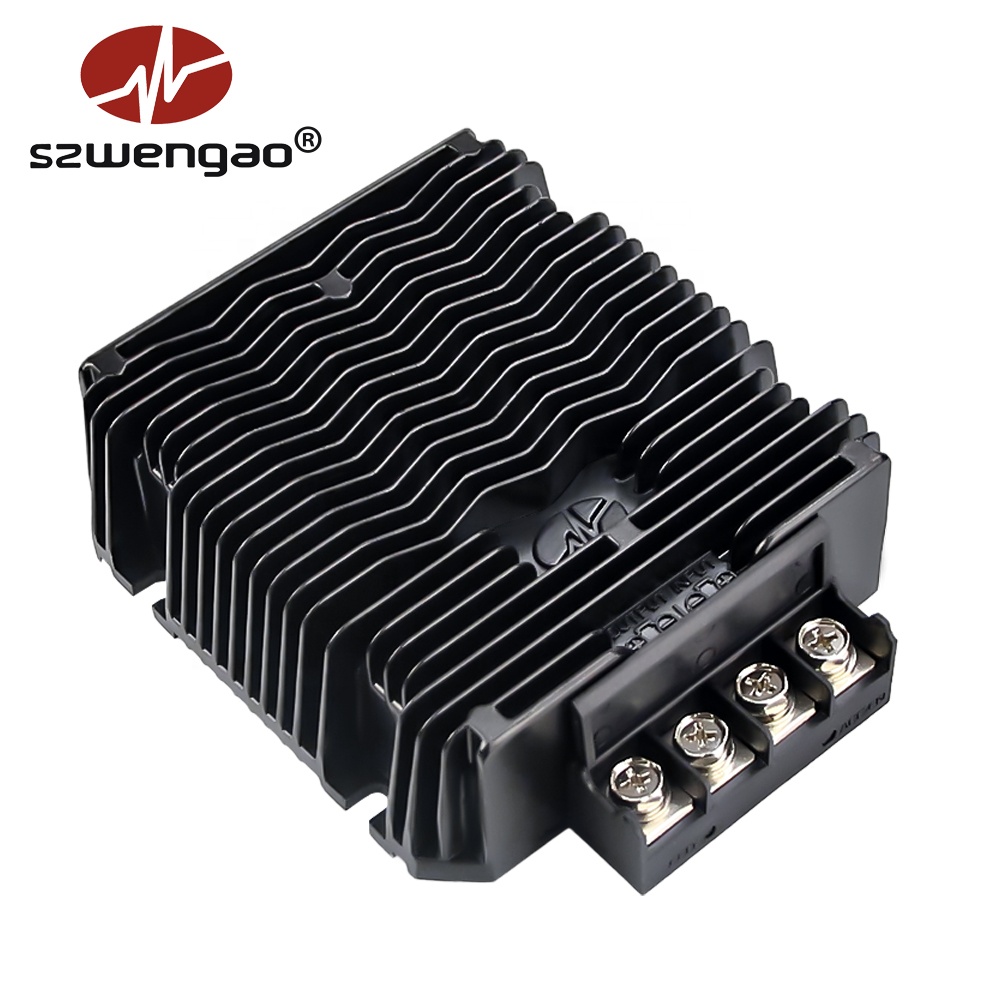
Smart 36V Lithium Charger 12V to 43.8V 13A
- TopologyDC-DC Boost Step-Up
- Input / Output12V DC → 43.8V 13A
- ProtectionIP67 Waterproof, OVP/OCP
- ApplicationRVs, E-Bikes, Utility Carts
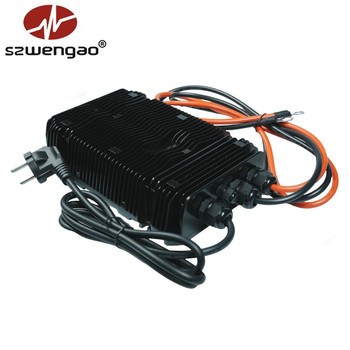
600W IP65 Waterproof AC-DC LiFePO4 Charger
- Input Voltage90–264V Universal AC
- Output Channels14.6V / 29.2V / 58.4V
- Efficiency≥ 92.5% Nominal
- EnclosureDie-cast Aluminum Heatsink
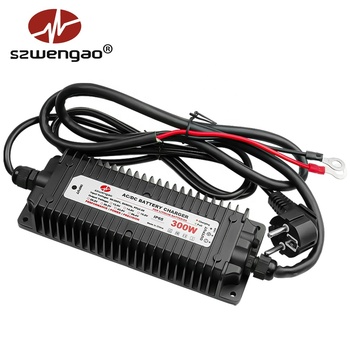
300W Marine & RV Lithium AC Charger
- Output Voltage14.6V / 29.2V Dual Profile
- ProtectionAnti-Salt Corrosion Potting
- PlugsUS / EU / UK Industrial
- CoolingFanless Passive Convection
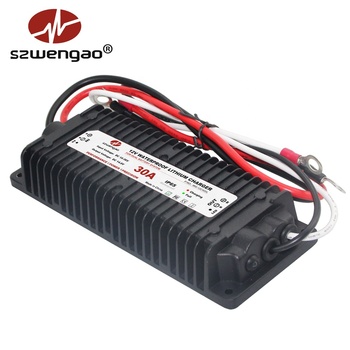
400W 12V DC-DC Waterproof Charger
- DC Input Window10V–36V Alternator/Starter
- AlgorithmLiFePO4 3-Stage CC/CV
- Max Output14.6V / 29.2V @ 25A
- Smart AlternatorIgnition Signal Sensing
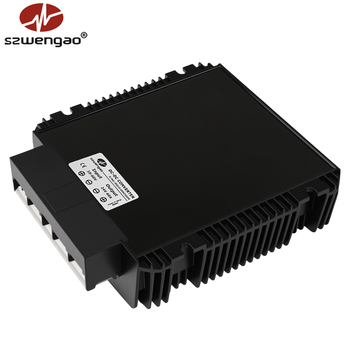
1500W Buck-Boost Voltage Stabilizer
- Input Range10V–60V Wide DC
- Output Regulation12V / 24V / 48V Fixed
- CommunicationRS485 Modbus Telemetry
- Peak Conversion96.8% Ultra-High Efficiency
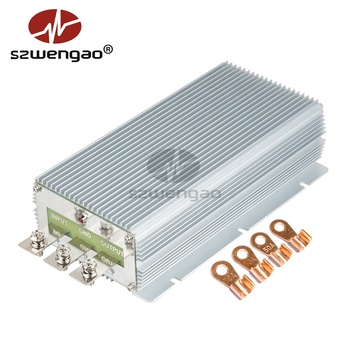
24V to 12V 100A Heavy Duty Buck
- Continuous Current85A – 100A Rated
- Input Bus18V–35V Commercial DC
- Ripple & Noise≤ 50mVp-p Low EMI
- ChassisIP68 Full Epoxy Sealed
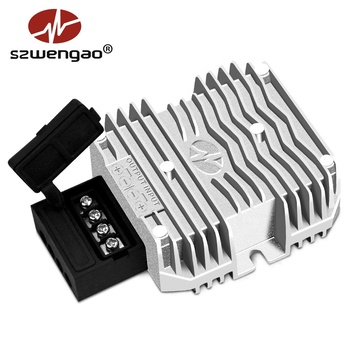
18–90V to 12V Isolated DC-DC Module
- Isolation Rating1500VDC Input/Output
- Ground ProtectionEliminates Ground Loops
- Input Compatibility24V, 36V, 48V, 72V Banks
- DurabilityMil-Std Vibration Resistant
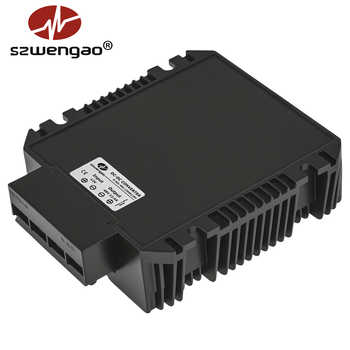
12V to 48V 20A Step-Up DC Booster
- Step-Up Ratio12V DC → 48V DC Stable
- Power Output960W Continuous Capacity
- Thermal ControlIntelligent Thermal Derating
- ApplicationInverters, Winches, Marine AC
Navigating the Critical Power Demands of the Soufrière RV & Mobile Eco-Tourism Sector
The Soufrière district of Saint Lucia represents one of the world's most geographically distinct, ecologically demanding operational envelopes for mobile power electronics. Positioned beneath the towering volcanic spires of Gros Piton and Petit Piton and encompassing the world-renowned Qualibou caldera (Sulphur Springs), vehicle electrical systems are routinely subjected to environmental stressors that rapidly degrade generic consumer-grade charging hardware.
As hospitality operators, overland tour fleets, commercial van-life fabricators, and maritime-RV hybrid users transition en masse toward Lithium Iron Phosphate (LiFePO4) storage chemistries, traditional alternator wiring and conventional open-frame AC chargers fail catastrophically. The confluence of ambient hydrogen sulfide (H2S) atmospheric saturation, sustained relative humidity frequently exceeding 92%, extreme oceanic salt deposition along the Soufrière Marine Management Area (SMMA), and violent 25% gradient switchbacks creates severe electrical and thermal challenges. Shenzhen Eltrum Electronic Co., Ltd. addresses this vital market gap by engineering industrial-grade, hermetically potted RV battery chargers, wide-voltage DC-DC converters, and multi-stage power conditioning modules designed for continuous resilience, mission-critical dependability, and compliance with the Caribbean's aggressive net-zero emissions trajectory.
Engineered Application Scenarios Across the Soufrière Basin
Eltrum's power electronics are specifically mapped to the real-world duty cycles, topography, and climate extremes encountered throughout the southwestern corridor of Saint Lucia.
Rainforest Glamping & Eco-Lodge Auxiliary Cabin Systems
Boutique luxury resorts tucked into the lush slopes of Fond Doux, Anse Chastanet, and Jade Mountain rely heavily on off-grid camper vans, mobile luxury pods, and electric guest shuttles. Standard grid hookups are frequently vulnerable to tropical brownouts. Eltrum's 600W–1000W AC-DC IP65 chargers accept dirty utility line power (90V–264V AC with severe transient sags) and deliver stabilized 14.6V or 29.2V CC/CV energy to cabin LiFePO4 packs without overheating in passive, whisper-quiet operation.
Piton Safari Overland Rigs & High-Torque Switchback Vans
Traversing the serpentine mountain climbs between Vieux Fort, Choiseul, and Soufrière places continuous low-RPM, high-torque strain on commercial vehicle alternators. Standard dual-battery isolators cause standard LiFePO4 batteries to draw unchecked current, burning out alternators within weeks. Eltrum DC-DC battery chargers (such as our 400W 12V 25A unit) intelligently throttle alternator load while maintaining constant current charging curves, preventing alternator stator burnout on steep ascents.
Dual Marine-RV Operations in the Soufrière Yachting Anchorage
In coastal Soufrière, tender support vehicles, overland expedition campers, and recreational sailing catamarans share identical battery platforms. Exposure to corrosive salt mist accelerates electrolytic corrosion on terminal boards. Our IP67/IP68 solid potted modules feature vacuum-injected epoxy shielding that completely isolates inductors, switching MOSFETs, and microprocessor logic from corrosive marine atmospheric salinity and volcanic sulfur deposition.
Technical Comparison: Eltrum RV Chargers vs. Conventional Imports
Procurement officers and engineering managers must evaluate total cost of ownership (TCO) and field failure rates when outfitting fleets in tropical island climates.
| Performance Specification | Generic Commercial Charger | Eltrum Industrial Potted Series | Critical Soufrière Advantage |
|---|---|---|---|
| Internal Sealing & Potting | Conformal coating or open PCB enclosure | Vacuum-Injected Thermally Conductive Epoxy | Impervious to airborne H2S sulfur corrosion and tropical condensation |
| DC Input Window (DC-DC) | Narrow 11.5V – 14.2V operating range | Ultra-Wide 8V – 40V / 18V – 90V Continuous | Accommodates Euro 6 smart alternator voltage throttling and deep battery sag |
| Thermal Derating Threshold | Sharp current drop above 40°C ambient | Full Rated Output to 65°C; Operation to 85°C | Sustained high-output bulk charging in unventilated van engine compartments |
| Galvanic Ground Isolation | Non-isolated common ground only | Optional 1500VDC Isolated Architecture | Prevents dangerous ground loops in mixed fiberglass/chassis metal systems |
| Digital Telemetry Control | Analog pot adjustments / No bus | RS485 Modbus / Dynamic CAN Interface | Real-time pack monitoring and integration with centralized hotel BMS |
| Vibration & Shock Rating | Standard consumer solder joints | MIL-STD-810G Impact Dampened Core | Survives unpaved rain-forested mountain roads and potholed island grades |
Solving Alternator Overheating on Heavy Commercial Climbs
When retrofitting conventional camper conversions or safari passenger transports with high-capacity LiFePO4 batteries (typically 200Ah to 600Ah banks), unmanaged charging introduces an immediate point of catastrophic failure: alternator stator thermal destruction.
Unlike traditional flooded lead-acid batteries whose internal resistance rises rapidly during recharge, LiFePO4 cells exhibit exceptionally low internal impedance throughout almost 95% of their State of Charge (SOC). When coupled via standard mechanical solenoids or split-charge relays, a discharged lithium bank will demand maximum available current from the alternator indefinitely.
At low vehicle speeds—such as crawling up the 20-degree hairpin turns between Canaries and Soufrière—the alternator fan operates at minimal RPM while the winding generates peak thermal output. Eltrum's smart DC-DC chargers solve this by implementing closed-loop micro-stepped current limiting. By constantly analyzing alternator ripple voltage and supply rail sag, our chargers precisely modulate the charge rate, protecting expensive vehicle alternators while pumping optimal, temperature-compensated CC/CV algorithms into the house lithium bank.
Macroeconomic & Energy Trends Transforming the Soufrière Market
Saint Lucia's commitment to the Caribbean Community (CARICOM) Sustainable Energy Roadmap and the national National Energy Transition Strategy (NETS) is driving dramatic structural shifts in commercial transport, tourism hospitality, and mobile electricity storage across Soufrière:
Solar-Alternator Dual Input Integration
High fuel importation costs on Saint Lucia have rendered pure generator power uneconomical. Modern custom expedition builds demand integrated DC-DC chargers capable of blending high-voltage rooftop MPPT solar feeds (up to 90V Voc) with variable alternator current, prioritizing clean photovoltaic energy when vehicle velocity decreases or parked under open tropical canopies.
Fleet Decarbonization in Eco-Tourism
UNESCO World Heritage oversight around the Piton Management Area is forcing resort operators to phase out noisy, fumigant two-stroke and diesel generators at remote sites. Premium glamping sites in Soufrière are deploying silent, zero-emission mobile power battery banks recharged via shore-power high-rate AC-DC waterproof chargers during off-peak hours.
Regulatory Safety & CE/RoHS Directives
As insurance underwriters in the Eastern Caribbean modernize standards for commercial passenger-carrying vehicles, uncertified, open-wire charging components imported through gray-market channels are being systematically rejected during annual roadworthiness inspections. Certified compliance (CE, RoHS, ISO 9001:2015) has evolved from a preference into a strict legal prerequisite.
Shenzhen Eltrum Electronic Co., Ltd. – Factory Power Direct to Soufrière Exporters
Established in 2015, Shenzhen Eltrum Electronic Co., Ltd. operates a high-precision, ISO 9001:2015-certified manufacturing facility spanning 3,000 m² in the Hangcheng industrial corridor of Shenzhen, China. With a catalog containing over 500 validated DC-DC converter and battery charger topologies, we maintain an international reputation as the direct technical partner for volume distributors, overland equipment fabricators, and specialized importers worldwide.
Surface Mount Technology (SMT) & Rigorous Burn-In
Every Eltrum charger board is populated using high-speed Yamaha and Panasonic SMT lines, followed by 100% automated optical inspection (AOI). Completed modules undergo a non-negotiable 4-hour full-load thermal burn-in cycle at elevated chamber temperatures before sealing, completely eradicating infant mortality failure rates.
Full Vacuum Potting & Environmental Shielding
We specialize in hermetic silicone and epoxy encapsulation. By eliminating all air pockets inside the aluminum casing, our products achieve absolute IP67 and IP68 water/dust proofing, high dielectric insulation, and rapid thermal transfer directly to the exterior cooling fins—vital for Caribbean sulfur atmospheres.
OEM/ODM Agile Customization
From tailored charge cut-off voltages (such as 14.4V vs 14.6V for specialized lithium iron batteries) to bespoke harness terminations (Anderson power poles, M8 studs, waterproof Deutsch plugs) and custom private branding, our direct factory R&D engineering team designs and samples custom solutions with flexible MOQs starting from 5 units.
How to Size RV Battery Chargers for Tropical High-Grade Routes
Selecting the proper charging capacity requires balancing battery bank recharge requirements against alternator thermal reserve and ambient temperature limits.
Recommended Charging Current Sizing Formula
For LiFePO4 chemistry deployed in Soufrière's tropical climate (32°C average ambient with high engine compartment temperatures), the recommended continuous charging current \(I_{charge}\) should be sized at 0.2C to 0.3C of total battery bank capacity \(C_{bank}\), capped at 50% of the alternator's rated idle output \(I_{alt,idle}\):
Illustrative Example for Soufrière Tour Fleet:
A customized Toyota HiAce safari conversion equipped with a 12V 200Ah LiFePO4 house battery and a 120A OEM alternator (which outputs approximately 60A at idle/low climbing RPM):
• Target 0.25C Rate = 50A
• Alternator 50% Idle Ceiling = 30A
Result: The optimal specification is Eltrum's 12V 25A–30A DC-DC Charger (such as the WG-12C400M series). Installing an unmanaged 60A charger would overload the alternator during crawling ascents toward the Pitons, triggering alternator stator burnout.
Frequently Asked Questions for Importers & Fleet Operators in Soufrière
Clear, actionable answers addressing shipping logistics, environmental compatibility, technical customization, and wholesale compliance.
How do Eltrum chargers withstand the sulfur gas emissions from Soufrière's Sulphur Springs?
Can your DC-DC battery chargers work with Euro 6 and smart alternator vehicles?
What is the Minimum Order Quantity (MOQ) and lead time for shipments to Saint Lucia?
Can you customize charge profiles for proprietary LiFePO4 or Lithium Titanate (LTO) batteries?
What international certifications accompany Eltrum battery chargers and converters?
What payment terms and after-sales warranty support do you provide for Caribbean accounts?
Empower Your Mobile & RV Fleets with Factory-Direct Engineering
Whether you require customized 12V–48V DC-DC converters, waterproof LiFePO4 shore-power chargers, or RS485-integrated power stabilizers for commercial fleets in Soufrière, our technical engineering team is ready to deliver tailored solutions.