Featured Industrial Regulated Power Supply & Conversion Modules
Certified under ISO 9001 quality systems and tested to CE and RoHS directives. Engineered with high-frequency synchronous rectification, wide thermal ranges, and rugged potting for heavy-duty operational environments.

Smart 36V Lithium Battery Charger (DC 12V to 43.8V 13A)
Intelligent step-up CC/CV charging unit engineered for EV vehicles, light commercial bikes, and mobile dual-battery power setups.
- Input Range10V – 16V DC
- Regulated Output43.8V DC @ 13A
- Efficiency> 94% Peak
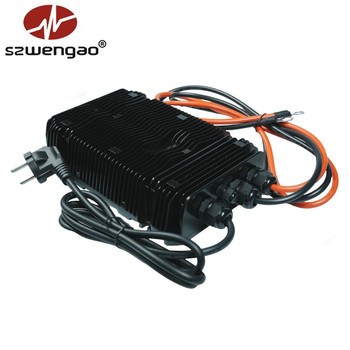
600W Waterproof AC-DC LiFePO4 Fleet Charger
Designed for heavy industrial handling equipment, electric utility carts, and marine energy storage banks operating across the Danube river basin.
- AC Input90V – 264V AC
- DC Output Voltage14.6V – 58.4V Profile
- Ingress RatingIP65 Sealed Casing
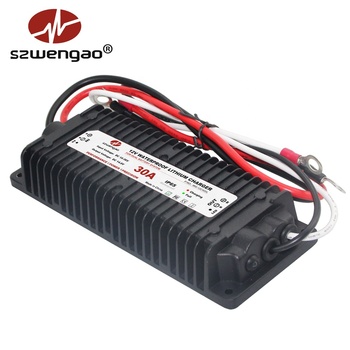
400W Heavy-Duty DC-DC Battery-to-Battery Charger
Safeguards starter alternators while providing three-stage algorithmic charging curves to secondary LiFePO4 batteries in utility fleets.
- Input Swing10V – 36V DC
- Output Profiles14.6V / 29.2V / 43.8V
- Thermal Window-40°C to +85°C

1500W High-Power Bidirectional Buck-Boost Regulator
Wide-window voltage regulation module with RS485 telemetry for automated manufacturing and solar storage systems in Serbian industrial zones.
- Input Range10V – 60V DC Wide
- Regulated Output12V / 24V / 28V / 48V
- CommunicationRS485 Modbus RTU
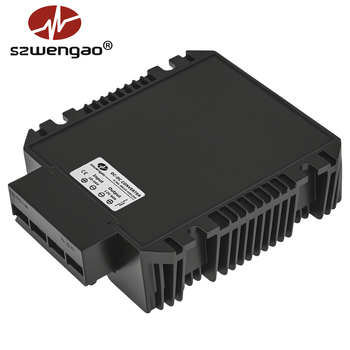
10–44V to 12V 60A High-Current Voltage Stabilizer
Eliminates cold-crank brownouts and sudden load dumps in commercial vehicle cabins, mining equipment, and municipal transport systems.
- Input Voltage10V – 44V DC
- Continuous Current50A – 60A Constant
- Output WattageUp to 720W Max
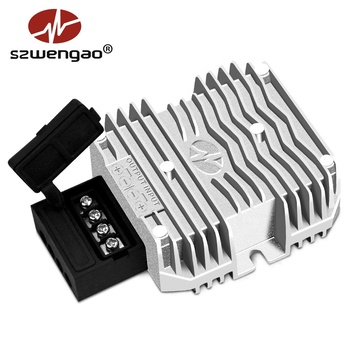
18–90V to 12V 10A Industrial Isolated Converter
Internal high-frequency transformer breaks ground loops and suppresses high-energy spikes across telecom basestations and AGV architectures.
- Dielectric Isolation1500V DC Barrier
- Ultra-Wide In18V – 90V DC
- Pure Output12V @ 10A (120W)

24V to 12V 100A Heavy-Duty Truck Buck Converter
High-ampere step-down conversion delivering clean 12V power from 24V commercial vehicle alternators to run auxiliary refrigeration and lighting.
- Nominal In24V DC (18V – 35V)
- Output Current85A – 100A Massive
- Thermal DesignDie-Cast Aluminum Heat Sink
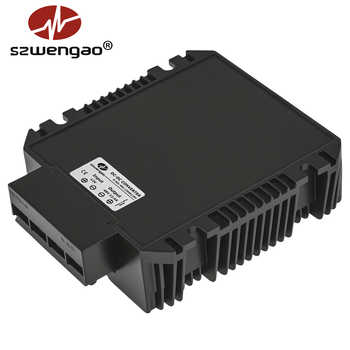
12V to 48V 20A Rugged Boost Converter (960W)
Step up standard 12V automotive battery banks to 48V rails for driving telecom auxiliary systems, BLDC motors, and heavy off-grid solar equipment.
- Input Rating10V – 18V DC
- Regulated Output48V @ 20A
- CasingFlame-Retardant Epoxy Potted
Regulated Power Conversion in Serbia: Industrial Deployments & Operational Scenarios
The Republic of Serbia stands as the pivotal manufacturing and logistics hub connecting the European Single Market with the Eurasian transit corridor. Driven by substantial Foreign Direct Investment (FDI) into automotive assemblies, rolling stock manufacturing, telecommunications infrastructure, and intensive greenfield metallurgy, the country requires exceptionally robust power regulation architectures. Industrial installations across the Belgrade-Novi Sad innovation spine, the automotive hub in Kragujevac, the heavy mechanical centers in Niš, and the mining belts around Bor demand switched-mode power supplies (SMPS) capable of operating in rigorous field environments.
1. Commercial EV & Rolling Stock Electronics
Serbia’s modernization of the Belgrade-Subotica railway line and investments in Kragujevac’s electric vehicle manufacturing ecosystem demand auxiliary power conversion systems compliant with rigorous vehicular standards. Our synchronous step-down (buck) converters bridge the gap between high-voltage 24V/48V vehicle batteries and 12V onboard telemetry, signaling processors, and pneumatic valve controllers, preventing component failure during severe alternator load dumps.
2. Mining & Heavy Metallurgical Machinery
In the open-pit mining environments of RTB Bor and Majdanpek, equipment is continuously subjected to extreme mechanical vibration, airborne conductive copper dust, and severe electrical surges. Our fully potted, IP67-rated isolated DC-DC converters eliminate ground loops and isolate sensitive programmable logic controllers (PLCs) from high-power inductive motor spikes.
3. Telecommunications & Balkan Microgrids
Telecom operators deploying 5G repeaters across rural mountain passages in Central Serbia and the Dinaric Alps rely on -48V DC power backup systems. Our isolated 36–75V to 12V/24V modules provide clean dielectric isolation up to 1500V DC, protecting remote broadband gear against lightning transient induction and seasonal grid instability.
Technological Trends Reshaping Serbian Industrial Power Procurement
Procurement patterns among Serbian system integrators and tier-1 original equipment manufacturers (OEMs) have shifted from generic off-the-shelf power packs to custom-configured, highly efficient power architectures. The primary market drivers include:
The Acceleration of Nearshoring Manufacturing: European manufacturers are establishing localized tier-1 and tier-2 assembly hubs within Serbia's 15 Free Zones (Slobodne Zone Srbije). These operations require electrical subsystems that conform strictly to European Union CE harmonized directives, specifically EN 55032 (Electromagnetic Compatibility for Multimedia Equipment) and EN 61000-4-2 (Electrostatic Discharge Immunity), while demanding factory-direct pricing to maintain margin targets.
Mass Transition to LiFePO4 Chemistry: Across material handling facilities, agricultural automation in Vojvodina, and solar-diesel hybrid microgrids, heavy lead-acid batteries are being aggressively replaced by Lithium Iron Phosphate (LiFePO4) storage banks. Unlike lead-acid cells, LiFePO4 batteries exhibit an extremely flat discharge curve (~3.2V per cell nominal) followed by a steep knee, demanding precise constant-current/constant-voltage (CC/CV) absorption algorithms (e.g., 14.6V for 4S, 29.2V for 8S, 58.4V for 16S packs) with automatic zero-current cut-offs to prevent thermal overcharging.
Digital Telemetry via RS485 and CAN Bus: Modern predictive maintenance setups within automated factories require power supplies that do not simply provide blind current, but actively transmit input voltage, output current, internal junction temperature, and fault status registers directly to the SCADA system via RS485 Modbus RTU protocol.
Comparative Topology Matrix for Serbian System Integrators
Selecting the proper switching topology is the critical determinant of system longevity, thermal dissipation, and electromagnetic interference (EMI) containment. Below is an engineering comparison of the primary architectures exported to the Serbian market:
| Topology Family | Typical Input / Output | Galvanic Isolation | Conversion Efficiency | Primary Application in Serbia |
|---|---|---|---|---|
| Buck (Step-Down) | 24V/48V in → 12V/24V out | Non-Isolated (Common Ground) | 94% – 97% | Commercial vehicle auxiliary power, commercial fleet telematics, bus HVAC control. |
| Boost (Step-Up) | 12V in → 24V/36V/48V out | Non-Isolated | 92% – 95% | Agricultural sensor arrays, industrial LED high-bay lighting, BLDC pump drives. |
| Buck-Boost Stabilizer | 8–40V in → 12V/13.8V fixed | Non-Isolated | 91% – 94% | Engine cranking voltage stabilization, variable voltage solar battery inputs. |
| Transformer Isolated | 18–90V in → 5V/12V/24V out | 1500V – 3000V DC Barrier | 88% – 92% | Substation SCADA automation, telecommunications basestations, industrial robotics. |
| Smart Battery Charger | 10–36V DC or 90–264V AC | Chemistry Dependent | 93% – 96% | Off-grid LiFePO4 dual-battery systems, light electric mobility fleet charging. |
Shenzhen Eltrum Electronic Co., Ltd.: Manufacturing Credentials
Founded in 2015, Shenzhen Eltrum Electronic Co., Ltd. has established itself as an authoritative manufacturer of high-reliability DC-DC power converters, switched-mode power supplies (SMPS), and intelligent LiFePO4 battery charging modules. Serving global clients across 130+ countries, our engineering core originated in high-density galvanic isolation conversion, which now underpins our comprehensive catalog of 500+ active product models.

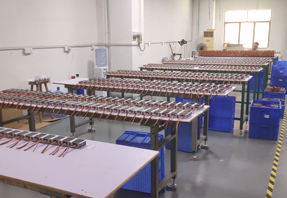
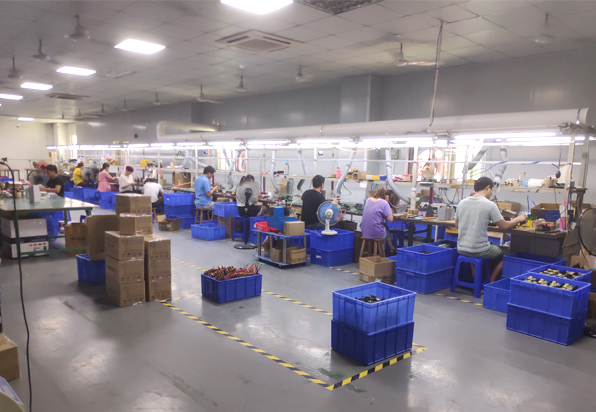
Our manufacturing ecosystem spans automated surface-mount technology (SMT) lines, custom toroidal winding facilities, optical solder inspection (AOI), and vacuum potting dispensing for epoxy encapsulation. Key operational strengths include:
1. Strict Quality & Burn-In Protocol: Every single converter that leaves our floor undergoes an automated 4-hour, 100% full-load dynamic burn-in test at elevated ambient temperature (50°C) with continuous cycle power interrupts to eliminate infant component mortality.
2. OEM/ODM Custom Engineering Service: Serbian automotive, agricultural, and industrial OEMs regularly leverage our in-house engineering team to develop customized pinout layouts, non-standard voltage steps (e.g., 80V down to 13.8V for electric forklifts), multi-stage programmable charging profiles, and IP68 hermetically sealed die-cast enclosures.
3. Direct Exporter Infrastructure to Serbia: Our experienced export documentation desk handles EUR.1 documentation assistance, direct air cargo consignments into Belgrade Nikola Tesla Airport (BEG), and containerized freight routing through the Port of Rijeka or Port of Bar, ensuring smooth customs processing under Serbian Customs Tariff codes (HS Code 8504.40).
Frequently Asked Questions for Serbian Procurement Teams
Technical and logistical guidance tailored to Serbian supply chain managers, integration engineers, and equipment distributors:
What is the Minimum Order Quantity (MOQ) for Serbian OEM pilot projects?
To support prototype development, validation bench testing, and pilot integration runs, our typical sample MOQ starts from just 5 units for standard converter and charger models. Selected high-power platforms (1000W–1500W) can be sampled in 1–2 unit quantities.
Do your converters carry valid CE and RoHS documentation for Serbian customs?
Yes. All our exported power converters and smart chargers are engineered to comply fully with European CE directives (LVD 2014/35/EU, EMC 2014/30/EU) and RoHS 2011/65/EU restrictions. Comprehensive Declaration of Conformity (DoC) certificates, test reports, and MSDS documentation are provided with dispatch.
When must we choose a Galvanically Isolated converter over a Buck converter?
Non-isolated buck converters share a common negative ground between input and output, which provides higher efficiency and lower cost. However, in telecommunications installations, industrial automation racks with extensive sensor cabling, or mining vehicles with floating chassis grounds, galvanic isolation (1500VDC+) is necessary to prevent ground loop noise and shield microcontrollers from fatal transient voltage spikes.
How do your power supplies perform in continental Balkan winter temperatures?
Serbia experiences significant continental temperature swings, frequently dipping to -20°C in winter and exceeding +40°C in summer. Our potted series utilize thermal-conductive epoxy resins rated for -40°C to +85°C operation, preventing cracking, internal condensation, and cold-start component drift.
Can your DC-DC battery chargers safely charge LiFePO4 packs from vehicle alternators?
Yes. Direct connection of modern high-output Euro-6 alternators to depleted LiFePO4 batteries causes severe alternator overheating and premature battery damage due to massive uncontrolled current surges. Our battery-to-battery (DC-DC) chargers govern the charging profile through tailored constant current (CC) and constant voltage (CV) stages, ensuring full 100% capacity replenishment without overloading the vehicle's electrical circuit.
What are the standard international trade terms and payment options?
We operate under standard Incoterms 2020 including EXW, FOB Shenzhen, CIF Belgrade, and DAP door-to-door courier freight via DHL/FedEx. Settlement is supported via T/T bank transfer in EUR or USD, as well as secure PayPal or Escrow for preliminary sample evaluations.