Featured Railway Power Converters & Systems
Engineered for extreme shock, thermal endurance, and high dielectric breakdown isolation across metro, light rail, and heavy transit lines.
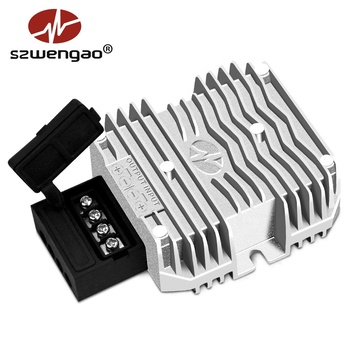
Isolated 18–90V to 12V 10A Railway Aux Converter
- Input Window: 18–90V Ultra-Wide DC
- Output: 12V DC @ 10A (120W)
- Isolation: 1500V DC Galvanic
- Application: Metro Telematics & TCMS

1500W High-Power Buck-Boost Converter with RS485
- Input Window: 10–60V Dynamic DC
- Output: 12V / 24V / 48V (1500W)
- Telemetry: RS485 Modbus RTU
- Protection: IP67 Sealed Housing
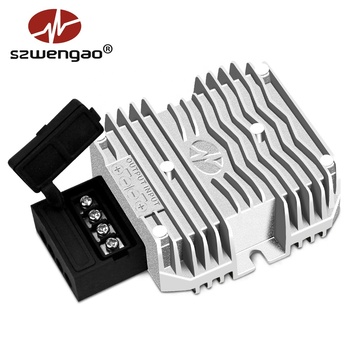
Isolated 36–75V to 24V 5A Signaling DC Supply
- Input Voltage: 36–75V DC (48V Bus)
- Output: 24V DC @ 5A (120W)
- Noise Filter: Low Ripple <30mVp-p
- Standard: EN 50121-3-2 EMC
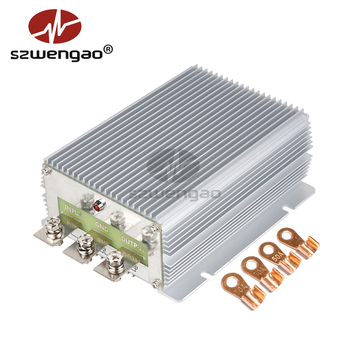
48V to 24V 40A 1000W Heavy-Duty Buck Converter
- Input Nominal: 48V DC (30–60V)
- Output: 24V DC @ 40A (1000W)
- Efficiency: Up to 96.5% Synchronous
- Thermal: Integrated Fin Cooling
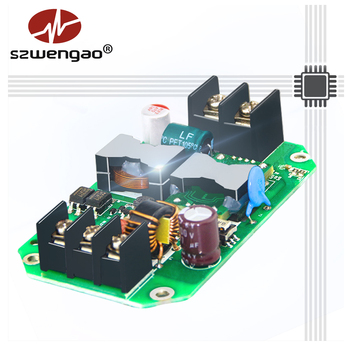
Isolated 36–75V to 12V 10A GSM-R & Radio Converter
- Input Bus: 36–75V DC Range
- Regulated Output: 12V DC @ 10A Constant
- Potting: Shock & Fire Polyurethane
- Target: Cab Radio, PIS, Displays

Smart 36V LiFePO4 DC-DC Charger 12V to 43.8V 13A
- Charging Mode: 3-Stage CC/CV Automatic
- Boost Voltage: DC 12V in → 43.8V out
- Charge Current: 13A Continuous
- Enclosure: IP68 Anti-Corrosion

24V to 12V 85A/100A Cab Lighting & HVAC Buck
- Input Voltage: 18–32V DC Continuous
- Output Power: 12V DC @ 100A (1200W)
- Transient Clamp: TVS Spike Suppressor
- Features: Parallel Redundancy Ready
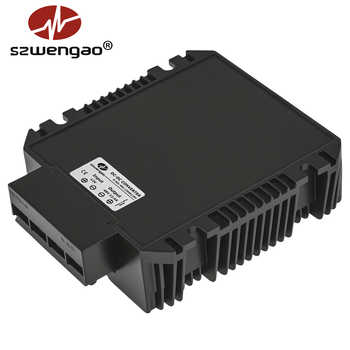
12V to 48V 20A Waterproof Boost Power Converter
- Input Range: 10–20V DC Wide
- Output Voltage: 48V DC @ 20A (960W)
- Ingress Rating: IP68 Hermetic Vacuum Potted
- Use Case: Trackside Sensors & Switches
Engineering DC-DC Power for the Dominican Republic Rail Transit Network
A rigorous overview of electromagnetic mitigation, mechanical shock damping, and extreme tropical climate hardening required for Caribbean railway systems.
1. The Demands of Dominican Rapid Transit: Santo Domingo Metro & Santiago Monorail
The Caribbean transit landscape is undergoing an unprecedented modernization push. The Office for the Reorganization of Transportation (OPRET) in Santo Domingo, along with the development of the Santiago Integrated Transportation System (SIT Santiago), has established high technical thresholds for rolling stock subsystems. Catenary fluctuations, regenerative braking spikes, and severe trackside inductive kickback create hazardous electrical noise for sensitive auxiliary equipment.
In railway rolling stock, auxiliary power supply architectures convert overhead DC catenary or high-voltage third-rail distribution (750V DC to 1500V DC) into standardized internal low-voltage DC buses—commonly 24V, 48V, 72V, or 110V DC. These intermediate voltages then feed essential cab electronics, European Train Control System (ETCS) and Communication-Based Train Control (CBTC) transponders, passenger information displays, automated door control units (DCUs), and emergency LED lighting strings.
Under Dominican operating conditions, converters must endure micro-power supply interruptions of up to 10 milliseconds (Class S2) and supply changeover interruptions up to 100 milliseconds without rebooting or corrupting downstream train management computing systems.
2. Galvanic Isolation & Common-Mode Noise Suppression
Non-isolated step-down regulators are unacceptable for mission-critical train-line circuits. Return current flowing through traction steel rails generates significant ground potential differences between railcars. Shenzhen Eltrum Electronic Co., Ltd. incorporates high-frequency planar transformer isolation delivering dielectric withstand voltages from 1,500V DC up to 3,000V DC between input, output, and chassis ground.
This galvanic barrier eliminates hazardous ground loops, protects passenger-facing USB and telecommunications equipment from traction ground surges, and ensures that catastrophic short circuits on primary distribution rails do not migrate to cab driver control consoles or interlocking microprocessors.
3. Tropicalization: Countering 95% Relative Humidity and Coastal Salinity
The Dominican Republic presents a severe tropical marine environment. Running along coastal corridors near Santo Domingo, the Port of Haina, and Caucedo, airborne salt mist accelerates galvanic corrosion on unpotted electrical terminals. Furthermore, midday ambient temperatures inside equipment compartments frequently exceed 55°C with 95% non-condensing relative humidity.
Eltrum converters overcome this via 100% complete vacuum encapsulation using UL94 V-0 flame-retardant polyurethane potting compounds. This hermetic barrier repels moisture ingress, eliminates condensation risks during sudden tropical rainstorms, and transfers heat directly to the extruded aluminum enclosure via passive conduction, completely eliminating mechanical cooling fans which are prone to dust and humidity fouling.
Target Application Scenarios Across the Dominican Republic
Tailored engineering implementations addressing the distinct infrastructure needs of passenger transit and heavy bulk freight corridors.
Santo Domingo Metro Auxiliaries
Rolling stock deployed on Metro Line 1 and Line 2 relies on robust DC-DC step-down converters to transform 72V/110V battery bank reserves into stable 24V DC. These rails energize driver desk instrumentation, automatic fare collection (AFC) interfaces, fire detection sensors, and cab-to-ground bi-directional communication systems without thermal derating in unconditioned undercar bays.
SIT Santiago Monorail Rolling Stock
The elevated straddle-beam monorail system in Santiago de los Caballeros requires ultra-compact, high-power-density power units. Eltrum isolated DC-DC modules provide auxiliary power for door obstacle detection mechanisms, active bogie monitoring telemetry, and emergency battery equalization circuits, operating seamlessly despite heavy vibrational stresses matching IEC 61373 Category 1 Class B standards.
Sugar Cane & Industrial Freight Lines
The Dominican Republic's private heavy industrial railways, such as the Central Romana agricultural rail lines and regional mining corridors, employ heavy diesel-electric locomotives. During engine cold cranking, main 24V/32V starter batteries sag drastically below 10V. Eltrum buck-boost regulators maintain constant 24.0V outputs to dispatch GPS trackers, safety telemetry, and hydraulic valve drivers.
Trackside Wayside Signaling & Interlocking
Signaling bungalows along the northern and eastern transport corridors experience line drop over long feeder cables. Our wide-range isolated DC-DC converters step down variable 48V–90V line distribution to clean 12V and 24V levels, powering fail-safe axle counters, LED signal heads, and track circuit relays with sub-30mV ripple to eliminate signal interference.
LiFePO4 Upgrade for Traction Substations
Modern transit depots in Dominican urban centers are shifting from toxic lead-acid backup banks to high-cycle Lithium Iron Phosphate (LiFePO4) storage. Eltrum smart battery-to-battery chargers (supporting custom 14.6V, 29.2V, 43.8V, and 58.4V profiles) regulate energy transfer between backup diesel gen-sets, solar PV substations, and critical 48V DC telecom batteries.
Port Terminal Cranes & Rail Intermodal Yards
Intermodal transshipment terminals at DP World Caucedo and Rio Haina rely on automated rail-mounted gantry (RMG) cranes and yard shunters. Heavy motor regenerative surges routinely spike power lines. Eltrum high-wattage buck converters provide clamped, isolated 24V power to programmable logic controllers (PLCs), LiDAR sensors, and camera arrays.
Infrastructure Modernization & Macro Rail Trends (2025–2035)
How the National Development Strategy and regional connectivity projects are elevating rolling stock component standards in the Caribbean.
Decarbonization, Nearshoring, and the National Railway Masterplan
Under the Dominican Republic's Vision 2030 and National Multi-Year Public Sector Plan, the central government is prioritizing public rail infrastructure over fragmented road transit. The expansion of Santo Domingo Metro Line 2C out to Los Alcarrizos and the planned connection to Haina Port will interconnect the nation's premier passenger hub with containerized maritime traffic.
Furthermore, the feasibility of the Santo Domingo to Santiago Interurban Freight and Passenger Corridor will necessitate dual-voltage locomotives capable of traversing varied altitudes and microclimates—from sea level salt air up to the humid Cordillera Central foothills. Key trends dictating DC-DC converter procurement for Dominican projects include:
As rail equipment tenders in the Dominican Republic incorporate tighter North American (AREMA) and European (CENELEC) norms, suppliers must move beyond off-the-shelf automotive-grade bricks. Converters must demonstrate verifiable test logs for impulse voltage withstand (1.2/50µs surges up to 5kV) and wide input fluctuations between 66% and 144% of nominal traction voltage without tripping breaker protections.
Shenzhen Eltrum Electronic Co., Ltd. Direct Manufacturer Direct Advantage
Established in 2015, Shenzhen Eltrum Electronic Co., Ltd. manufactures world-class DC-DC power converters, high-voltage battery charging architectures, and custom power supplies engineered for extreme duty cycles.
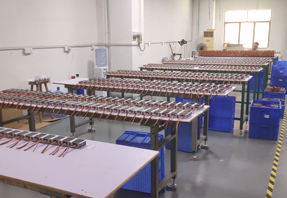
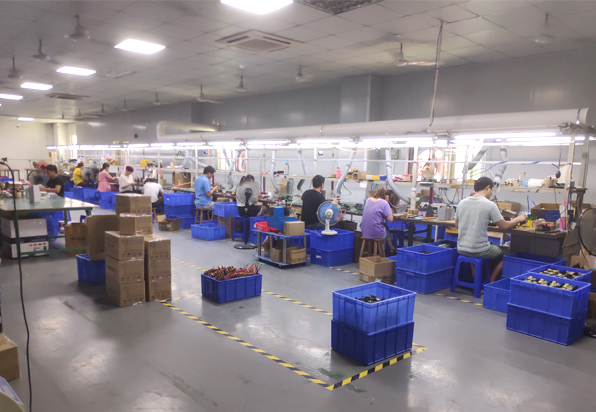
With a verified 3,000m² production footprint and 51–100 specialized technicians, our factory executes high-precision surface mount assembly (SMT), automated transformer winding, hermetic vacuum encapsulation, and rigorous 100% full-load burn-in testing under elevated temperatures.
Our engineering center accommodates custom input/output voltages, proprietary RS485 communication protocols, specialized terminal blocks, and custom mounting brackets for quick retrofit into existing Alstom, Siemens, or CRRC rolling stock cabins deployed in Latin America.
Inquire Now
Dominican Republic Buyer & Engineering FAQs
Direct answers to the most common technical, logistics, compliance, and warranty questions raised by Caribbean rail project contractors.
What specific railway standards do Eltrum DC-DC converters comply with for Dominican projects?
How do your converters withstand the extreme tropical humidity and coastal salt fog of Santo Domingo and Haina?
Can you customize DC input ranges for legacy rolling stock or non-standard diesel locomotives?
What is your Minimum Order Quantity (MOQ) and lead time for evaluation samples delivered to the Dominican Republic?
What customs and logistics documentation do you provide for Dominican clearance (DGA)?
How does galvanic isolation protect our cab radio and wayside signaling systems from failure?
What payment terms and factory warranties are offered to Dominican infrastructure contractors?
Equip Your Dominican Rail Transit Project with Reliable Power
Consult with our power conversion engineers today. Request technical datasheets, CAD dimensional models, compliance test certificates, or custom engineering samples for rolling stock validation.