High-Efficiency Onboard Charging & DC-DC Architecture
Engineered to satisfy stringent CE, RoHS, and UNECE automotive EMC requirements across Italian industrial and nautical sectors.

Smart 36V Lithium Battery Charger DC 12V to 43.8V 13A
- TopologyBoost DC-DC Charger
- Input Voltage10V – 36V DC
- Max Output43.8V @ 13A (CC/CV)
- ProtectionIP67 Fully Potted
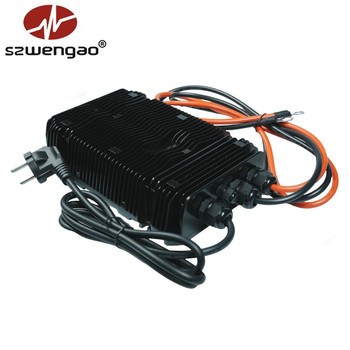
600W Waterproof LiFePO4 AC-DC Onboard Charger
- Input Voltage90V – 265V AC Universal
- Output Rails14.6V / 29.2V / 58.4V
- Efficiency≥ 93.5% Resonant LLC
- SuitabilityMarine & Utility EV
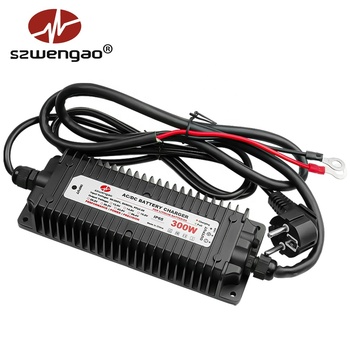
300W Compact Marine Lithium Onboard Charger
- AC Range100V – 240V 50/60Hz
- ProfilePre-charge, CC, CV, Cut-off
- HousingDie-Cast Aluminum Salt-Resistant
- Plug StandardEU Schuko / Custom Molex
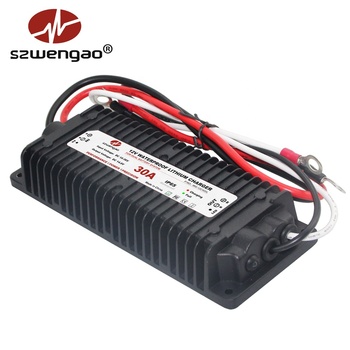
400W Alternator-to-Battery DC-DC LiFePO4 Charger
- Input10V – 36V Wide DC Range
- ChemistryLiFePO4, AGM, GEL, Ternary
- ControlSmart Alternator Euro 6 Ignition
- CoolingConvection Sealed Heat Sink

1500W Dynamic Buck-Boost Onboard Power Supply
- Input Range10V – 60V Continuous
- Regulated Output12V, 24V, 28V, 48V Programmable
- Bus ProtocolRS485 / CANbus Integrated
- Efficiency96.8% Peak Synchronous
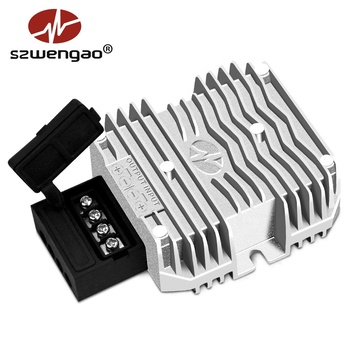
Isolated 18-90V Wide-Input Auxiliary DC Converter
- Isolation Voltage1500V DC Dielectric Barrier
- Input Swing18V – 90V Traction Inputs
- Regulated Rail12.0V ±1.5% @ 10A (120W)
- StandardEN 61000-6-2, EN 61000-6-4

24V to 12V 100A High-Current Step-Down Converter
- Current Output100A Continuous (1200W)
- Input Operating18V – 35V DC
- ProtectionThermal Cutback, Short Circuit
- Commercial UseIveco Bus & Fleet Telematics
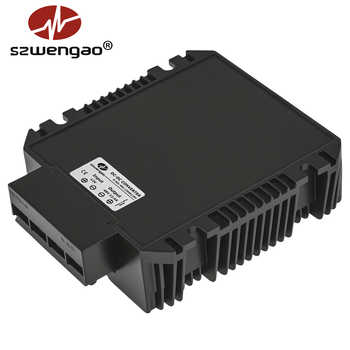
Waterproof 12V to 48V High-Torque Boost Charger
- Primary Bus10V – 16V Automotive 12V
- Traction Rail48.0V / 54.6V up to 20A
- PottingThermostable Silicon Elastomer
- TargetElectric Hydraulics & Winches
Onboard Power Conversion Architecture for Italy's High-Tech Industries
A comprehensive examination of galvanic isolation, thermal management in Mediterranean microclimates, and compliance with the EU Low Voltage Directive.
The Italian industrial manufacturing landscape is experiencing a rapid architectural shift toward high-efficiency electrical drivetrains, hybrid auxiliary systems, and localized off-grid energy storage. Across the traditional shipyards of Viareggio and Genoa, the advanced agricultural machinery corridors of Emilia-Romagna and Veneto, and the high-precision vehicle prototyping laboratories in Modena's "Motor Valley," procurement directors and lead hardware engineers are confronting severe challenges in electrical management. The deployment of custom lithium-iron phosphate (LiFePO4) and high-density NMC battery chemistries demands onboard battery chargers (OBCs) and DC-DC power converters capable of delivering extreme power densities while withstanding mechanical vibration, ambient salt fog, wide temperature oscillations, and transient voltage spikes.
As an ISO 9001 certified manufacturer with over 500 validated power topologies, Shenzhen Eltrum Electronic Co., Ltd. addresses the Italian market's demanding requirements by designing and exporting specialized onboard battery chargers. Our systems replace obsolete, unsealed linear modules with synchronous resonant LLC architectures, fully potted polyurethane and silicone enclosures, and microprocessor-controlled Constant Current/Constant Voltage (CC/CV) profiles. By bridging the gap between rigorous European design directives (such as CE, RoHS, and UNECE R10 automotive EMC) and factory-direct agility, we provide Italian Tier-1 integrators and OEM builders with high-reliability power solutions starting from low sample minimum order quantities (MOQs of 5 units).
Furthermore, the Italian geographical condition—spanning hot Mediterranean coastal zones in the south to rugged sub-alpine working territories in Piedmont and Trentino-Alto Adige—imposes strict operational boundaries. Onboard chargers must operate without convective airflow fans that succumb to dust, sawdust, vineyard chemicals, or marine salt crystallization. Eltrum's fully potted, cast-aluminum heatsink chassis ensure continuous operation from -40°C to +85°C, maintaining operational efficiency above 94% without thermal throttling under nominal load regimes.
Localized Applications Across Key Italian Industrial Hubs
Tailored power electronics addressing localized operational constraints, moisture ingress, and vibration limits across the Italian peninsula.
Yachting & Marine (Liguria & Adriatic)
The Italian luxury nautical sector—concentrated in La Spezia, Viareggio, Livorno, and Ancona—demands high safety standards. Our IP65/IP67 waterproof onboard chargers provide complete galvanic isolation between shore power and house battery banks, eliminating galvanic corrosion on hull fittings and outdrives while maintaining stable CC/CV absorption at 14.6V or 29.2V for LiFePO4 packs.
Specialized Viticulture & Agricultural Vehicles
Vineyard tractors, automated fruit-picking platforms, and robotic spraying units across the Prosecco hills of Veneto, Tuscany, and Emilia-Romagna operate under demanding thermal and dust conditions. Our onboard DC chargers convert 48V to 72V traction battery energy down to regulated 12V/24V auxiliary lines, powering precision GPS, solenoid valves, and robotic guidance computers without heat dissipation failure.
Motor Valley High-Performance EV Conversions
Boutique automotive design houses, hypercar developers, and commercial EV conversion firms in Modena, Bologna, and Turin require compact onboard charging units that fit into tight chassis envelopes. Eltrum's 600W to 1500W chargers offer configurable digital communication interfaces (RS485 Modbus and automotive CANbus), enabling real-time telemetry streaming to master Vehicle Control Units (VCUs).
Urban Last-Mile Fleets & Micro-Mobility
Navigating historic city centers (ZTL - Zone a Traffico Limitato) in Rome, Milan, and Florence has forced logistics operators toward three-wheeled light electric vehicles (LEVs) and electric cargo vans. Our chargers handle unstable urban grid inputs (180V-265V AC fluctuations) and provide high power factor (PFC > 0.98), minimizing harmonic distortion across multi-vehicle charging depots.
Intermodal Warehousing & AGVs (Bologna & Verona)
Northern Italy's logistics crossroads utilize continuous-duty Automated Guided Vehicles (AGVs) and warehouse robotics. Eltrum onboard battery charging modules enable opportunity charging during brief 10-minute docking intervals, delivering high constant-current throughput without thermal runaway, backed by automated reverse-polarity and cell balancing protections.
Italian Market Trends & Regulatory Directives
Understanding the interplay between European sustainability mandates, PNRR modernization funding, and electrical conformity standards.
1. PNRR & Transition 5.0 Tax Incentives
Italy's National Recovery and Resilience Plan (Piano Nazionale di Ripresa e Resilienza - PNRR), combined with the "Transizione 5.0" fiscal incentive frameworks, provides significant capital subsidies for domestic enterprises investing in fleet electrification, smart warehouse robotics, and eco-sustainable maritime transport. Equipment builders must specify components that prove compliance with strict energy-efficiency thresholds. Eltrum's high-efficiency synchronous LLC charging platforms (operating at up to 96.8% efficiency) minimize energy conversion losses, assisting Italian OEMs in obtaining eco-design verification for their machines.
2. Transition from Lead-Acid to LiFePO4
Across Italy's extensive rental fleets for golf carts, scissor lifts, utility municipal sweepers, and pleasure craft, the legacy lead-acid and AGM battery infrastructure is being systematically decommissioned in favor of Lithium Iron Phosphate (LiFePO4). However, retrofit projects frequently fail when legacy chargers are retained. LiFePO4 chemistry requires an uncompromising two-stage CC/CV profile without float desulfation pulses. Eltrum delivers direct drop-in replacement onboard chargers tailored with chemistry-specific termination algorithms that safeguard integrated Battery Management Systems (BMS).
3. European Normative Standards (CE / EMC / LVD)
Italian customs and regulatory bodies (such as the Ministry of Enterprises and Made in Italy - MIMIT) mandate strict conformity with harmonized European standards. All Eltrum onboard battery chargers and DC-DC converters are engineered to adhere strictly to:
- EN 60335-2-29: Household and similar electrical appliances safety requirements for battery chargers.
- 2014/30/EU: Electromagnetic Compatibility (EMC) Directive ensuring low conducted and radiated emissions.
- 2014/35/EU: Low Voltage Directive (LVD) governing insulation resistance and dielectric clearance.
- UNECE Regulation 10 (E-mark alignment): Suppressing electromagnetic spikes that interfere with onboard CAN networks or digital instrument clusters.
Full CE documentation, test reports, and materials declaratives (RoHS 2.0 / REACH) are provided directly to procurement teams to enable smooth entry at European ports of entry.
Why Italian OEMs Partner with Shenzhen Eltrum Electronic
Combining Shenzhen's power electronics supply chain speed with verified ISO 9001 European quality control principles.
Low MOQ Prototyping (From 5 Units)
We eliminate high barrier volume restrictions for European design engineers. Test standard units or request sample curve calibration with a minimum order quantity of just 5 units before escalating to full mass-production batch shipments.
Complete OEM/ODM & Buyer-Label
Custom input ranges, specific terminal connections (Anderson, Deutsch, Molex, waterproof round IP67 pins), bespoke voltage setpoints, and custom buyer-label silkscreening are executed in-house within our 3,000 m² facility.
Hermetic Potting Technology
Every onboard marine and vehicular unit undergoes a precision two-component liquid polyurethane or silicone potting cycle, yielding an IP67/IP68 rating that protects internal magnetics from corrosive Mediterranean brine, dust, and continuous vibration.
100% Automated Burn-In & Stress Testing
Quality reliability is guaranteed through automated computerized functional testing, followed by a minimum 4-hour dynamic full-load burn-in cycle at elevated ambient temperatures before outgoing inspection and packaging.
Flexible Incoterms for Europe
We routinely support Italian purchasing departments with flexible commercial structures including FOB Shenzhen, CIF Genoa/La Spezia/Trieste, or express DDP via air courier for urgent R&D prototyping components.
Direct Factory Engineering Support
No intermediaries. Italian project engineers consult directly with our senior power electronics development team to calculate line drop compensation, thermal sink requirements, and bus telemetry implementations.
Frequently Asked Questions: Procurement & Technical Integration
Clear, unhedged answers addressing common questions regarding voltage compatibility, marine safety, customs clearances, and battery chemistry.
Are Eltrum onboard battery chargers fully compatible with Italy's 230V / 50Hz single-phase grid?
How do your chargers prevent galvanic corrosion in Italian luxury marine applications?
Can we customize the charging curve for custom BMS profiles from Italian battery pack makers?
What is the standard lead time for delivery to ports or airports in Northern Italy?
Do your products possess CE, RoHS, and technical documentation required for Italian customs?
Why choose a DC-DC battery charger over a simple voltage sensitive relay (VSR) for Euro 6 vehicles?
What sealing and ingress protection standards are utilized for agricultural applications?
Accelerate Your Electrification Projects in the Italian Market
Connect with our technical sales division to receive engineering datasheets, dimensional CAD drawings, and volume wholesale quotations. Fast sample dispatch starting from 5 units for R&D verification.