High-Efficiency Waterproof Chargers & Regulators
Designed and built by Shenzhen Eltrum Electronic Co., Ltd. for turnkey OEM deployment, harsh maritime spray, high-humidity ambient cycles, and multi-chemistry lithium energy storage systems in George Town.

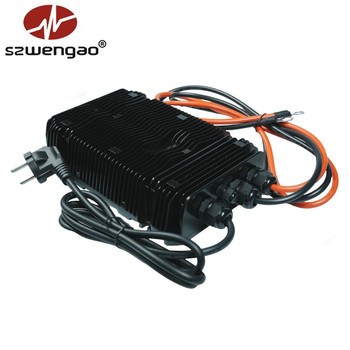
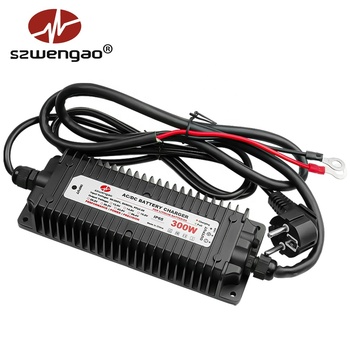
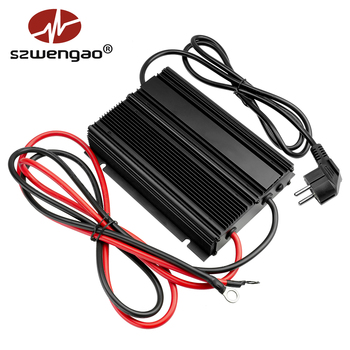
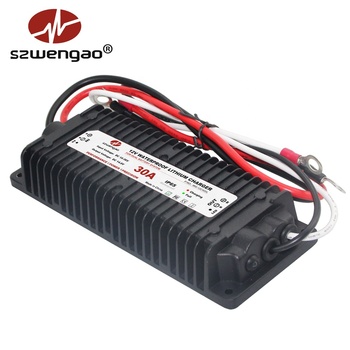

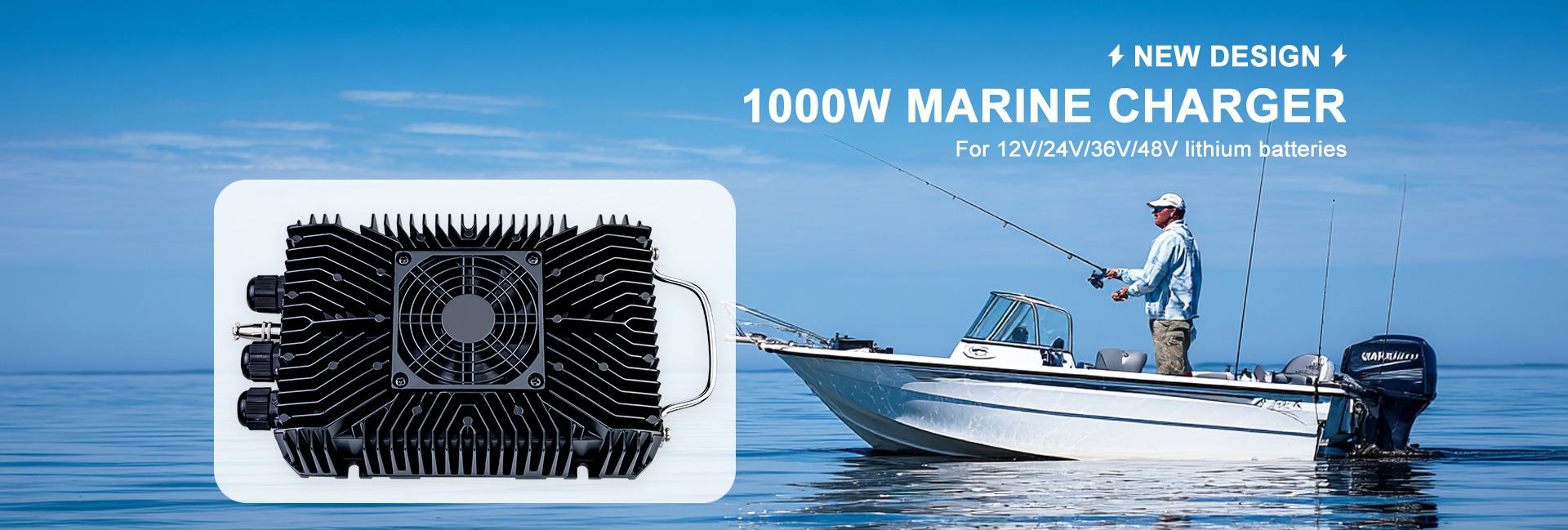
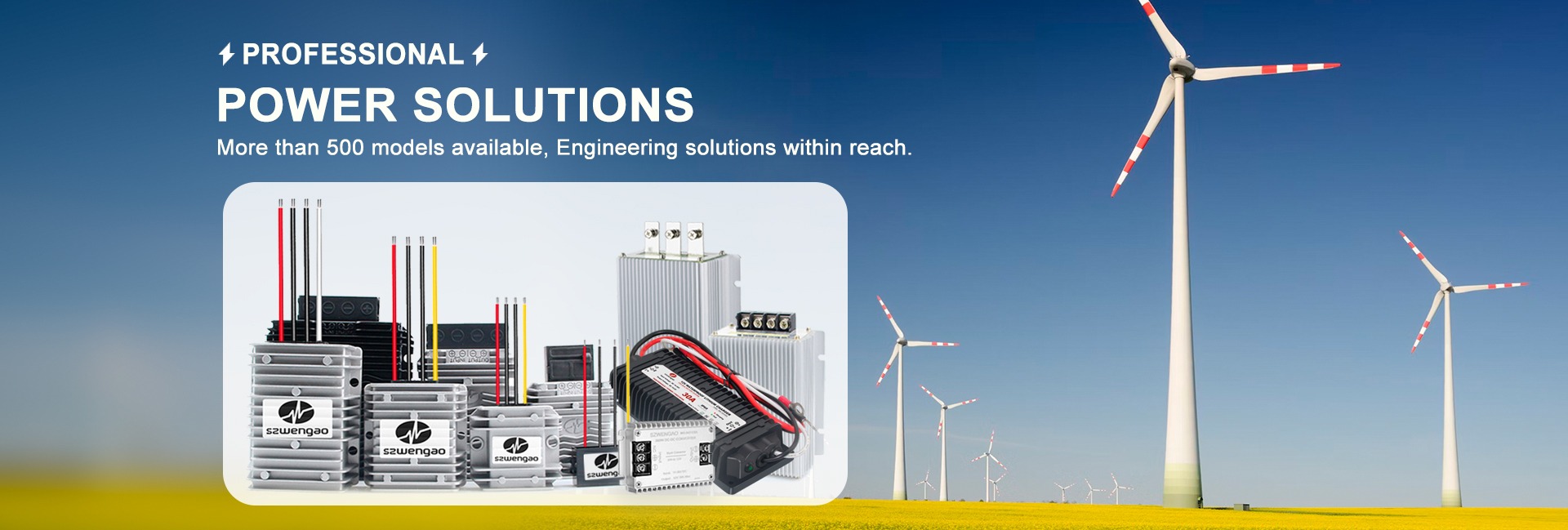
Engineering High-Integrity Waterproof Charging Architectures for George Town's Tropical Coastline
In high-humidity, marine-adjacent commerce centers like George Town, electrical conversion systems face severe environmental stresses that cause rapid failure in conventional vented battery chargers. Operating in an equatorial, coastal environment means managing continuous relative humidity levels exceeding 85%, frequent salt-fog ingress from the Malacca Strait and Andaman Sea, ambient temperatures routinely reaching 34°C, and unpredictable AC line transients caused by industrial port operations.
Procuring commercial-grade waterproof battery chargers through experienced OEM/ODM partners requires a clear understanding of modern power topologies. Standard consumer-grade chargers rely on perforated ventilation slots and internal fans, which pull airborne moisture, salt aerosols, and fine conductive dust directly across high-voltage traces. Within months, galvanic dendritic growth and capacitor seal degradation trigger catastrophic short circuits. Shenzhen Eltrum Electronic Co., Ltd. eliminates these failure points through vacuum-degassed epoxy and silicone compound potting enclosed within die-cast aeronautical aluminum enclosures (IP65, IP67, and IP68 rated).
The Mechanics of Sealed Potting: Thermal Dissipation Without Air Convection
The primary engineering hurdle of hermetically sealed waterproof chargers is heat extraction. In a vented charger, forced air carries heat away from switching MOSFETs and toroidal magnetic cores. In an IP67 or IP68 waterproof enclosure, convective air exchange is zero. All thermal energy generated by switching losses (RDS(on)) and magnetic hysteresis must transfer via direct conduction to the external heatsink casing.
Eltrum solves this by using thermally conductive silicone potting compounds rated at 1.5 to 2.0 W/m·K. The uncured compound flows under vacuum into every micro-cavity between planar transformers, power diodes, high-ripple electrolytic capacitors, and the aluminum housing. Once cured, the elastic block serves three vital functions:
Total Barrier Isolation
Completely shields copper runs, surface-mount components, and solder joints from salt air, liquid water immersion, and caustic chemical washdowns common in maritime bilges.
Structural Shock Absorption
Dampens high-g vibrational shocks generated by outboard engine harmonics, rough wave impacts, and rough industrial forklift movements up to 10G mechanical shock resistance.
Uniform Heat Spreading
Eliminates localized thermal hotspots on switching silicon, channeling heat uniformly across the ribbed aluminum casing for natural convection dissipation into ambient air or bilge water.
Localized Applications in George Town & Maritime Hubs
Meeting the operational demands of George Town's historic harbors, fast-growing logistics ports, commercial fishing fleets, and equatorial industrial parks.
Commercial Ferries & Marine Vessels
Passenger catamarans, service workboats, and pleasure yachts traversing coastal channels require IP67/IP68 shore-power chargers and battery-to-battery DC-DC regulators. Eltrum chargers endure wet bilge mounting, salt-spray exposure, and engine vibration while providing precise CC/CV charging to 12V, 24V, and 36V house banks.
Port Terminal AGVs & Electric Forklifts
Container logistics terminals operating 24/7 in coastal humidity rely on heavy-duty 48V to 72V traction battery packs. Our IP65 600W–1000W AC-DC chargers and wide-input buck-boost modules power auxiliary systems, telemetry units, and motive battery packs without failing from outdoor humidity or washdown protocols.
Coastal Solar Storage & Microgrids
Off-grid monitoring stations, marine navigational beacons, and island resorts around George Town rely on solar-plus-storage. Buck-boost stabilizers smooth out variable solar bus voltages (9V–40V) to deliver rock-solid 13.8V or 27.6V float charging rails to secondary buffer batteries in direct tropical sun exposure.
Resort Golf Carts & Municipal E-Mobility
Equatorial heat accelerates electrolyte degradation in legacy lead-acid fleet carts. Upgrading municipal service vehicles and hospitality shuttles to 48V LiFePO4 packs demands waterproof chargers with customized charge termination logic to prevent high-temperature overcharge cycles.
Decarbonization & Charging Infrastructure Trends in George Town
An in-depth analysis of supply chain modernization, regulatory pressures, and electrification roadmaps shaping local procurement decisions.
1. The Accelerated Transition from Flooded Lead-Acid to LiFePO4 Chemistry
Across George Town's industrial and marine sectors, traditional flooded and AGM lead-acid batteries are rapidly being phased out. Local fleet managers are shifting to Lithium Iron Phosphate (LiFePO4) systems due to their 4,000+ cycle life, 70% reduction in curb weight, and superior discharge efficiency under heavy loads. However, this transition requires matching charger upgrades:
Connecting a legacy lead-acid charger to a LiFePO4 battery pack will permanently damage the cells. Lead-acid chargers rely on desulfation spikes and continuous multi-stage trickle currents that cause over-voltage shutoffs in modern lithium Battery Management Systems (BMS). George Town engineering teams increasingly require OEM suppliers like Eltrum to configure custom two-stage Constant Current / Constant Voltage (CC/CV) profiles with pre-programmed automatic low-voltage wake-up triggers to reset tripped BMS units.
2. Navigating Coastal Grid Volatility & Diesel Generator Harmonics
Industrial harbor grids and island-side resort power systems frequently experience significant AC line voltage fluctuations, with mains sags down to 95V AC and brown-out surges reaching 270V AC. Additionally, shore-power setups often run on auxiliary diesel generators that produce dirty, high-THD (Total Harmonic Distortion) power waves.
Waterproof chargers engineered for the George Town market incorporate active Power Factor Correction (PFC) circuitry with ultra-wide input windows (90V–265V AC, 47Hz–63Hz). This guarantees stable, rated DC output amperage regardless of AC grid swings, preventing costly system resets and protecting expensive lithium battery banks.
3. RS485 & CANbus Telemetry Integration for Fleet Health Monitoring
Modern commercial deployments no longer view chargers as simple standalone bricks. Large operations—such as automated terminal tractors, electric harbor craft, and municipal fleets—require integrated data feeds. Eltrum's advanced series supports RS485 Modbus RTU communication protocols, allowing vehicle control units (VCUs) and fleet diagnostic computers to continuously read:
- Real-time input AC/DC voltage and current ingestion rates.
- Accurate output terminal voltage and actual current delivery (mA resolution).
- Internal core MOSFET temperature sensor readings for predictive safety cutoffs.
- Charge stage indicators, cumulative Ah counters, and detailed diagnostic error flags.
Comprehensive Electrical & Mechanical Selection Matrix
Direct comparison of Eltrum waterproof power conversion topologies engineered for coastal, mobile, and industrial OEM deployments.
| Series Topology | Input Range | Nominal Output Rails | Continuous Power | Ingress Rating | Primary Industrial Use Case |
|---|---|---|---|---|---|
| AC-DC Smart Charger | 90V–265V AC Universal | 14.6V, 29.2V, 43.8V, 58.4V | 300W – 1000W | IP65 / IP66 | Marina Shore-Power, Harbor Vessels, Electric Carts |
| DC-DC Lithium Booster | 10V–16V (Alternator In) | 43.8V CC/CV (for 36V Pack) | 400W – 600W | IP67 Submersible | 12V Vehicle Engine to 36V Battery Trolling Systems |
| Battery-to-Battery (B2B) | 10V–36V Dual Ingestion | 14.6V / 29.2V LiFePO4 | 300W – 800W | IP68 Potted | RV Campers, Workboats, Dual-Battery Solar Systems |
| High-Power Buck-Boost | 10V–60V DC Wide Range | 12V, 24V, 28V, 48V Regulated | 800W – 1500W | IP65 Sealed | Industrial Voltage Stabilization, Large Port AGVs |
| Galvanic Isolated DC-DC | 18V–36V / 36V–75V / 18–90V | 5V, 12V, 24V Pure Clean Bus | 100W – 250W | IP67 Rugged | Telecom Racks, Marine Radar, Noise-Sensitive Sonar |
Shenzhen Eltrum Electronic Co., Ltd. Advantage
Established in 2015, operating under an ISO 9001 quality framework, and shipping advanced power conversion hardware to over 130 countries worldwide.
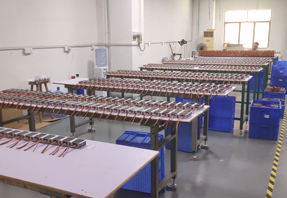
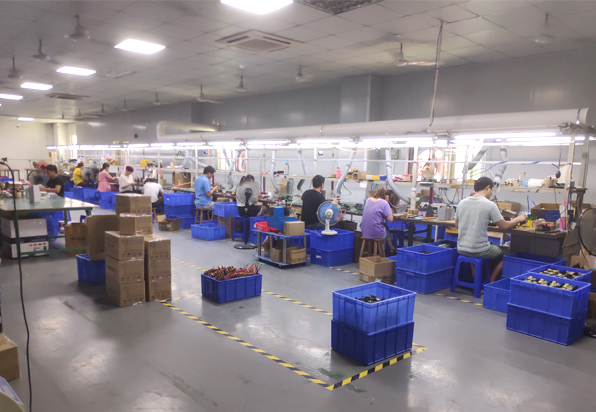
Precision Engineering Tailored to Your Brand
Shenzhen Eltrum Electronic Co., Ltd. provides robust OEM, ODM, and buyer-label production for international brands, marine refit shipyards, and system integrators. Our engineering facility operates high-speed Yamaha SMT lines, proprietary CNC metalworking stations, and dedicated potting and vacuum-curing chambers.
Every single unit coming off our assembly floor undergoes complete automated testing: high-voltage hipot isolation verification (>2.5kV AC), input brownout recovery, short-circuit recovery, and full-rated load burn-in at elevated ambient temperatures. We supply custom connector pigtails (Anderson Powerpole, Amphenol, Deutsch, M12 marine water-tight), tailored laser-etched markings, and bespoke CC/CV firmware profiles tuned to your battery BMS requirements.
Frequently Asked Questions by George Town Importers
Key technical, regulatory, and logistics answers for engineers, fleet directors, and sourcing managers.
What is the minimum order quantity (MOQ) and production lead time for George Town orders?
How do Eltrum chargers resist salt-mist corrosion and tropical galvanic degradation?
Can your DC-DC battery chargers properly charge a LiFePO4 bank from an alternator?
Are your chargers fully compatible with local AC shore-power supplies?
What certifications and test reports accompany volume shipments?
Request Custom Engineering Schematics & OEM Pricing
Connect directly with our senior power electronics team to discuss custom voltage rails, communication protocols, or sample evaluations for your George Town projects.