Featured Industrial Step-Up & Charging Modules
Factory-calibrated power supplies engineered with wide input tolerances, dynamic thermal management, and synchronized rectification.

Smart 36V Lithium Battery Charger DC 12V to 43.8V 13A
- Topology: Step-Up Boost CC/CV
- Input / Output: 12V DC → 43.8V DC (13A)
- Protection: IP67 Encapsulated
- Target System: EV Carts, RVs, E-Bikes
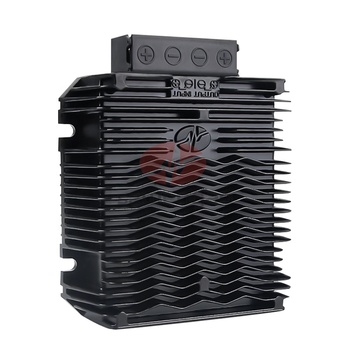
High-Current 12V to 24V/48V Step-Up Boost Converter
- Topology: Non-Isolated Boost
- Current Range: 20A to 50A Output
- Thermal Control: Extruded Aluminum Fin
- Compliance: CE, RoHS Certified
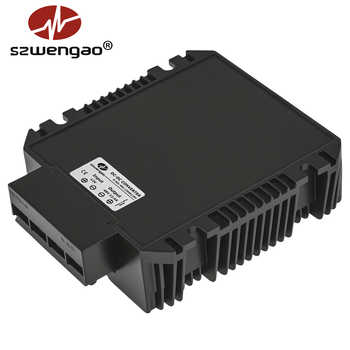
Hermetic 12V to 48V Waterproof Boost Module
- Input Nominal: 12V DC (9-20V Range)
- Output: 48V DC (Up to 20A)
- Ingress Rating: Full Epoxy Potted IP68
- Applications: Marine & Solar Pumping
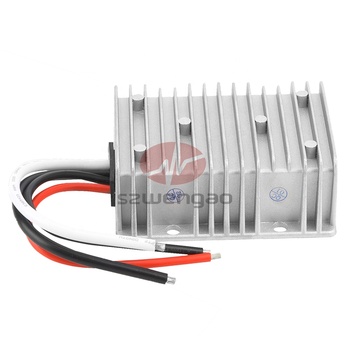
Synchronous 24V to 48V Step-Up Industrial Regulator
- Input Voltage: 18-32V DC Continuous
- Output Rating: 48V DC (10A - 15A)
- Efficiency: Up to 96.5% Peak
- Protections: OVP, OCP, OTP, Short

1500W Step-Up/Down Converter with RS485 Interface
- Wide Input: 10V to 60V Dynamic
- Output Range: 12V / 24V / 28V / 48V Adjustable
- Telemetry: MODBUS RTU / RS485
- Max Output: 1500 Watts Continuous
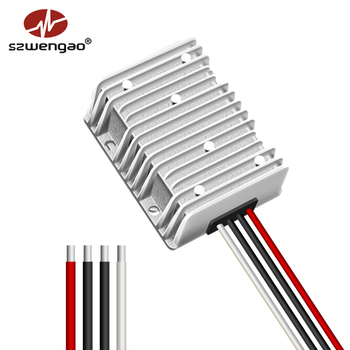
8V-40V to 13.8V High-Amperage Voltage Stabilizer
- Cranking Tolerance: Survives 8V Cold Drops
- Output Spec: 13.8V Floating (25A-30A)
- Noise Level: < 50mV RMS Ripple
- Enclosure: Vibration-Damped Alloy
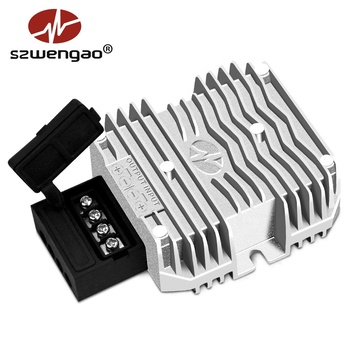
Wide-Band 18V-90V Isolated Step-Up & Regulation Unit
- Dielectric Barrier: 1500V DC Galvanic Isolation
- Input Window: 18V to 90V Ultra-Wide
- Output Channels: 12V / 24V Stabilized
- Function: Eliminates Ground Loops
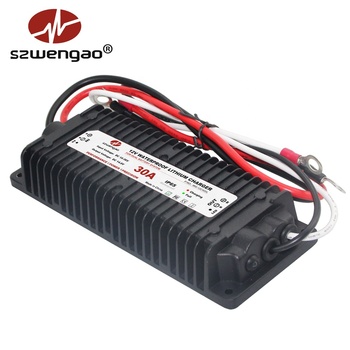
400W Multi-Stage Step-Up DC-DC Battery Charger
- Chemistry Match: LiFePO4, Ternary Lithium, AGM
- Input Envelope: 10V to 36V Step-Up
- Profile: Microprocessor CC/CV 3-Stage
- Enclosure: Salt-Mist Resistant IP67
Technical Architecture: Engineering High-Reliability Step-Up Conversion
In power distribution architectures, DC-DC step-up (boost) converters serve as critical nodes where electrical integrity directly influences overall system availability. For original equipment manufacturers (OEMs) and original design manufacturers (ODMs) deploying solutions in demanding operational conditions, standard consumer-grade conversion topologies present severe failure liabilities. Switching transients, excessive internal heat dissipation, and common-mode conducted emissions frequently cause field degradations when operating across volatile primary bus voltages.
Modern step-up converters bypass these legacy constraints through high-frequency switching architectures (typically 100 kHz to 250 kHz) utilizing planar magnetics and low-RDS(on) synchronous MOSFET switches. In a conventional diode-rectified boost topology, forward voltage drop ($V_f$) across the output diode introduces escalating thermal penalties as load current expands ($P_{loss} = I_{out} \times V_f$). By substituting active synchronous switching elements driven by precise dead-time control circuits, reverse conduction efficiency is elevated above 96%, substantially lowering junction temperatures inside sealed enclosures.
Heat dissipation in encapsulated converters depends entirely on conductive heat transfer. Utilizing double-sided direct bonded copper (DBC) or heavy copper FR4 printed circuits encased in aluminum alloy housings via thermally conductive silicone elastomer (thermal conductivity > 1.5 W/m·K) ensures thermal resistance ($\theta_{jc}$) is minimized, preventing localized thermal runaway even under maximum continuous current output.
Furthermore, managing transient input voltages requires high-headroom input capacitor banks coupled with differential-mode LC filters. This topology suppresses back-fed switching noise onto the primary rail, preventing false triggering of battery management systems (BMS) or interference with critical sensor instrumentation sharing the DC bus.
Topological Comparison: Boost vs. Buck-Boost vs. Isolated Step-Up
| Conversion Architecture | Typical Input Envelope | Standard Boost Rails | Isolation Breakdown | Primary Use Cases |
|---|---|---|---|---|
| Synchronous Boost | 9V – 32V DC | 24V, 36V, 48V, 56V | Non-Isolated (Common Ground) | Heavy equipment aux rails, LED drive, marine electronics |
| Four-Switch Buck-Boost | 8V – 60V DC | 12V, 24V, 28V, 48V | Non-Isolated (Floating Switching) | Variable battery stabilizer, engine-cranking immune rails |
| Flyback / Push-Pull Isolated | 18V – 90V Wide Input | 12V, 24V, 48V | 1500V – 3000V Galvanic Barrier | Telecom DC buses, high-noise industrial drives, AGVs |
| Intelligent Step-Up Charger | 10V – 36V DC | 14.6V, 29.2V, 43.8V, 58.4V | Optional Hybrid Isolation | Alternator to LiFePO4 bank dual-battery systems |
Industrial Demands & Deployment Landscapes in Nampo
Navigating technical operating parameters across maritime logistics, industrial fabrication, and off-grid renewable installations.
Port Infrastructure & Marine Operations
The maritime gateway and cargo processing facilities in Nampo require ruggedized step-up hardware built to endure saline exposure and wide engine room thermal cycles. Step-up DC-DC units reliably elevate 12V or 24V marine service batteries to 36V and 48V banks, powering modern dynamic positioning, bow thruster controls, navigation systems, and dockside cold-ironing monitoring.
Heavy Manufacturing & Smelting Complexes
In regional industrial zones featuring metallurgical processing, glass manufacture, and machinery assembly, primary power grids often suffer from switching surges and transient sags. Isolated step-up converters deliver rock-solid auxiliary rails for PLC racks, motor encoders, and electro-pneumatic valves, avoiding costly downtime caused by line instability.
Commercial Fleet Electrification & AGVs
Warehousing and regional distribution networks are progressively adopting electric automated guided vehicles (AGVs) and utility fleets. Step-up modules bridge 24V vehicle architectures with 48V sensor suites (such as LiDAR and high-speed telemetry), ensuring continuous, clean conversion while safeguarding low-voltage logic circuitry.
Key Technological Trends Driving Nampo Procurement
How changing environmental parameters and modernization initiatives dictate hardware specifications.
Transition to LiFePO4 Energy Banks
Industrial buyers are replacing flooded lead-acid banks with Lithium Iron Phosphate. Because lithium batteries require precise constant-current/constant-voltage (CC/CV) curves, converters must incorporate smart charging logic to eliminate thermal runaway hazards.
Digital Telemetry & Remote Diagnostics
Stand-alone analog units are being superseded by power converters equipped with RS485 and CANopen protocols. Plant supervisors now demand real-time diagnostics on thermal margins, output currents, and operational run-times.
Hermetic Environmental Hardening
Due to coastal humidity and industrial dust exposure, the regional failure rate of fan-cooled hardware has pushed demand toward IP67/IP68 potted units capable of convective cooling without exposed airflow pathways.
Wide Dynamic Input Windows
Modern projects favor wide-input modules (e.g., 18V–90V range) that unify procurement stocks across diverse vehicle battery configurations (24V, 36V, 48V, 72V), lowering parts overhead and maintenance costs.
Engineering Leadership & Manufacturing Scale
Built on over a decade of core power electronics innovation, verified facilities, and direct technical collaboration.
ISO 9001 Process Discipline
Our manufacturing lines implement stringent multi-tier quality gates. From surface mount technology (SMT) pick-and-place precision to automated optical inspection (AOI) and 100% full-load electrical burn-in testing, every shipped product ensures repeatable quality.
- 100% high-voltage dielectric breakdown checks
- Automated thermal stress cycles (-40°C to +85°C)
- Comprehensive buyer-label & barcode traceability
Agile OEM & ODM Customization
We tailor standard reference hardware to match specific client specifications. Whether you require customized switching frequencies, specific connector assemblies (Anderson, Amphenol, Deutsch), or specialized charging profiles, our engineering team is here to assist.
- Fast-track functional prototype turnarounds
- Custom PCB layouts for compact spaces
- Flexible low MOQ sample runs starting from 5 units
Global Trade Infrastructure
Serving international buyers across 130+ nations, we structure straightforward trade documentation, multi-currency pricing, and streamlined logistics options (FOB, EXW, CIF) backed by professional application engineers.
- Full CE, RoHS, and UL compliance dossiers
- Multilingual technical support engineers
- Consolidated shipment support for mixed-model batches
Frequently Asked Technical Questions
Common inquiries from industrial procurement specialists, system integrators, and engineering buyers.