ISO 9001 Factory · CE & RoHS Compliant DC-DC Power · OEM / ODM Welcome

English USD [email protected]
EN 50155 & ISO 9001 Certified Engineering

OEM/ODM Railway DC DC Converter Manufacturer & Exporters in Daegu

Delivering High-Isolation Traction Power Solutions, Wide-Input Voltage Regulators, and Rugged Rolling Stock SMPS for Daegu Urban Transit & Global Rail Systems.

500+
Standard Power Topologies & Converters
130+
Countries Exported Across Global Networks
1.5kV
Galvanic Dielectric Protection
96%
Ultra-Peak Thermal Conversion Efficiency
Engineered Traction Power Portfolio

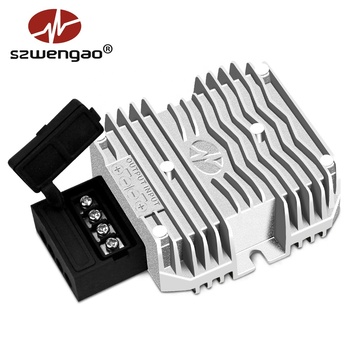
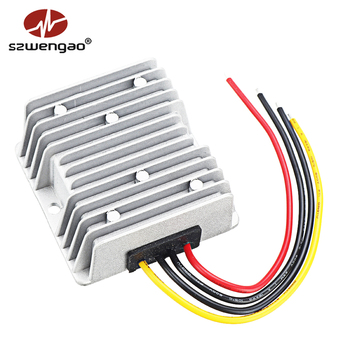
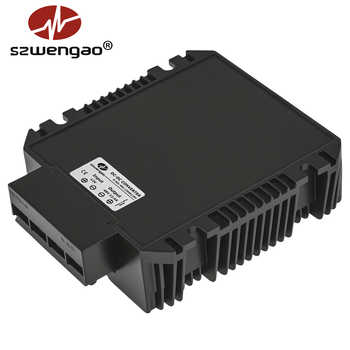
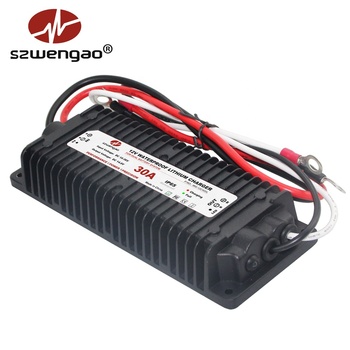
Featured Industrial & Railway DC-DC Power Conversion Units

Engineered to absorb catenary transient voltages, severe switching ripple, and broad thermal swings, each unit is manufactured with automotive and military-grade components to satisfy rigorous global rolling-stock criteria.

Daegu Industrial Specialization

Localized Applications in Daegu’s Railway & E-Mobility Ecosystem

Daegu serves as a prime epicenter of South Korea's high-tech industrial transformation, anchored by national logistics networks, advanced transit infrastructure, and intelligent manufacturing corridors like the Daegu Technopolis and Gyeongsan Industrial Complex.

Daegu Metro Line 1, 2 & Monorail Line 3

Rolling-stock modernization across the DTRO (Daegu Transit Corporation) network demands ruggedized step-down conversion from raw coach auxiliary voltages (DC 72V and 110V) down to ultra-stable 24V and 12V rails. Our galvanically isolated converters supply crucial passenger signaling, automated door controllers, and IP surveillance cameras without ground hum or inductive ripple.

Trackside Train Control & Signaling (KTCS-2)

Daegu's junction lines connecting the Gyeongbu High-Speed Railway mandate fail-safe continuous operation. Trackside switching enclosures, European Train Control System (ETCS) transponders, and local interlock systems deploy our high-dielectric DC-DC converters to maintain communication integrity despite severe electromagnetic surges induced by 25kV catenary arcing.

Daegu Technopolis AGV & Depot Logistics

Within automated rail maintenance depots and robotic material distribution centers across Seongseo Industrial Complex, battery-powered heavy automated guided vehicles (AGVs) rely on our buck-boost stabilizers to deliver ripple-free 24V and 48V power directly to precision LiDAR scanners, programmable logic controllers (PLCs), and pneumatic servos.

KORAIL Rolling Stock Subsystem Integration

Tier-1 railway Tier-1 and Tier-2 integrators based in the Daegu-Gyeongbuk jurisdiction export complete HVAC, cab instrumentation, and pantograph control units worldwide. Our OEM/ODM flexibility allows embedded PCB modules or bolt-on aluminum packages that seamlessly fit legacy Korean rolling stock envelope dimensions.

Emergency Lithium Reserve Top-Off Units

Daegu's municipal green transport mandates have accelerated the conversion of auxiliary lead-acid batteries to lithium iron phosphate (LiFePO4) storage. Our intelligent multi-stage battery-to-battery charging modules bridge primary auxiliary DC lines to emergency communication reserves, assuring complete battery health management.

Technical Whitepaper: Solving Power Quality & Surge Challenges in Rolling Stock Systems

Railway power conversion is profoundly distinct from general commercial or stationary telecom operations. A railway coach is essentially an isolated, mobile microgrid exposed to massive mechanical vibrations, wide operational thermal gradients, and intense inductive kicks. In the South Korean rolling stock architecture—governed by national standard KRS regulations alongside international standards like EN 50155, IEC 60571, and EN 50121-3-2—power supplies must operate reliably without maintenance for up to 100,000 continuous hours.

Primary DC auxiliary systems on modern high-speed trains and monorails typically utilize nominal intermediate voltages such as 24V, 48V, 72V, 96V, or 110V. However, transients caused by regenerative braking, line switches, short circuits, or pantograph bounce often generate catastrophic overvoltage spikes reaching 1.4 to 2.0 times the nominal voltage for durations spanning 100 milliseconds to whole seconds. Conversely, heavy engine cranking or sudden load transfers induce severe voltage drops down to 0.6 of nominal.

✔
Ultra-Wide Input Windows: Proprietary multi-stage buck-boost switching stages accommodate 4:1 and up to 10:1 continuous dynamic input swings without dropping voltage regulation.
✔
Complete Galvanic Separation: High-frequency planar transformer isolation separates input from output grounds, eliminating destructive ground loops and high catenary common-mode potentials.
✔
Hermetic Resin Encapsulation: IP65/IP67 polyurethane or silicone conformal potting provides total resilience against metal dust, brake particulates, humidity, and extreme rail shock (IEC 61373 Category 1 Class B).
✔
Advanced Conducted & Radiated EMI Filtration: Multi-pole LC pi-networks integrated directly onto the PCB suppress high-frequency PWM switching harmonics, guaranteeing absolute adherence to EN 50121-3-2 railway EMC specifications.

For engineers and procurement teams in Daegu's dynamic mobility hub, integrating these protective architectures prevents premature field degradation in critical systems—such as driver human-machine interfaces (HMIs), GPS/LTE-R communications, axle bearing monitoring sensors, and emergency fail-safe braking solenoid valves.

Daegu Regional Power Conversion Trends: Automation, Decarbonization & Lightweighting

The Daegu Metropolitan City government's strategic focus on the "5 Future New Industries"—including future mobility, robotics, and clean healthcare tech—is driving revolutionary alterations in rolling stock auxiliary requirements:

  • Transition from Centralized SIVs to Distributed Modular DC-DC: Historic coach architectures relied entirely on massive, centralized Static Inverters (SIV) that were heavy and vulnerable to single-point failure. Daegu rolling-stock refurbishments favor distributed, autonomous isolated DC-DC converters embedded at individual seat rows, infotainment pods, and cab consoles.
  • Adoption of Wide Bandgap (WBG) Semiconductors: Silicon Carbide (SiC) and Gallium Nitride (GaN) switching topologies are progressively specified by Korean transit authorities to achieve >95% system efficiency, drastically cutting heat dissipation within unventilated undercarriage compartments.
  • Smart Telemetry via Real-Time Transit Data Buses: Modern power modules can no longer be passive black boxes. Our RS485/CAN-enabled converter series provides continuous telemetry on input transient frequency, instantaneous load current, junction temperature, and ripple amplitude straight to the train management system (TCMS).

As a seasoned partner to OEM/ODM exporters across Daegu, Gyeongsangbuk-do, and international transit corridors, we supply precision-engineered power architectures that directly solve these localized technical and industrial mandates.

Enterprise Capabilities & OEM Authority

Decade-Proven Manufacturing Rigor & Engineering Depth

Operating since 2015, our modern, ISO 9001-certified high-density production facility spans over 3,000 square meters. Having served railway, automotive, solar, and heavy industrial clients across more than 130 countries, we maintain strict on-site third-party verifications and absolute transparency.

Isolated DC-DC power conversion represents our deep foundational heritage. We engineer every core transformer, design multilayer impedance-matched PCBs, and execute automated surface mount technology (SMT) with precision thermal profiling.

1 Full Prototype-to-Volume Flexibility: Low sample validation starting from 5 units for qualification testing before full production scale.
2 Comprehensive In-House Environmental Screening: 100% full-load burn-in screening, thermal shock cycling (-40°C to +85°C), and automated dynamic load perturbation testing.
3 Tailored Turnkey Customization: Custom pinout assignments, ruggedized Mil-spec circular connectors, IP68 hermetic aluminum extrusion casings, and custom algorithmic charging firmware.
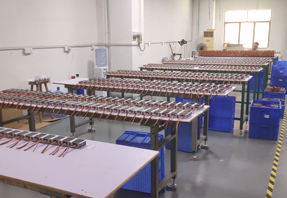
Railway DC-DC converter automated SMT assembly line
Procurement Engineering FAQ

Frequently Asked Questions by Daegu Transit & System Engineers

Addressing critical technical, regulatory, and supply chain queries encountered when specifying DC-DC power equipment for South Korean rolling stock and automated industrial projects.

How do your converters meet Korean Railway Standards (KRS) and international EN 50155 requirements?
Our railway-grade DC-DC converters are engineered from schematic inception to satisfy the key pillars of EN 50155 and KRS specifications. This includes input voltage range variations (0.7 to 1.25 times nominal continuous, and 0.6 to 1.4 times nominal transient overshoots for 100ms), electrical isolation tests delivering up to 1,500V - 2,500V DC galvanic insulation between input, output, and chassis ground, and high shock/vibration endurance compliant with IEC 61373 Category 1 Class B. Custom laboratory validation reports and EMC pre-compliance test data (EN 50121-3-2) can be provided during sample qualification.
What is the difference between Isolated and Non-Isolated buck/boost topologies in rail installations?
Non-isolated converters share a common negative return ground between input and output, offering exceptionally compact volume, higher power density, and lower cost. They are optimal for auxiliary automotive circuits or localized battery balancing within the same metallic enclosure. Conversely, isolated converters use an internal high-frequency magnetic transformer to mechanically and electrically separate the primary traction DC circuit from secondary sensitive low-voltage loads. In Daegu metro systems, isolation is compulsory when bridging high-voltage auxiliary rails (e.g., 72V, 96V, 110V) to delicate passenger electronics, communications (LTE-R), or sensor controllers to eliminate inductive ground loops and catastrophic primary-side short-circuit feedback.
Can your factory provide custom form factors, military-spec circular connectors, or specific rail enclosures?
Yes. Through our full OEM/ODM program, we regularly support Daegu engineering integrators requiring non-standard form factors. We can adapt open-frame PCBs, add custom anodized aluminum extrusion cold plates, mount DIN-rail clamping fixtures, or integrate sealed Harting, Amphenol, or MIL-DTL-5015 style multi-pin circular connectors. Our engineering team conducts thermal modeling and 3D CAD envelope fitting prior to physical tooling.
What are the MOQ terms, sample turnaround times, and logistics procedures for delivery to Daegu?
Standard catalog sample orders start from a flexible 5-unit baseline to allow hardware engineers in South Korea to conduct comprehensive bench and in-vehicle evaluations. Production delivery is streamlined under flexible Incoterms including FOB Shenzhen, EXW, or direct air/sea CIF Busan/Incheon freight handling, seamlessly transferring into the Daegu industrial zone via expressway or rail freight within 3-5 transit business days after customs dispatch.
How do your converters manage the severe cold and extreme summer humidity typical of Daegu's inland basin climate?
Daegu experiences dramatic climate swings—from frigid, dry winters to extreme summer heat and heavy monsoon moisture. Our railway modules employ comprehensive high-grade thermally conductive epoxy potting or silicone vacuum encapsulation. This solid encapsulation completely expels air, preventing condensation, oxidation, fungal growth, and thermal isolation failure, while efficiently transferring internal MOSFET/inductor heat directly to the exterior aluminum heat spreader across a verified operating range of -40°C to +85°C.
Do you offer multi-stage battery charging models tailored for transit LiFePO4 battery upgrades?
Yes, we provide specialized DC-DC and AC-DC battery chargers engineered specifically for lithium iron phosphate (LiFePO4), lithium titanate (LTO), and lead-acid backup banks. These units feature precise microprocessor-controlled Constant Current / Constant Voltage (CC/CV) profiles, thermal derating sensors, and RS485 communication ports that interface with train battery management systems (BMS) to safely regulate charging without overstressing coach auxiliary alternators.

Accelerate Your Transit Power Project with Custom OEM Solutions

Whether you require a standard isolated module sample or a specialized high-power DC-DC traction stabilizer engineered to your precise electrical specifications, our senior power engineering team is ready to assist your project.