High-Efficiency Marine Battery Chargers & Converters
Specifically matched for freshwater e-mobility, dual-battery auxiliary networks, and cold-weather alpine marina charging infrastructure across Salzburg State.

Smart 36V 13A DC-DC Waterproof LiFePO4 Charger
- Input VoltageDC 12V (10-18V)
- Output ChargingDC 43.8V @ 13A
- ProtectionIP65 / Over-Temp / Short
- Optimized For36V Trolling & E-Drives
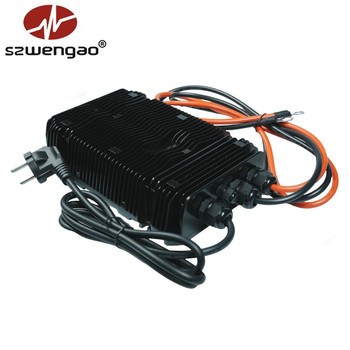
600W Waterproof AC-DC Marine Lithium Charger
- Mains Input90–265V AC (47-63Hz)
- Profile Options14.6V / 29.2V / 58.4V
- Efficiency≥ 92% Alpine Thermal
- EnclosureHeavy Die-Cast Alloy
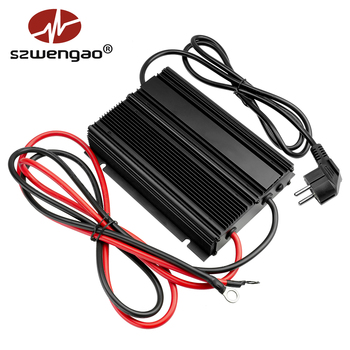
12V/24V/36V/48V 600W Boat & Marina Charger
- ArchitectureMicrocontroller CC/CV
- ChemistryLiFePO4 & Ternary Li-ion
- Ingress RatingIP65 Fully Sealed
- CertificationCE, RoHS, EN 60335-2-29
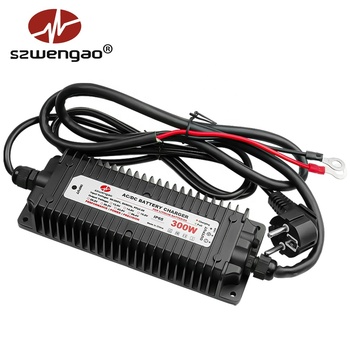
300W Marine Lithium Charger (EU Schuko)
- Output Rails14.6V / 29.2V / 43.8V
- Connector OptionEU Plug / Anderson / M8
- CoolingFanless Passive Heat Sink
- TargetSailboats & Electric Tenders
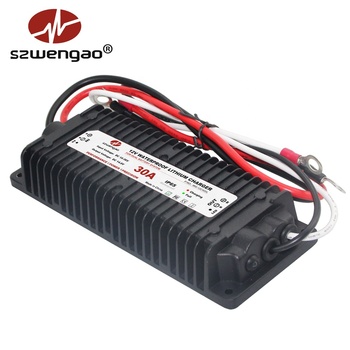
400W Waterproof DC-DC Dual-Battery Charger
- Alternator Input10–36V DC Wide Window
- Regulated Output14.6V / 29.2V CC/CV
- Euro 6 Smart AltIntegrated Ignition Trigger
- ApplicationDual-Battery Marine & Campers

1500W Buck-Boost Converter with RS485
- Input Voltage10–60V DC Seamless
- Output Selection12V / 24V / 48V Fixed
- Digital BusRS485 Telemetry / MODBUS
- Commercial VesselFerry DC Power Rail Stabilizer

18–90V to 12V 10A Isolated DC Converter
- Galvanic Isolation1500V DC Break Barrier
- Input Range18–90V Wide Marine DC
- Noise SuppressionElectrolysis & Hum Free
- Marine AvionicsSonar, Radar & VHF Protection
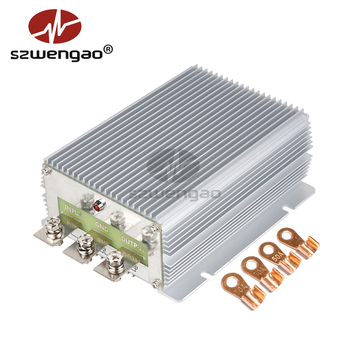
48V to 24V 40A 1000W DC Marine Buck Module
- High Current Out24V @ 40A Continuous
- Peak Efficiency96.5% Synchronous Rect.
- Potting CompoundFlame Retardant Epoxy IP68
- Heavy Marine LoadBow Thrusters, Winches, Pumps
Electrification of Maritime Systems in the Salzburg Alpine Region
A technical treatise on cold-weather lithium charging kinetics, galvanic hull isolation, and strict environmental water directives governing the Austrian Salzkammergut.
The state of Salzburg and the broader Salzkammergut lacustrine basin represent one of Europe’s most demanding test beds for commercial and leisure marine electrification. Encompassing pristine glacial waterways including Wolfgangsee, Wallersee, Mattsee, Obertrumer See, and Zeller See, local authorities enforce stringent water ecology acts (Wasserrechtsgesetz) that restrict or outright prohibit fossil-fuel internal combustion engines. This regulatory framework has driven an aggressive transition toward high-density lithium iron phosphate (LiFePO4) energy storage and high-voltage permanent magnet synchronous motors (PMSM).
However, marine engineering contractors, shipyard refitters, and naval architects in Salzburg face unique technical bottlenecks. Unlike standard coastal saltwater applications, freshwater alpine boating introduces specific electrical challenges: high sub-surface water resistivity, sub-zero winter temperatures dipping below -15°C, high condensation from alpine thermal inversion, and the pervasive hazard of ground loop stray currents accelerating hull electrolytic corrosion. Selecting an industrial-grade Marine Battery Charger Manufacturer capable of delivering microsecond-accurate CC/CV algorithms, certified galvanic isolation, and IP67 hermetic sealing is essential to guarantee uptime and safety.
Critical Alpine Environmental Factors Influencing Charger Engineering
Standard off-the-shelf consumer battery chargers frequently fail in Salzburg due to three non-negotiable physical constraints:
- Sub-Zero LiFePO4 Lithium Plating Phenomenon: When charging lithium cells below 0°C without precise temperature coefficient feedback, metallic lithium irreversibly plates onto the graphite anode. This permanently degrades cell capacity and induces catastrophic internal micro-short circuits. Eltrum marine chargers integrate precision NTC temperature monitoring and intelligent low-temperature current foldback algorithms.
- Condensation Cycling via Mountain Thermal Drift: Salzburg’s alpine lakes exhibit severe night-to-day temperature swings. Traditional ventilated fan-cooled chargers ingest humid morning air, precipitating dew directly onto high-voltage MOSFETs and transformer windings. Eltrum chargers utilize complete vacuum-pressure polyurethane/epoxy potting inside extruded aluminium heatsinks, achieving true IP65/IP67 ingress ratings.
- Lake Grid Power Fluctuation at Remote Jetties: Shore power pedestals located at lakeside wooden piers often experience significant voltage drops when multiple boats connect during peak summer docking hours. Our chargers feature universal wide-range active PFC (Power Factor Correction) inputs ranging from 90V to 265V AC, maintaining stable, ripple-free DC output regardless of local grid sag.
Commercial Passenger Ferries
High-capacity electric catamarans and heritage passenger boats operating on Lake Wolfgang and Lake Zell require 48V–96V traction banks recharged safely during short docking turnarounds. Our 1000W–1500W modules support N+1 parallel redundancy and RS485 telemetry for integration into onboard PLC bridge systems.
Alpine Sailing & Auxiliary Systems
Keelboats and racing yachts in the Trumer Seen region utilize compact 12V and 24V LiFePO4 house banks alongside electric auxiliary drives. Here, our DC-DC chargers enable battery-to-battery charging directly from small hydro-generators or solar arrays without risking alternator burn-out.
Emergency & Rescue Vessel Fleets
Austrian Water Rescue (ÖWR - Österreichische Wasserrettung) Salzburg units demand mission-critical readiness. Chargers permanently mounted on rescue response craft must tolerate relentless hull pounding, wave spray, and extreme cold while maintaining float voltage indefinitely without overcharging.
Technical Topology Matrix: Matching Converters to Marine Architecture
Selecting the appropriate power electronics topology prevents thermal throttling and ground loop failures. The comparison below outlines typical deployments for naval systems engineering:
| Conversion Architecture | Standard Input Range | Regulated Marine Outputs | Galvanic Isolation | Salzburg Marine Application |
|---|---|---|---|---|
| AC-DC Multi-Stage LiFePO4 | 90V – 265V AC Active PFC | 14.6V, 29.2V, 43.8V, 58.4V | > 2500V AC Input/Output | Shore-power pedestal charging in alpine yacht clubs and marinas. |
| DC-DC Smart Step-Up (Boost) | 10V – 18V (12V Starter) | 29.2V, 43.8V, 58.4V CC/CV | Non-Isolated (Common Ground) | Charging 36V/48V electric trolling motors from 12V house batteries. |
| DC-DC Isolated Converter | 18V – 90V Ultra-Wide | 12.0V, 24.0V Regulated | 1500V DC Break Potential | Eliminating ground loops between traction packs and marine radio/sonar. |
| Buck-Boost Dynamic Stabilizer | 10V – 60V Fluctuating | 12.0V, 13.8V, 24.0V Flat Rail | Optional / Non-Isolated | Powering sensitive navigation computers during heavy winch/bow-thruster sag. |
Galvanic Isolation: The Primary Defense Against Electrolytic Hull Corrosion
In high-end aluminium and steel-hulled vessels navigating the Salzach River and interconnected lakes, electrolytic corrosion caused by ground differentials is a severe operational risk. When shore-side mains earth meets the vessel’s DC negative ground, micro-volt differentials create high-current galvanic cells through freshwater, causing pitting on propeller shafts, rudder bearings, and through-hull fittings.
Eltrum solves this through optocoupler-driven, high-frequency transformer isolated topologies (such as our WG-Series Isolated Converters). By providing complete galvanic isolation up to 1500V DC between input and output, ground loops are broken at the power module level, safeguarding million-euro naval assets without requiring complex supplementary isolator hardware.
Trends Shaping Salzburg’s Marine Power Sector (2025–2030)
How regulatory shifts, ecotourism expansion, and battery chemistry evolutions are reshaping procurement for regional boatbuilders and municipal operators.
Zero-Emission Mandates
The Land Salzburg administration continues to expand strict non-combustion licensing quotas across all interior lakes. Commercial rental operators must transition 100% of their fleets to electric drive by 2028, sparking heavy demand for multi-channel rack chargers.
Rapid Shore Turnaround
Tourism peaks during Salzburg’s midsummer festival season require tour boats to operate near continuous loops. Fleet managers are adopting 1000W+ onboard chargers configured in parallel to deliver 1C rapid charging during brief 30-minute passenger boarding intervals.
Solar-Integrated Hybrid Buffers
Alpine boathouses equipped with rooftop photovoltaic systems are integrating DC-DC buck-boost converters. These units step down fluctuating 48V–72V solar storage banks directly into 12V or 24V onboard auxiliary circuits without dual DC-AC-DC conversion losses.
CE & ISO 9001 Compliance
Naval procurement inspectors in Austria strictly verify CE compliance under the Recreational Craft Directive (2013/53/EU). Shenzhen Eltrum’s fully certified bill of materials guarantees seamless electrical inspection approval for all local commercial registrations.
Frequently Asked Questions for Salzburg Marine Buyers
Direct technical answers addressing certification, delivery times to Austria, warranty coverage, and custom engineering parameters.
Do your marine chargers comply with Austrian and European marine electrical regulations?
How does the IP65/IP67 waterproof sealing endure alpine winter freezes in Salzburg boathouses?
Can Eltrum customize charge profiles for specialized LiFePO4 or Lithium Titanate (LTO) battery packs?
What is your minimum order quantity (MOQ) and sample lead time for Austrian shipyards?
Why is a DC-DC battery charger preferred over a standard split-charge relay in marine dual-battery setups?
What international trade and delivery terms (Incoterms) do you support for Austrian orders?
Why Tier-1 Marine OEMs Choose Shenzhen Eltrum Electronic
Combining decade-long power conversion expertise, rigorous ISO 9001 manufacturing rigor, and responsive global distributor support.
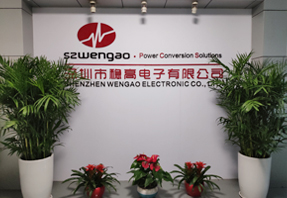
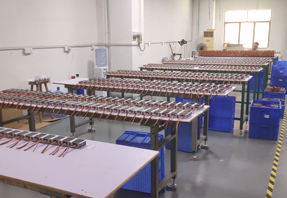
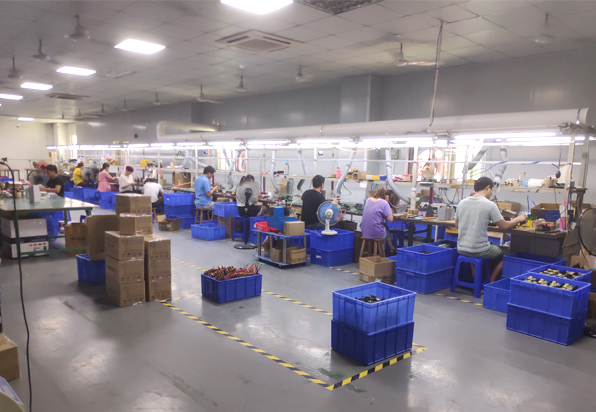
Onsite-Verified Manufacturing Facility Since 2015
Headquartered in the global electronics manufacturing capital of Shenzhen (Hangcheng Industrial Corridor), Shenzhen Eltrum Electronic Co., Ltd. operates a modern 3,000 m² facility with 51–100 specialized technicians and R&D engineers. Our facility has undergone rigorous third-party onsite verification, establishing our standing as an accredited manufacturer for mission-critical power conversion modules.
Isolated DC-DC power conversion is where our technical foundation began. Today, that deep understanding of magnetic core winding, thermal dynamics, and switching topologies extends across over 500 cataloged models. We supply OEM buyers and authorized distributors across 130+ countries, maintaining long-term partnerships in Germany, Austria, Switzerland, the United States, and Scandinavia.
- 100% full-load burn-in testing and thermal imaging verification before packaging.
- Automated SMT pick-and-place lines ensuring flawless solder integrity and vibration resistance.
- Comprehensive IP68 potting encapsulation lines with automated bubble-free degassing.
- Tailored buyer-label branding, customized laser-etched wiring diagrams, and custom packaging.
Power Your Marine Electrification Project in Salzburg
Consult directly with our electrical engineering team. Send your input voltage parameters, target battery chemistry profiles, enclosure constraints, and batch quantities for an expedited technical proposal and sample dispatch.