
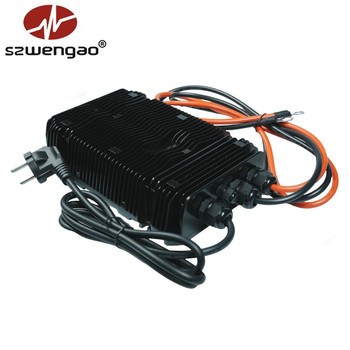
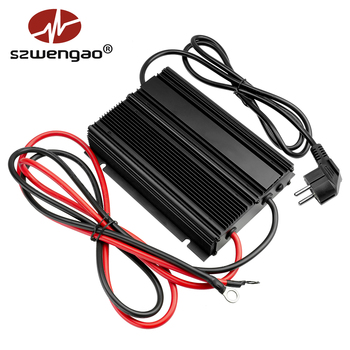
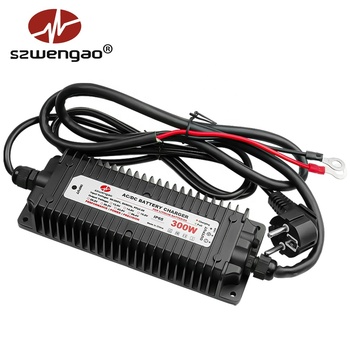
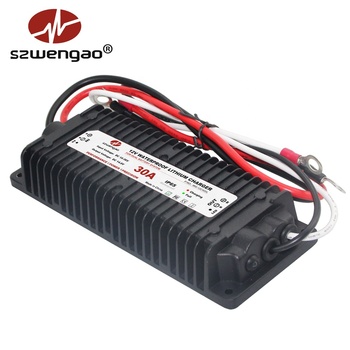
Smart 36V 13A Waterproof LiFePO4 Charger (12V to 43.8V)
- TopologyDC-DC Step-Up Boost
- Input / Output10-16V DC → 43.8V DC
- Charge Rate13A CC/CV Automated
- ProtectionIP67 Fully Potted
Precision-engineered constant-current, constant-voltage (CC/CV) power systems built to withstand the rigorous moisture, salt spray, and vibration profiles encountered across Vietnamese maritime operations.


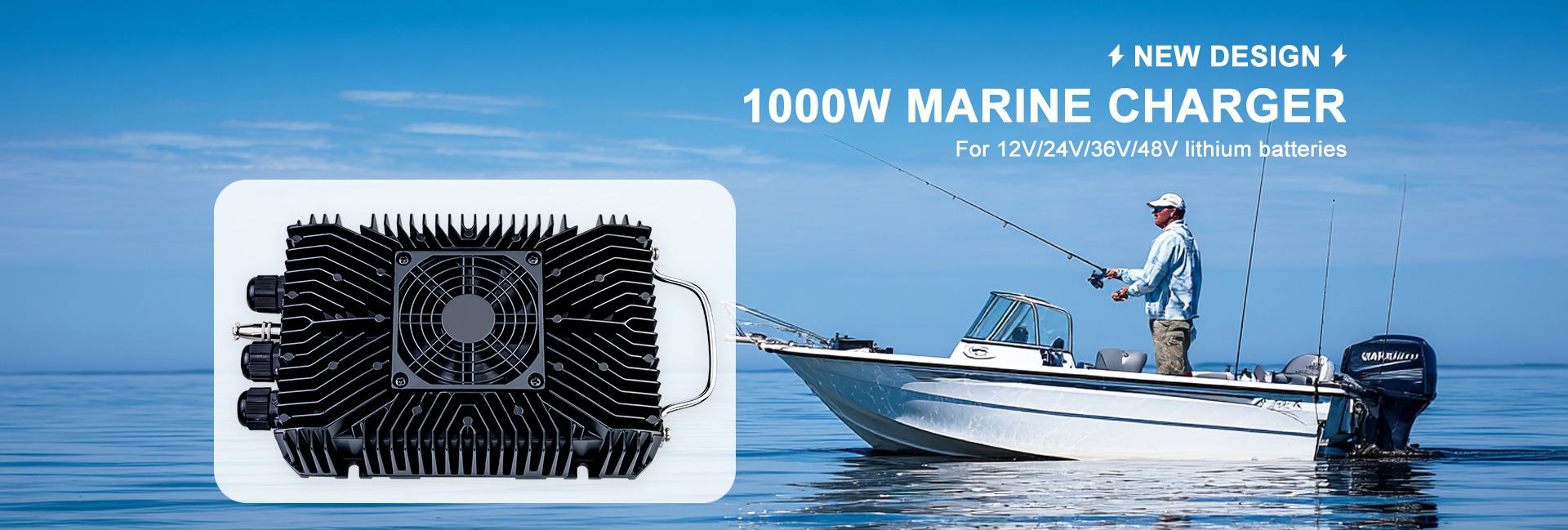
Why conventional automotive chargers and open-frame switch-mode power supplies inevitably fail when deployed on commercial vessels operating in Vietnamese coastal waters.
Marine electrical architecture demands an entirely distinct discipline of engineering compared to terrestrial or stationary industrial power supplies. Operating off the coast of Da Nang, navigating the brackish waterways of the Mekong Delta, or running heavy duty offshore trawlers out of Kien Giang exposes power conversion hardware to a destructive triad: high atmospheric humidity averaging above 85–95%, hyper-saline electrolytic air, and violent mechanical vibration frequencies generated by high-displacement diesel marine engines.
When charging high-capacity Lithium Iron Phosphate (LiFePO4) chemistries, system risks increase significantly. While lead-acid batteries can absorb marginal charging curve inaccuracies through electrolyte off-gassing, LiFePO4 cells require absolute precision. Voltage overshoot beyond 3.65V per cell leads to irreversible cathode structural damage, while chronic undercharging creates severe cell imbalance within 4S, 8S, or 16S bank configurations. Furthermore, if a battery management system (BMS) enters low-voltage disconnect mode (0V sleep state), an ordinary battery charger cannot initiate current flow because it fails to detect resting terminal voltage.
Galvanic isolation constitutes another critical parameter often overlooked by general importers. Standard non-isolated converters create a common DC ground connection between the auxiliary battery bank, the engine alternator chassis, and navigation equipment. When deployed in sea vessels with steel, aluminum, or bonded composite hulls, minor ground potential differences generate continuous parasitic micro-current loops through the water column. This accelerates sacrificial zinc anode consumption and causes aggressive electrolytic hull pitting. By incorporating galvanic isolation barriers tested to 1,500V DC breakdown thresholds, our isolated converters decouple power rails entirely, preventing ground-fault loops and safeguarding expensive radar, echo sounder, and radio communications equipment.
Complete vacuum impregnation using high-thermal conductive resin eliminates air voids. Components resist salt spray crystallization, condensation during day/night temperature cycles, and sulfurous diesel fumes in ship machine rooms.
Microcontroller-governed 3-stage charging curves: Bulk constant-current phase, absorption constant-voltage saturation at precisely 14.6V, 29.2V, or 58.4V, followed by automatic cutoff without float trickle degradation that destroys lithium cells.
For DC-to-DC battery chargers, integrated current limiters and ignition triggers prevent the high acceptance rate of low-impedance LiFePO4 banks from pulling excessive continuous amperages that scorch engine alternators during prolonged idling.
From the industrial maritime shipping hubs of Hai Phong to the expansive aquaculture networks of the southern delta, discover how Eltrum power systems integrate into Vietnamese operational infrastructure.
Long-range fishing trawlers operating out of Quang Ninh, Da Nang, Binh Dinh, and Kien Giang spend weeks at sea in high-salinity zones. Our chargers replenish 24V and 48V LiFePO4 banks powering high-wattage LED squid-attracting lighting arrays, sonar fish finders, and communication systems directly from dual alternator setups or auxiliary diesel generator buses.
Vietnam’s extensive inland waterway transport across the Tien and Hau Rivers connects agricultural hubs with Cat Lai and Cai Mep ports. River transport operators are modernizing fleet electronics, replacing heavy 200Ah flooded lead-acid starter/auxiliary batteries with lightweight LiFePO4 systems to increase payload capacity and eliminate acidic gas emissions in living quarters.
Ecotourism flagships in Ha Long Bay, Lan Ha Bay, and Phu Quoc are moving toward zero-emission "Silent Night" operation. Our 600W and 1000W IP65 chargers recharge massive house battery banks via shore power during daytime layovers, allowing overnight air conditioning, galley induction cooktops, and hotel loads to run entirely on silent lithium power without running generators.
Intensive shrimp and pangasius farming facilities in Ca Mau, Bac Lieu, and Soc Trang deploy automated paddlewheel aerators and water quality sensors. Eltrum chargers support hybrid solar-diesel DC microgrids, ensuring uninterrupted lithium reserve replenishment even during monsoon cloud covers and seasonal grid brownouts.
Pilot boats, port authority patrol cutters, and tugboats in Hai Phong and Vung Tau require uninterrupted readiness. Our compact 300W–600W chargers offer rapid plug-in maintenance charging, featuring integrated reverse-current blocking that prevents battery back-drain when shore power connections are disconnected.
Vietnamese commercial shipyard engineers in Nam Dinh, Hai Phong, and Ho Chi Minh City design custom vessels for foreign and domestic registry. Eltrum delivers custom-programmed charging curves, bespoke wiring harnesses, and custom-branded anodized housings tailored precisely to shipbuilder CAD specifications.
How regulatory shifts, fuel volatility, and modernization incentives are accelerating the replacement of lead-acid banks with lithium systems across Vietnam’s commercial watercraft.
The Socialist Republic of Vietnam is actively executing national decarbonization commitments under Decision No. 876/QD-TTg, which approves the Action Program on Green Energy Transition and Reducing Carbon and Methane Emissions across the Transport Sector. A primary pillar of this legislation targets the phased transformation of inland waterway vessels, coastal ferries, and fishing craft toward electric and green hybrid propulsion. As diesel fuel subsidies face restructuring and environmental zones tighten around UNESCO world heritage sites such as Ha Long Bay and the Trang An scenic landscape, maritime operators are compelled to adopt energy-dense battery energy storage systems (BESS).
Historically, the Vietnamese marine market relied almost exclusively on domestically manufactured flooded lead-acid batteries (such as Dong Nai and GS Vietnam) due to low initial acquisition costs. However, fleet operators are recognizing the severe total cost of ownership (TCO) penalties associated with legacy chemistries: high cycle degradation (300–500 cycles at 50% Depth of Discharge), deadweight mass reducing cargo capacities, persistent sulfation under high tropical ambient heat, and the release of volatile hydrogen-acid gases requiring complex ventilated battery lockers.
In contrast, LiFePO4 battery cells deliver over 3,500–5,000 full cycles at 80% DoD, operate safely inside enclosed engine room compartments, and provide an energy density nearly four times higher per kilogram. Yet, the bottleneck in this maritime energy transition remains charging infrastructure reliability. Vietnam’s regional coastal electrical grids frequently exhibit severe voltage drops—often fluctuating between 180V and 260V AC—particularly when heavy shore equipment or fish processing freezers spin up simultaneously at rural wharves. Eltrum marine chargers overcome this instability through ultra-wide active Power Factor Correction (PFC) circuitry operating stably down to 90V AC without dropping output current, guaranteeing that vessels recharge reliably regardless of dockside electrical grid volatility.
Examine the electrical and mechanical differentiators that separate industrial-grade potted marine systems from standard consumer chargers.
| Performance Parameter | Eltrum Marine LiFePO4 Charger | Standard Consumer Lithium Charger | Conventional Lead-Acid Marine Charger |
|---|---|---|---|
| Ingress Protection Rating | IP67 / IP68 Fully Potted | IP20 Open Vents (Fan cooled) | IP22 Drip-Proof Only |
| Salt Spray & Humidity Resistance | Complete Hermetic Isolation | Rapid PCB Corrosion (<6 Mos) | Moderate Conformal Coating |
| Charging Algorithm | Microprocessor CC/CV 0V Wake | Generic Constant Current Only | Bulk/Absorption/Float (Damages Li) |
| Alternator Protection (DC-DC) | Active Current Limit & Delay | None (Alternator Burnout Risk) | Manual Voltage Sensing Relays |
| Operating Temperature | -30°C to +75°C (No Derate to 50°C) | 0°C to +40°C (Heavy Derating) | -10°C to +45°C |
| Galvanic Hull Protection | 1500V DC Transformer Isolated | Non-Isolated Common Ground | Rarely Isolated |
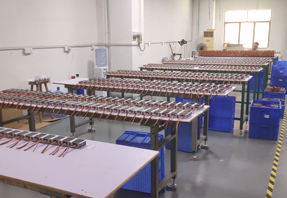
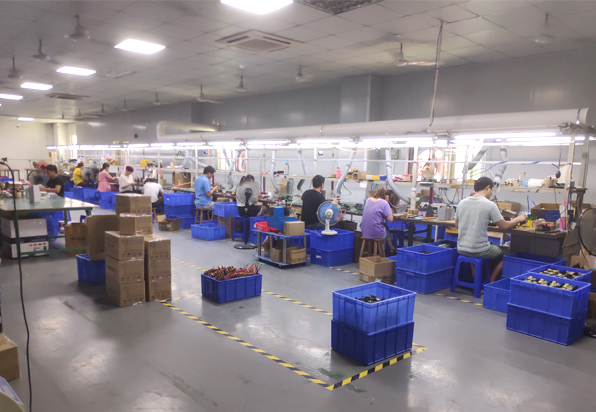
Founded in 2015, Shenzhen Eltrum Electronic Co., Ltd. operates a high-precision manufacturing hub dedicated to DC-DC power converters, battery charging systems, and high-voltage modules. Our facility integrates automated surface-mount technology (SMT) lines, high-vacuum silicone potting systems, and computer-controlled burn-in test chambers.
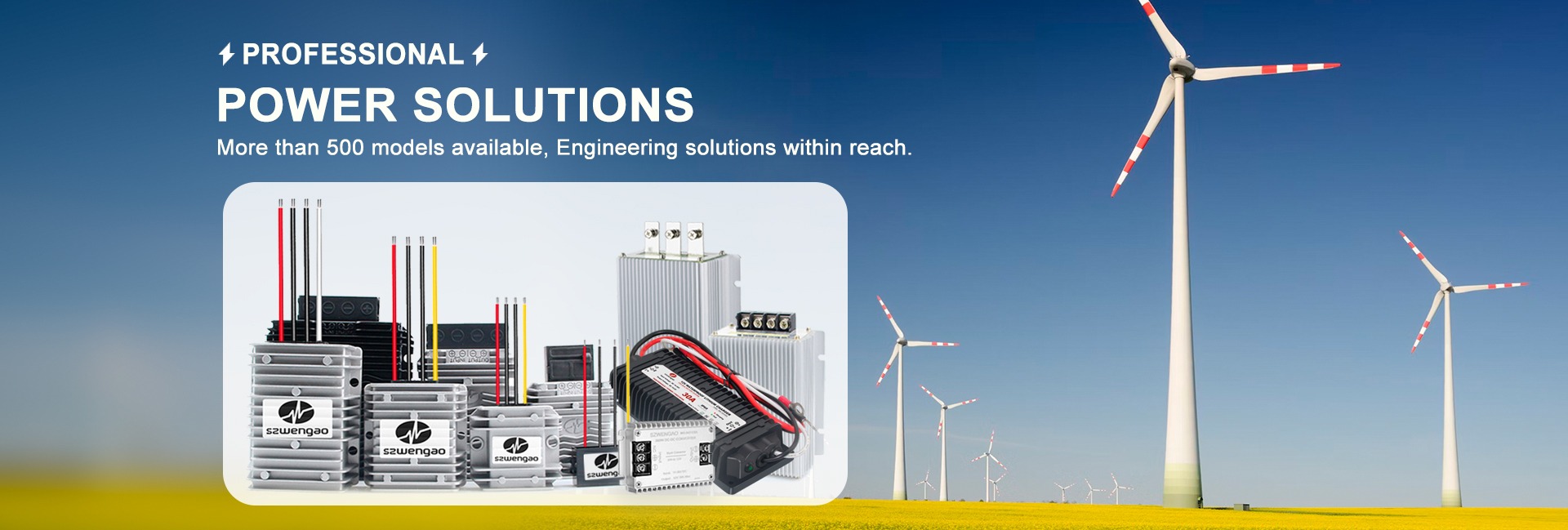
With over 500 standardized models and robust OEM/ODM engineering capabilities, we serve commercial marine, industrial automation, telecommunication, and renewable energy sectors in more than 130 countries worldwide. Every marine unit exported to Vietnam is 100% full-load burn-in tested for 4 hours to eliminate infant mortality defects before packaging.
Comprehensive regulatory, customs, logistics, and technical guidance for shipbuilders, fleet managers, and marine electrical distributors in Vietnam.
Industrial battery chargers and static converters are classified under HS Code 8504.40. Importers can utilize the ASEAN-China Free Trade Area (ACFTA) Framework. By requesting a Form E Certificate of Origin directly from our Shenzhen export department, eligible Vietnamese buyers can reduce import tariffs to 0% MFN preferential rates, paying only the standard 8%–10% Value-Added Tax (VAT) upon customs clearance at Hai Phong Port or Cat Lai Port.
Every internal cavity in our marine charger range is hermetically sealed via automated high-vacuum pressure potting utilizing an advanced two-part thermally conductive silicone resin. Unlike lacquer spray conformal coatings that develop micro-fissures from heat cycling, our solid silicone potting completely encases all surface-mount semiconductors, toroidal transformers, and electrolytic capacitors, guaranteeing IP67/IP68 submersion defense and zero corrosion from salt aerosol.
Yes. When a marine lithium battery suffers excessive drain (such as bilge pumps running continuously at dock), the onboard battery management system (BMS) enters low-voltage cutoff, presenting 0V across its output terminals. Our smart microcontroller executes an automatic low-current pulsing reactivation routine that detects the pack, safely recharges cells above the disconnect floor, and triggers the BMS to re-engage normal CC/CV fast charging.
Because LiFePO4 batteries feature extremely low internal electrical resistance, connecting them directly to an engine alternator via a simple mechanical relay causes the lithium bank to pull maximum current continuously. At engine idle speeds, low alternator cooling airflow combined with maximum amp output will overheat the alternator windings within 15 minutes. Eltrum DC-DC chargers maintain an exact electronically governed current ceiling, shielding both standard and high-output marine alternators from overload.
For standard catalog marine chargers and converters, our baseline MOQ is only 5 units, enabling naval architects and marine engineering workshops to validate prototypes. Bulk production batches (100–1,000 units) require 15–20 working days. We coordinate air freight (3–5 days to Noi Bai [HAN] or Tan Son Nhat [SGN]) and ocean container freight (5–8 days sea transit from Shenzhen Port to Hai Phong or Cat Lai, Ho Chi Minh City).
Absolutely. Shenzhen Eltrum Electronic specializes in OEM/ODM engineering. We can preset bespoke absorption voltages (e.g., 14.4V vs 14.6V for extended cell life cycles), integrate CAN-bus or RS485 Modbus telemetry protocols for ship bridge displays, install IP68 waterproof quick-connect plugs (Deutsch, Anderson, or marine screw-terminals), and laser-engrave your local brand trademark onto the anodized aluminum heatsink casing.
Whether you require sample testing for custom passenger ferry tenders in Da Nang, high-volume DC-DC converters for riverine logistics fleets, or turnkey OEM chargers for a modern shipyard program, our engineering team provides complete datasheets, custom charging curve programming, and prompt FOB/CIF pricing.