ISO 9001 Factory · CE & RoHS Compliant DC-DC Power · OEM / ODM Welcome

English USD [email protected]

Golf Cart DC DC Converter Manufacturers & Exporter serving Austin

OEM/ODM Galvanic & Step-Down Power Solutions (36V/48V/72V to 12V/24V) Engineered for High-Heat Hill Country Terrains and Neighborhood Electric Vehicles (NEV)

500+
Engineered SMPS Models
96.5%
Peak Synchronous Efficiency
ISO9001
CE, RoHS & IP68 Certified
130+
Export Regions Supported
Product Portfolio

Engineered DC-DC Power & LiFePO4 Chargers for Austin Fleets

Designed to deliver uncompromised auxiliary stability across Club Car, EZ-GO, Yamaha, and LSV/NEV custom street conversions operating under intense Texas environmental profiles.
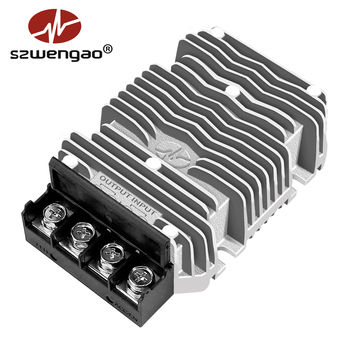
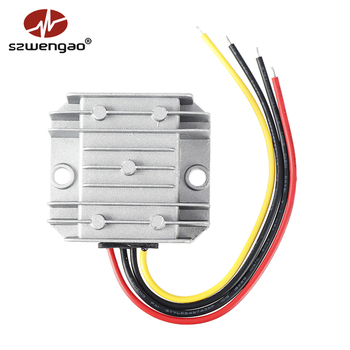
Austin Field Deployment

Localized Application Scenarios in Central Texas & Austin Terrains

Austin is neither a flat standard suburb nor a gentle temperate zone. Golf cart DC-DC conversion architectures must survive severe thermal dissipation challenges, high vibration, and unique municipal operational profiles.

Lake Travis & Westlake Hills Elevation Shifts

In hilly residential sectors like Lakeway, Westlake Hills, and Bee Cave, golf carts draw massive regenerative spikes and deep battery draws navigating 12% to 18% grades. When an unbuffered 48V or 72V traction pack dips under uphill acceleration or rebounds during hill braking, standard linear regulators buckle.

Eltrum synchronous buck modules maintain an immutable 12.2V rail without dropping under-voltage lockouts, ensuring headlights and hydraulic braking servos remain fully active.

Balcones Fault Thermal Stress (105°F+ Days)

Austin summers sustain relentless 100°F+ ambient heatwaves, which translate into enclosed cart battery compartments exceeding 145°F (63°C). Inferior power converters suffer massive thermal derating, triggering shutoffs while carts operate under intense midday golf rounds or campus errands.

Our IP68 aluminum-potted converters operate safely up to 85°C case temperature with integrated thermal foldback protection rather than sudden abrupt blackouts.

Mueller & Downtown NEV Commuter Regulation

Planned urban developments like Mueller, Circle C Ranch, and East Austin rely heavily on Street-Legal Low-Speed Vehicles (LSVs) and NEVs under Texas Transportation Code § 551.404. These vehicles require continuous, high-draw 12V circuits for DOT turn signals, high-output horns, windscreen wipers, and GPS tracking.

Eltrum provides high-amperage 30A to 60A continuous step-down units capable of powering full DOT accessory packages alongside 300W Bluetooth sound systems.
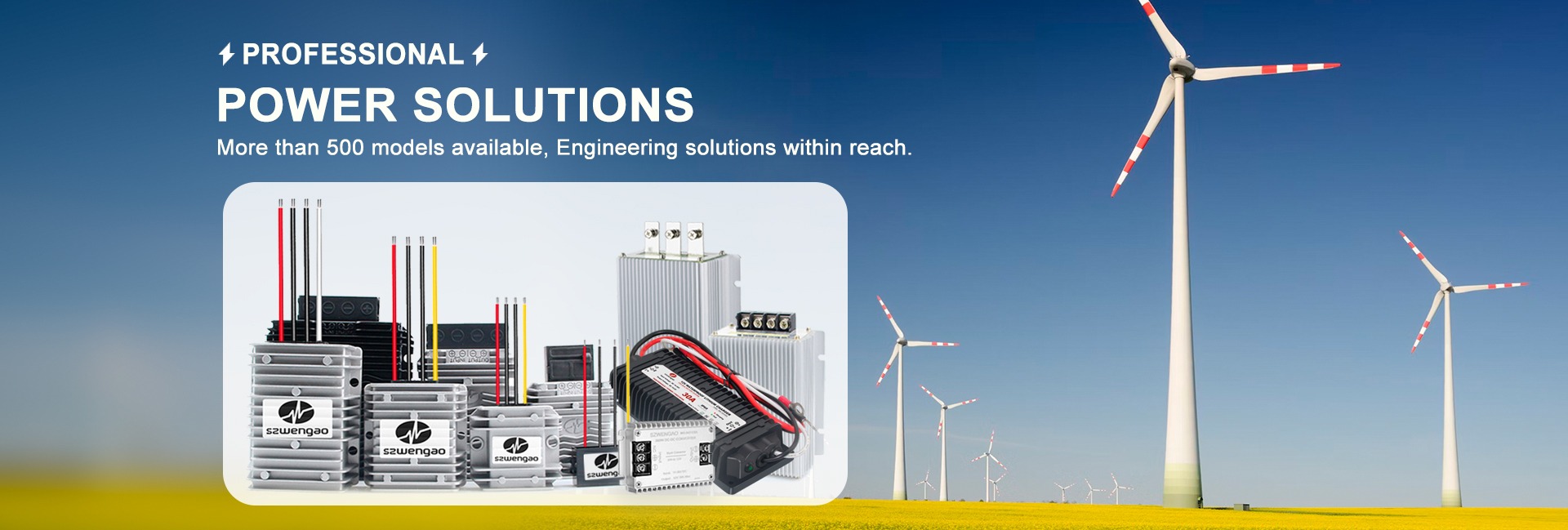
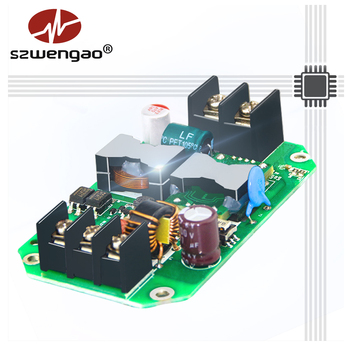
Golf Cart DC-DC Converter Industrial Testing and Assembly
Central Texas Market Trends

The Shift from Lead-Acid Tap-Offs to High-Efficiency DC-DC Integration

Across Travis, Williamson, and Hays counties, golf cart service centers and fleet managers are aggressively phasing out the obsolete practice of "battery tapping." In traditional 48V setups (utilizing six 8V or four 12V lead-acid batteries), tapping 12 volts across a single battery causes uneven discharge, early cell sulfation, and catastrophic premature battery bank failure.

  • Lithium LiFePO4 Drop-In Surges: Modern lithium conversions (such as 48V, 51.2V, and 72V single-pack batteries) incorporate an internal BMS that disconnects under uneven load tapping. A dedicated wide-input DC-DC converter is mandatory to harvest power across the whole pack.
  • Galvanic Isolation Standards: With high-end touch screen digital instrumentation, cellular GPS telemetry, and sensitive motor controllers, non-isolated grounds invite ground loops and high-frequency PWM switching noise. Isolated modules shield vehicle logic from traction motor spikes.
  • Demand for Ultra-Compact Footprints: As lithium packs occupy less volumetric space than lead-acid blocks, owners install auxiliary electronics in battery bays, necessitating flat-profile, waterproof converters.
Request Engineering Specs
Procurement Matrix

Technical Benchmark: Auxiliary Power Topologies for Golf Cart Applications

Compare how different voltage transformation topologies function when retrofitting modern golf carts and light utility electric vehicles.

Architecture Type Input Voltage Window Output Current Range Ground Loop Immunity Efficiency (%) Recommended Austin Application
Non-Isolated Synchronous Buck 30V – 60V (36V/48V Banks) 20A, 30A, 50A, 60A Common Negative Ground 94% – 96.5% High-power lighting bars, audio amplifiers, lift kit motors, auxiliary USB ports.
Galvanic Isolated DC-DC 18V – 36V / 36V – 75V 5A, 10A, 15A 1500V DC Galvanic Barrier 89% – 92% Telemetry GPS units, golf course tracking radios, microcontrollers, medical transport.
Ultra-Wide Buck-Boost 10V – 60V Continuous 10A – 40A Auto-Ranging Optional Isolation 91% – 94% Vehicles subject to severe voltage drop under steep Hill Country climbs.
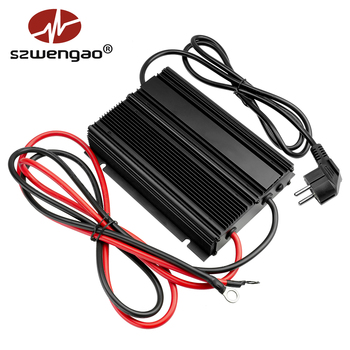
Onboard Lithium Charger (DC-DC) 10V – 36V Auxiliary 8A – 20A CC/CV Controlled Float Profile 93% – 95% Maintenance carts charging secondary batteries from the primary 48V/72V traction pack.
Direct From Manufacturer

Shenzhen Eltrum Electronic Co., Ltd. — Your OEM/ODM Engineering Partner

Supplying global distributors, OEM cart builders, and specialized EV retrofit shops since 2015 with over 500 validated SMPS architectures.

Automotive-Grade Potting

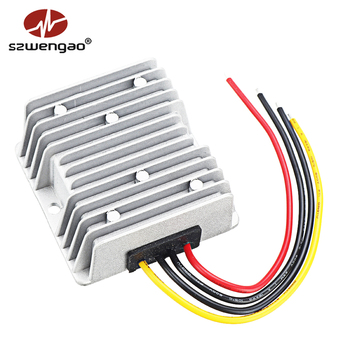
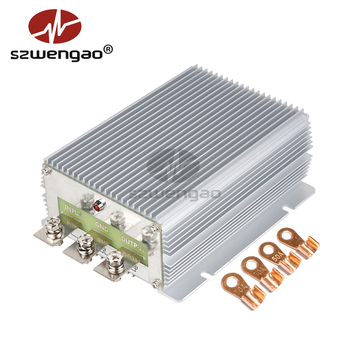
100% full-fill polyurethane resin encapsulations provide true IP68 waterproof ratings and shock mitigation, resisting Texas downpours, dusty course fairways, and mechanical vibration.

Custom OEM Harnesses

We supply plug-and-play wiring connectors matching Club Car Precedent/Tempo, EZ-GO TXT/RXV, and Yamaha Drive2 harnesses, minimizing field assembly labor for regional upfitters.

100% Full-Load Burn-In

Every single power unit is subjected to rigorous 4-hour dynamic burn-in testing under elevated operating temperatures at our Shenzhen manufacturing center before container dispatch.

Flexible Low MOQ (From 5 Pcs)

We allow engineering evaluation samples starting at just 5 pieces for standard catalog models, granting Austin specialty shops prototype agility before volume container commitments.

Buyer FAQ

Frequently Asked Questions: Austin Golf Cart DC-DC Procurement

Detailed engineering and trade answers addressing common logistical, technical, and regulatory concerns for Texas commercial buyers.

Why can't I just tap 12V from a single battery in my 48V golf cart pack?
Tapping 12V off one or two batteries in a series circuit causes severe pack imbalance. During discharge, the tapped battery discharges deeper than the others, and during standard charger cycling, the tapped cell never reaches full charge while the untrapped cells suffer overcharging. In modern lithium (LiFePO4) packs, the Battery Management System (BMS) will register this differential voltage and trigger an abrupt undervoltage shutdown to protect cells. A dedicated step-down converter draws uniformly from the total 36V, 48V, or 72V circuit, keeping every cell perfectly balanced.
Do I need a continuous 30A or 50A/60A DC-DC converter for my cart?
It strictly depends on your accessory current consumption. Standard factory LED headlights and taillights consume approximately 3A to 6A. However, Austin cart owners frequently install street-legal upgrades: a 48V-to-12V 30A (360W) converter handles standard DOT light kits, phone charging ports, and a mild horn. If you are operating high-powered marine-grade audio subwoofers, underbody rock lights, cooling fans, or high-volume electric beverage pumps, you must specify a 50A or 60A (600W-720W) converter to prevent peak-draw voltage sagging.
How does the Austin summer heat affect converter selection and longevity?
Solid-state semiconductors drop in operating efficiency as temperature climbs. In Central Texas where ambient conditions exceed 100°F (38°C) and under-seat compartment temperatures exceed 140°F (60°C), non-potted plastic converters frequently melt or encounter thermal lockouts. We recommend choosing an IP68 die-cast aluminum housed converter with pure epoxy or polyurethane potting. Eltrum converters utilize synchronous rectification with a thermal conductivity coefficient greater than 2.0 W/m·K, allowing natural heat convection across the vehicle chassis.
What is the key-switch trigger wire and why is it critical?
Many basic converters stay constantly energized when connected to the main battery bank, creating a parasitic drain (quiescent current) that will drain a golf cart battery over several weeks of winter storage. Eltrum offers 5-wire models incorporating a low-current ignition trigger (key-switch line). When the vehicle's key is turned OFF, the converter enters an ultra-low standby state consuming less than 10µA, completely preventing battery depletion.
How fast can Eltrum ship samples and production batches to Austin, Texas?
Standard prototype evaluation orders (MOQ 5 units) ship via air courier (FedEx, DHL, or UPS) directly to Austin-Bergstrom International Airport (AUS) customs within 3 to 7 business days. For volume container procurement (1,000+ units), maritime logistics route through the Port of Houston followed by dedicated intermodal trucking to Central Texas distribution hubs, delivering reliable landed costs.
Can Eltrum manufacture custom input/output voltages and connector terminations?
Yes. Shenzhen Eltrum Electronic Co., Ltd. provides full OEM/ODM manufacturing. We customize input thresholds (such as 18V-90V ultra-wide), specific output voltages (e.g., regulated 13.8V for high-end radio communications or true 12.0V for delicate controllers), custom IP-rated Deutsch connectors, and private-label laser etching for equipment distributors and cart brands.

Ready to Upgrade Your Central Texas Fleet Performance?

Direct from factory pricing, custom wiring harnesses, high-efficiency synchronous DC-DC designs, and verified ISO 9001 quality. Talk directly with our senior power supply engineers today.