
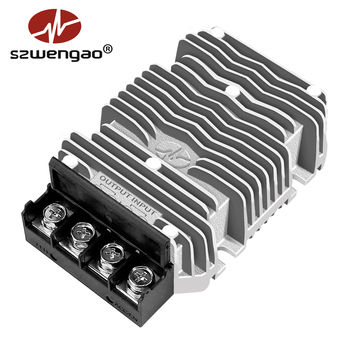
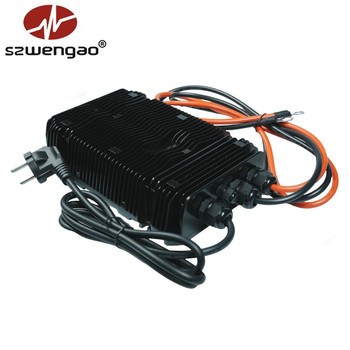
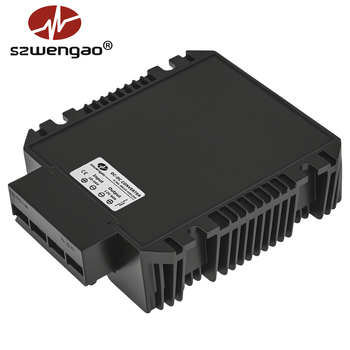
Smart 36V Lithium Battery Charger DC 12V to 43.8V 13A
- Topology: Step-Up Boost Charging
- Input / Output: 12V DC → 43.8V DC
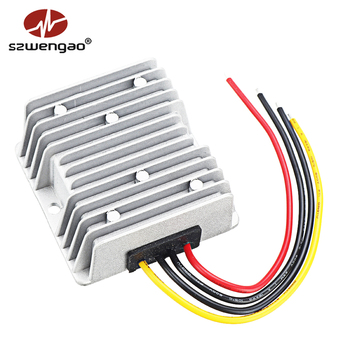
- Enclosure: IP65 Waterproof Epoxy
- Target: EV, Golf Cart, Electric Bike
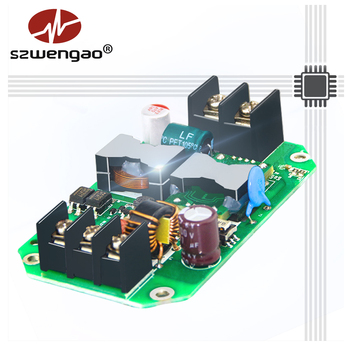
High-efficiency conversion modules built with rugged cast-aluminum thermal management and full potting for extreme tropical humidity.


Caloocan represents a distinct crossroads within Metro Manila’s industrial and commercial fabric. Characterized by a high concentration of manufacturing compounds, logistics hubs across North Caloocan, sprawling memorial and private recreational parks, and mixed-use commercial campuses, the operational demands placed on utility vehicles, low-speed electric vehicles (LSEVs), and off-highway golf cart fleets are rigorous. Fleet engineers and transport directors operating in the Caloocan, Navotas, and Valenzuela corridor face steep challenges: unforgiving stop-and-go duty cycles, intense ambient temperatures frequently reaching 38°C with relative humidity breaching 90%, and seasonal road-level inundations during the monsoon season. In this ecosystem, power conversion is not a mere commodity; it is the linchpin of fleet longevity.
Golf carts and electric utility vehicles typically operate on high-voltage traction battery arrays configured at 36V, 48V, or 72V nominal. However, every mission-critical subsystem aboard modern units—including high-candela LED illumination, horn assemblies, telematics systems, dynamic GPS tracking, USB-C recharging modules, electronic ticketing equipment, and hydraulic dump solenoids—demands an unyielding 12V or 24V supply. Historically, regional operators made the detrimental mistake of tapping into a single 12V lead-acid battery within a 48V string. This outdated practice induces localized unbalanced discharge, precipitating rapid cell degradation, accelerated sulfation, and early total pack failure. Shenzhen Eltrum Electronic engineers solve this operational vulnerability by introducing high-power synchronous step-down (buck) and galvanic-isolated power converters that distribute the auxiliary load evenly across the entire traction string.
Engineering Takeaway: Drawing an auxiliary 12V tap off a single lead-acid cell or LiFePO4 series pack triggers irreversible state-of-charge (SoC) imbalance within fewer than 45 charging cycles. An integrated 48V-to-12V buck regulator drawing uniformly across all pack terminals protects battery warranty coverage and extends operational lifespan by up to 2.8 times.
Furthermore, the rapid conversion of legacy lead-acid golf carts to lithium iron phosphate (LiFePO4) systems across industrial facilities in Bagumbong, Deparo, and Grace Park requires updated power architectures. LiFePO4 batteries feature an exceptionally flat discharge profile, maintaining approximately 3.2V per cell for the bulk of their cycle, followed by an abrupt voltage cliff near discharge termination. Legacy analog converters calibrate poorly against these rapid threshold swings, frequently oscillating or cutting power prematurely. Eltrum's advanced pulse-width modulation (PWM) controllers operate with wide input windows—such as 30V to 90V DC—delivering ripple-free, stable current even during violent traction motor starts and full-throttle acceleration on steep warehouse inclines.
Direct manufacturer traceability, ISO 9001 quality infrastructure, and strict component binning guarantee that every converter withstands the harshest operating conditions.
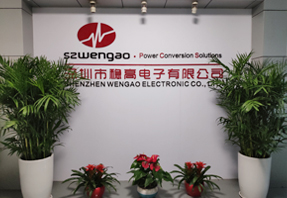
Shenzhen Eltrum Electronic Co., Ltd. operates a high-precision, 3,000 m² clean-room production facility certified under ISO 9001 management protocols. To satisfy the demands of coastal and tropical environments such as the National Capital Region (NCR) of the Philippines, our entire golf cart series implements solid-state, two-component thermally conductive epoxy potting. This process vacuum-seals active planar transformers, MOSFET switches, and low-ESR ceramic capacitors within anti-corrosive extruded aluminum enclosures.
Our surface-mount technology (SMT) lines incorporate automated optical inspection (AOI) alongside rigorous in-circuit functional testing. Every power supply intended for export to our partners in Caloocan, Southeast Asia, and North America undergoes continuous full-load burn-in at 50°C ambient chambers to weed out infantile component failure, guaranteeing true drop-in dependability.
Caloocan presents unique geographic and urban hurdles that differ substantially from standardized western golf course deployments. Commercial buyers, municipal contractors, and factory operations require power electronics that thrive within high-stress microclimates.
Within North Caloocan’s vast warehousing complexes, electric utility carts and tuggers run continuous 16-hour shifts. Inductive spikes from heavy fork movements and continuous low-speed crawling generate severe voltage ripple across traction lines. Our 48V-to-24V and 48V-to-12V buck modules incorporate high-capacity electrolytic buffer stages that filter inductive kickbacks, keeping safety lights, reversing sirens, and barcode scanners online without reboot cycles.
Memorial parks and sprawling residential enclaves in Caloocan require quiet, emissions-free low-speed shuttles operating over undulating, potholed terrain. Chronic vehicle vibration frequently shatters poorly braced solder joints in cheaper units. Eltrum’s fully solid-potted construction eliminates mechanical harmonic stress, delivering steady 12V 30A supplies to vehicle headlamps, passenger sound systems, and perimeter emergency beacons.
Municipal facilities, hospital complexes, and industrial yards utilize street-legal low-speed utility vehicles exposed directly to torrential rain, salt-laden sea air blowing inland from Manila Bay, and dust. The IP68 ingress protection on our potted converters resists continuous water immersion and atmospheric corrosion, ensuring fleet uptime during extreme regional typhoons.
In all these environments, thermal dissipation is a primary operational hurdle. Unpotted, fan-cooled converters ingest airborne road debris, salt mist, and humidity, resulting in internal galvanic corrosion and catastrophic short-circuiting across primary and secondary traces. Eltrum circumvents active cooling failures entirely by implementing passive conduction cooling. Massive integrated heatsink fins conduct heat away from the silicon junctions directly to the outer cast chassis, lowering thermal resistance (θJA) to less than 1.8°C/W.
As the Philippine government continues its push for public and commercial fleet modernization under EVIDA (Electric Vehicle Industry Development Act), the Caloocan industrial sphere is experiencing three transformative power architecture shifts:
Operators are rapidly ditching flooded lead-acid banks due to electrolyte watering maintenance and short life cycles. LiFePO4 battery adoption requires buck converters capable of handling ultra-low internal resistance, dynamic discharge spikes, and higher operating cut-off thresholds.
Modern commercial fleet managers demand real-time GPS telemetry, battery state-of-health tracking, and remote geofencing. These microprocessor-driven systems require clean, low-ripple DC inputs without electrical noise interference from high-current traction controllers.
Industrial health and safety standards increasingly dictate galvanic isolation between the primary traction pack (48V/72V) and operator-accessible auxiliary circuits (12V) to eliminate ground loop currents, chassis-leakage hazards, and static shock risks in wet conditions.
Field maintenance golf carts are increasingly outfitted with secondary inverters, mobile diagnostic computers, power tools, and high-wattage auxiliary charging stations, necessitating 12V continuous power envelopes exceeding 50A to 60A (600W to 720W).
Shenzhen Eltrum Electronic Co., Ltd. stands at the cutting edge of these transitions. Our product roadmap incorporates programmable switching frequencies, dynamic synchronous rectification, and RS485-enabled communications buses that interface directly with vehicle telematics nodes for live thermal and voltage monitoring.
From initial design simulation to final dispatch, our workflow reflects full conformance to global manufacturing benchmarks.
Shenzhen Eltrum Electronic maintains an audited ISO 9001 quality management framework. Every converter series is built with components sourced directly from tier-one semiconductor suppliers, mitigating electromagnetic compatibility (EMC) problems and ensuring compliance with CE and RoHS standards.
Our engineering laboratory conducts extensive environmental stress testing, including thermal shock cycles from -40°C to +85°C, three-axis vibration profiling matching severe commercial off-road vehicle standards, and salt-spray chamber exposure exceeding 96 hours. For our procurement partners in Caloocan, this ensures long-term operational resilience without premature field recalls.
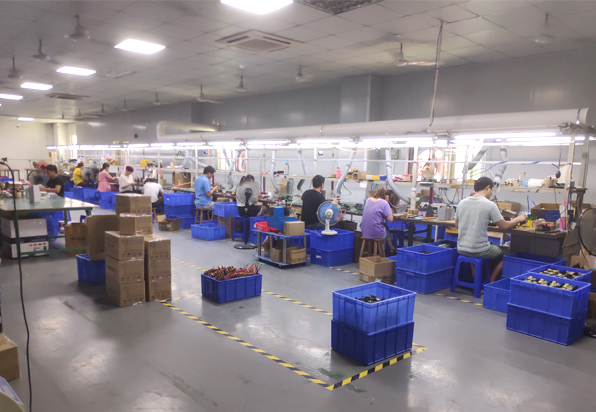
Clear, straightforward technical and logistical answers addressing the real concerns of fleet owners, spare parts importers, and automotive electrical workshops.
Contact our direct engineering team today to review load profiles, request custom voltage configurations, or obtain comprehensive datasheets and wholesale OEM pricing.
Get Catalog