Featured Dual Battery DC-DC Chargers & Converters
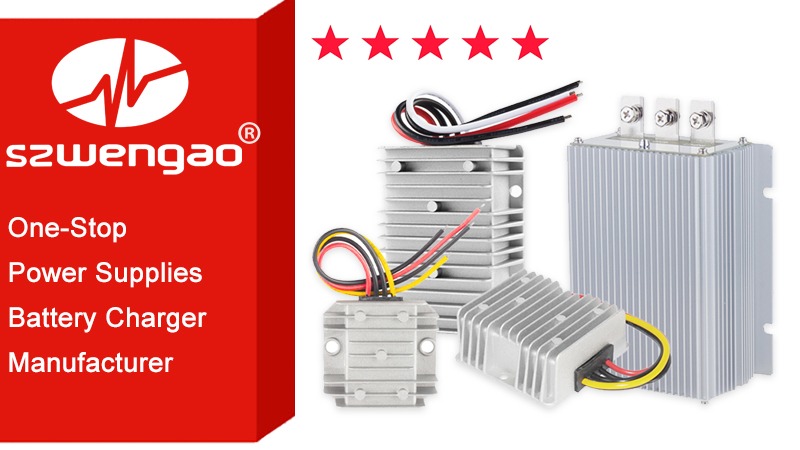
Engineered to bridge automotive smart alternators (Euro 6d/Euro 7) with multi-chemistry secondary auxiliary banks. Each system features galvanic protection, micro-controlled CC/CV profiles, and IP67 industrial waterproof potting.
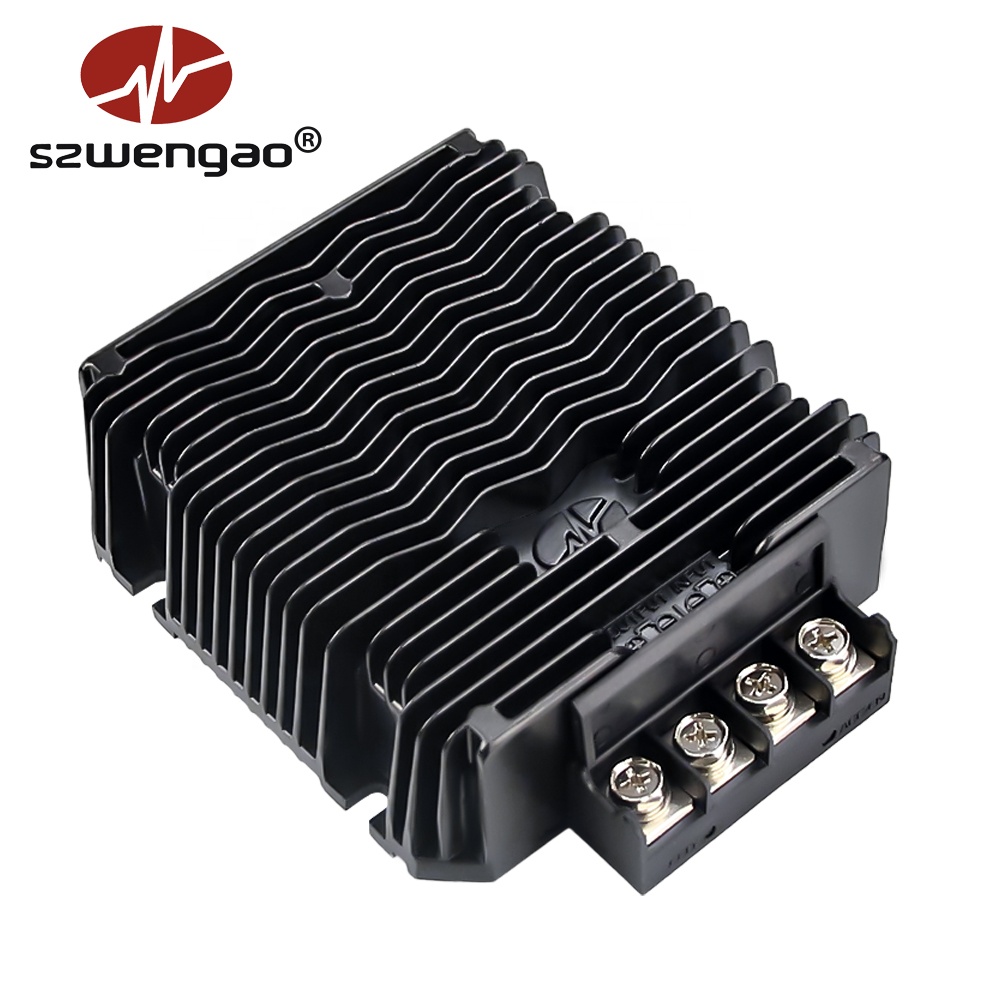
Smart 36V Lithium Battery Charger DC 12V to 43.8V 13A
- TopologyStep-Up Boost CC/CV
- Input / Output10-16V DC → 43.8V 13A
- EnclosureIP67 Die-Cast Aluminum
- Efficiency≥94.5% Peak
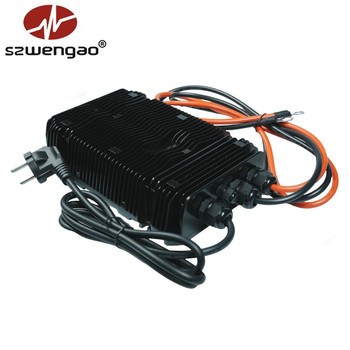
600W IP65 Industrial LiFePO4 Charger 14.6V - 58.4V
- TopologyAC/DC High-Resonance LLC
- Selectable Out14.6V / 29.2V / 58.4V
- ProtectionOVP, OCP, OTP, Reverse Polarity
- CoolingConvection Sealed Alloy
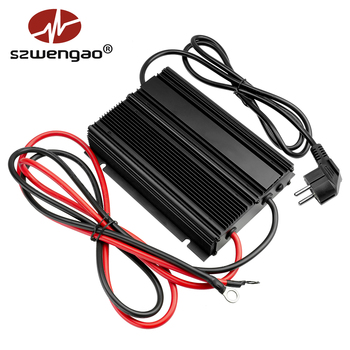
12V/24V/36V/48V 600W Multi-Volt Sealed LiFePO4 Unit
- ArchitectureAdaptive Smart Curve
- V-Range12V - 48V Nominal Packs
- Ingress RatingHermetic IP66/IP67
- ApplicationService Carts & Shuttles
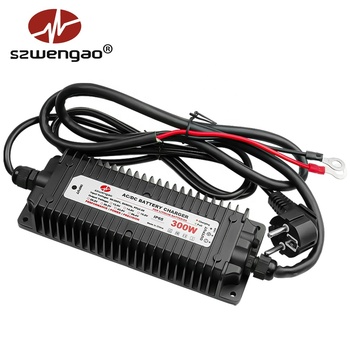
300W Marine-Grade Dual System LiFePO4 Auxiliary Charger
- ProfileUltra-Low Profile Body
- Voltage Trim14.6V / 29.2V / 43.8V
- AC Input Range90-265V AC Auto-Switch
- VibrationMIL-STD-810G Compliant
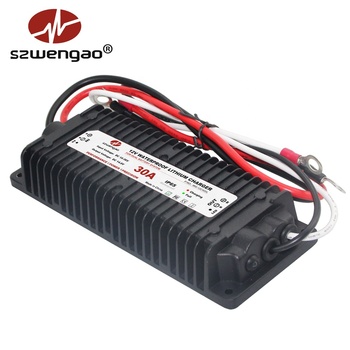
400W 12V Dual Battery System DC-DC Charger (10-36V In)
- ConversionSynchronous Buck-Boost
- Output Power14.6V / 29.2V Up to 25A
- Ignition WireEuro 6 D+ Detection Line
- CasingEpoxy-Potted Waterproof
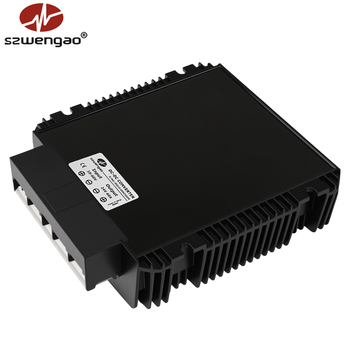
1500W Intelligent Buck-Boost Stabilizer with RS485 Modbus
- Input Range10-60V Wide DC Window
- Output Range12V / 24V / 28V / 48V Regulated
- CommunicationIsolated RS485 Real-Time Bus
- Power Density96% Synchronous Switch
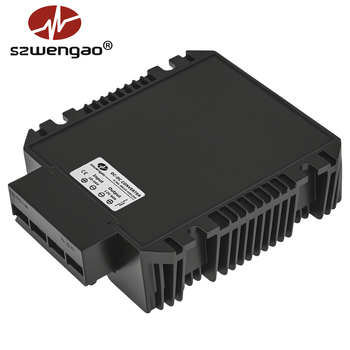
10-44V to 12V 50A/60A High-Amperage Buck-Boost Regulator
- Continuous Current50A - 60A Steady Output
- Output Power600W - 720W True RMS
- Ripple / Noise≤50mVp-p High Purity
- ApplicationBroadcast & Radio Vans
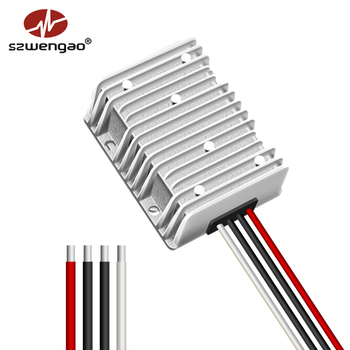
8-40V to 13.8V 25A/30A Precision Float Power Stabilizer
- Voltage Rating13.8V Calibrated Base
- Input SwingUltra-Wide 8V to 40V DC
- Current Output25A - 30A Heavy-Duty
- StandardsCE, RoHS, ISO 9001 Audited
Engineering Dual Battery Systems for High-Value, Zero-Emission Enclaves
Operating specialty vehicular fleets, mission-critical security units, and low-emission maintenance platforms within the sovereign confines of Vatican City presents unique electro-mechanical challenges. Because the Vatican State is an urban microstate containing irreplaceable cultural treasures, sensitive telecommunications arrays (such as Vatican Radio transmitters), and tightly controlled low-emission zones, conventional combustion architectures and crude mechanical battery isolators are systematically obsolete. Modern installations demand sophisticated dual battery system DC-DC chargers capable of precise algorithmic current regulation, full isolation, and multi-chemistry chemistry profiling.
A dual battery system isolates the primary automotive starting battery—dedicated purely to cranking the engine or energizing basic chassis electronics—from secondary auxiliary lithium iron phosphate (LiFePO4) or AGM battery banks. Without an intelligent DC-DC charger, connecting an auxiliary lithium bank directly to a vehicle's alternator via standard voltage-sensitive relays (VSRs) presents severe engineering hazards. Modern smart alternators (ubiquitous in European Euro 6d and Euro 7 commercial chassis, including Fiat Professional, Iveco Daily, and Mercedes-Benz platforms deployed throughout Vatican City) utilize regenerative braking software that modulates voltage aggressively between 12.2V and 15.4V. When alternator voltage plunges, an unmanaged lithium auxiliary battery can back-feed voltage into the starter circuit. Conversely, during regenerative spikes, massive inrush currents can instantly overheat the alternator stators or trip the Battery Management System (BMS) over-current cutoffs.
Three-Stage CC/CV Charging Curves Tailored for LiFePO4 Chemistry
Our Shenzhen manufacturing facility designs dual-battery chargers operating on high-frequency switch-mode PWM architectures. When an auxiliary lithium bank demands current, the charger activates a precision three-stage algorithm: Constant Current (Bulk), Constant Voltage (Absorption), and Maintenance (Float). For standard 12.8V LiFePO4 banks, bulk charging occurs at full rated amperage (e.g., 20A, 40A, or 60A) until cell groups hit precisely 14.6V (3.65V per cell). The unit then transitions seamlessly to absorption mode, sustaining 14.6V while current naturally decays below C/10. Finally, a safe float stage (13.6V - 13.8V) maintains parasitic electronics, telecommunications gear, and security monitors without inducing lithium plating or electrolyte degradation.
Buck-Boost Flexibility
Operates stably even when engine alternator voltage plunges to 9.5V during idling or spikes to 32V during jump-start routines. The output remains locked to the calibrated battery charge envelope.
Galvanic Ground Isolation
High-dielectric transformer isolation breaks common chassis ground loops, eliminating parasitic electromagnetic interference (EMI) across delicate VHF/UHF Vatican broadcast frequencies.
Engine-Run Detection (D+)
Integrated microprocessors monitor input voltage signatures alongside physical D+ ignition leads, ensuring zero quiescent draw from starter batteries when service vehicles are parked.
Mission-Critical Applications Across Vatican City
Vatican City State encompasses 49 hectares of high-density architectural monuments, administrative offices, and specialized security networks. Our DC-DC power modules serve five distinct localized deployment vectors.
Gendarmerie & Swiss Guard Vehicles
Patrol SUVs, mobile surveillance vans, and emergency response transports require secondary battery systems to power thermal imaging cameras, encrypted tactical radios, and perimeter tracking hardware without draining engine cranking reserves during extended silent standby.
Vatican Gardens Micro-Utility Carts
Covering nearly half the city-state's territory, maintenance tractors and utility electric carts require 48V to 12V or 24V step-down DC converters and battery-to-battery balancers to energize robotic pruners, precision irrigation telemetry, and auxiliary LED field illuminators.
Vatican Media & Broadcast Vans
Mobile broadcast units transmitting global audio-visual coverage of papal ceremonies demand ultra-clean DC rails. High-efficiency isolated DC-DC chargers decouple video transceivers and satellite uplink amplifiers from vehicular alternator ripples, eradicating harmonic hum.
Papal Motorcade Escort & Micro-EV Fleets
Custom ceremonial electric shuttles and support vehicles utilize multi-bank battery systems where 72V or 96V traction packs interface with sensitive 12V auxiliary steering, dynamic braking solenoids, and ceremonial illumination via fully potted industrial DC-DC regulators.
Engineering Matrix: Traditional Relays vs. Advanced DC-DC Charging
Evaluating the electrical, operational, and thermal metrics between outdated mechanical separation systems and Eltrum high-frequency power conversion units.
| Performance Parameter | Voltage Sensitive Relay (VSR) | Standard Non-Isolated DC-DC | Eltrum Isolated Buck-Boost Charger |
|---|---|---|---|
| Smart Alternator Compatibility | Incompatible (Drops out below 12.8V) | Good (Compensates voltage drops) | Superior Full Euro 6d/7 Active Tracking |
| Charging Profile | Unregulated Alternator Float | 2-Stage Uncalibrated | Precision 3-Stage Microcontroller CC/CV |
| LiFePO4 Chemistry Protection | Zero (Risk of high inrush current) | Moderate (Internal current limiter) | Certified Over-voltage, Temp-compensated, BMS Safe |
| Ground Isolation (Dielectric) | Common Ground (0V Isolation) | Common Negative Ground | >1500V DC Full Transformer Galvanic Isolation |
| Electromagnetic Noise (EMI) | Mechanical contact arching | Class B Filtered | CISPR 25 Class 3 Broadcast & Telemetry Pure |
| Environmental Sealed Ingress | IP40 Open Casing | IP54 Vented Chassis | IP67 Waterproof Vacuum Epoxy Sealed Aluminum |
Vatican City Electrification Trends: Mandates for Green Mobility by 2030
Following the environmental encyclical Laudato si’ promulgated by Pope Francis, the Governorate of Vatican City State has established one of the world's most aggressive municipal ecological transition roadmaps. The Holy See has committed to achieving net-zero emissions across its territorial perimeter, mandating the systematic phase-out of all internal combustion municipal utility vehicles, security cruisers, and maintenance trucks by 2030 in favor of 100% clean-energy electric vehicles.
This macro-trend introduces radical structural transformations for fleet managers and electrical contractors operating within the Leonine City. Transitioning legacy diesel and gasoline workhorses (such as waste collection platforms, delivery vans, and logistics haulers) to modern battery-electric architectures requires high-performance secondary power conversion. Standard factory micro-EV platforms often lack the auxiliary reserve capacity to power aftermarket hydraulic lifts, specialized medical refrigeration, high-intensity spotlighting, or mobile radio repeaters. Procurement departments are mandating dual-battery retrofits where secondary LiFePO4 modules act as independent energy storage systems (ESS), decoupled from the primary EV high-voltage drive pack through isolated DC-DC converters to maintain European UN ECE R100 vehicle safety certifications.
Furthermore, the Holy See's progressive expansion of distributed rooftop photovoltaic systems—including the 2,400 solar cell installation atop the Paul VI Audience Hall—has accelerated interest in hybrid DC-DC chargers capable of dual-source inputs. Modern Vatican procurement specifications increasingly stipulate dual-battery charging modules that integrate both smart-alternator inputs and auxiliary solar Maximum Power Point Tracking (MPPT) inputs within a solitary potted aluminum enclosure.
Frequently Asked Questions by Vatican & Italian Fleet Engineers
Comprehensive technical answers addressing logistics, European safety certifications, installation topologies, and multi-chemistry charging protocols.
◆ How do export shipments and customs clearances operate into Vatican City?
Shipments destined for the State of Vatican City (Stato della Città del Vaticano) transit through Rome, Italy under EU customs protocols (T1 transit documents or direct consignment to Vatican postal code 00120). Shenzhen Eltrum Electronic Co., Ltd. provides full export documentation, including EUR.1 preferential certificates, CE declarations of conformity, commercial invoices, and airway bills via DHL Express, FedEx, or consolidated sea freight into the Port of Civitavecchia.
◆ Will your DC-DC chargers interfere with sensitive Vatican Radio communications?
No. Our isolated DC-DC converters and battery chargers are engineered and tested to stringent CISPR 25 Class 3/4 standards and EN 55032 Class B limits. Utilizing toroidal power inductors, high-grade planar magnetic cores, and heavy die-cast aluminum shielding, our units eliminate harmonic switching hash that could otherwise disrupt high-sensitivity terrestrial transmitters or secure Swiss Guard communication lines.
◆ Can an auxiliary LiFePO4 battery be safely paired with a lead-acid starter battery?
Yes. This is precisely the engineering function of our dual battery system DC-DC chargers. The charger acts as a directional galvanic barrier. It draws electrical energy from the lead-acid (or AGM) starter circuit only when the alternator is generating positive surplus power, then steps the voltage up to 14.6V with dedicated CC/CV algorithms for the LiFePO4 auxiliary pack, entirely preventing cross-charging or voltage imbalance.
◆ What is the minimum order quantity (MOQ) for procurement and OEM engineering samples?
To support municipal testing, prototyping, and fleet retrofits, our standard MOQ starts from just 5 units across standard catalog models. High-capacity custom converters (such as 1500W buck-boost modules with RS485 telemetry) can be sampled from 1-2 units, enabling engineering teams to validate electrical parameters on test benches prior to full batch orders.
◆ How does the charger react to Euro 6d regenerative braking shut-offs?
Euro 6d alternators frequently down-regulate to 12.2V or shut off completely during vehicle acceleration to minimize engine drag. Our DC-DC units utilize advanced microcontroller voltage-threshold sensing paired with an auxiliary ignition terminal (D+). The charger maintains continuous, stable output during sudden input sags, ensuring the secondary electronics remain fully energized without interruption.
◆ Can these chargers operate in high ambient temperatures or enclosed battery boxes?
All our units are thermally potted with automotive-grade thermally conductive epoxy resin inside finned extruded aluminum heat sinks. They operate reliably within an ambient temperature range of -40°C to +85°C. An integrated temperature compensation sensor automatically throttles charge current if internal junctions approach +105°C, preventing catastrophic thermal runaway.
Shenzhen Eltrum Electronic Co., Ltd.
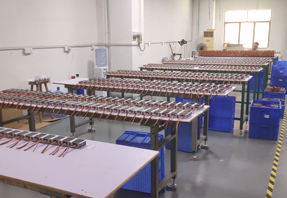
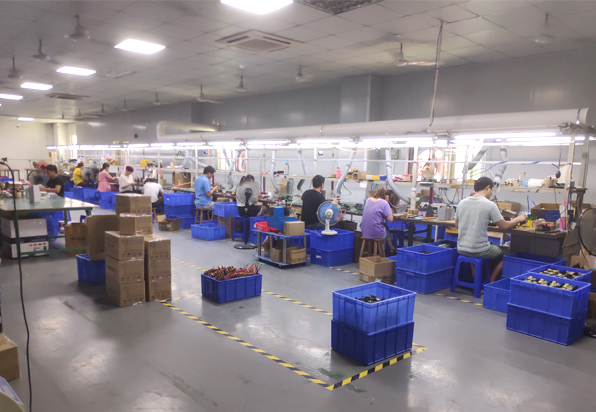
Established in 2015, Shenzhen Eltrum Electronic Co., Ltd. has developed into a premier designer and manufacturer of DC-DC converters, isolated power modules, battery-to-battery charging systems, and high-efficiency AC-DC power converters. Operating out of our modern facility in Shenzhen, China, our team delivers high-reliability power electronics serving alternative energy, vehicle conversions, industrial automation, and municipal infrastructure across 130+ nations.
Our core engineering legacy is rooted in transformer-isolated DC-DC topology. This deep experience enables us to craft converters with high galvanic protection, superior power density, and ultra-low electrical ripple. Certified under ISO 9001 quality management with products carrying full CE and RoHS European conformity, we maintain an on-site verified production line with rigorous 100% burn-in testing under full load conditions.
Request Custom Dual-Battery Systems or Technical Quotations
Consult directly with our power electronics engineering team for custom DC input/output profiles, bespoke RS485 communication protocols, or volume distribution terms across Vatican City and Southern Europe.