Architectural Foundations of Modern Dual Battery DC-DC Systems in Kyiv
The operational landscape for vehicular power systems, tactical emergency response vehicles, telecommunications field maintenance vans, and off-grid mobile infrastructure in Kyiv and across Ukraine has experienced a profound structural pivot. Modern European commercial vehicles operating across the Kyiv municipal corridor and broader regional transport routes are uniformly equipped with Euro-5 and Euro-6 compliant internal combustion systems. These powertrains incorporate smart alternators governed by engine control units (ECUs) alongside regenerative braking protocols. These systems periodically reduce alternator line voltage down to 12.2V or intermittently elevate it to spikes exceeding 15.4V based strictly on engine deceleration profiles and thermal emissions thresholds.
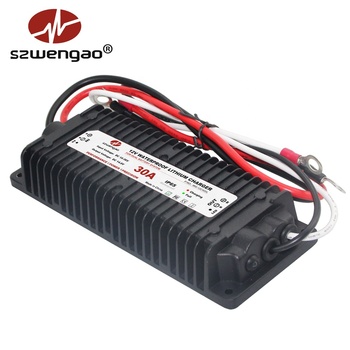
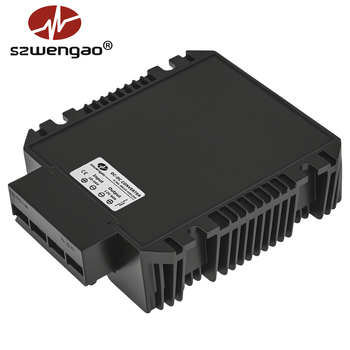
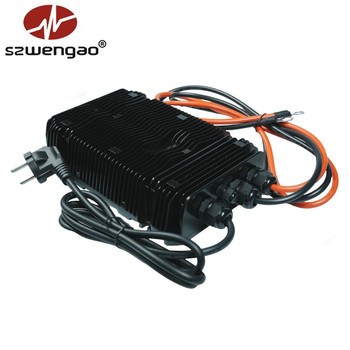
This dynamic voltage fluctuation renders legacy mechanical Voltage Sensitive Relays (VSRs) and simple diode isolators completely obsolete. Direct paralleling of an automotive starter battery with a secondary house bank (specifically Lithium Iron Phosphate, LiFePO4) via mechanical relays induces massive inrush currents that blow starter-fuse links, burn out high-output alternators through prolonged low-RPM saturation, and chronically undercharge lithium cells. The primary function of an industrial Dual Battery System DC-DC Charger is to decouple the input alternator bus entirely from the secondary energy storage layer, utilizing advanced synchronous buck-boost topology to govern constant-current / constant-voltage (CC/CV) profiles regardless of source voltage variances.
"Engineering dual-battery systems in extreme environmental corridors requires moving beyond simplistic voltage balancing. True industrial power resilience depends upon galvanic isolation, wide-spectrum buck-boost dynamic stability, and precise multi-stage CC/CV profile synthesis that neutralizes alternator line distortion and prevents severe lithium cell passivation."
The Kyiv Energy Ecosystem: Extreme Thermal Cycles and Grid Stress
Municipal fleet operations, logistical transport rings around the Kyiv Oblast, and defense-critical support platforms face two major technical vulnerabilities: severe sub-zero winter temperatures reaching down to -25°C, and unprecedented reliance on localized mobile auxiliary power due to electrical grid intermittency. In this environment, dual-battery chargers cease to be recreational accessories; they serve as mission-critical energy nodes that ensure off-grid communication arrays, medical refrigeration, high-power emergency lighting, and surveillance equipment remain operational without continuous engine idling.
A primary failure mode documented across the Kyiv transit theater is cold-temperature lithium charging degradation. Charging LiFePO4 chemistry below 0°C without active thermal regulation causes irreversible metallic lithium plating on the anode, resulting in catastrophic internal micro-shorting and elevated safety hazards. Eltrum's specialized dual-battery conversion series integrates programmable auxiliary temperature sensor inputs and internal microcontrollers that automatically taper charging currents or divert DC bus power into heating jacket loops prior to executing absorption-stage charging.
Active Euro-6 ECU Compatibility
Integrated low-voltage ignition trigger lines and software-defined threshold monitoring enable seamless integration with dynamic start-stop smart alternators, preventing secondary bank drain when the vehicle rests at idle.
Galvanic Ground Loop Isolation
Transformer-isolated variants eliminate common-mode ground noise across 1500V DC dielectric thresholds, protecting sensitive SDR communication terminals, field laptops, and RTU units from chassis ground loops.
Comprehensive Chemistries Support
Configurable output settings precisely support LiFePO4 (14.6V absorption), Ternary Lithium (12.6V / 16.8V), AGM (14.4V / 14.7V cold compensation), and Gel profiles with automated float and storage preservation routines.
Comparative Topologies: Buck vs. Boost vs. Non-Isolated Buck-Boost
A frequent error observed in industrial procurement contracts across Eastern Europe is the misapplication of basic Step-Down (Buck) converters inside 12V nominal vehicle chassis. In an automotive environment, a lead-acid starter battery coupled to an active alternator typically outputs between 13.8V and 14.4V. However, under high engine bay heat or heavy accessory draw, alternator terminal voltage frequently drops to 12.4V. A standard buck converter requires an input headroom of at least 1.5V to 2.0V above its target output voltage. Consequently, when attempting to charge a 4-cell LiFePO4 pack that requires a strict 14.6V absorption profile, a buck topology will instantly fall out of regulation, dropping into low-voltage cutoff or severely starving the battery.
Conversely, non-isolated Four-Switch Synchronous Buck-Boost topology allows smooth, continuous bidirectional transformation. When alternator voltage rises above 14.6V during downhill regenerative deceleration, the charger operates in step-down mode; when the vehicle idles and alternator voltage plummets to 12.0V under electrical load, the charger seamlessly transitions into step-up mode, continuously delivering the rated 14.6V constant current without a single millisecond of voltage collapse.
| Topological Family |
Typical Input (V) |
Regulated Target (V) |
Peak Efficiency |
Application Suitability in Kyiv Region |
| Synchronous Buck-Boost |
9.0V – 36.0V |
14.6V / 29.2V (CC/CV) |
95.8% |
Universal Euro-5/6 utility fleets, overlanding, mobile repair workshops. |
| Isolated Industrial DC-DC |
18.0V – 90.0V |
12.0V / 24.0V / 48.0V |
92.4% |
Military communications, electronic warfare shielding, municipal trolleybus telemetry. |
| High-Current Buck (Step-Down) |
18.0V – 35.0V |
12.6V – 13.8V |
96.5% |
24V heavy commercial trucks powering 12V cab communications and refrigeration. |
| Step-Up Boost Charging |
10.0V – 16.0V |
43.8V / 58.4V |
94.1% |
Charging high-voltage 36V/48V light electric vehicles (LEV) from 12V vehicle alternators. |
Addressing Extreme Electrical Disturbances: ISO 7637-2 Automotive Transient Immunity
Vehicular DC distribution networks are notorious for aggressive electrical spikes. The disconnection of a battery while the alternator is generating current produces what is standardly classified as an ISO 7637-2 / ISO 16750-2 "Load Dump Transient" (Test Pulse 5a/5b). In 12V electrical systems, this spike can surge up to +87V for a duration of 400 milliseconds; in 24V commercial chassis, the surge can easily eclipse +174V. Cheap consumer-grade battery chargers constructed with low-voltage MOSFETs and inadequate TVS (Transient Voltage Suppressor) arrays break down permanently upon the first load-dump event.
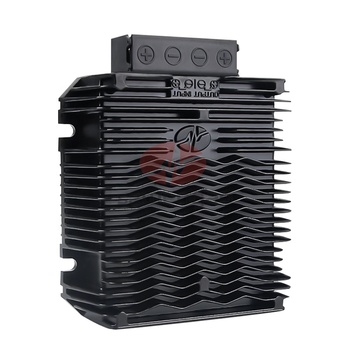
Shenzhen Eltrum Electronic Co., Ltd. incorporates heavy-duty planar choke inductors, high-joule metal oxide varistors (MOVs), multi-stage LC input EMI filters, and secondary transient clamping circuitry on all industrial models. Furthermore, our sealed chassis designs utilize thermally conductive, flame-retardant polyurethane potting that guarantees continuous IP67/IP68 ingress protection against road grime, salt slurry from winter de-icing operations in Kyiv, and aggressive moisture condensation.
Procurement Trends and B2B Supply Chain Dynamics: China-to-Kyiv Logistics
The geopolitical and logistical context of supplying mission-critical electronic components to Ukraine has driven significant shifts in enterprise procurement strategy. Ukrainian municipal enterprises, emergency service coordinators, and commercial distributors have moved away from low-volume consumer dropshipping toward centralized B2B bulk orders governed by formal quality management agreements.
Key procurement demands currently dominating the Kyiv import sector include:
- Consolidated Multi-Voltage SKUs: Given unpredictable fleet compositions across the region (mixing Western European 12V vans, American heavy pickups, and domestic 24V utility trucks), importers seek chargers with universal wide-input ranges (e.g., 10V–36V DC) capable of servicing both 12V and 24V chassis without physical component substitution.
- Direct Factory Labeling & OEM Software Tuning: Importers in Kyiv frequently request custom low-voltage disconnect set points (e.g., locking out secondary charging if the starter bank drops below 12.3V for longer than 30 seconds) to prevent vehicle stranding during cold-weather dispatch.
- Streamlined Rail and Multimodal Logistics: Shenzhen Eltrum Electronic coordinates verified freight routes utilizing bonded hub networks through Central Europe directly into logistics consolidation warehouses located in Western and Central Ukraine, complete with CE, RoHS, and comprehensive customs compliance documentation.