High-Efficiency Dual Battery Charging Systems for Sheffield OEMs
Engineered to mitigate Euro 6 / Euro 6d-TEMP variable alternator sagging, protect secondary LiFePO4 chemistry banks, and deliver high CC/CV efficiency across automotive, marine, and off-grid utility platforms.

Smart 36V Lithium DC-DC Charger (12V to 43.8V 13A)
- Input Voltage12V DC (9–16V)
- Charging Output43.8V CC/CV · 13A
- Efficiency / Rating>94% · IP67 Waterproof
- Target SetupEV, RV & E-Bike Packs
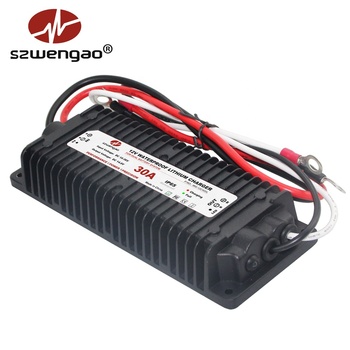
400W Dual-Stage DC-DC LiFePO4 Charger
- Input Voltage10–36V DC Multi-Source
- Charge Presets14.6V / 29.2V / 43.8V
- Continuous Power400W Rated Continuous
- Smart AlternatorEuro 6 D+ Terminal Compatible
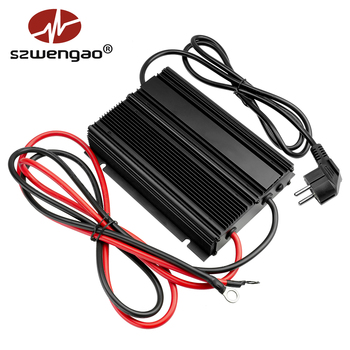
600W Universal Dual-Rail Battery Charger
- Voltage Platforms12V / 24V / 36V / 48V
- Output Density600W High Peak Handling
- Protection MatrixOVP, OCP, OTP & Reverse
- Ingress RatingIP65 Anodised Heat-Sink

1500W Buck-Boost Charger with RS485 Modbus
- Ultra-Wide Input10–60V DC Buck-Boost
- Regulated Output12V / 24V / 28V / 48V Stable
- Telemetry LinkRS485 Telemetry & Remote ON
- ApplicationIndustrial Fleet & Hydrogen APU
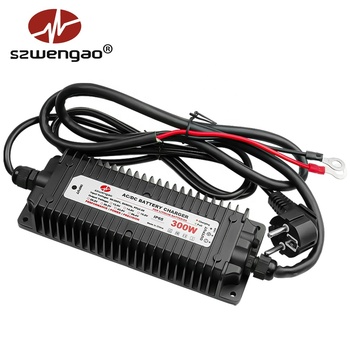
300W Marine Dual House-Bank Charger
- Dual InputAC Shore / Auxiliary DC Feed
- LiFePO4 Curve14.6V / 29.2V / 58.4V CV cutoff
- EnclosureAnti-Corrosive Marine Alloy
- PlugsUK 3-Pin / Industrial Commando
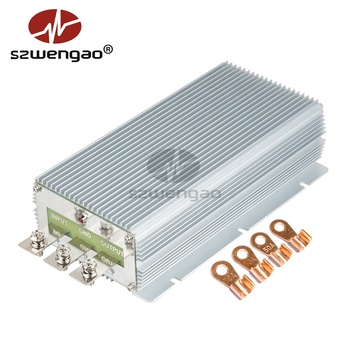
24V to 12V 100A Commercial Bus Step-Down
- Traction In18–32V DC Commercial Rail
- Secondary Bank12V / 13.8V at 100A Peak
- Thermal SystemConvection Extruded Fin Casing
- ComplianceECE R10 & CE Certified
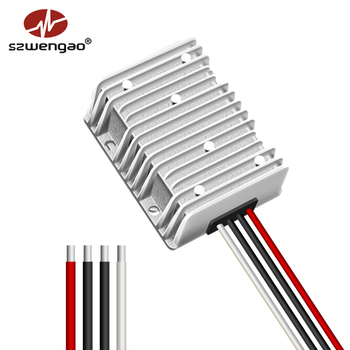
8–40V to 13.8V 30A In-Vehicle Voltage Stabilizer
- Cranking Window8V Cold Crank Survival
- Float Voltage13.8V Solid House Float
- Output Power414W Continuous Output
- ProtectionFull Silicone Gel Ingress Seal
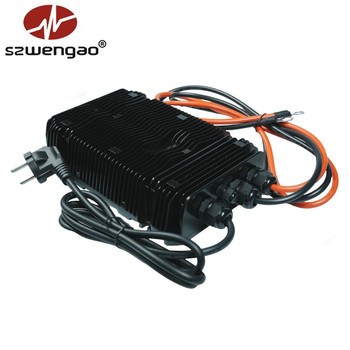
600W Fleet Depot AC-DC Workshop Charger
- Grid Connection90–264V AC Universal 50Hz
- DC Profile14.6V / 29.2V / 58.4V Options
- Efficiency93.5% Active Power Factor (PFC)
- ChassisIP65 Cast Alloy Tough Body
500+
Standard SMPS & Charger Models
96%
Peak Synchronous Rectification
ISO 9001
Verified Factory Quality Control
5 pcs
Low MOQ Sample Evaluation
Dual Battery Charging Architecture: Topology Selection Matrix
A rigorous comparative analysis of power conversion topologies tailored for fleet conversions, rail systems, and smart alternator installations across the UK.
| Conversion Topology | Input Dynamic Window | Output Voltage Regulation | Thermal & Efficiency Tradeoff | Sheffield Fleet Use Case |
|---|---|---|---|---|
| Buck-Boost (DC-DC) Non-Isolated 4-Switch |
8.0V – 40.0V DC (handles Euro 6 deceleration spikes & stop-start dips) |
Precise CC/CV 14.6V (4S LiFePO4) or 29.2V (8S LiFePO4) ±0.2V | 92%–95% efficiency; requires precision planar inductors to avoid thermal throttling under hood. | Commercial vans (Ford Transit, MB Sprinter) retrofitted for mobile welding and cold-chain fleets inside Sheffield CAZ. |
| Synchronous Step-Down (Buck) High Current DC-DC |
20.0V – 36.0V DC (requires input strictly above battery absorption voltage) |
Stable 12.0V – 14.2V aux rail at up to 100A continuous output | Up to 97% peak efficiency; minimal internal heat buildup, convection cooled extruded cases. | South Yorkshire 24V bus networks, municipal refuse lorries, and construction plant equipment running 12V auxiliary telemetry. |
| Galvanically Isolated DC-DC High-Frequency Transformer |
18.0V – 90.0V DC (ultra-wide multi-voltage industrial bus) |
Fully decoupled floating 12V, 24V, or 48V ground rails | 88%–92% efficiency; breaks dangerous common-ground loops, galvanic barrier >1500V DC. | Off-highway electric excavators, automated guided vehicles (AGVs) in the Advanced Manufacturing Park (AMP), and telecom relays. |
| AC-DC Grid / Shore Charger Active PFC Resonant LLC |
90V – 264V AC (universal UK single-phase 230V 50Hz) |
14.6V, 29.2V, 43.8V, 58.4V LiFePO4 dedicated profiles | Active power factor >0.98; low THD compliant with UK grid codes, sealed IP65 chassis. | Depot overnight charging hubs across Sheffield Logistics Parks, Peak District holiday camper hookups, and canal moorings. |
*Note: Synchronous rectification with MOSFET switches significantly reduces forward conduction loss compared to legacy Schottky diode isolators, preventing alternator thermal burnout.
Dual Battery Charging Scenarios Across South Yorkshire
From the industrial valleys of the Don to the rugged terrain of the Peak District, precision secondary power systems solve specific local operational challenges.
Sheffield Clean Air Zone (CAZ) Fleet Retrofits
With Sheffield enforcing a Class C Clean Air Zone across the Inner Ring Road and city centre, fleet operators are transitioning from diesel generators to high-capacity LiFePO4 battery auxiliary packs. Our DC-DC chargers pull strictly regulated power from the primary engine alternator while moving, recharging secondary banks without idling engine penalties.
Peak District Expedition & Camper Conversions
Sheffield sits at the doorstep of the Peak District, making South Yorkshire a prominent hub for bespoke campervan converters (VW Transporter, Mercedes Sprinter, MAN TGE). Enthusiasts encounter freezing winter temperatures where charging lithium batteries without internal heating or BMS cutoff causes cell degradation. Our chargers integrate precision temperature logic.
Sheffield & Tinsley Canal Electric Marine Vessels
Electric narrowboats and commercial maintenance craft cruising the inland waterways between Sheffield Victoria Quays and the Humber Estuary require dual isolated house and traction battery circuits. Galvanic isolation prevents hull electrolysis caused by shore ground sharing, ensuring continuous DC-to-DC maintenance of steering, navigation, and bilge circuits.
Advanced Manufacturing Park (AMP) Robotics & AGVs
High-tech manufacturing plants in Waverley and Rotherham rely on heavy-load automated guided vehicles (AGVs) carrying precision steel components. Dual battery configurations provide uninterrupted 24V/48V traction power while maintaining an isolated 12V rail for LiDAR, industrial PCs, and robotic arms, eliminating shutdown risks during rapid dock battery swap-outs.
Emergency Services & Mobile Medical Clinics
Regional rapid-response paramedic command units and utility repair vans require uncompromised auxiliary power to operate sensitive diagnostic gear, communications relays, and defibrillator recharge docks. Buck-boost architecture ensures that even during extended engine idle or high cold-cranking draw, the 13.8V medical rail never drops below threshold.
Off-Grid Forestry & Heavy Civil Works Plant
Heavy quarrying, civil earthmoving, and timber management contractors operating across South Yorkshire encounter rugged operating conditions. Machinery auxiliary cabs demand step-down charging from 24V starter banks to 12V auxiliary telemetry, survey systems, and UHF satellite links without introducing ground bounce or vibration failure.
South Yorkshire Power Electronics & Decarbonisation Trajectory
Analyzing key structural shifts reshaping auxiliary power demand across Sheffield's industrial manufacturing corridor.
Net-Zero 2040 Mandate
South Yorkshire Mayoral Combined Authority (SYMCA) has laid out aggressive regional decarbonisation targets. Fleet operators are phasing out secondary combustion auxiliary APUs in heavy utility vans, moving directly toward high-density lithium secondary storage recharged via high-efficiency DC-DC converters during standard drive cycles.
Hydrogen & Fuel Cell APU Hybrids
Sheffield is an internationally renowned center for hydrogen technology innovation (anchored by ITM Power and regional research institutes). Dual-battery conversion architectures are increasingly required to interface fuel-cell stack buffer batteries (often 48V–72V) with conventional 12V and 24V chassis architectures, demanding bi-directional and wide-input chargers.
Digitally Connected Fleets & Modbus
Modern telematics platforms across commercial hire fleets in Yorkshire demand live state-of-charge (SoC), operational temperature, and charging current visibility. The shift from analog split-charge relays to smart DC-DC chargers equipped with RS485 communication allows depot engineers to predict secondary battery end-of-life before road failure occurs.
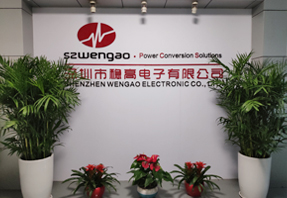
Shenzhen Eltrum Electronic Co., Ltd. — Your Global Powerhouse
Since 2015, Shenzhen Eltrum Electronic Co., Ltd. has specialized in industrial power supplies, isolated DC-DC converters, dynamic buck-boost voltage regulators, and intelligent waterproof lithium battery chargers. Operating under strict ISO 9001 quality management guidelines, our products are deployed across more than 130 countries worldwide.
Our experienced engineering team bridges the gap between high-volume manufacturing economies and the stringent compliance expectations of the UK and European automotive, marine, and industrial sectors.
- 500+ Standard Power Models
- Full CE, RoHS & ISO 9001 Compliance
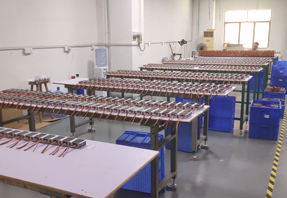
- Automated SMT & 100% Full Load Burn-In
- Custom Curves, Connectors & RS485
- Low MOQ From 5 Units for Testing
- FOB / CIF Fast Air & Sea Logistics

Frequently Asked Questions by Sheffield Importers & OEMs
Essential answers regarding UK regulatory compliance, maritime import logistics, thermal profiles, and custom engineering.
How do Eltrum dual battery chargers handle Euro 6 smart alternators?
Euro 6 and Euro 6d-TEMP engines utilize regenerative braking and variable voltage alternators that regularly drop down to 12.2V or spike to 15.4V. A traditional mechanical split-charge relay will disengage during voltage dips, starving the auxiliary battery. Our buck-boost chargers maintain continuous multi-stage charging (14.6V LiFePO4 or 14.4V AGM) regardless of fluctuating alternator voltages, activated via ignition line (D+) or smart vibration/voltage sensing.
What are the freight lead times and port options into Sheffield?
For standard prototyping orders (5–50 units), we ship via air express (DHL / FedEx / UPS) with customs clearance delivered directly to Sheffield workshops within 5 to 8 working days. For palletized OEM container volume, sea shipments route through the Port of Immingham or Port of Hull (the closest Humber estuary hubs to South Yorkshire) or Felixstowe, typically taking 28 to 35 days port-to-door via the M18/M1 freight corridor.
Do your chargers comply with UKCA, CE, and automotive E-Marking?
Yes. All series are engineered and manufactured in compliance with CE (EMC Directive 2014/30/EU and Low Voltage Directive 2014/35/EU) and RoHS standards under our ISO 9001 accredited facility. Complete Declaration of Conformity documents and laboratory test reports are provided for UKCA alignment and UNECE Regulation 10 (electromagnetic compatibility for in-vehicle electrical equipment).
Can the charging curve be customized for mixed battery chemistries?
Absolutely. While modern installations overwhelmingly adopt LiFePO4 (Lithium Iron Phosphate), many Sheffield vehicle builders operate mixed environments—e.g., standard lead-acid starter battery paired with an NMC or LiFePO4 auxiliary battery. We provide pre-programmed multi-chemistry switchable firmware or custom factory-flashed charging curves (Bulk, Absorption, Float) matching your specific Battery Management System (BMS) requirements.
How do the units perform during harsh northern UK winter temperatures?
Our industrial converters are rated for operation between -40°C and +85°C (with appropriate thermal derating above +60°C). Charging lithium cells below 0°C without thermal compensation can lead to permanent lithium plating and fire hazards. We offer models with integrated external NTC thermistor inputs that automatically throttle or cut charging current when sub-zero electrolyte temperatures are detected.
What is the sample evaluation MOQ and warranty policy for UK OEMs?
To support design engineering and validation benchmarking, standard models carry an MOQ of only 5 units (with single-unit sampling available for qualified high-power projects). Every unit undergoes thorough full-load burn-in testing before dispatch. Products are backed by a comprehensive 12 to 24-month replacement warranty with direct technical access to our Shenzhen power supply engineering team.
Connect Directly With Our Power Engineering Team
Whether you require a standard 400W waterproof DC-DC charger, high-amperage 24V-to-12V buck regulator, or a bespoke multi-stage charging module with CAN/RS485 integration for your Sheffield fleet project, our factory is ready to assist.