
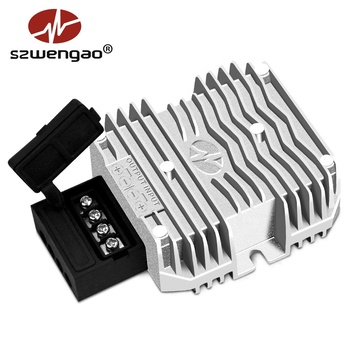
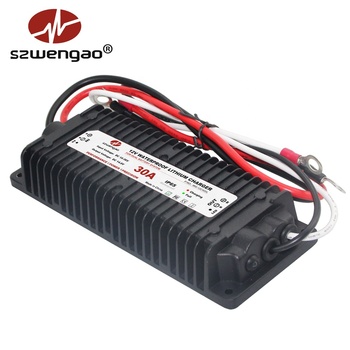
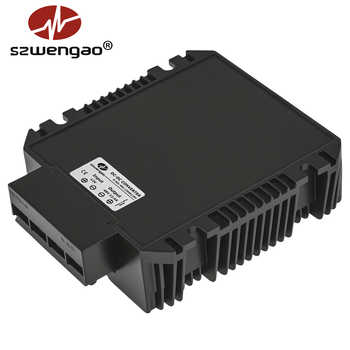
Smart 36V Lithium Battery Charger DC 12V to 43.8V 13A
- TopologyBoost Charger
- Input / Output12V DC → 43.8V 13A
- Ingress RatingIP68 Full Potted
- ApplicationEV, Marine & AGV
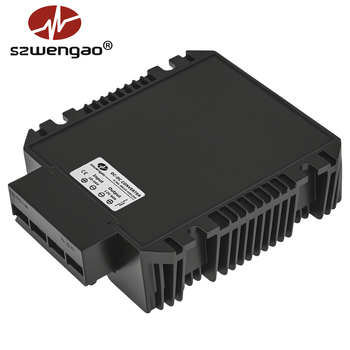
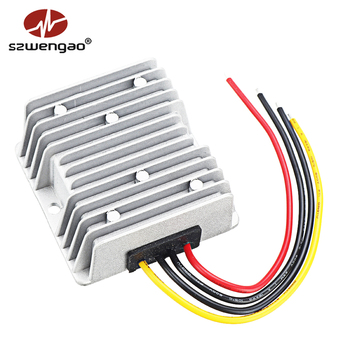
High-reliability step-up, step-down, wide buck-boost, and battery-to-battery charging modules engineered to handle heavy electrical ripples, transients, and moisture.


The city of Ruse, recognized as Bulgaria's primary inland port on the Danube River and the southern anchor of the Danube Bridge linking Ruse and Giurgiu (Romania), functions as an essential nexus for Pan-European Transport Corridor IX. This geographic role imposes stringent electrical demands on DC power supplies, step-down/step-up converters, and battery charging infrastructure. From heavy dry-bulk cranes at Port Complex Ruse-East to cross-border logistics fleets operating across wide ambient temperature swings (-20°C in continental winter to +40°C in mid-summer), voltage stability is a non-negotiable operational prerequisite.
Commercial inland waterway vessels operating along the Lower Danube encounter substantial voltage instability. Generator systems powered by marine auxiliary engines experience severe inductive kickbacks and transient surges when winches, bow thrusters, and anchoring capstans cycle on and off. Furthermore, steel hull vessels are highly prone to ground loops, electrolytic corrosion, and galvanic voltage differentials. When standard non-isolated converters are deployed to power communication equipment, bridge radars (24V DC), AIS transponders, or navigation transceivers, ground current loops frequently corrupt high-frequency data packets and accelerate underwater sacrificial anode consumption.
Shenzhen Eltrum's Isolated DC-DC Series (18–36V, 36–75V, and 18–90V inputs) integrate planar transformer barriers delivering over 1500V DC dielectric isolation. This breaks common return paths between the vessel's alternator charging circuits and sensitive sensor equipment, effectively eliminating ground potential differences and preserving signal-to-noise ratios (SNR) on NMEA 0183 and NMEA 2000 marine networks.
With thousands of long-haul trucks crossing the Ruse-Giurgiu border weekly, on-board cold chain monitoring, telematics units, GPS transceivers, and tail-lift battery systems are exposed to extreme cranking voltage transients. During cold engine starts in harsh winter conditions, standard 24V starter battery banks can experience voltage collapse dropping below 14V for several hundred milliseconds, triggering abrupt resets across microcontrollers and fleet computers.
To eliminate transient brownouts without resorting to expensive auxiliary batteries, Eltrum's Synchronous Buck-Boost Converters continuously regulate a stable 12.0V or 24.0V output rail even when the input voltage sweeps erratically between 8V and 40V DC. Using advanced hysteretic PWM/PFM control with sub-microsecond transient response, these units bridge starter sags seamlessly, avoiding telematics downtime and sensor data corruptions during extended customs idling at the border checkpoint.
Within the Ruse Free Zone and surrounding logistics logistics parks, material handling fleets are transitioning away from flooded lead-acid batteries toward high-energy-density Lithium Iron Phosphate (LiFePO4) chemistries. Forklifts, automated guided vehicles (AGVs), and tow tractors operating on nominal 48V, 60V, or 72V traction battery packs experience substantial voltage swing (from 84V fully charged down to 52V under maximum incline torque).
Auxiliary electronics—including LED mast illuminators, RFID scanners, weighing terminals, and hydraulic control solenoids—require tightly regulated 12V or 24V power. Eltrum's Wide-Input Buck Modules (30V–90V in) feature military-grade TVS overvoltage suppressors, integrated active snubber circuits, and ceramic input capacitors to withstand high-energy inductive flyback spikes generated during regenerative braking and dynamic motor reversing.
How Eltrum's DC voltage conversion systems solve operational engineering challenges across Ruse's vital economic sectors.
Providing galvanic ground isolation and 24V/12V step-down power conversion for marine navigation displays, hydro-acoustic depth sounders, and bilge sensor telemetry exposed to river humidity and salt spray.
1500V Isolation BarrierProtecting delicate telemetry, onboard dash tracking, and active asset monitoring systems against extreme alternator load dumps and cold-start voltage drops across the Danube Bridge route.
Wide 8–40V StabilizersBuffering wide fluctuating DC strings from rooftop and ground PV battery banks to drive stable industrial control PLCs, SCADA field sensors, and emergency lighting arrays without line dropouts.
RS485 Telemetry ControlProcurement teams, fleet operators, and industrial systems integrators across Ruse and the broader North Central Bulgaria planning region are increasingly refining their technical specifications for DC power supplies. Market analysis reveals three decisive transition vectors:
Historically, low-cost linear or simple non-isolated buck regulators were standard in regional manufacturing and automotive aftermarket retrofits. However, the rapid expansion of computerized CAN-bus systems, variable frequency motor drives, and sensitive micro-electronics has led to elevated failure rates caused by differential common-mode ground transients. Systems engineers in Ruse are increasingly mandating optocoupler and high-frequency planar transformer isolation to safeguard control microchips and eliminate ground noise.
Aligning with EU decarbonization and Green Deal mandates, commercial warehouses in the Free Zone Ruse are systematically replacing internal combustion equipment with LiFePO4 electric forklifts, reach trucks, and autonomous yard sweepers. This shift pushes baseline DC bus voltages from legacy 12V/24V levels to 48V, 72V, and even 96V systems. As a direct consequence, the demand for wide-input step-down modules capable of operating up to 90V DC while delivering 24V or 12V at high amperage (50A to 100A) has grown by over 34% year-over-year.
Due to the geographic proximity to the Danube waterway, outdoor industrial switchgear, harbor gantry cranes, and chassis-mounted vehicle electronics face chronic issues with atmospheric moisture condensation, freeze-thaw cracking, and industrial particulate contamination. Regional maintenance managers have largely rejected open-frame or vented perforated-cage power supplies in favor of thermally conductive vacuum-potted aluminum housings rated at minimum IP65 to IP68.
Founded in 2015, Shenzhen Eltrum Electronic Co., Ltd. is a world-class designer and manufacturer specializing in advanced DC-DC converters, isolated power modules, buck-boost stabilizers, and waterproof LiFePO4 battery chargers. Our state-of-the-art Shenzhen production facility operates under an audited ISO 9001 quality management framework, delivering power solutions to OEM and engineering distributors across more than 130 countries worldwide.
Unlike trading intermediaries, Eltrum controls the entire manufacturing cycle—from high-density SMT automated placement, custom planar transformer winding, and thermally conductive vacuum resin potting, to 100% full-load thermal burn-in testing. We provide engineering customization (OEM/ODM), offering tailored input voltage windows, unique CC/CV charging algorithms, custom connectors, and RS485 communication protocols.

Clear, engineering-backed answers addressing the technical, regulatory, and logistics inquiries common to Bulgarian systems integrators and importers.
Whether you require sample units for Danube marine field testing, large-volume truck fleet converters, or custom high-voltage step-down modules for industrial machinery in Ruse, our engineering team is ready to assist with full technical datasheets and competitive commercial terms.