
Smart 36V 13A Waterproof Lithium Battery Charger (DC 12V to 43.8V)
- Input Voltage12V DC Nominal
- Charge Target43.8V LiFePO4 (13A)
- ProtectionIP67 Potted / Short Proof
Explore field-proven solid-state DC-DC conversion architectures and thermal-potted lithium charging modules trusted by marine yards, solar technicians, and heavy fleet operations in Marsh Harbour.
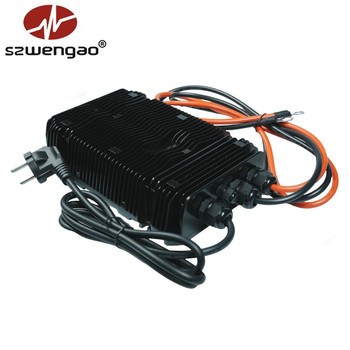

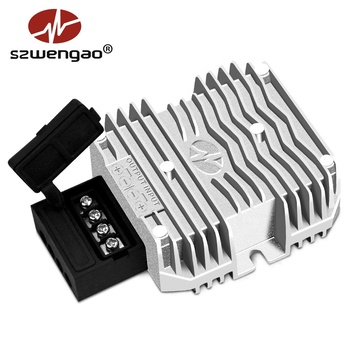

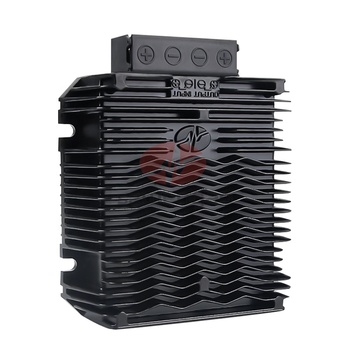
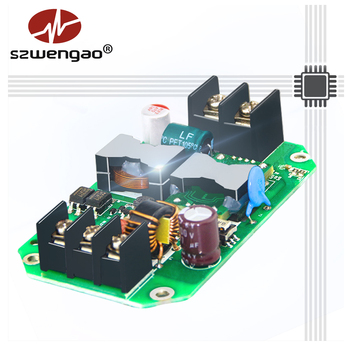
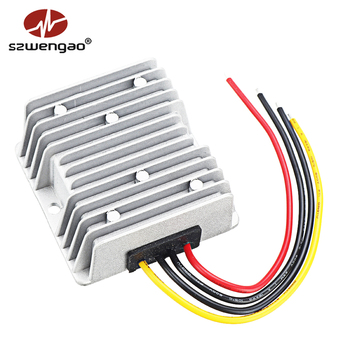
A rigorous review of high-voltage solid-state regulation, thermal dissipation mechanics, and galvanic circuit isolation tailored for oceanic micro-environments.
Industrial power distribution in the Caribbean archipelago, and specifically across Marsh Harbour and the wider Abaco Cays, operates under environmental constraints vastly distinct from mainland installations. The combination of hyper-saline ambient air, intense thermal solar radiation, seasonal hurricane volatility, and heavy reliance on decentralized off-grid battery architectures exposes solid-state electronics to rapid degradation if basic consumer-grade topologies are deployed. Selecting an industrial-grade DC power module manufacturer requires an empirical understanding of switched-mode power supply (SMPS) design, synchronous rectification, magnetics saturation thresholds, and hermetic potting encapsulation.
In island microgrids and marine dual-battery circuits, alternator output and PV array voltages routinely swing past theoretical limits. A standard 12V alternator system can plunge to 8.8V during heavy thruster or windlass loading, yet surge above 15.5V during high-RPM unloaded conditions. Without active four-switch buck-boost synchronization, auxiliary sub-systems face catastrophic brown-outs or dielectric over-voltage breakdown.
Conventional buck converters relying on Schottky diodes suffer considerable thermal penalties (Vf losses of 0.4V to 0.7V), generating significant localized heat inside unventilated enclosures. In tropical marine zones like Marsh Harbour, where ambient enclosure temperatures easily surpass 55°C (131°F), every watt dissipated internally accelerates dry-out of ceramic capacitors and deteriorates ferrite core permeability.
Eltrum’s DC-DC converters eliminate passive freewheeling diodes in favor of dynamic N-channel MOSFET synchronous rectifiers. By driving channel resistance down to single-digit milliohms (RDS(on) < 3.2mΩ), conversion efficiencies consistently exceed 95% to 98%. Lower heat generation enables completely fanless, sealed aluminum cold-plate designs. By eliminating ventilating fans, the circuit prevents salty air from circulating across critical PCB traces, eradicating galvanic copper corrosion and dendrite crystal growth permanently.
| Circuit Topology | Voltage Ratio Behavior | Efficiency Envelope | Isolation Level | Optimal Deployment (Abaco Ecosystem) |
|---|---|---|---|---|
| Synchronous Buck | Vin must exceed Vout by >2V | 95% – 98.2% | Non-Isolated Common Ground | Stepping down 48V/72V solar storage & golf carts to 12V navigation & radio circuits. |
| Current-Fed Boost | Vin strictly lower than Vout | 93% – 96.5% | Non-Isolated | Stepping 12V starter batteries up to 24V/48V for bow thrusters, watermakers, and Starlink. |
| 4-Switch Buck-Boost | Seamless crossover above & below | 92% – 95% | Non-Isolated Voltage Stabilizer | Vehicle-mounted refrigeration and sensitive medical electronics during severe engine cranking. |
| Flyback / Forward ISO | Flexible Step-Up / Step-Down | 88% – 93% | 1500V – 3000V Galvanic Transformer | Telecom towers (e.g., Albury’s Ferry dispatch, cell relays), isolating common ground loop noise. |
Non-isolated power supplies link input and output negative rails together through an unbroken electrical ground path. In saltwater environments, this common negative creates dangerous potential differences between aluminum hull structures, shore power earths, and outboard grounding blocks. The result is accelerated electrolysis—eating away through-hull fittings, sail drives, and transducer housings.
Shenzhen Eltrum Electronic Co., Ltd.’s isolated series integrates high-permeability toroidal planar transformers that completely sever the conductive return path between primary generation systems (alternator/solar arrays) and sensitive electronics. With >1500V DC breakdown ratings, these modules eliminate low-frequency humming on communication transceivers and protect automated PLC units from inductive voltage spikes caused by lightning or nearby diesel generator cut-ins.
Decentralized island economies necessitate absolute electrical resilience. Discover how Eltrum power conversion hardware anchors foundational infrastructure across Great Abaco.
Yacht charters operating out of Marsh Harbour Marina and Boat Harbour require robust 24V-to-12V buck regulators and multi-stage 43.8V LiFePO4 chargers to maintain navigation gear, bilge backups, and house lithium banks without engine overheating.
Following post-Dorian infrastructure redesigns, remote settlements across the cays depend on decentralized 48V battery banks. Buck-boost stabilizers prevent brown-outs across critical satellite modems, clinic refrigeration, and emergency LED illumination.
Repeater stations connecting Marsh Harbour to Hope Town and Guana Cay utilize Eltrum 36–75V isolated DC-DC modules to feed 12V and 24V wireless relay arrays, rejecting noise and surviving intense transient lightning induction.
Golf carts and utility EVs are primary transport methods. Our 30–90V wide-input step-down modules handle 48V/72V flooded or lithium battery packs, converting clean 12V/24V power for lighting, sound systems, and charging ports.
Cranes, forklifts, and container lifters at Marsh Harbour Commercial Port subject electronics to severe vibration and voltage spikes. Solid-state potting and wide 10–44V buck-boost converters keep sensors and hydraulic valves operating safely.
Reverse-osmosis watermakers demand constant DC amperage. Our high-power 1500W modules regulate fluctuating PV array outputs into smooth 24V or 48V direct drives for high-pressure DC water pumps on remote out-islands.
Market modernization patterns dictating the future of local electrification, marine conversion, and energy autonomy.
The energy landscape of Marsh Harbour and Great Abaco is moving through an aggressive transformation phase. Volatile imported diesel prices, high grid-tariff volatility, and persistent weather events have triggered a rapid pivot away from centralized fossil generation toward distributed renewable systems. Power conversion requirements are evolving at every level of commerce:
Marine operators and solar contractors are aggressively stripping heavy lead-acid and AGM batteries in favor of Lithium Iron Phosphate. This creates immediate demand for smart DC-DC chargers equipped with strict CC/CV parameters to prevent thermal runaways.
Commercial passenger tenders and harbor transport are experimenting with electric outboard motors. High-voltage battery systems (72V–96V) require high-reliability DC step-down converters to power low-voltage navigation systems simultaneously.
Remote maintenance across island chains is prohibitively expensive. System engineers increasingly mandate RS485 / CANbus telemetry on DC-DC converters to remotely track module temperature, actual load current, and fault logs over satellite uplinks.
As these trends mature, standard mainland power converters—typically designed for benign, dust-free indoor server rooms—consistently fail within 6 to 18 months due to internal condensation, salt spray ingress, or unchecked thermal cycling. Industrial buyers throughout Marsh Harbour are actively bypassing trading middlemen to partner directly with original design manufacturers capable of engineering custom-sealed, thermally resilient DC modules.
Shenzhen Eltrum Electronic Co., Ltd. delivers direct factory engineering, rigorous testing, and custom capabilities that eliminate project bottlenecks.
Operating since 2015 with up to 3,000 m² of modern manufacturing floor in Shenzhen, our onsite-verified production facility utilizes high-speed surface-mount technology (SMT) and automated magnetic winding machines.
Every converter, buck-boost module, and battery charger is built under certified ISO 9001 quality systems. Full conformity to EU CE directives and RoHS environmental limits ensures high safety and export compliance worldwide.
Our in-house R&D team customizes input voltage windows, proprietary battery charging curves, high-amperage terminal blocks, custom enclosures, and firmware-integrated RS485 communication protocols to your exact system requirements.
We respect engineering development cycles. Most standard products carry an agile Minimum Order Quantity of just 5 units, allowing project engineers to conduct live bench and field tests without tying up excessive capital.
All outdoor and mobile series undergo vacuum-degassed epoxy or silicone potting, ensuring a sealed physical barrier that resists submersion, marine salt aerosol, high atmospheric humidity, and heavy operational vibration.
Supporting T/T, PayPal, and Escrow payment terms in USD or CNY, backed by FOB Shenzhen or direct EXW freight consolidation, ensuring reliable delivery right to your preferred Caribbean freight forwarder.
Direct answers covering shipping to the Bahamas, corrosion resistance, voltage matching, and technical deployment.
Consult with our Shenzhen engineering headquarters regarding conversion ratios, high-volume container pricing, or tailored OEM/ODM manufacturing specifications.