Verified DC-DC Voltage Regulators & Converters for Seattle Applications
From harsh saltwater-tolerant potting for Lake Union and Elliott Bay marine craft to ultra-wide input voltage stabilizers for hybrid utility fleets, explore eight factory-direct power modules rigorously validated under ISO 9001 quality management.

Smart 36V Lithium Battery Charger DC 12V to 43.8V 13A
- Topology: DC-DC Step-Up Charger
- Input Range: 10V – 16V DC
- Output CC/CV: 43.8V @ 13A (LiFePO4)
- Protection: IP67 Fully Potted
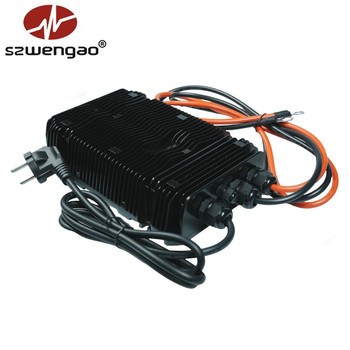
600W Waterproof LiFePO4 Battery Charger 14.6V–58.4V
- Mains Input: 90V – 264V AC Universal
- Nominal Options: 12V / 24V / 36V / 48V
- Efficiency: > 92.5% Synchronous
- Sealing: Anodized IP65 Marine
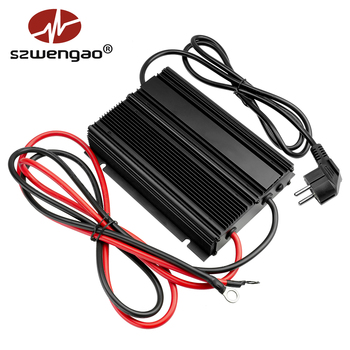
Multi-System 600W Boat & Commercial EV Charger
- Target Chemistries: LiFePO4, Ternary Li-ion
- Voltage Rails: 14.6V, 29.2V, 43.8V, 58.4V
- Cooling: Thermal Fin Conduction
- Certification: CE, RoHS, ISO 9001
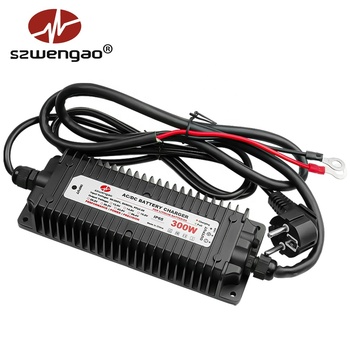
300W Marine LiFePO4 On-Board Regulated Charger
- Outputs: 14.6V / 29.2V / 43.8V
- Connector: US / NEMA 5-15 Standard
- Safety: OVP, OCP, SCP, Reverse Polarity
- Casing: Silicone Potted Anti-Corrosion
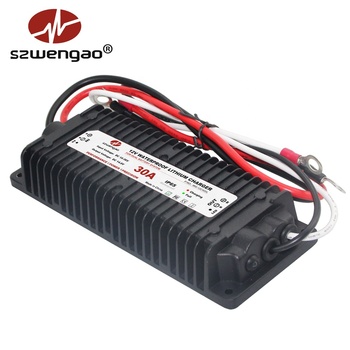
400W Battery-to-Battery Charger for RV & Workboats
- Alternator Input: 10V – 36V DC Dynamic
- Regulated Output: 14.6V / 29.2V CC/CV
- Power Rating: 400W Continuous Load
- Smart Ignition: Euro 6 / Smart Alternator Sense

1500W Heavy-Duty Buck-Boost Stabilizer (RS485)
- Wide Range: 10V – 60V DC Seamless
- Output Stated: 12V / 24V / 28V / 48V Regulated
- Control Interface: Modbus-RTU over RS485
- Architecture: 4-Switch Synchronous Topology
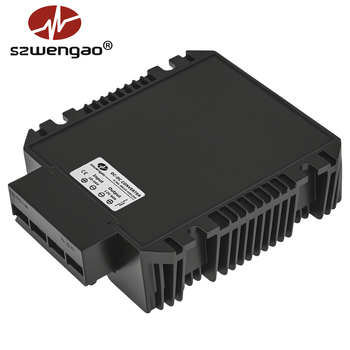
10–44V to 12V 50A/60A Automatic Buck-Boost Regulator
- Input Swing: 10V – 44V Cranking Sustained
- Stabilized Output: 12.0V ±1.5% @ 60A Max
- Continuous Power: 720W High Surge Reserve
- Enclosure: Die-Cast Aluminum Heat-Sink

24V to 12V 85A/100A Heavy Vehicle Step-Down Buck
- Input Nominal: 24V (18V – 35V DC)
- Output Delivery: 12V @ 100A (1200W Real Power)
- Ripple & Noise: < 50mVp-p High Purity
- Use Case: Transit Buses, Harbor Tugs, GSE
Engineering Whitepaper: Managing Power Quality in Seattle’s High-Density Clean Technology Corridor
The Greater Seattle metropolitan region—stretching from the aerospace manufacturing hubs of Everett and Renton to the commercial maritime corridors of Puget Sound, Lake Union, and the Port of Tacoma—operates under some of the most exacting electrical and environmental standards in North America. Electrical engineers, fleet integrators, and industrial procurement directors across King, Pierce, and Snohomish counties face a dual imperative: accelerating the transition toward complete battery electrification and hybrid microgrids while ensuring zero field-failure operation amid relentless Pacific Northwest rain, maritime salt air, thermal cycling, and heavy industrial inductive transients.
A DC-DC voltage regulator is far more than a basic component; in critical Seattle deployments, it serves as the foundational barrier between erratic, unregulated raw direct-current power (generated by vehicle alternators, diesel-electric generator exciter buses, regenerative traction braking, or unconditioned photovoltaic arrays) and mission-critical electronics. Whether stabilizing a 12V auxiliary line for autonomous lidar sensors navigating wet Seattle streets or providing galvanic isolation for high-value marine navigation suites aboard commercial tugs entering the Strait of Juan de Fuca, understanding power topology, thermal dissipation dynamics, and electromagnetic compliance (EMC) is critical to engineering long-term operational reliability.
Specialized DC-DC Application Scenarios Across Greater Seattle
How Eltrum’s switching architectures solve mission-critical power delivery challenges in key Pacific Northwest industrial sectors.
Puget Sound Maritime & Hybrid Ferries
From private yachts berthed in Shilshole Bay Marina to commercial fishing trawlers departing for Alaska from Fisherman’s Terminal, auxiliary marine power demands absolute galvanic isolation. High-draw bow thrusters and windlasses trigger extreme bus voltage dips. Our isolated DC-DC converters eliminate ground loops between hull anodes and delicate NMEA 2000 navigational avionics, while IP67 resin potting completely seals magnetic cores from humid salt fog.
Commercial Transit & GSE Fleet Electrification
Sound Transit and King County Metro transit electrification initiatives require heavy-duty step-down regulation. When 24V or 48V commercial chassis drive 12V communication radios, passenger fare validators, passenger WiFi, and LED illumination, standard regulators overheat. Eltrum’s synchronous buck units deliver up to 100A continuous current with over 95% efficiency, minimizing parasitic thermal dissipation inside enclosed underbody compartments.
Aerospace Ground Support & Avionics Calibration
Across the aerospace manufacturing corridor between Boeing Field (King County International Airport) and Paine Field in Snohomish County, ground support mobile carts require clean, ripple-free 28V DC instrumentation rails. Our wide-input 9–40V to 28V boost-buck converters hold ultra-tight load regulation (±1%) with low ripple (<30mVp-p), ensuring calibration sensors remain unaffected by line voltage dips during engine start procedures.
Technical Selection Matrix: Selecting the Optimal Conversion Topology
System integrators in Seattle often inquire whether a standard synchronous buck converter or a wide-input buck-boost regulator is appropriate for dual-battery vehicle conversions and auxiliary energy storage systems. In mobile and marine battery environments, voltage is fundamentally dynamic. A 12V LiFePO4 bank will swing from 14.6V during active alternator bulk absorption down to 10.0V under high-current inverter loads.
If your downstream load requires an uninterrupted, regulated 12.0V or 13.8V rail, a pure step-down (buck) converter fails as soon as input voltage sags below the required output plus dropout voltage headroom (typically $V_{in} < V_{out} + 1.5V$). In contrast, a 4-switch synchronous buck-boost topology seamlessly transitions between buck mode, 100% duty-cycle pass-through, and boost mode, ensuring telemetry systems, marine autopilots, and emergency communications never reboot during engine cranking or high-load surges.
| Topology | Input Range ($V_{in}$) | Output Voltage ($V_{out}$) | Electrical Isolation | Typical Seattle Industrial Application |
|---|---|---|---|---|
| BUCK (Step-Down) | 18V – 35V / 30V – 90V | 12V, 13.8V, 24V (Fixed) | Non-Isolated (Common GND) | Port of Seattle AGVs, electric forklifts, transit bus 24V→12V cabin loads |
| BOOST (Step-Up) | 9V – 16V / 18V – 30V | 24V, 28V, 36V, 48V | Non-Isolated (Common GND) | 12V battery stepping up to 48V for marine electric trolling or LED lighting towers |
| BUCK-BOOST | 8V – 40V / 10V – 60V | 12.0V, 13.8V, 19V, 24V | Non-Isolated (High Efficiency) | Off-grid solar arrays, overland camper dual battery banks, fluctuating alternators |
| ISOLATED DC-DC | 18V – 36V / 36V – 75V / 18V – 90V | 5V, 12V, 24V (Regulated) | 1500V DC Galvanic Isolation | Marine wheelhouse avionics, telecom cell towers, positive-ground industrial systems |
Pacific Northwest Technology Trends: Transitioning from Legacy Lead-Acid to Intelligent LiFePO4
Across Washington State, aggressive decarbonization mandates—such as the Washington Clean Energy Transformation Act (CETA) and local electrification directives from the Port of Seattle—are drastically shortening the lifespan of legacy flooded lead-acid and AGM battery storage systems. Commercial vessel refits, recreational yachts, telecommunication remote sites in the Cascade Mountains, and municipal maintenance vehicles are rapidly standardizing on Lithium Iron Phosphate (LiFePO4) chemistry.
However, drop-in lithium transitions introduce severe electrical challenges for legacy charging architectures:
- Alternator Thermal Overload: LiFePO4 batteries feature exceptionally low internal resistance ($R_{int}$). When depleted, a lithium pack attempts to pull the maximum current possible from the engine alternator at idle, driving standard automotive alternators into thermal runaway. Eltrum’s DC-DC battery chargers enforce precise Constant Current / Constant Voltage (CC/CV) limits, protecting alternators from burn-out.
- High-Frequency Voltage Cutoff Spikes: If an external Battery Management System (BMS) disconnects due to cell imbalance or over-temperature, the sudden load dump causes severe voltage spikes on the DC link. Our converters feature high-speed transient voltage suppression (TVS) diodes and active snubber circuits to clamp inductive spikes instantly.
- Smart Alternator Compatibility (Euro 6 / EPA Tier 4): Modern fleet vehicles utilize regenerative braking and variable-voltage smart alternators that drop down to 11.8V during cruising. Eltrum's intelligent battery-to-battery charging circuits detect ignition signal inputs, preventing phantom battery draining while charging house banks at up to 43.8V or 58.4V.
Shenzhen Eltrum Electronic: Precision Manufacturing Behind Seattle’s Leading Integrators
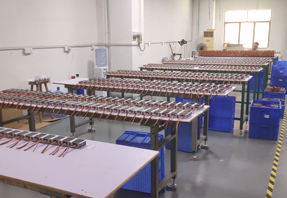
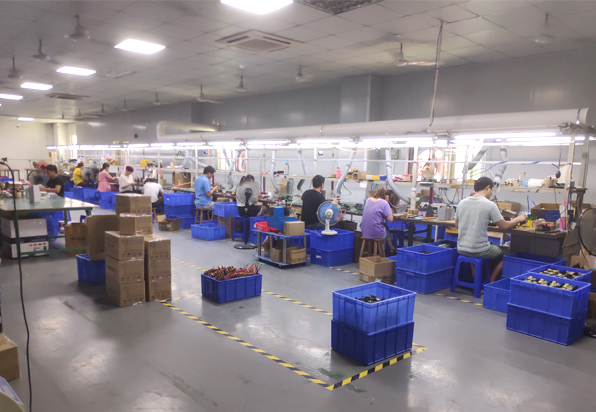
Founded in 2015, Shenzhen Eltrum Electronic Co., Ltd. operates a modern 3,000 m² production and testing facility dedicated to the engineering and export of high-reliability DC-DC converters, AC-DC battery chargers, and specialized voltage regulators.
Unlike trading middlemen or re-sellers, our engineering team manages the complete design lifecycle: high-speed surface-mount technology (SMT) assembly, automated transformer magnetic winding, multi-stage potting encapsulation, and 100% full-load thermal burn-in testing.
Our verified factory has exported power modules to over 130 countries, establishing sustained relationships with equipment manufacturers and distributors across North America. With support for OEM/ODM buyer labels, custom output curves, Modbus/RS485 communications, and sample evaluations starting from just 5 units, we eliminate supply chain friction for engineering projects in Seattle and beyond.

Frequently Asked Questions for Seattle Engineers & Buyers
Direct technical answers addressing environmental, compliance, customs, and application inquiries from Pacific Northwest procurement teams.
How do Eltrum DC-DC voltage regulators perform in high-humidity, marine salt-fog environments like Puget Sound?
Standard open-frame or fan-ventilated converters rapidly corrode when exposed to maritime moisture and airborne saline chlorides found around Seattle’s coastal and waterway operations. Eltrum’s marine and outdoor-rated models utilize thermally conductive, flame-retardant epoxy or organic silicone resin potting within an anodized, die-cast aluminum heat-sink housing. This process achieves complete IP67 or IP68 ingress protection, shielding internal semiconductors, inductors, and solder joints from salt-fog oxidation, galvanic corrosion, moisture condensation, and mechanical vibration up to 10G.
What is the difference between non-isolated and galvanically isolated DC-DC converters in maritime and industrial control?
In non-isolated converters, the input negative terminal and output negative terminal share a common ground plane. While highly efficient (up to 96%) and compact, non-isolated topologies allow noise, ground potential differentials, and electrical spikes to propagate across systems. Galvanically isolated converters utilize a high-frequency planar or toroidal transformer to break the physical ground connection, maintaining up to 1500V DC breakdown isolation. This is strictly required in marine vessels with aluminum or steel hulls to prevent electrolytic hull corrosion, in 48V telecom installations with positive grounding, and in sensitive scientific sonar or radio suites susceptible to ground loop interference.
What are the typical shipping lead times, customs clearance, and DDP terms for orders delivered to Seattle, WA?
For standard prototyping and sample orders (starting from our 5-unit MOQ), modules are dispatched via expedited air courier (FedEx, DHL, or UPS) directly to Seattle-Tacoma International Airport (Sea-Tac) freight hubs, arriving in 4 to 7 business days. For volume OEM production runs (500 to 5,000+ units), we provide sea-freight containerized shipping directly into the Port of Seattle or Port of Tacoma with typical transit times of 16 to 22 days. We support FOB Shenzhen, CIF Seattle, EXW, and complete DDP (Delivered Duty Paid) arrangements including US Customs clearance, HTS classification, and harbor maintenance fee administration.
Can Eltrum customize charging profiles, output voltages, or communication protocols for proprietary battery systems?
Yes. Shenzhen Eltrum Electronic offers comprehensive OEM/ODM engineering capabilities. If standard 12V, 24V, 28V, 36V, or 48V outputs do not align with your chemistry profile, our R&D team can program specialized Constant Current / Constant Voltage (CC/CV) float curves, absorption timing thresholds, low-temperature charging cutoff parameters, and custom undervoltage lockout limits. For automated vehicle telemetry and smart microgrids, we integrate RS485 / Modbus-RTU or CAN-bus interfaces, enabling remote voltage trimming and thermal status reporting directly to your centralized controller.
How should an engineer size a DC-DC converter to handle electric motor or compressor inrush currents?
Inductive loads commonly deployed on Pacific Northwest utility trucks and marine vessels—such as refrigeration compressors, hydraulic pumps, macerator pumps, and DC winches—exhibit locked-rotor or inrush current surges lasting 50ms to 500ms that can exceed steady-state operating currents by 300% to 600%. If a converter is sized solely for nominal continuous wattage, its internal overcurrent protection (OCP) circuit will trip during inrush, causing load brownouts. We advise selecting a regulator with at least a 25–30% continuous power safety margin or selecting Eltrum’s high-peak burst models specifically characterized for high-capacitance and inductive surge handling.
What quality verification standards and burn-in tests are performed prior to export?
Every converter manufactured in our Shenzhen facility operates under an audited ISO 9001 quality management framework and adheres to CE (EN 61000 EMC directives) and RoHS environmental compliance. Prior to final buyer-label packaging and dispatch, 100% of production units undergo automated electrical parameter verification, high-voltage dielectric withstand testing (for isolated series), and elevated-temperature full-load burn-in screening. Inspection test records and compliance certificates are provided upon request to Seattle engineering teams.
Accelerate Your Seattle Engineering Project with Direct Factory Support
Connect directly with our senior power electronics engineering group to discuss custom voltage targets, request comprehensive datasheets and 3D CAD step files, or order evaluation samples with rapid Seattle delivery.