Standard & Heavy-Duty Power Conversion Solutions
Pre-engineered DC-DC topologies manufactured under ISO 9001 quality frameworks, delivering high-efficiency voltage stabilization, low ripple characteristics, and IP68 waterproof encapsulation.

Smart 36V Lithium Battery Charger DC 12V to 43.8V 13A
- Input Voltage10V – 36V DC
- Output Charging43.8V CC/CV (13A)
- Efficiency / Rating94.5% | IP68 Rated
- ApplicationsEV Carts, Boat Auxiliary
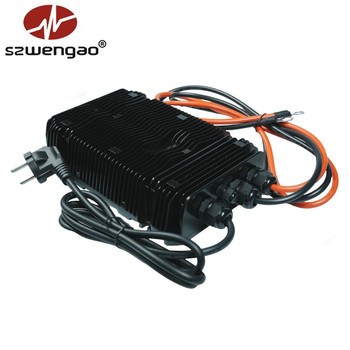
600W Waterproof AC-DC LiFePO4 Charger
- Input Grid90V – 265V AC Mains
- Charge Profiles14.6V / 29.2V / 58.4V
- Housing BuildAnodized Aluminum IP65
- Safety SystemOVP, OCP, Reverse Polarity
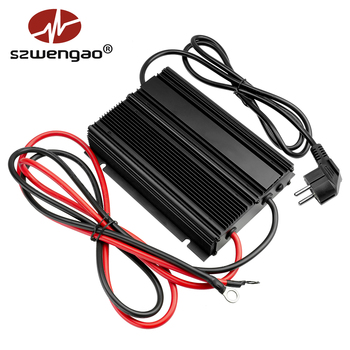
12V/24V/36V/48V 600W Multi-Bank Charger
- Platform Compatibility12V, 24V, 36V, 48V
- Peak Output Power600W Continuous
- Enclosure SealSolid Silicone Potted IP68
- Harsh EnvironmentAnti-Salt Corrosion Body
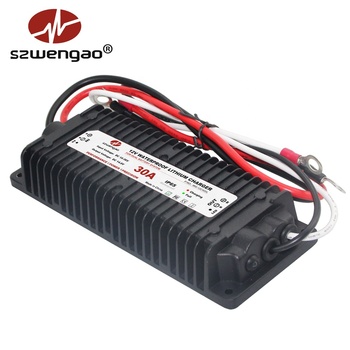
400W B2B Alternator-to-LiFePO4 Charger
- Alternator Input10V – 36V DC Variable
- Regulated Output14.6V / 29.2V (Up to 25A)
- Smart SensingEuro 6 Smart Alternator Rig
- Thermal Range-40°C to +85°C Operational

1500W Buck-Boost Converter with RS485
- Dynamic DC Input10V – 60V Wide Range
- Configurable Output12V / 24V / 28V / 48V
- Telemetry BusRS485 Modbus RTU
- Peak CurrentUp to 60A Output Load
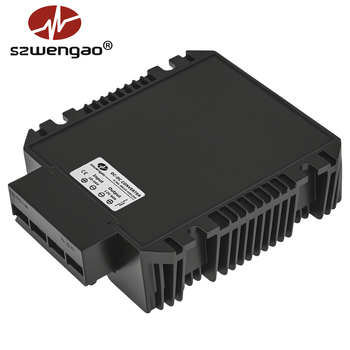
10–44V to 12V 60A Buck-Boost Stabilizer
- Fluctuating DC In10V – 44V Battery Line
- Locked Output12.0V DC (±1% Accuracy)
- Continuous Amps50A – 60A Heavy-Duty
- Chassis StandardExtruded Heatsink Fin
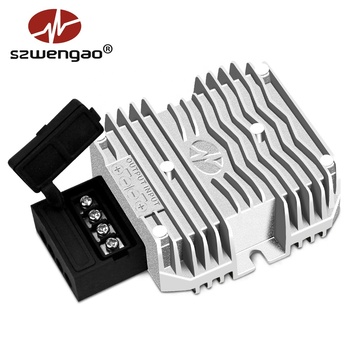
18–75V to 24V 5A Isolated DC Module
- Isolation Breakdown>1500V DC Galvanic Barrier
- Telecom Bus In18–36V / 36–75V Ranges
- Output Rail24V DC / 5A (120W)
- Grounding IsolationEliminates Ground Loops

24V to 12V 100A Step-Down Buck Regulator
- Commercial Input18V – 32V (24V Nominal)
- High Current Out12V DC at 100A (1200W)
- Conversion Rate96% Synchronous Rect.
- ApplicationsTruck, Transit Bus, Cranes
Hamburg’s Industrial Power Conversion Landscape
As the primary intermodal trading nexus of Northern Europe and Germany’s maritime gateway, the Free and Hanseatic City of Hamburg imposes uniquely stringent demands on DC power electronics.
The industrial fabric of Hamburg—from the container terminals of Altenwerder and Burchardkai to the aviation supply chains in Finkenwerder and chemical processing parks along the southern banks of the Elbe—operates in an aggressive convergence zone. Power electronics deployed in this regional corridor must contend with high relative humidity, brackish saline air from the North Sea tidal reaches, severe mechanical shock from automated terminal logistics, and extreme voltage fluctuations typical of decentralized regenerative renewable microgrids.
Procurement directors and electrical systems integrators throughout the Hamburg metropolitan area face significant challenges in securing DC-DC converters and voltage regulators that balance certified engineering rigor with agile supply chain economics. While domestic European distributors provide catalog lines, direct OEM collaboration with dedicated high-capacity manufacturers bridges the gap between customized pin configurations, wide-input battery ranges (18V to 90V), and competitive unit landed costs.
Port Terminal Automation & AGVs
Automated Guided Vehicles (AGVs), straddle carriers, and robotic gantry cranes operating at the Port of Hamburg utilize 48V to 80V traction battery systems. Our step-down buck regulators convert heavy traction power into stable, ultra-low-noise 12V and 24V lines to supply critical telemetry, LiDAR navigation sensors, edge computing units, and emergency fail-safe braking actuators without ripple interference.
Maritime & Harbor Vessels
From Elbe ferry operators and customs patrol vessels to zero-emission canal push-barges, shipboard power plants experience severe ground potential shifts. Our galvanically isolated DC-DC converters (exceeding 1500V breakdown barriers) eliminate ground loops, protect ECDIS radar systems, and stabilize power delivered to mission-critical navigational instrumentation from battery transients.
Renewable Wind & Hydrogen Plants
Northern Germany’s wind corridors and Moorburg’s expanding green hydrogen electrolyzer facilities generate wide bus voltage swings. Buck-boost stabilizers manage wide dynamic inputs (10V to 60V), maintaining a fixed 24V or 48V rail for PLC control modules, gas monitoring arrays, and remote valve manifolds regardless of charging or shedding cycles.
Intermodal Commercial EV Fleets
Long-haul trucks, regional delivery vans, and heavy-duty logistics transports passing through the Billbrook logistics sector require robust battery-to-battery charging systems. Our smart CC/CV chargers efficiently step alternator output to 14.6V or 29.2V to safely rapid-charge onboard LiFePO4 auxiliary batteries that power electric tail-lifts, refrigeration packs, and cabin climate modules.
Selecting the Correct DC-DC Voltage Regulator Topology
A rigorous engineering comparison to guide procurement teams and systems architects in selecting between Buck, Boost, Buck-Boost, and Isolated power topologies.
| Circuit Topology | Input Voltage Window | Nominal Output Rails | Conversion Efficiency | Galvanic Isolation | Primary Industrial Use-Case |
|---|---|---|---|---|---|
| Synchronous Buck | 18V–36V / 30V–90V | 5V, 12V, 24V Regulated | 94.0% – 96.5% | No (Common Ground) | Stepping down 24V/48V bus rails to auxiliary sensors, lighting, and computing boards. |
| Non-Isolated Boost | 9V–18V / 18V–32V | 24V, 36V, 48V Up-converted | 92.0% – 95.0% | No (Common Ground) | Powering 48V auxiliary hydraulics, winches, and high-intensity LED matrices from 12V battery packs. |
| 4-Switch Buck-Boost | 8V–40V / 10V–60V | 12V, 13.8V, 24V, 28V | 91.5% – 94.5% | No (Common Ground) | Maintaining locked 12V/24V outputs against deep cranking sags (down to 8V) and alternator load-dump spikes. |
| Galvanically Isolated | 18V–36V / 36V–75V / 18V–90V | 5V, 12V, 24V Fully Floating | 88.0% – 92.5% | Yes (>1500V DC Barrier) | High-noise telecom, marine navigation (NMEA), industrial automation requiring earth separation. |
Emerging Technology Trends in Hamburg’s Industrial Sector
Key regulatory, ecological, and topological transitions driving hardware decisions for local system engineers through 2025–2030.
Port Decarbonization & Shore Power
Under the EU Green Deal and local mandates by the Hamburg Port Authority (HPA), vessels berth under shore-connection mandates. Shore-side DC microgrids and battery-hybrid harbor craft demand modular DC-DC converters capable of handling wide voltage fluctuations as multi-megawatt systems switch across grid taps and storage banks.
Wide-Bandgap (SiC / GaN) Adoption
The push for compact power density in automated intralogistics and mobile robotics has accelerated the switch to Silicon Carbide (SiC) switching stages. SiC switching frequencies allow for smaller planar magnetics, reducing converter footprint by up to 40% while preserving thermal margins up to 85°C internal enclosure temperatures.
Stringent EMC & Environmental Potting
With high-density automated container terminals employing private 5G industrial networks and radar arrays, electromagnetic compliance (CE / EN 55032 Class B) is non-negotiable. Concurrently, high-grade thermally conductive polyurethane potting is essential to insulate circuit assemblies against continuous marine salt fog and humidity.
Shenzhen Eltrum Electronic Co., Ltd.
Established in 2015, Shenzhen Eltrum Electronic Co., Ltd. has developed into a premier manufacturer of high-efficiency DC-DC converters, multi-chemistry battery chargers, and specialized power modules. With an active portfolio exceeding 500 standard models, our systems are deployed in demanding environments across more than 130 countries worldwide.
For engineering teams in Hamburg and greater Northern Germany, Eltrum represents a powerful combination of precision manufacturing and cost efficiency. Our production plants feature advanced high-speed SMT placement lines, robotic potting stations, automated multi-point automated optical inspection (AOI), and continuous 100% full-load thermal burn-in testing chambers.
- ISO 9001:2015 Certified: Documented traceability from raw semiconductor wafer sourcing to outgoing dispatch.
- Complete Regulatory Compliance: Full CE mark, RoHS directive validation, and REACH environmental certification.
- Direct OEM/ODM Customization: Custom output voltage trims, modified harness connectors, and custom RS485 communication protocols.
- Low-Barrier Engineering Validation: Sample runs starting from just 5 units to support rapid bench prototyping.

Hamburg Procurement & Engineering FAQ
Detailed technical answers addressing compliance, testing, shipping logistics, and electrical integration questions commonly raised by German procurement engineers.
For standard production runs and engineering evaluation samples (5–50 units), typical dispatch occurs within 5 to 7 business days from our Shenzhen factory floor, reaching Hamburg Airport (HAM) via direct air cargo in 4 to 6 days. For consolidated container volume shipments servicing long-term supply contracts, maritime freight enters directly via the Port of Hamburg (HHLA terminals) with a transit window of approximately 24 to 28 days.
Our waterproof series utilizes vacuum-degassed, high-thermal-conductivity organic silicone potting compounds completely filling an anodized, die-cast aluminum enclosure. This complete encapsulation delivers true IP68 ingress protection, shielding components against prolonged exposure to saline air, condensation, thermal shock cycling from -40°C to +85°C, and structural shock up to 50G in compliance with maritime industrial specifications.
Yes. Modern commercial fleet transport vehicles operating in the EU utilize regenerative smart alternators whose output drops dramatically (down to 12.2V or lower) during coasting or idle periods. Our battery-to-battery (B2B) buck-boost chargers detect alternator state-of-charge, boosting lower inputs while smoothing alternator over-voltage spikes up to 36V, maintaining a precise constant-current / constant-voltage (CC/CV) absorption curve (14.6V for LiFePO4 chemistry).
Absolutely. In heavy industrial automation and maritime communication arrays, sharing a negative chassis earth ground can induce hazardous ground loops and high-frequency switching harmonics. Eltrum isolated modules employ custom-wound planar toroidal isolation transformers providing over 1500V DC galvanic isolation between input negative and output negative, safeguarding sensitive RS485 lines, CANbus networks, and NMEA sensor buses.
Yes. We routinely support European original equipment manufacturers (OEMs) with tailored voltage trims (such as 13.8V, 28V aviation ground supplies, or 56.4V custom lithium profiles). Additionally, we can integrate specified terminal blocks, Deutsch DT connectors, Anderson power poles, or industrial M12 round connectors directly into the wiring harness during factory assembly.
Every shipment arrives with full factory quality release records, complete technical datasheets including thermal derating curves, and verified CE Declarations of Conformity addressing EN 61000-6-2 (Immunity for industrial environments) and EN 61000-6-4 (Emission standard for industrial environments). Full material declaration compliance documentation for RoHS and REACH is available upon request.
Connect Directly with Power Electronics Engineers
Discuss your operational voltage windows, thermal envelope constraints, or OEM volume pricing schedules. Our Shenzhen factory engineering team provides comprehensive design match analysis within 24 hours.