Industrial & Maritime Step-Down Voltage Regulators
Factory-direct power topologies engineered for high ambient reliability, vibration resistance, and sub-zero Baltic conditions. Fully certified with CE, RoHS, and manufactured under ISO 9001 quality controls.
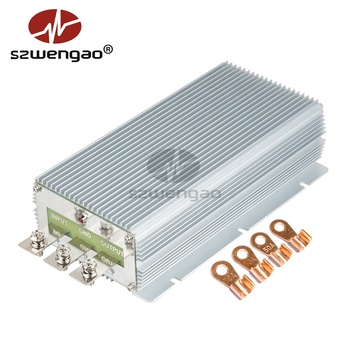
24V to 12V 85A/100A High-Current Step Down Buck Converter
- Input Nominal24V DC (18–36V Range)
- Output Regulated12V DC ±1% up to 100A (1200W)
- Conversion Efficiency≥ 95.5% Synchronous
- Enclosure / IngressDie-cast Aluminum / IP68 Potted
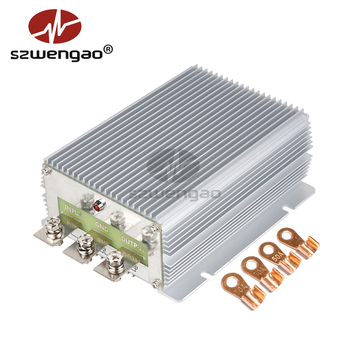
48V to 24V 40A 1000W Heavy-Duty DC-DC Step Down Regulator
- Input Operating Range36V – 60V DC continuous
- Output Power Rail24V DC @ 40A Continuous
- Protection CircuitryOVP, OCP, OTP, Short Auto-Recovery
- Operating Temp Window-40°C to +85°C Baltic Rated
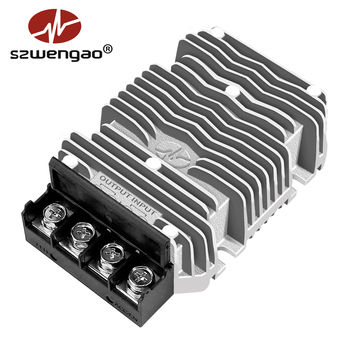
30V–60V to 12V 50A/60A Synchronous Buck Voltage Regulator
- Input Flexibility30–60V (Optimized for 48V Banks)
- Continuous Output12V DC @ 50A/60A (Up to 720W)
- Cooling MethodNatural Convection via Integrated Fins
- Compliance StandardsCE EMC, RoHS, ISO 9001
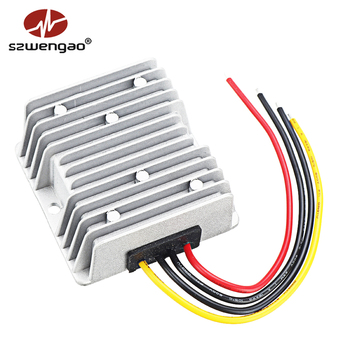
30V–90V Ultra-Wide Input to 24V 10A/20A Step-Down Module
- Input Spectrum36V, 48V, 60V, 72V, 80V Nominal
- Output Regulation24V DC Fixed (240W – 480W)
- Transient SuppressionTVS Surge Clamp + Reverse Diode
- Target UtilizationKlaipėda FEZ AGVs & Port Forklifts
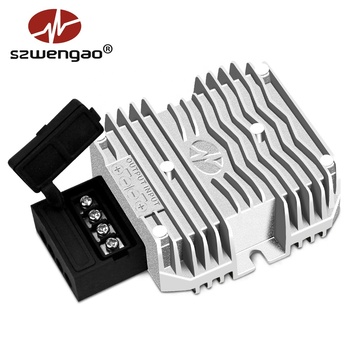
Galvanic Isolated 18–36V / 36–75V to 24V 5A Industrial Converter
- Galvanic Isolation1500V DC Primary-to-Secondary
- Output Rating24V DC Regulated @ 5A (120W)
- Noise FilteringLow Ripple < 50mVp-p, LC Filter
- Application DomainVessel Nav Comms & SCADA PLCs
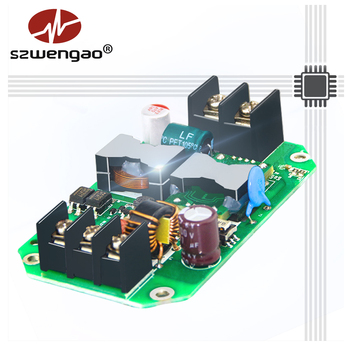
Isolated 36V–75V (48V Bus) to 12V 10A Heavy-Duty Module
- Input Bus Range36V – 75V DC (48V / 60V systems)
- Isolated Output12V DC ±1.5% @ 10A Continuous
- Ground ProtectionPrevents Vessel Hull Ground Loops
- Moisture ResistancePolyurethane Potting, IP67 Sealed
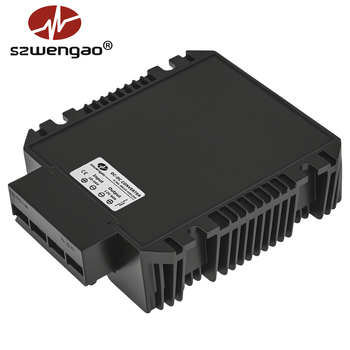
10V–44V Wide-Input to 12V 50A/60A Automatic Buck-Boost Stabilizer
- Dynamic Input10V – 44V (Handles Heavy Engine Cranks)
- Regulated OutputClean 12V DC Stable Output @ 60A
- Power Ceiling720W Max Rated Capacity
- Typical Fleet UsePort Pilot Boats & Cold-Chain Vehicles

Smart 36V Lithium Battery Charger DC 12V to DC 43.8V Waterproof 13A
- Dual FunctionalityDC-DC Step-Up / Multi-Stage CC-CV
- Output Profile43.8V DC Optimized for LiFePO4 / Li-ion
- Efficiency & Seal94% / 100% Hermetic IP67 Enclosure
- E-Mobility ClassEV Tugs, Utility Trikes, Baltic e-Boats
Standardized Power Electronics for Western Lithuania's Coastal Hub
Shenzhen Eltrum Electronic Co., Ltd. delivers high-frequency DC-DC step-down conversion systems specifically hardened against salt-fog exposure, extreme thermal cyclic expansion, and continuous marine shock profiles.
Power Architecture Whitepaper: Step-Down Conversion in Marine & Logistics Hubs
In modern industrial and maritime nodes such as Klaipėda—the premier ice-free port in the eastern Baltic Sea—electrical architectures face an uncompromising convergence of physical and environmental stresses. As systems transition from legacy combustion engines to hybrid battery banks, commercial DC microgrids, and high-voltage lithium traction packs (48V, 72V, 96V, and up to 144V), the necessity for fail-safe, ruggedized DC-DC step-down voltage regulators (buck converters) has become paramount.
Design engineers at Shenzhen Eltrum Electronic have analyzed real-world operating data from cold-climate maritime installations and heavy port equipment. Unlike standard commercial power supplies that quickly suffer from solder micro-cracks and capacitive dry-out under Baltic sub-zero cold and humidity, industrial buck voltage regulators serving Klaipėda require deep component-level de-rating, hermetic potting, and advanced planar magnetics.
Topology Breakdown: Non-Isolated Synchronous Buck vs. Galvanic Isolated Regulators
Selecting the optimal step-down conversion topology is the critical first step for electrical system designers at shipbuilding yards like Western Shipyard (Vakarų laivų gamykla) or industrial automation builders across the Klaipėda Free Economic Zone (FEZ). Below is the comparative engineering matrix between synchronous non-isolated buck regulators and galvanic-isolated forward/push-pull modules:
| Conversion Architecture | Typical Input / Output | Electrical Isolation | Peak Efficiency | Grounding Configuration | Recommended Klaipėda Application |
|---|---|---|---|---|---|
| Synchronous Rectification Buck | 24V (18–36V) → 12V 50A–100A | Non-Isolated (Common Ground) | 95.5% – 96.8% | Negative ground common bus | Heavy truck cabins, auxiliary LED lighting, automated gantry utility racks |
| High-Voltage Traction Buck | 48V/72V/80V → 12V / 24V 20A–40A | Non-Isolated Buck | 93.0% – 95.0% | Common system ground | Port warehouse electric forklifts, container yard AGVs, utility sweeps |
| Galvanic Isolated Push-Pull/Flyback | 18–36V or 36–75V → 24V / 12V | 1500V DC Galvanic Isolation | 89.0% – 92.5% | Isolated dual grounds (floating or chassis bonded) | Commercial ship bridge navigation, radar, echo sounders, marine SCADA PLCs |
| Four-Switch Synchronous Buck-Boost | 10–44V Wide → 12V or 24V Stabilized | Non-Isolated Stabilizer | 94.0% – 96.0% | Single ground reference | Offshore crew transfer vessels (CTV), cranking battery voltage sag protection |
Localized Application Scenarios in the Klaipėda Industrial & Maritime Corridor
Klaipėda represents Lithuania’s most critical transport and manufacturing artery. The implementation of Eltrum’s DC-DC step-down converters across this region aligns with four primary engineering use-cases:
1. Baltic Marine & Offshore Support Vessels
Navigating the Curonian Lagoon and Baltic shipping routes requires rigorous immunity to electrolytic corrosion and ground loops. Eltrum's 1500V isolated DC-DC converters step down 24V or 48V auxiliary battery banks to ultra-clean 12V rails. They power sensitive Furuno/Simrad marine GPS, AIS repeaters, radar consoles, and NMEA 2000 sensor backbones with zero common-mode noise interference.
2. Port Terminal Electrification & AGVs
The Port of Klaipėda is accelerating decarbonization across its container terminals. Heavy electric gantry cranes, terminal reach stackers, and automated guided vehicles (AGVs) operating on 72V or 80V lithium traction packs rely on Eltrum 30–90V wide-input buck regulators. These supply 24V DC to safety LiDARs, hydraulic electro-valves, telematics gate-readers, and emergency PLC controllers.
3. Cold-Chain Transport & FEZ Manufacturing
Refrigerated logistics fleets departing Klaipėda towards Vilnius, Kaunas, and Northern Scandinavia demand reliable auxiliary voltage conversion under external temperatures plummeting below -30°C. Eltrum’s thermally potted 24V to 12V 100A regulators withstand severe road vibrations, thermal shock, and salt-laden slush without thermal throttling or shutdown.
Technological & Regulatory Trends Impacting Power Procurement in Klaipėda
Lithuania’s aggressive implementation of the European Green Deal and the Port of Klaipėda’s ambitious target to establish a "Green Baltic Port" by 2030 are driving structural shifts in industrial voltage conversion. Key strategic trends include:
1. Shore-to-Ship Cold Ironing and Low-Voltage DC Busses: As berthed cargo and passenger vessels shut down auxiliary diesel generators to connect to high-voltage shore power (HVSP), onboard battery charging infrastructure is converting primary high-voltage DC down to 24V/12V distribution networks. This requires buck regulators with wide input windows and galvanic barrier integrity to ensure dockside shore power isolation does not cause galvanic pitting on vessel hulls.
2. Transition from Lead-Acid to High-Capacity LiFePO4: Across Klaipėda's maritime refit yards and logistics fleets, legacy deep-cycle lead-acid banks are being replaced with 8S (25.6V) and 16S (51.2V) Lithium Iron Phosphate batteries. Unlike lead-acid, LiFePO4 chemistry features extremely steep charging/discharging curves and instantaneous low internal resistance. Regulators must possess tight line-and-load regulation (≤ ±1%) and immediate recovery from sudden pulsed loads without generating voltage ringing that can trip sensitive Battery Management Systems (BMS).
3. Demand for Hermetically Sealed IP68/IP67 Electronics: High relative humidity (often exceeding 88% along the Curonian Spit), constant salt-aerosol drift, and freezing Baltic spray mean standard perforated aluminum mesh power supplies corrode within 6–12 months. Lithuanian procurement engineers now prioritize die-cast IP68 fully potted regulators encapsulated with thermal-conductive silicone gel, eliminating condensation, vapor infiltration, and mechanical fatigue caused by engine harmonics.
Shenzhen Eltrum Electronic Co., Ltd.
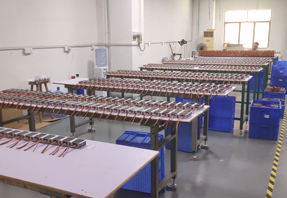
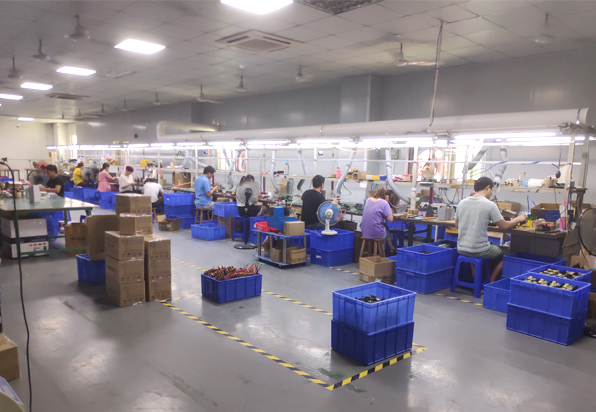
Established in 2015, Shenzhen Eltrum Electronic Co., Ltd. operates a high-precision manufacturing facility in Shenzhen, China. As a direct factory exporter serving the Baltic and broader European Union markets, our manufacturing lines integrate automated surface-mount technology (SMT), automated optical inspection (AOI), computerized magnetics winding, and vacuum potting dispensing.
Every step-down buck regulator undergoes rigorous three-stage quality controls: ICT in-circuit testing, 100% full-load 4-hour high-temperature burn-in testing, and high-voltage dielectric insulation testing. We support marine engineers, fleet operators, and industrial distributors across Klaipėda with turnkey OEM and ODM custom engineering—from custom voltage inputs and programmable RS485 communication down to buyer-label packaging and consolidated DDP logistics.
Frequently Asked Questions by Lithuanian Engineers
Comprehensive answers regarding environmental qualifications, galvanic protection, customs logistics into Klaipėda Port, and OEM customization capabilities.
Why is galvanic isolation critical for naval and marine electronics in Klaipėda?
How do Eltrum step-down voltage regulators perform in sub-zero Baltic winters?
What certifications and compliance documents are provided for EU and Lithuanian customs clearance?
Can Eltrum customize step-down voltage curves and output connectors for OEM manufacturers in Klaipėda FEZ?
What are the recommended lead times, minimum order quantities (MOQ), and shipping routes to Klaipėda?
What is the difference between a buck step-down converter and a DC-DC battery charger for LiFePO4 installations?
Accelerate Your System Design with Direct Factory Engineering
Whether you require standard 24V-to-12V 100A heavy truck buck modules, 1500V galvanic isolated navigation power supplies, or custom 80V traction step-down converters for port logistics, our Shenzhen design team is prepared to assist.