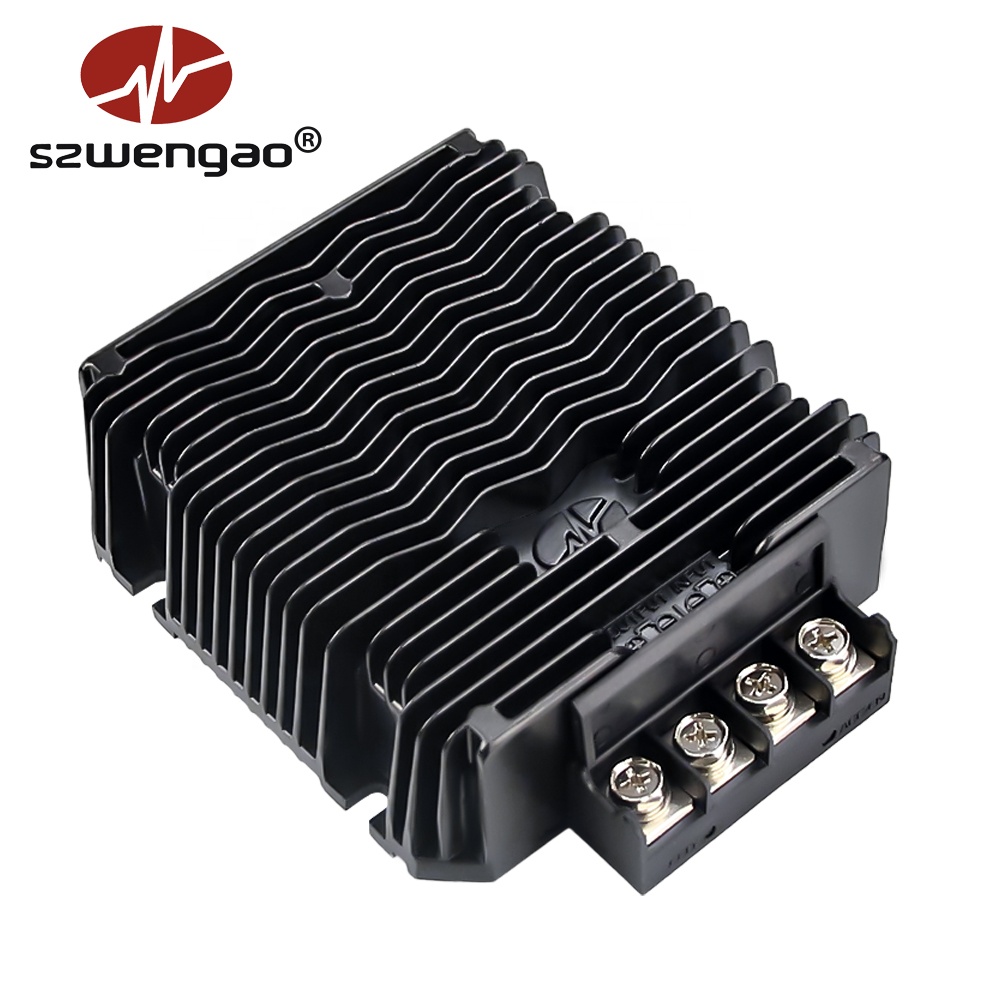
Smart 36V Lithium Battery Charger DC 12V to 43.8V 13A
- Input Voltage: DC 10V–16V
- Charge Profile: CC/CV 43.8V (LiFePO4)
- Current Output: 13A Continuous
- Enclosure Class: IP67 Fully Potted
Engineered to eliminate voltage drops, manage alternator load surges, and safely regulate LiFePO4, AGM, and ternary lithium batteries under extreme continental climates.
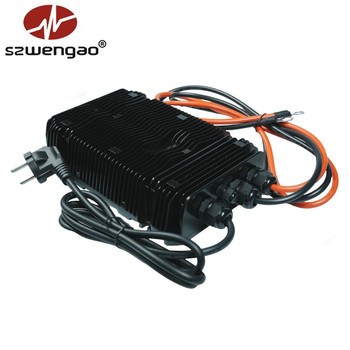
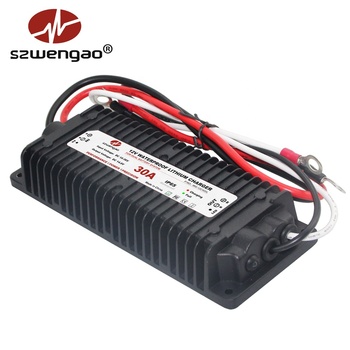
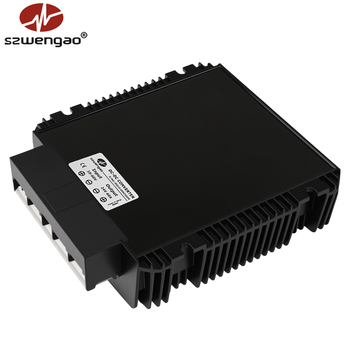
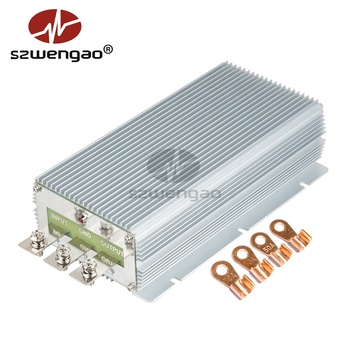
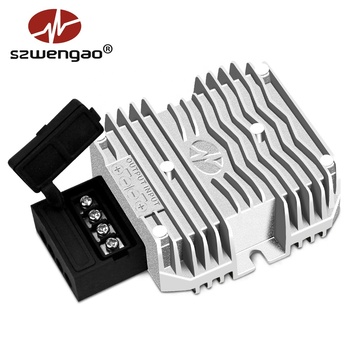
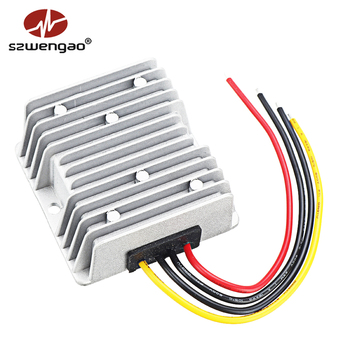
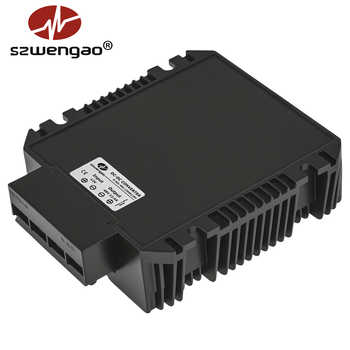
A rigorous engineering brief on solving dual-battery charging anomalies, alternator saturation, and dielectric ground loop failures across Belarusian industrial equipment.
Minsk represents an epicenter of Eurasian mechanical engineering, heavy agricultural equipment manufacturing (Minsk Tractor Works - MTZ), heavy road logistics, and urban electric transport (Belkommunmash). Designing and sourcing DC-DC battery chargers and converters destined for deployment in Belarus necessitates strict compliance with demanding electrical and climatic stresses that standard off-the-shelf consumer electronic modules cannot endure.
Commercial haulage and machinery engines in Belarus operate on 24V starting architectures driven by high-output alternators. Traditional split-charge relays and linear voltage droppers create severe thermal penalties and unpredictable current surges when attempting to charge secondary LiFePO4 (Lithium Iron Phosphate) or AGM auxiliary banks. When alternators reach thermal equilibrium during long-haul transit across transit corridors connecting Minsk, Brest, and Gomel, load dump transients (in compliance with ISO 7637-2 and ISO 16750-2 Class A) routinely generate over-voltage spikes ranging between 35V and 80V. Without specialized buck-boost topologies and transient voltage suppression (TVS), conventional chargers suffer immediate semiconductor punch-through.
Minsk winters regularly subject mobile machinery and stationary remote telecom terminals to temperatures descending below -25°C to -35°C. Charging standard lithium-ion chemistries below 0°C without intelligent CC/CV control causes immediate irreversible lithium plating on the anode, resulting in catastrophic dendrite formation and cell capacity degradation. Our DC-DC chargers incorporate proprietary pre-heat logic controls, integrated temperature thermistors (NTC), and automatic low-temperature charge current derating algorithms to safeguard lithium asset investments.
When selecting power architectures for municipal trolleybuses, agricultural GPS auto-steer consoles, or utility service trucks in Minsk, system integrators must rigorously distinguish between isolated and non-isolated topologies:
Non-Isolated Synchronous Buck/Boost: Yields the highest conversion efficiencies (reaching 94%–96%) and minimized physical footprints. These are ideal for battery-to-battery charging where common ground planes between the starter chassis and secondary battery box do not create ground loop hum, signal disruption, or galvanic electrochemical corrosion.
Galvanic Transformer-Isolated Converters: Indispensable for 48V–72V traction systems (such as light industrial electric vehicles, automated guided vehicles, and railway telemetry). By introducing high-frequency planar transformer coupling rated at 1500V DC dielectric breakdown, these units break noise interference paths, protect sensitive telematics microcontrollers from inductive kickback, and preserve chassis floating ground requirements.
De-icing salts, humidity, and fine dust are constant threats during operational cycles across Belarus. Standard fan-cooled power modules rapidly collect conductive brine and corrosive condensation, driving premature short circuits. Eltrum SMPS modules feature high-grade vacuum-injected thermally conductive organosilicon potting rated at IP67 and IP68. This eliminates air pockets, dampens extreme mechanical vibrations (rated up to 10G in heavy tractor engine bays), and uniformly distributes internal heat across the exterior extruded aluminum heatsink casing.
Tailored power electronics solving specific voltage stabilization challenges in local infrastructure and OEM production lines.
Converting unstable 24V starter alternator outputs down to stabilized 12V and 13.8V rails for precision GPS guidance systems, hydraulic sensors, telemetry receivers, and operator cab amenities in MTZ tractors and MAZ logistics trucks.
Traction pack auxiliary power stepping down 600V/72V bus voltages to 24V low-voltage auxiliary networks. Supplying passenger ticketing validation systems, interior LED illuminators, onboard security surveillance, and emergency door actuators.
Auxiliary battery-to-battery charging systems dedicated to continuous refrigeration container power. Ensuring temperature-controlled food transport throughout the Minsk ring road corridor without draining vehicle cranking capacity.
Wide-input buck-boost regulators maintaining ultra-stable 12V and 24V loads from off-grid solar-battery installations, managing fluctuating inputs from 9V to 40V under heavy overcast winter weather and partial shading.
Analysis of regulatory transitions, chemical shifts, and electrification mandates steering regional procurement strategies.
Traditional heavy lead-acid auxiliary banks are being systematically phased out across fleet management companies in Minsk in favor of prismatic LiFePO4 batteries. The superior cycle life (3000+ cycles vs 400 cycles) and deep depth of discharge (DoD) demand precision smart chargers with tailored three-stage charging profiles (Bulk, Absorption, Float) rather than crude mechanical alternator relays.
Modern industrial equipment manufacturers require integrated real-time diagnostics. Simple analog voltage reducers are being replaced by micro-controlled DC-DC platforms capable of streaming continuous state-of-charge (SoC), operational temperatures, input brown-out events, and output amp draw over RS485 / Modbus protocols straight into vehicle telematics units.
B2B importers across Belarus prioritize manufacturers offering ISO 9001 quality management along with comprehensive test documentation aligned with Technical Regulations of the Customs Union (TR CU 004/2011 Low Voltage Safety and TR CU 020/2011 Electromagnetic Compatibility). Eltrum delivers complete pre-compliance testing to expedite customs clearance.
Direct answers addressing technical parameters, cold-start limits, delivery pathways, and custom OEM manufacturing.
Combining decade-long manufacturing discipline with strict ISO 9001 certified production pipelines.
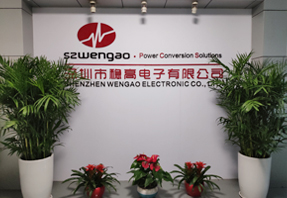
Operating a dedicated 3,000 m² high-precision assembly plant in Hangcheng Street, Shenzhen, with over 500 validated SMPS, buck, boost, isolated, and smart charger configurations.
Pioneering high-frequency magnetic winding, planar transformer design, and synchronous rectification architectures delivering up to 96% energy conversion efficiency with minimum thermal loss.
Every single power unit undergoes automatic SMT optical inspection, high-voltage dielectric isolation breakdown testing, vibration resistance verification, and prolonged full-load thermal burn-in.
Certified to CE and RoHS directives under verified ISO 9001 quality infrastructure. Dedicated B2B engineering consultation for international OEM and procurement partners.
Whether you require standard 12V–24V buck-boost modules or custom-engineered LiFePO4 battery chargers with RS485 telemetry, our Shenzhen engineering laboratory is ready to review your schematic requirements.
Send an Inquiry