High-Efficiency DC-DC Step-Down Regulators & Converters
Engineered to handle harsh electrical noise, cold-start Baltic freeze, and wide input fluctuations across industrial automation and vehicle conversion sectors.

Smart 36V Lithium Battery Charger DC 12V to 43.8V 13A Waterproof
- Topology: Step-Up / Charger
- Input Voltage: 9V – 36V DC
- Output: 43.8V @ 13A (570W)
- Ingress Rating: IP68 Hermetic Sealed

24V to 12V 85A/100A High-Current Step-Down Buck Converter
- Topology: Synchronous Buck
- Input Range: 18V – 32V DC
- Output Power: 12V @ 100A (1200W)
- Application: Commercial Transport / Fleet
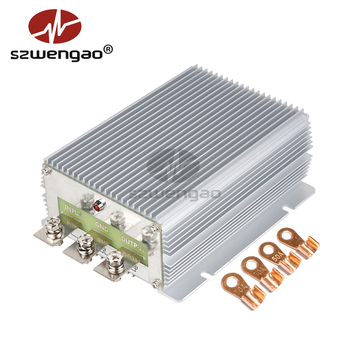
48V to 24V 40A 1000W High Conversion Efficiency Buck
- Efficiency: Up to 96.5%
- Input Voltage: 38V – 60V DC
- Output: 24V DC Regulated @ 40A
- Protection: OCP, OVP, OTP, Reverse
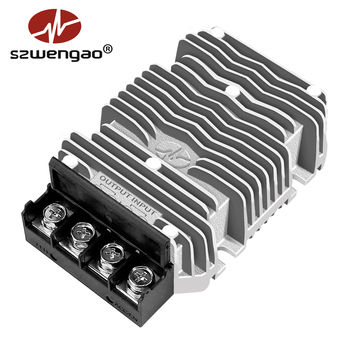
30–60V to 12V 50A/60A Step-Down Voltage Regulator
- Input Range: 30V – 60V DC Nominal
- Continuous Current: 50A – 60A Max
- Housing: Die-Cast Aluminum Heat Sink
- Cooling: Natural Convection
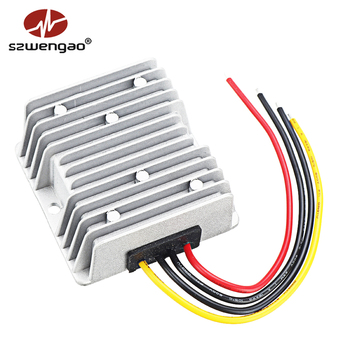
30–90V (36V/48V/72V) to 24V 10A/20A Buck Regulator Module
- Input Swing: 30V – 90V Ultra-Wide
- Output Precision: 24V ±1.5%
- Thermal Range: -40°C to +85°C Operational
- Enclosure: Silicone Potted Waterproof
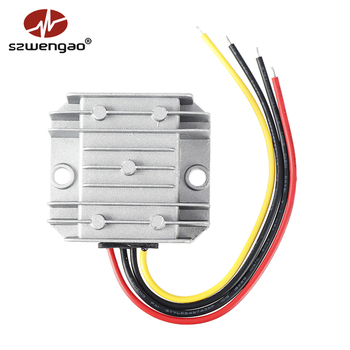
18–90V to 12V 5A/10A Rugged Industrial Step-Down Module
- Input Compatibility: 24V/36V/48V/60V/72V
- Ripple & Noise: <50mVp-p Low Noise
- Certifications: CE / RoHS / ISO9001
- Form Factor: Compact Chassis Mount
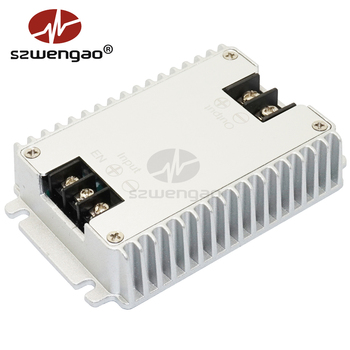
36–75V to 24V 5A Isolated DC-DC Industrial Power Module
- Isolation Voltage: 1500V DC Galvanic
- Primary Application: Telecom / AGV Control
- Grounding: Complete Ground Separation
- Standby Current: <10mA Low Quiescent

18–90V to 12V 10A 120W Waterproof Isolated Step-Down
- Isolation Barrier: 1.5kV High Potential
- Ingress Rating: IP67 Submersible Sealed
- Transient Shield: TVS Clamping Diode Built-in
- Warranty: 2-Year Industrial Exchange
Precision Step-Down Conversion for Demanding Sub-Zero & Industrial Environments
A rigorous examination of topology selection, synchronous rectification efficiency, and thermal mitigation designed for Lithuanian systems engineers.
In high-reliability power systems, DC-DC step-down (buck) topology serves as the operational bedrock for taking unconditioned, volatile higher-voltage direct current rails—such as 24V vehicle battery banks, 48V telecom bus lines, or 72V traction battery packs—and stepping them down into highly regulated, noise-immune 12V, 24V, or 5V sub-buses. In the modern manufacturing landscape of Northern Lithuania, centered within the Šiauliai Free Economic Zone (Šiauliai LEZ) and the broader Baltic transport corridor, electronic design engineers encounter operational demands that break consumer-grade hardware. Thermal extremes fluctuating from severe Baltic winter lows of -30°C to high-ambient engine compartment temperatures exceeding +70°C necessitate robust industrial design paradigms.
Shenzhen Eltrum Electronic Co., Ltd. architects DC-DC buck converters that solve the classic power trade-off: achieving maximum conversion efficiency (frequently surpassing 96%) while eliminating EMI interference that can compromise CAN bus networks, GPS telemetry, or sensitive industrial sensors. By employing high-frequency synchronous rectification with planar magnetics, our buck modules minimize the forward diode voltage drop associated with legacy non-synchronous designs, generating significantly lower waste heat per cubic centimeter of chassis volume.
Synchronous Rectification
Replaces traditional freewheeling Schottky diodes with extremely low RDS(on) N-channel power MOSFETs. Gate timing is optimized via intelligent dead-time control to prevent cross-conduction shoot-through, dropping thermal losses by up to 60% compared to legacy converters.
- Efficiency peak up to 96.8% under typical loads
- Eliminates bulky forced-air cooling blowers
- Extends lifespan of adjacent electrolytic filter capacitors
Thermal Potting & IP68 Ingress
Every export-tier converter module is encapsulated using a high thermal-conductivity, flame-retardant silicone or epoxy resin compound (UL94 V-0 recognized). This ensures absolute resistance against moisture condensation, Baltic road de-icing salt sprays, and intense mechanical vibration.
- Hermetically sealed against road grime and salt mist
- Exceptional thermal dissipation via cast-alloy shell
- Tested to withstand 10G mechanical vibration sweeps
ISO 7637-2 Transient Suppression
Designed specifically for commercial automotive and fleet equipment, our buck regulators integrate multi-stage LC input filtering coupled with high-energy Transient Voltage Suppressors (TVS) to quench alternator load-dump spikes and cold-cranking voltage troughs without reset or failure.
- Absorbs inductive kickback up to 100V peak surges
- Guaranteed stable output under heavy starter draws
- Compliant with EN 55032 Class B electromagnetic radiation
Key Application Scenarios Across the Šiauliai Industrial Ecosystem
Tailored power conversion engineering mapped directly onto the manufacturing, logistics, and renewable infrastructure driving Northern Lithuania's economy.
Commercial Trailer & Specialized Truck Modification
Šiauliai serves as a principal transit hub along the E77 and E272 corridors, housing specialized automotive engineering firms that modify heavy semi-trailers, timber carriers, and municipal vehicles. Our 24V to 12V (85A–100A) synchronous buck regulators provide reliable power for tail-lifts, diagnostic beacons, refrigeration monitoring telemetry, and precision hydraulic valve actuators operating off 24V alternator mains.
Šiauliai LEZ Automated Warehousing & AGV Fleets
The accelerated expansion of smart warehousing within the Šiauliai Free Economic Zone relies on Automated Guided Vehicles (AGVs) and electric tuggers driven by 48V or 72V lithium iron phosphate (LiFePO4) power blocks. Eltrum's isolated 48V/72V to 24V and 12V buck modules decouple logic controllers, LiDAR safety systems, and wireless transceivers from inductive motor commutation spikes.
Renewable Solar & Wind Edge Infrastructure
Across the agricultural plains of Šiauliai County, decentralized solar photovoltaic installations and wind turbines require ruggedized auxiliary DC rails. Our wide-input 30V–90V buck regulators step down unconditioned battery bank power directly into stable 12V/24V feeds for edge-computing SCADA telemetry, perimeter thermal security, and optical anemometer gearboxes without grid dependency.
Lithuania's Green Transition & Power Regulation Demands
The Baltic energy corridor is undergoing unprecedented modernization, anchored by Lithuania's strategic desynchronization from the post-Soviet IPS/UPS grid and complete synchronization with the Continental European synchronous area. This monumental shift has catalyzed massive domestic investments in energy storage systems (BESS), decentralized renewables, and electric fleet conversions.
In Šiauliai—traditionally an industrial crossroad connecting Vilnius, Kaunas, Riga, and the seaport of Klaipėda—enterprises are modernizing commercial transportation fleets. Diesel auxiliary generators are being aggressively replaced by high-voltage 48V and 80V secondary lithium battery banks.
Municipal and industrial tenders in Lithuania increasingly mandate 48V to 72V architecture for material handling, auxiliary hydraulics, and electric passenger transit to reduce copper cable weight. High-voltage buck converters must maintain minimum 95% efficiency to satisfy strict EU Ecodesign directives.
Selection Guide: Synchronous Buck vs. Isolated DC-DC Conversion
Evaluating trade-offs between shared-ground non-isolated converters and galvanic isolated topologies for Baltic system developers.
| Converter Category | Typical Input Range | Nominal Output | Ground Architecture | Peak Efficiency | Ideal Šiauliai Deployment |
|---|---|---|---|---|---|
| Heavy Truck Buck | 18V – 35V DC | 12V DC (50A – 100A) | Common Negative Ground | 96.5% | Fleet radio, GPS, lighting retrofits in 24V commercial rigs. |
| E-Mobility High-V Buck | 30V – 90V DC | 12V / 24V DC (10A – 30A) | Non-Isolated Common Ground | 94.8% | Electric yard tuggers, golf carts, and municipal utility vehicles. |
| Telecom Isolated Buck | 36V – 75V DC | 24V / 12V DC (5A – 15A) | 1.5kV Galvanic Isolated | 92.0% | Base stations, SCADA sensors, ground-loop elimination. |
| High-Power Industrial Buck | 38V – 60V DC | 24V DC (40A / 1000W) | Common Chassis Ground | 96.0% | Automated CNC sub-drives, conveyor line control in Šiauliai LEZ. |
| Severe Duty Marine/Outdoor | 18V – 90V DC | 12V DC (10A Sealed) | Full Isolation IP67/IP68 | 91.5% | Baltic agricultural sprayers, cold-storage refrigeration telemetry. |
Sizing Guidelines for Sub-Zero Lithuanian Field Deployments
When engineering electronics intended to endure Lithuanian winters, thermal derating calculations must account for initial cold start impedance shifts. At -30°C, the Equivalent Series Resistance (ESR) of standard electrolytic capacitors climbs sharply, which can result in elevated output voltage ripple and instability during startup. Eltrum addresses this challenge by integrating premium solid polymer aluminum capacitors and high-grade multilayer ceramic capacitors (MLCCs) across all our buck converter output stages, securing rock-solid startup behavior down to -40°C.
Furthermore, designers should ensure a 20% to 25% continuous current overhead headroom when mounting non-ventilated potted converters inside sealed vehicle junction boxes. For inductive loads such as DC starter solenoids, winches, or high-capacity compressor fans, our engineers advise configuring a current-limit margin of at least 2.5 times the continuous steady-state amperage to absorb inrush transient peaks smoothly.
Why Baltic OEMs & System Integrators Partner with Eltrum
Shenzhen Eltrum Electronic Co., Ltd. brings a decade of focused power electronics production excellence directly to European procurement teams.
Certified ISO 9001:2015 Manufacturing Infrastructure
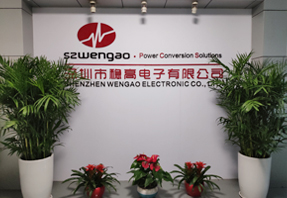
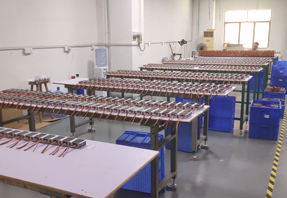
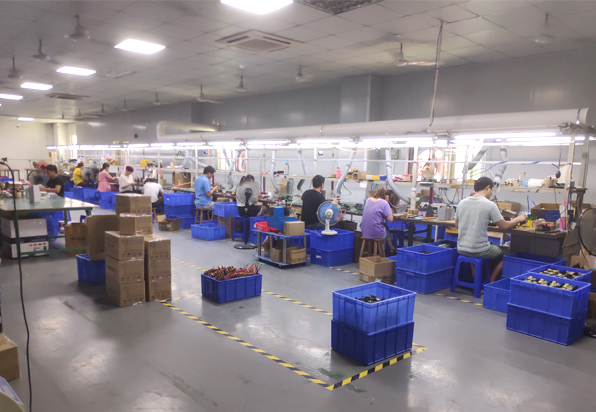
Founded in 2015, Eltrum operates a state-of-the-art facility equipped with precision high-speed SMT placement lines, automated optical inspection (AOI), dual-wave soldering chambers, and custom computerized load-testing rigs. All production is certified strictly under the ISO 9001 quality management framework, ensuring full lot traceability for all components from silicon wafers to final alloy enclosures.
- Onsite verified production facilities in Shenzhen
- Fully RoHS compliant lead-free soldering and materials
- Full conformity with European CE low voltage and EMC directives
100% Full-Load Environmental Burn-In Screen
Zero out-of-box failure is our mandatory quality benchmark. Every single manufactured buck converter undergoes a rigorous 4 to 8-hour continuous full-load burn-in screening inside elevated-temperature test chambers prior to packaging. This thermal stress process forces early semiconductor infant mortality defects to surface at our factory, rather than within critical customer equipment in Šiauliai.
- Continuous real-time voltage and current telemetry during burn-in
- Automated high-pot testing up to 1.5kV for isolated variants
- Calculated MTBF exceeding 100,000 hours per MIL-HDBK-217F
Frequently Asked Questions by Lithuanian Engineers & Buyers
Key information regarding international logistics, EU customs compliance, sub-zero operation, and custom ODM modifications.
What are the typical shipping lead times and delivery terms (Incoterms) for Šiauliai?
How do Eltrum buck converters withstand extreme Baltic winter temperatures?
Do your converters comply with mandatory European Union CE, RoHS, and WEEE standards?
When should a system engineer specify an isolated buck converter instead of non-isolated?
Can Eltrum customize voltage setpoints, connector harnesses, or housings for OEM equipment?
What is the Minimum Order Quantity (MOQ) for prototypes and series manufacturing?
Accelerate Your Power Engineering Project in Šiauliai
Discuss your direct voltage step-down requirements with our factory applications engineering team. We supply tailored datasheets, 3D CAD step files, evaluation samples, and competitive OEM volume pricing.