Featured DC-DC Boost & Step-Up Power Platforms
Factory-direct non-isolated, synchronous step-up, and wide-input buck-boost modules engineered for continuous high-load duty cycles across Roman industrial infrastructure.
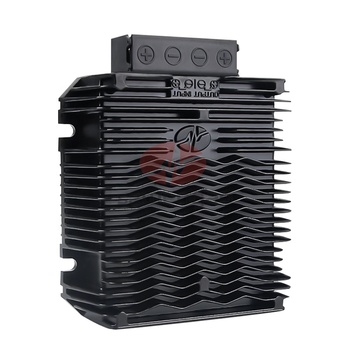
12V to 24V 50A Step-Up DC Boost Converter
- TopologyNon-Isolated Boost
- Input Range10.0V – 20.0V DC
- Output Power1200W (50A continuous)
- Efficiency>95.8% Peak
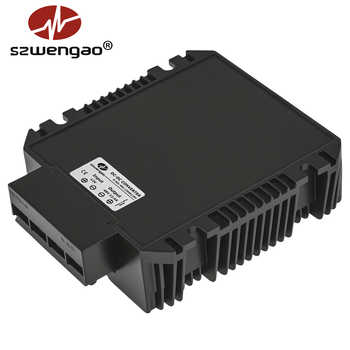
12V to 48V 20A Industrial Boost Converter (IP68)
- TopologySynchronous Step-Up
- Output Voltage48.0V DC Stable
- Continuous Amps20A (960W Max)
- ProtectionFull Silicone Potting
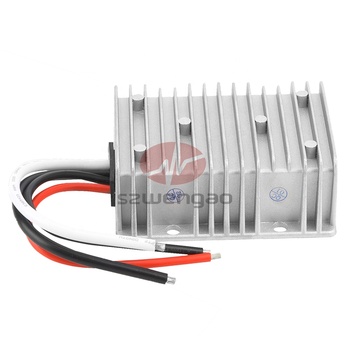
24V to 48V 15A Heavy-Duty DC-DC Step-Up Unit
- Input Range18.0V – 32.0V DC
- Output48.0V DC (15A Max)
- EnclosureDie-Cast Anodized Al
- Ripple/Noise<50mVp-p
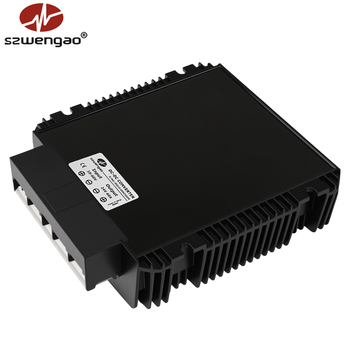
1500W Wide-Input Buck-Boost with RS485 Bus
- Dynamic In10.0V – 60.0V DC
- Out Range12V / 24V / 28V / 48V
- TelemetryRS485 Modbus RTU
- Peak Power1500W Continuous
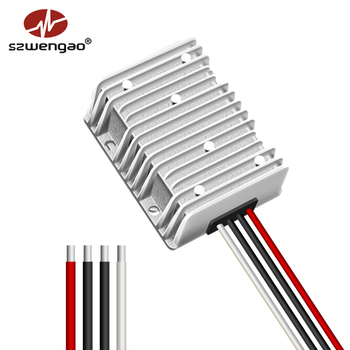
8–40V to 13.8V 30A Stabilizing Boost-Buck Converter
- Input Span8.0V – 40.0V Dynamic
- Regulated Out13.8V Constant
- Current Cap30A (414W Output)
- ApplicationMarine & Lead/Lithium
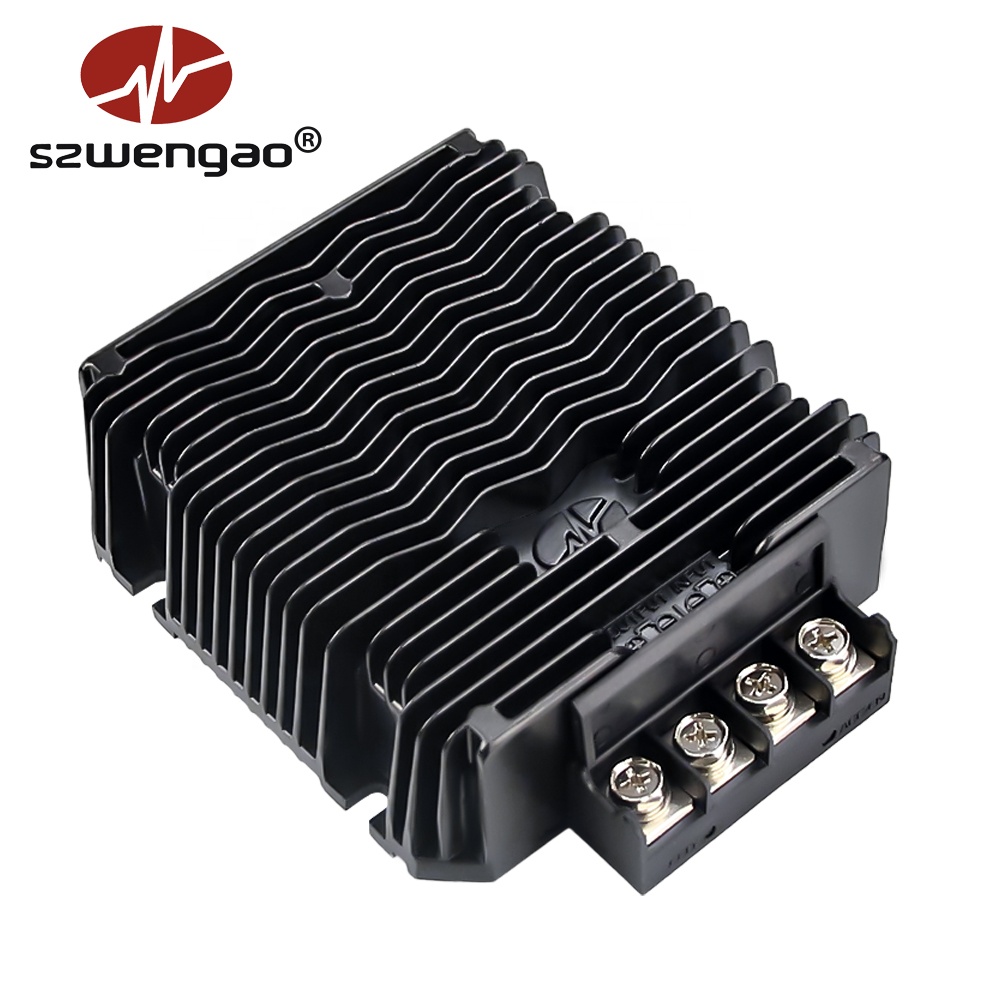
Smart 12V to 43.8V 13A LiFePO4 Boost Charger
- Source Voltage12V DC Vehicle Alt
- Battery Target36V (43.8V CC/CV)
- Output Amps13A True Constant
- Thermal LevelSealed IP67 Engine Bay
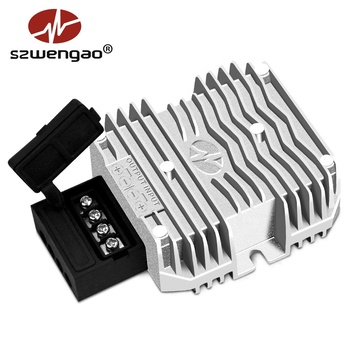
18–90V Ultra-Wide Isolated DC Step Module
- Galvanic Break1500V DC Isolation
- Input Spectrum18.0V – 90.0V DC
- Output Spec12.0V @ 10A (120W)
- GroundingIsolated Ground Loop
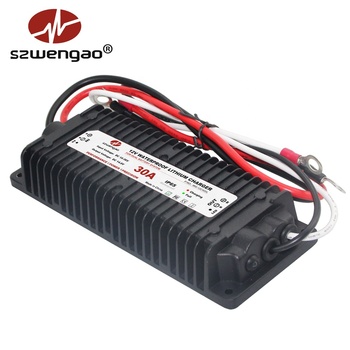
400W Battery-to-Battery LiFePO4 Step-Up Charger
- Input Range10.0V – 36.0V DC
- Charge Rails14.6V / 29.2V / 43.8V
- Rated Power400W Controlled Output
- ValidationCE, RoHS, ISO 9001
High-Density DC Boost Topology: Physics, Thermal Dynamics & Magnetic Design
A deep-dive technical examination of non-isolated boost, synchronous rectification, and closed-loop feedback algorithms built to withstand aggressive Roman operating conditions.
In modern industrial and heavy automotive electrical architectures across the Metropolitan City of Rome Capital, low-voltage power distribution frequently encounters strict physical boundaries. Whether upgrading public bus transit networks from legacy 12V alternators to 24V/48V CAN-bus telemetry arrays, or stepping marine battery banks in Ostia port installations, direct conversion efficiency dictates hardware survivability. A standard step-up boost converter increases input direct current voltage ($V_{in}$) to a defined higher target output ($V_{out}$) through controlled inductive energy retention and transfer governed by the primary duty cycle equation: $V_{out} = \frac{V_{in}}{1 - D}$, where $D$ represents the switching duty ratio of the high-frequency MOSFET semiconductor.
Solving Low-Input Current Strain & Thermal Dissipation
The primary failure point of inferior step-up modules operating in hot Mediterranean summer environments (where ambient enclosure temperatures routinely exceed 50°C in Lazio engine bays) stems from the inverse relationship between input voltage and input current. Governed by the law of energy conservation:
I_in = (V_out × I_out) / (η × V_in)
P_cond = (I_rms)² × R_DS(on)
P_core = K × f^α × B_max^β
When stepping 12V up to 48V to power a 960W industrial pump or auxiliary hydraulic servo, an operating efficiency ($\eta$) of 95% demands an input current draw of approximately 84.2 Amperes. At these massive current thresholds, conventional passive diodes produce catastrophic thermal saturation. Eltrum SMPS integrates Synchronous Rectification (SR) topologies employing planar power MOSFETs with ultra-low drain-to-source on-resistance ($R_{DS(on)} < 1.8\text{ m}\Omega$). By bypassing the 0.7V forward diode drop, internal thermal dissipation is suppressed by more than 70%, maintaining case temperatures safely below critical junction thresholds.
Strategic Field Deployments in Central Italy’s Industrial Ecosystem
How Eltrum’s high-power boost and buck-boost power supplies resolve acute conversion bottlenecks across Rome’s transport, aerospace, maritime, and utility sectors.
Urban Mobility & Transit Retrofits (Rome ZTL & ATAC Fleets)
Rome’s progressive low-emission transition mandates the electrification and auxiliary modernization of urban shuttle systems, commercial delivery vans, and municipal buses navigating historic central corridors. Our 12V-to-24V and 12V-to-48V boost converters supply stable power to pneumatic valves, automated passenger ticketing gateways, LED illumination matrices, and onboard surveillance cameras without requiring complete drivetrain re-engineering.
Tyrrhenian Maritime & Port Infrastructure (Ostia & Civitavecchia)
Yachts, commercial fishing vessels, and port transport carriers operating out of the Port of Civitavecchia and the Ostia Marina face high humidity, saline exposure, and violent engine cranking voltage drops. Our IP68 waterproof boost modules step irregular 12V shipboard house battery lines directly into pristine 24V or 48V power for bow thrusters, navigation radar systems, desalination pumps, and secondary LiFePO4 battery banks.
Agrivoltaics & Distributed Renewable Grids (Agro Romano)
Agricultural enterprises across the Roman countryside increasingly harness decentralized photovoltaic installations. Irradiance swings create severe voltage dropoff in long DC cable runs. Eltrum’s wide-input buck-boost stabilizers accept variable 10V–60V inputs from localized solar arrays and step them to unyielding 28V/48V buses, ensuring automated drip-irrigation pumps and telemetry stay fully energized 24/7.
Direct Factory Technical Specification Matrix
Compare conversion topologies, input-to-output ratios, thermal thresholds, and physical sealing architectures across our core production series.
| Series Code | Conversion Topology | Nominal Input | Regulated Output | Max Current | Thermal Sealing | Common Lazio Application |
|---|---|---|---|---|---|---|
| ELT-BST-1224 | Synchronous Boost | 10.0 – 20.0 VDC | 24.0 VDC (±1%) | 50 Amperes (1200W) | IP68 Thermoconductive Potting | Commercial Vehicle 24V Tailgate Lift |
| ELT-BST-1248 | Step-Up Non-Iso | 10.0 – 30.0 VDC | 48.0 VDC (±1%) | 20 Amperes (960W) | IP68 Vacuum Sealed Shell | E-Bike/Scooter Docking Stations |
| ELT-BST-2448 | Step-Up Non-Iso | 18.0 – 32.0 VDC | 48.0 VDC (±1%) | 15 Amperes (720W) | IP67 Extruded Aluminum | Transit HVAC Boost Systems |
| ELT-BKB-1060 | Buck-Boost Micro | 10.0 – 60.0 VDC | 12V / 24V / 48V (RS485) | Up to 1500W Dynamic | IP65 Active Thermal Ribbing | Tiburtina Tech Park Robotics / AGVs |
| ELT-BST-CHG36 | 3-Stage CC/CV Boost | 11.0 – 16.0 VDC | 43.8 VDC (36V LiFePO4) | 13 Amperes Controlled | IP67 Engine Bay Resistant | Alternator-to-Traction Battery Charging |
Direct Factory Advantages: Engineering Purity from Shenzhen to Rome
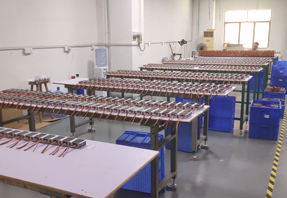
Founded in 2015, Shenzhen Eltrum Electronic Co., Ltd. operates state-of-the-art SMT, winding, automated potting, and testing lines within the Anle Industrial Zone, Shenzhen. With an expansive product line exceeding 500 standardized models deployed across more than 130 countries, we maintain an uncompromising standard of electrical safety and operational longevity.
For procurement directors and electronic systems engineers in Rome, partnering directly with Eltrum eliminates intermediate trading markups, ensures direct access to core schematic designers, and unlocks flexible batch manufacturing starting from a sample MOQ of just 5 units. Every boost converter destined for the Italian market undergoes 100% full-load burn-in testing, high-potential dielectric breakdown validation, and stringent automated optical inspection (AOI).
Frequently Asked Questions by Italian & Rome Buyers
Addressing import compliance, CE declarations, technical topology selection, and customs procedures for engineering procurement teams in Italy.
Are Eltrum DC boost converters fully compliant with CE and RoHS standards for import into Italy?
Yes. All Eltrum DC-DC boost converters, buck-boost stabilizers, and battery chargers shipped to Rome and the broader European Union strictly adhere to the EMC Directive (2014/30/EU) and RoHS Directive (2011/65/EU and amendment 2015/863). We furnish complete CE Declarations of Conformity (DoC), EMC test reports verifying compliance with EN 61000-6-3 (Emissions) and EN 61000-6-1 (Immunity), as well as RoHS hazardous substance laboratory certificates to simplify Italian customs clearance (Dogana di Roma).
When should an engineering team in Rome select a synchronous boost converter versus an isolated DC-DC converter?
A synchronous boost converter (common negative ground) should be selected when maximum electrical efficiency (>95%), compact volumetric density, and economical pricing are required, such as stepping 12V to 24V or 48V for vehicle lighting, auxiliary cooling pumps, and standard DC motors. Conversely, an isolated DC-DC converter is mandatory when complete galvanic isolation (zero shared ground) is necessary to eliminate dangerous ground loops, protect high-frequency telecommunication infrastructure, or prevent noise feedback into sensitive medical or railway instrumentation.
Can your boost converters charge a 36V or 48V LiFePO4 battery pack from a standard 12V vehicle alternator?
Standard open-loop boost converters should never be connected directly to lithium battery banks because they lack current limiting and over-voltage absorption logic. However, our specialized DC-DC Boost Chargers (such as the 12V-to-43.8V 13A or 12V-to-58.4V models) incorporate integrated 3-stage Constant Current / Constant Voltage (CC/CV) microcontrollers. They actively regulate input draw to protect the starter battery/alternator from overheating while safely charging 36V or 48V LiFePO4 or NMC battery packs up to 100% state-of-charge.
What are the lead times and minimum order quantities (MOQ) for custom-engineered voltage outputs?
Standard catalog units maintain an entry-level evaluation MOQ of just 5 units, with samples dispatched via DHL/FedEx air freight to Rome Leonardo da Vinci Airport (FCO) within 5 to 7 business days. For OEM/ODM custom electrical calibrations (e.g., custom trigger thresholds, tailored current limits, specialized RS485 communication protocols, or custom waterproof cable harnesses), rapid prototyping requires approximately 2 weeks, with volume production lead times typically ranging between 18 and 25 working days.
How do Eltrum boost converters survive high summer ambient heat in Rome without internal fans?
Fans are notoriously vulnerable to dust, moisture, and mechanical seizure in harsh vehicular and outdoor operating environments. Eltrum SMPS utilizes aerospace-grade vacuum potting with high thermal-conductivity silicone elastomer inside an integral finned die-cast aluminum enclosure. This structure achieves a rapid junction-to-ambient thermal resistance path, allowing our units to dissipate heat passively and maintain full-load operation at ambient temperatures ranging from -40°C to +85°C.
Connect Directly with Our Power Engineering Team
Whether designing an auxiliary electrical upgrade for Roman municipal transport, equipping marine vessels at Civitavecchia, or sourcing reliable factory-direct OEM DC-DC boost converters, submit your voltage, current, and environmental requirements today for immediate technical and commercial consultation.
Get a Quote