
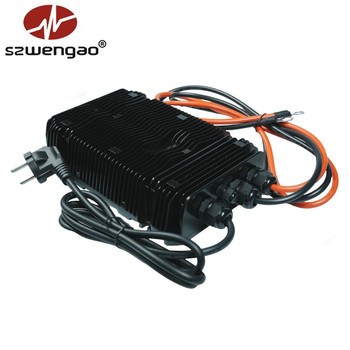
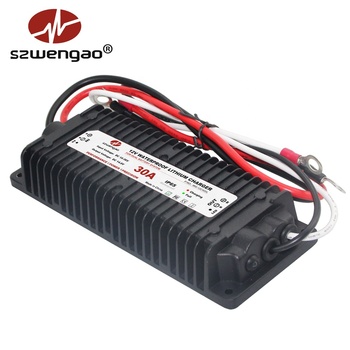
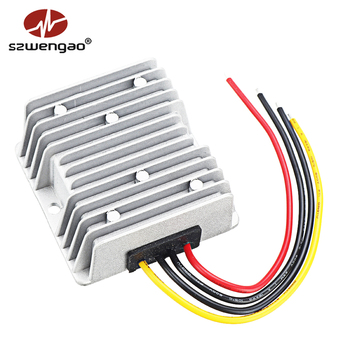
Smart 36V Lithium Battery Charger DC 12V to 43.8V Waterproof 13A
- Nominal Output43.8V DC (12S LiFePO4)
- Input Bus10.5V – 16.0V DC
- Max Output13A Continuous (570W)
- Ingress RatingIP68 Fully Potted
Precision-engineered power modules engineered for the harsh vibrational profiles, high thermal loads, and rigorous electromagnetic compatibility demanded by European system integrators.

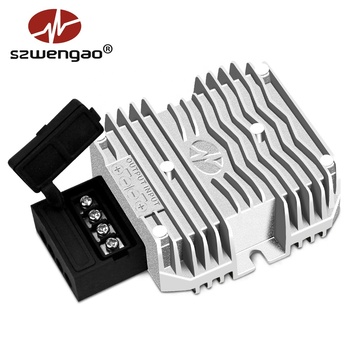

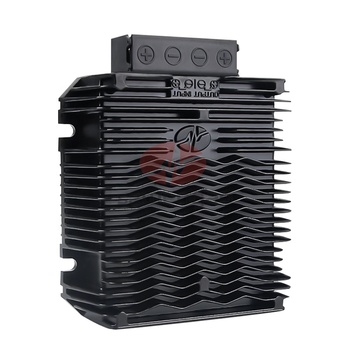
Düsseldorf stands at the heart of continental Europe’s dense logistics and manufacturing corridor. From the Port of Duisburg (Duisport) to the sprawling distribution hubs bordering Düsseldorf International Airport, legacy internal combustion material handling fleets are being comprehensively phased out in favor of automated guided vehicles (AGVs), electric narrow-aisle forklifts, and lithium-powered autonomous mobile robots (AMRs).
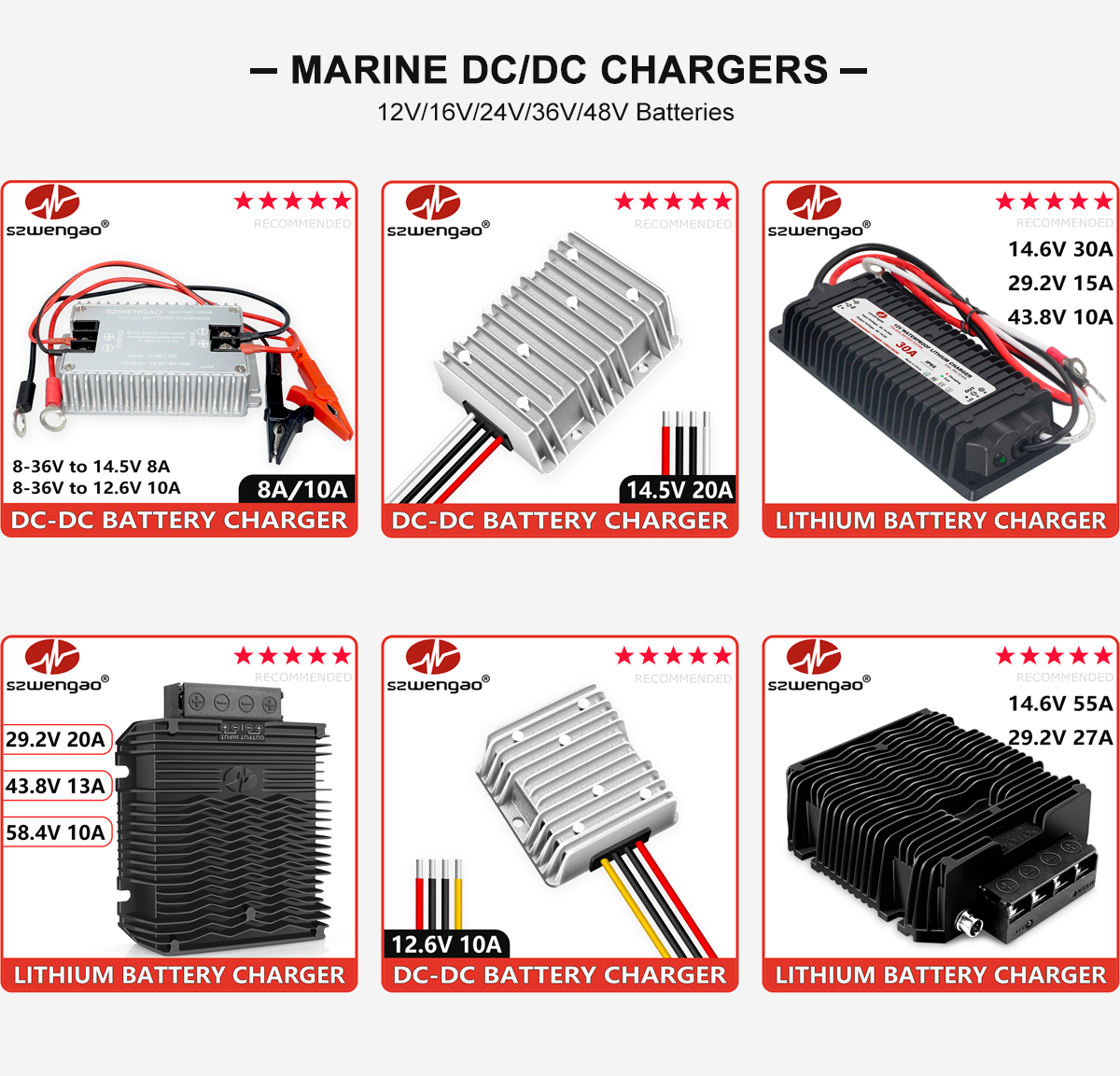
Our custom OEM battery charging modules directly address the stringent technical expectations of mechanical and electrical engineering teams across North Rhine-Westphalia (NRW). By engineering DC-DC conversion architectures with dynamic multi-stage constant-current/constant-voltage (CC/CV) profiles, our systems ensure that 24V, 48V, and 80V secondary lithium batteries maintain cell balance, extend operational life cycles beyond 4,000 cycles, and eliminate thermal runaway vectors inside high-turnover logistics centers.
Real-world integration scenarios where our high-reliability charging sub-assemblies and DC power units solve mission-critical operational challenges.
Düsseldorf e-commerce logistics centers operate multi-vendor autonomous robotics requiring inductive and drop-in DC-DC docking charging. Our modules step down 48V/80V facility rail buses to precise 24V/48V LiFePO4 packs, featuring RS485 communication for dynamic BMS closed-loop current throttling and real-time state-of-health tracking.
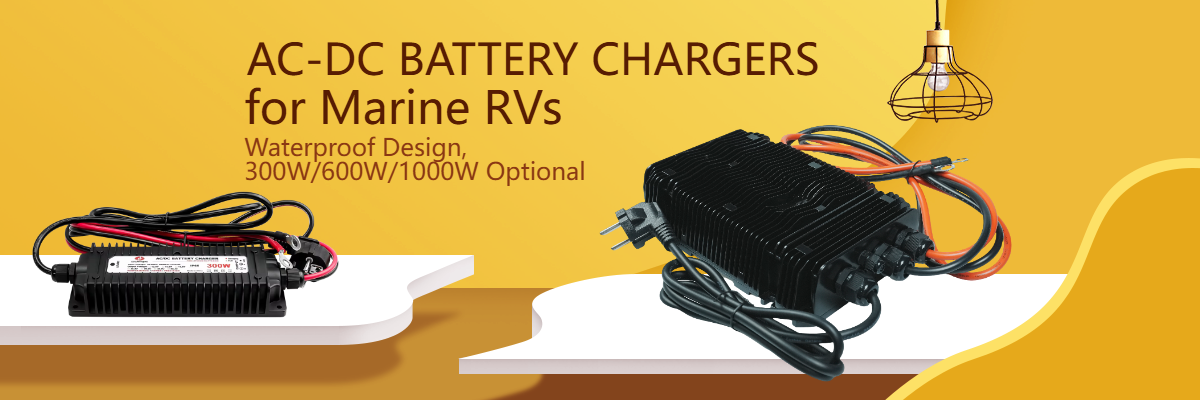
Barge freight and tourist watercraft operating on the Rhine through Düsseldorf require IP68 encapsulated charging and power modules resistant to condensation, vibration, and saline air. Our isolated DC-DC converters eliminate catastrophic galvanic ground loops between navigation electronics and high-capacity LiFePO4 house battery banks.
Düsseldorf municipal utility contractors and long-distance transport fleets utilize our 24V-to-12V synchronous buck units (up to 100A) to decouple Euro-6 alternator auxiliary power. This ensures ultra-stable 13.8V/14.6V feeds to specialized telematics, radio sensors, and on-board refrigeration equipment without draining the primary starter banks.
Procuring power modules within the European Economic Area demands unambiguous adherence to evolving safety and environmental directives. Industrial buyers in Düsseldorf are strictly held to EU Regulation 2023/1542 (the New EU Battery Regulation), which imposes comprehensive carbon footprint declarations, supply chain transparency, and strict lifecycle efficiency quotas.
Shenzhen Eltrum Electronic Co., Ltd. builds all custom OEM battery charging modules under strict ISO 9001 certified protocols. Our modules integrate class-leading electromagnetic compatibility (EMC) suppression components, complying with EN 55032 and EN 55035 Class B standards. This guarantees near-zero ripple injection into delicate onboard control units (CAN bus, industrial PLCs, and medical monitors).
Additionally, our production lines implement automated 100% full-load burn-in stress testing, multi-stage thermal cycling, and hi-pot dielectric withstand verification. This comprehensive quality infrastructure protects European exporters and system assemblers against costly field callbacks, port delays, or compliance fines under German trade enforcement authorities.
Combining world-class switching topology engineering with cost-optimized volume export capabilities from Shenzhen’s core high-tech industrial cluster.
Rather than starting from zero, our clients leverage over 500 validated field topologies—including non-isolated buck, boost, multi-phase buck-boost, and transformer-isolated topologies—reducing development cycles from months down to a few days for custom prototype delivery.
We believe in fast hardware evaluation. We eliminate steep multi-thousand-unit initial commitments by supporting sample and validation runs starting at just 5 units, enabling development teams to perform physical bench tests, EMC sweeps, and in-chassis temperature profiling with minimal capital risk.
All outdoor, marine, and mobile-chassis chargers undergo high-precision vacuum injection potting using thermally conductive organic silicone or epoxy. This confers true IP68 liquid ingress protection, complete resistance to heavy mechanical vibration, and superior thermal dissipation without active fan failure modes.
Crucial details regarding technical customizability, import protocols, certification paperwork, and localized deployment.
Our OEM firmware is fully programmable. During development, our engineering team adjusts the multi-stage CC/CV parameters (Bulk, Absorption, and Float) down to 0.1V precision (e.g., exactly 14.6V for 4S LiFePO4 or 43.8V for 12S banks). Cutoff currents (C/10, C/20) and automatic restart conditions can be tailored precisely to match the communication requirements of your proprietary BMS.
Standard design evaluation samples are dispatched within 3–5 working days via express air freight (DHL/FedEx directly into Düsseldorf DUS or Cologne/Bonn CGN), arriving in approximately 4–6 business days. Commercial production batches typically ship in 2–3 weeks. We offer FOB Shenzhen, CIF Hamburg/Rotterdam, or DDP direct delivery to your warehouse with customs and import tariffs cleared.
Yes. Modern commercial fleet vehicles in Germany feature smart regenerative braking alternators whose system voltage drops from 15.2V down to 12.0V or lower within seconds. Our DC-DC battery chargers utilize high-speed buck-boost architectures that continuously monitor input voltages, providing full-power regulated CC/CV output without dropping charging currents or tripping undervoltage locks.
Every commercial production batch is accompanied by comprehensive CE and RoHS Declarations of Conformity (DoC), full factory quality test certificates (FQC), hi-pot breakdown reports, and individual serial tracking. If required, full electromagnetic compatibility (EMC) test dossiers from third-party accredited laboratories can be provided for your technical construction file.
Consult directly with Shenzhen Eltrum Electronic Co., Ltd.’s power design engineers. Request detailed datasheets, custom voltage/connector modifications, or arrange sample evaluation for your Düsseldorf manufacturing operations.