Industrial-Grade Power Conversion & Charging Solutions
Tested, validated, and potted for heavy salt-spray, high ambient heat, and extreme electrical duty. Explore our primary conversion topographies below.

Smart 36V 13A Waterproof LiFePO4 Battery Charger
- Input Voltage: 12V DC (9–18V Range)
- Output Voltage: 43.8V DC (CC/CV)
- Current / Power: 13A / ~570W Peak
- Ingress Rating: IP67 Fully Potted
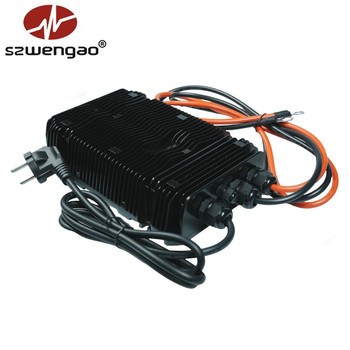
600W Waterproof AC-DC LiFePO4 Industrial Charger
- Input Voltage: 90–265V AC Universal
- Output Channels: 14.6V / 29.2V / 58.4V
- Efficiency: ≥ 93.5% at Full Load
- Form Factor: Extruded Aluminum IP65

1500W High-Power Buck-Boost DC-DC Regulator
- Input Range: 10–60V DC Continuous
- Regulated Rails: 12V / 24V / 28V / 48V
- Telemetry: RS485 Modbus RTU
- Topology: 4-Switch Synchronous
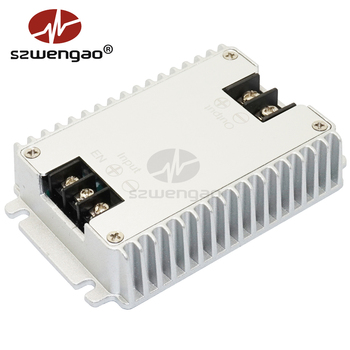
Isolated 36–75V to 24V 5A DC Industrial Module
- Isolation Rating: 1500V DC In/Out
- Input Nominal: 48V / 60V DC Telecom
- Ripple & Noise: ≤ 50mVp-p Low EMI
- Thermal Range: -40°C to +85°C Ambient

24V to 12V 100A High-Current Step-Down Converter
- Input Voltage: 18–35V DC Vehicle Bus
- Continuous Output: 12V ±1% at 100A (1200W)
- Cooling Method: Passive Heatsink Base
- Safety Certs: CE, RoHS, E-Mark Compliant
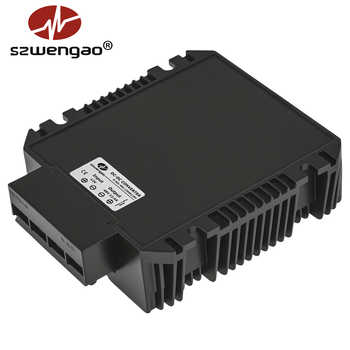
12V to 48V 20A Industrial Boost Converter (960W)
- Input Voltage: 10–16V DC Low Rail
- Boost Output: 48V DC ±0.5V at 20A
- Efficiency: 95.2% Peak Rectification
- Housing: Die-Cast Aluminum IP68
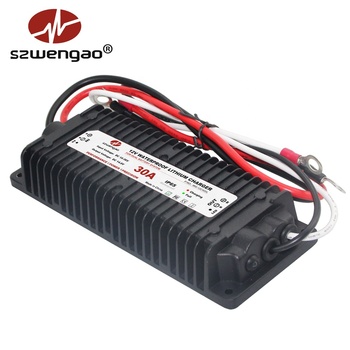
400W Waterproof Battery-to-Battery LiFePO4 Charger
- Smart Alternator: Euro 6 / Smart Control In
- Profiles: LiFePO4, AGM, GEL, Lead
- Charging Logic: 3-Stage Microprocessor
- Mounting: Engine Bay & Marine Bilge
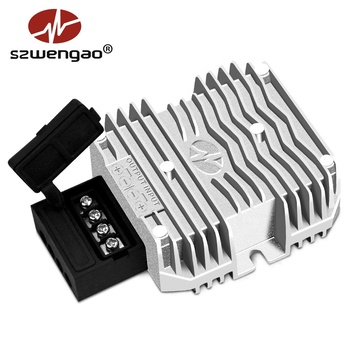
Isolated 18–90V to 12V 10A Ultra-Wide DC Module
- Ultra-Wide Input: 18–90V DC (24/36/48/72V)
- Output Regulation: 12V DC Constant 10A
- Surge Immunity: EN61000-4-5 Level 3
- Encapsulation: Thermally Conductive Epoxy
Optimizing Switched-Mode Power Architectures for Kingston’s Tropical and Maritime Industrial Operating Environments
A technical guide for Caribbean electrical contractors, marine logistics engineers, telecommunication network operators, and industrial plant managers sourcing heavy-duty power supplies directly from Shenzhen manufacturing hubs.
The industrial landscape across Kingston, Jamaica—from the bustling container operations at the Port of Kingston and Kingston Freeport Terminal (KFT) to the intensive industrial estates of Newport West, Marcus Garvey Drive, and the thermal power installations around Hunts Bay—presents unique, severe stresses on electrical power conversion equipment. Commercial off-the-shelf power supplies engineered exclusively for temperate, climate-controlled clean rooms consistently succumb to premature failure within tropical maritime settings. Three dominant micro-environmental variables drive these failure rates: ambient thermal saturation exceeding 45°C inside unventilated control enclosures, continuous relative humidity ranging from 78% to 92%, and high-salinity hygroscopic aerosol deposition that rapidly initiates dendritic electrolytic migration and galvanic trace pitting on printed circuit boards (PCBs).
When procurement authorities in Kingston look to China wholesale industrial power supply factories to modernize their localized equipment, the technical criteria must extend far beyond simple nameplate wattage and nominal output voltage. Specifiers must analyze switching topologies, active thermal paths, encapsulation chemistry, and transient immunity profiles to guarantee mean time between failures (MTBF) exceeding 100,000 continuous operating hours under harsh Caribbean environmental parameters.
“In coastal industrial corridors like Kingston Harbour, non-potted, fan-cooled power supplies act as active vacuum cleaners for airborne salt-mist. Switching to fully encapsulated silicone-gel potting with IP67/IP68 ingress ratings eliminates galvanic corrosion on high-voltage copper traces while lowering overall junction-to-case thermal resistance.”
Furthermore, the electrical distribution network across Jamaica’s Corporate Area experiences frequent transient voltage anomalies, load-shedding dips, and harmonic distortion caused by industrial inductive motor loads and legacy grid switching. When battery-backed or auxiliary DC systems operate on tugs, terminal tractors, or off-grid solar-diesel hybrid microgrids, DC bus voltages fluctuate widely. A nominal 24V commercial vehicle alternator will cycle between 18V during heavy cranking and 29.5V under rapid alternator charging. Implementing advanced buck-boost topologies with synchronous rectification is mandatory to preserve precision voltage regulation (±1%) on sensitive PLCs, marine telematics, sensory encoders, and lithium battery banks.
Port Terminal & Marine Fleets
The heavy gantry cranes, container-handling reach stackers, and terminal tractors operating 24/7 along Kingston Harbour require ruggedized 24V-to-12V buck converters and 48V traction step-down modules. Potted construction prevents corrosion from maritime salt air, and transient suppression diodes arrest starter-motor inductive spikes.
Solar Microgrids & BESS
Caribbean solar installations across Saint Andrew and Saint Catherine demand high-efficiency buck-boost stabilizers and intelligent LiFePO4 battery chargers. Wide input ranges (10–60V DC) regulate fluctuating photovoltaic arrays, sustaining stable CC/CV absorption rails to house lithium energy storage systems.
Telecom & Critical Infrastructure
Cellular towers, optical repeater hubs, and emergency transceivers situated throughout the Blue Mountain foothills and downtown Kingston rely on 18–90V ultra-wide isolated converters. Galvanic isolation (1.5kV DC minimum) prevents destructive lightning-induced earth ground loops and electrical interference.
Comparative Engineering Matrix: Industrial Conversion Topologies for Kingston Specifiers
Selecting the optimal power supply architecture depends directly on the relationship between source voltage variance, load tolerance, and potential electrical isolation requirements:
| Circuit Topology | Dynamic Input Window | Efficiency Rating | Galvanic Isolation | Recommended Kingston Application Sector |
|---|---|---|---|---|
| Synchronous Buck (Step-Down) | 18–35V DC / 30–90V DC | 94% – 97% | Non-Isolated (Common Ground) | Terminal Tractors, Municipal Buses, LED Auxiliary lighting |
| Synchronous Boost (Step-Up) | 10–16V DC / 18–30V DC | 93% – 96% | Non-Isolated (Common Ground) | 12V Battery Banks driving 24V/48V Marine Winches & Sensors |
| 4-Switch Buck-Boost | 10–60V DC Continuous | 91% – 94% | Non-Isolated (Wide Range) | Unstable Solar PV Arrays, Variable Alternators, Medical Transport |
| Flyback / Forward Isolated | 18–36V / 36–75V / 18–90V | 88% – 92% | Isolated (1500V–3000V DC) | Cellular Base Stations, Mining Control, Forklifts, Substation Scada |
| AC-DC Universal SMPS | 90–265V AC (47–63Hz) | 90% – 94% | Isolated (3000V AC Breakdown) | Commercial Port Logistics Warehousing, Ship-to-Shore Grid Power |
Decarbonization, Microgrids, and Fleet Modernization in the Kingston Economic Corridor (2025–2030)
Technological imperatives shaping industrial procurement, supplier verification, and power electronics deployment across the Greater Kingston Metropolitan Area.
As Jamaica accelerates toward its target under the National Energy Policy (NEP) 2009–2030 to achieve 50% renewable energy penetration in its electricity generation mix, industrial facilities within Kingston are undergoing rapid capital transformations. Private industrial complexes in the Riverton City, Spanish Town Road, and Three Miles industrial corridors are aggressively pairing rooftop solar photovoltaic arrays with centralized Lithium Iron Phosphate (LiFePO4) Battery Energy Storage Systems (BESS). This mass transition from conventional deep-cycle flooded lead-acid batteries to high-density lithium chemistry introduces stringent charging requirements that legacy unregulated transformer rectifiers cannot deliver.
LiFePO4 chemistry requires an exceptionally rigid constant-current / constant-voltage (CC/CV) multi-stage profile. Over-voltage of even 0.2V per cell risks irreversible electrolyte breakdown, while under-voltage leads to substantial state-of-charge (SoC) drift and capacity starvation. Furthermore, ambient heat in Kingston’s unconditioned manufacturing sheds accelerates thermal aging in battery chemistries. The modern standard of China-manufactured industrial power supplies deployed into Kingston includes dynamic microprocessor-controlled temperature compensation, automatic equalization algorithms, and RS485/CAN bus interfaces that integrate directly with modern Building Management Systems (BMS) and SCADA supervisory networks.
Simultaneously, the logistics and transport sector in Kingston—anchored by cross-island haulage moving between Kingston, Spanish Town, Ocho Rios, and Montego Bay—is transitioning auxiliary fleet electricals to heavy-duty solid-state converters. High-amperage 24V-to-12V buck modules (85A to 100A continuous) are replacing inefficient dual-battery isolators to run refrigeration units, real-time GPS fleet transponders, hydraulic tailgate controls, and high-lumen dock illumination. This transition significantly lowers alternator mechanical drag, directly enhancing commercial diesel fuel efficiency.
Shenzhen Eltrum Electronic Co., Ltd. — Your Direct Industrial Factory Partner
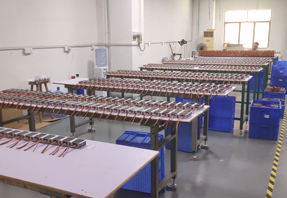
Founded in 2015, Eltrum combines advanced magnetics engineering, high-throughput automated SMT lines, and ISO 9001 certified quality control to supply robust power electronics worldwide.
Direct Engineering Collaboration for Kingston Distributors & OEMs
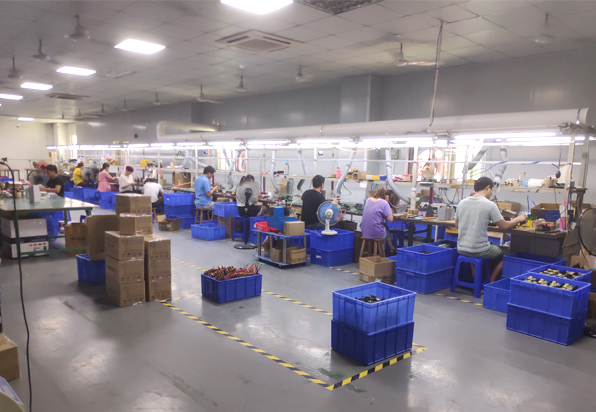
Unlike trading intermediaries, Shenzhen Eltrum Electronic Co., Ltd. operates dedicated engineering facilities covering up to 3,000 m² in the Bao'an / Hangcheng industrial zone of Shenzhen. With 51 to 100 experienced personnel, including veteran switch-mode power supply (SMPS) design engineers, we develop isolated DC-DC converters, buck-boost modules, and IP67 waterproof battery chargers that fulfill stringent international guidelines.
Our competitive advantages for Kingston and Caribbean industrial procurement include:
- Direct Customization (OEM/ODM): Bespoke tailoring of input voltage windows (e.g., non-standard DC inputs like 18–90V), dedicated charging termination algorithms, customized cable harnesses, and private laser-etched buyer labeling.
- Rigorous Testing Protocols: Every production batch undergoes 100% full-load thermal burn-in testing, high-voltage dielectric insulation breakdown tests (Hipot), and simulated surge testing prior to maritime packing.
- Accessible MOQ for Rapid Testing: Standard evaluation models start at just 5 units, empowering Kingston engineering teams to perform bench trials, vibration testing, and environmental thermal validations before committing to bulk container orders.
Frequently Asked Questions: Kingston Commercial & Industrial Buyers
Direct technical and operational answers to assist engineering consultants, plant operators, and import procurement directors in Kingston.