
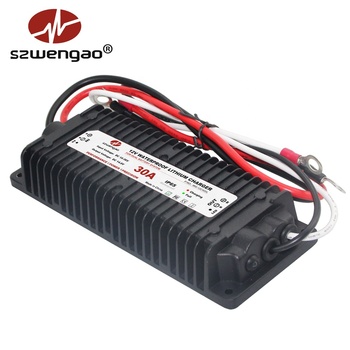
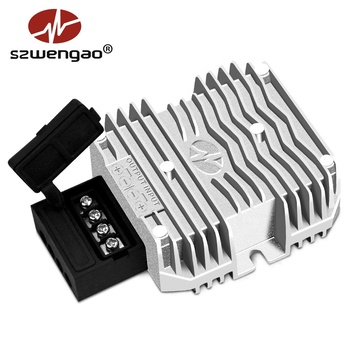
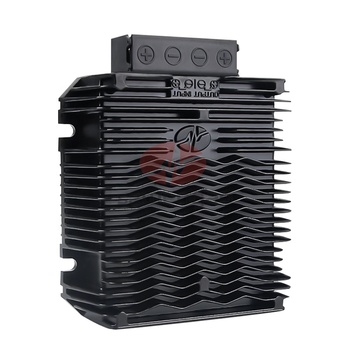
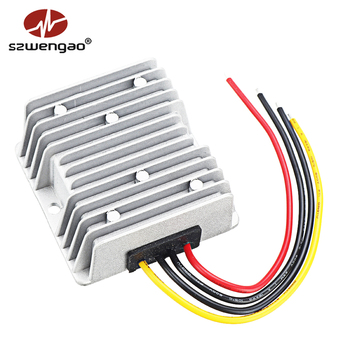
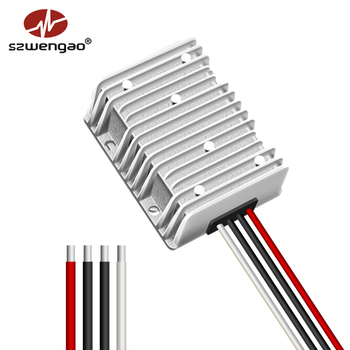
Smart 36V Lithium Battery Charger DC 12V to 43.8V 13A
- Input Voltage12V DC (Alternator/Starter)
- Output Charging43.8V CC/CV (36V LiFePO4)
- Rated Current13A Max
- EnclosureIP67 Aluminum Alloy
Engineered for high thermal tolerance, low quiescent discharge, and adaptive Multi-Stage CC/CV profiles matching LiFePO4, Ternary Lithium, and AGM chemistries.


A comprehensive examination of how harsh Scandinavian maritime environments, smart alternators (Euro 6d/Euro 7), and green harbor initiatives determine conversion topology choices.
Procuring industrial-grade DC-DC battery chargers and converters for Aarhus and the broader Jutland industrial corridor requires navigating distinct electrical, structural, and climatic hurdles. As Denmark accelerates toward its aggressive carbon reduction goals, corporate fleets, maritime contractors operating at Aarhus Havn, and renewable power developers have abandoned primitive split-charge relays and linear droop regulators. The widespread implementation of regenerative braking systems and smart alternators in modern commercial utility vehicles has rendered unregulated battery-to-battery charging obsolete.
When an internal combustion or hybrid engine decelerates, modern ECU-controlled alternators spike system voltage upwards of 15.2V to recapture kinetic energy. Conversely, under cruising or thermal stress, alternator output frequently plunges below 12.2V. Connecting a low-impedance auxiliary lithium iron phosphate (LiFePO4) storage bank directly across these erratic buses triggers catastrophic alternator stator overheating or causes premature battery management system (BMS) over-voltage disconnects. Eltrum’s high-precision buck-boost topology DC-DC battery chargers resolve this fundamental instability by decoupling the starter rail completely, accepting unpredictable primary voltages from 8V to 90V while enforcing strict three-stage Constant Current / Constant Voltage (CC/CV) absorption algorithms tuned precisely to 14.6V, 29.2V, or 43.8V.
Furthermore, maritime logistics at the Port of Aarhus demand resilient galvanic isolation. Stray direct currents stemming from shared chassis grounds remain the primary catalyst for rapid electrolytic hull decay in Kattegat saltwater berths. By utilizing Eltrum isolated DC-DC modules with transformer barriers rating up to 1500V DC breakdown voltage, Danish naval architects and industrial electricians effectively eliminate ground loop ground shifts, preserving cathodic protection systems and shielding mission-critical marine radar, sonar, and programmable automation controllers from voltage transients.
Deployable engineering architectures custom-tailored to solve local power challenges across Midtjylland's primary commercial sectors.
Tugboats, crew transfer vessels (CTVs) for offshore wind farms, and recreational yachts berthed at Aarhus Lystbådehavn encounter severe saline condensation. Our fully potted IP67/IP68 DC-DC battery chargers provide clean, moisture-proof galvanic separation between main cranking batteries and secondary house lithium banks, eliminating galvanic corrosion while sustaining electronics.
Municipal vans, telecommunication maintenance vehicles, and overlanding utility conversions operating in cold Danish winters rely on dual-battery systems. Eltrum chargers feature programmable temperature compensation curves and smart ignition sense wiring, guaranteeing that secondary tool batteries charge at full 20A–50A capacity without drawing down starting banks below freezing.
Throughout Central Denmark Region wind testing zones and hybrid microgrids, battery bus voltages shift wildly under intermittent charge cycles. Our 10V–60V wide-input buck-boost converters continuously deliver stabilized 12V or 24V output rails to remote SCADA units, weather lidar, and telemetry transmitters, completely immune to source fluctuation.
Distribution centers around Hasselager and Skejby use 48V, 60V, or 72V traction battery packs. Supplying 12V automotive-grade sensors, barcode scanners, and emergency steering systems requires high-efficiency step-down converters with over-current safety envelopes and anti-arcing ceramic input filters designed for 24/7 continuous warehouse operations.
Advanced manufacturing facilities in the Jutland industrial zone require clean DC rails free from high-frequency switching hash generated by nearby heavy variable-frequency drives (VFDs). Our isolated converter line delivers low output ripple (<50mV p-p) and compliance with strict European EN 61000-6-2 electromagnetic immunity regulations.
Critical telecommunication nodes installed near docklands run on -48V DC standards. Our 36V–75V isolated DC conversion blocks offer robust reverse polarity protection and thermal overload foldback, guaranteeing uninterruptible operation for remote data logging hubs exposed to the elements year-round.
Key technical shifts dictating low-voltage DC system architectures over the next decade.
Nordic winters severely degrade classic ternary lithium cells. Danish fleets are accelerating the adoption of specialized cold-resilient LiFePO4 and emerging Sodium-Ion (Na-Ion) packs. Chargers must integrate low-temperature charging lockout routines and reconfigurable CC/CV cut-off profiles to preserve battery health during sub-zero operation.
Closed, unmonitored power supplies are quickly disappearing from commercial specifications. Marine systems and utility vehicles across Aarhus increasingly specify native RS485 Modbus RTU or CAN bus telemetry. Engineering real-time current, temperature, and operating status streams into central vehicle telematics has become essential for proactive maintenance.
Unpotted circuit boards with traditional cooling fans consistently fail in coastal marine climates due to salt mist corrosion. The market has definitively shifted toward vacuum-encapsulated thermally conductive polyurethane resin potting, enabling silent, fanless operation inside harsh maritime environments and engine bays.

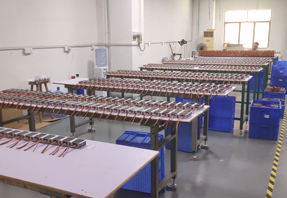
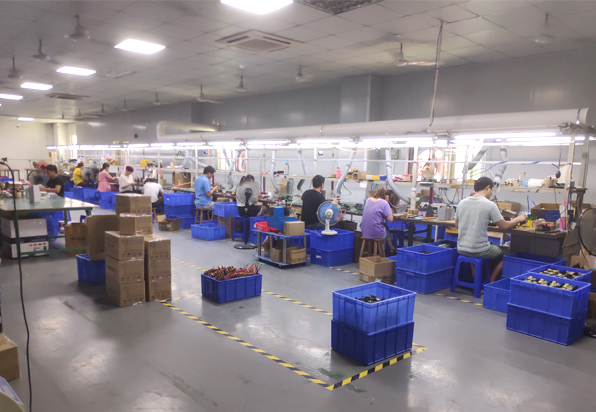
Founded in 2015, Shenzhen Eltrum Electronic Co., Ltd. operates a modern 3,000 m² high-precision power conversion factory in Hangcheng Street, Shenzhen. Employing a seasoned engineering team, we bridge the gap between flexible prototype validation and dependable high-volume production.
Unlike trading intermediaries, Eltrum controls the entire manufacturing chain from bare PCB surface-mount technology (SMT) and magnetic transformer winding to thermal resin potting, multi-stage automated load testing, and comprehensive thermal burn-in under maximum current loads.
We routinely supply distributors, system integrators, and OEM manufacturers across Denmark and more than 130 countries worldwide. Whether you need buyer-label packaging, customized CC/CV voltages, specialized IP68 marine enclosures, or integrated RS485 communication protocols, our team delivers custom-tailored samples starting at an accessible minimum order quantity of just 5 units.
Essential guidance on minimum order quantities, CE/RoHS conformity, topology selection, and direct factory shipping logistics to Aarhus.
Consult with Shenzhen Eltrum’s technical engineering team regarding custom voltage envelopes, bulk wholesale pricing, or sample orders for your application in Aarhus.
Get a Quote