Featured Step Up Converters & High-Current Boost Chargers
Precision-engineered DC-DC step-up architectures ranging from 12V to 48V conversions to 1500W wide-input buck-boost controllers, optimized for high shock resistance and sub-zero thermal stability.
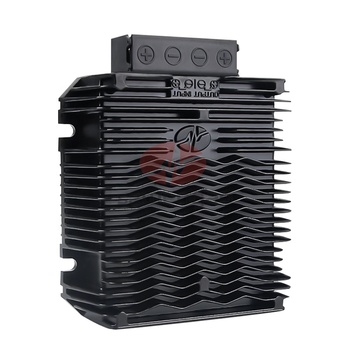
12V to 24V / 48V High-Current Boost Converter (50A / 20A)
- Nominal Input: 12V DC (9–18V Range)
- Regulated Output: 24V @ 50A / 48V @ 20A
- Efficiency: Up to 96.5% Synchronous
- Enclosure: Die-Cast Aluminum Heat Sink
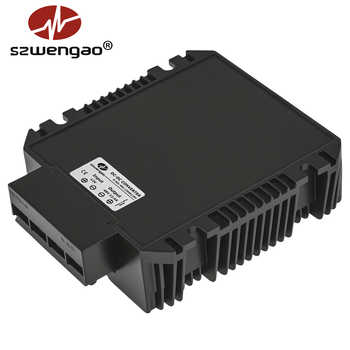
12V to 48V Potted Step-Up Boost Regulator (12.5A–20A)
- Input Voltage: 9V–20V DC
- Output Rating: 48V DC Continuous
- Protection: IP68 Potted / Anti-Vibration
- Application: Harbor Robotics & Marine Winches
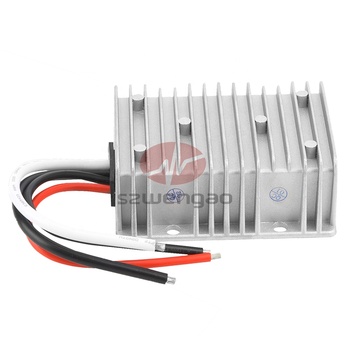
24V to 48V 10A / 15A Step-Up Heavy-Duty Converter
- Input Voltage: 18V–35V DC Fleet Bus
- Output Voltage: 48V DC Stable Rail
- Power Class: 480W to 720W Max
- Standard: EN 50498 Vehicle Transient

Smart 36V Lithium Battery Charger DC 12V to 43.8V 13A
- Input Architecture: 10V–16V Starter / Alternator
- Charge Profile: CC/CV Absorption @ 43.8V
- Current Output: 13A Fully Regulated
- Waterproof: IP67 Fully Sealed Silicone

1500W High-Power Boost / Buck-Boost with RS485
- Ultra-Wide Input: 10V–60V Universal Rail
- Output Channels: 12V / 24V / 28V / 48V
- Digital Control: Modbus RTU over RS485
- Peak Power: 1500W Continuous Rating
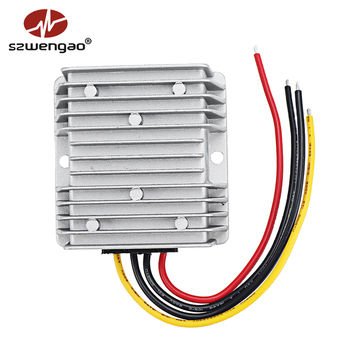
9–40V to 24V 6A / 10A Step-Up Voltage Stabilizer
- Input Voltage: 9V–40V DC (12V/24V Auto)
- Regulated Output: 24V DC Fixed (±1%)
- Current Range: 6A to 10A Rated
- Protection: OVP, OCP, OTP, Short-Circuit
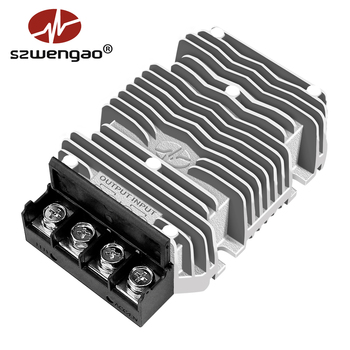
9–40V to 28V 15A / 20A Heavy-Duty Step-Up Unit
- Input Range: 9V–40V DC Fleet Power
- Output Voltage: 28V DC Avionics / Radar
- Continuous Output: 420W–560W Industrial
- Ripple & Noise: <50mVp-p High Suppression
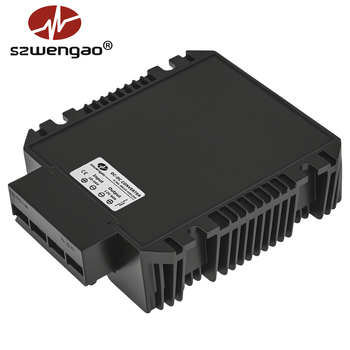
10–44V to 12V / 24V 50A Heavy Step-Up Stabilizer
- Input Swing: 10V–44V Cold-Crank Safe
- Maximum Amps: 50A Continuous Output
- Thermal Control: Heavy Aluminum Extrusion
- Target Industry: Turku Shipyard & AGV Fleets
Engineering Whitepaper: DC-DC Step Up Architectures in Turku's High-Stress Environments
In Southwest Finland, power electronics deployed across coastal installations, marine vessels, and municipal utility fleets are exposed to combined mechanical and thermal stress parameters that quickly degrade non-ruggedized commercial supplies. As Turku progresses toward its aggressive 2029 carbon-neutrality benchmark, the electrification of marine transit across the Archipelago Sea, retrofitting of port automation machinery, and the roll-out of sub-zero distributed battery storage systems require a fundamental re-examination of DC-DC step-up (boost) topology engineering.
A step-up boost converter fundamentally operates by utilizing an inductor, a solid-state power switch (typically a high-voltage, low-RDS(on) MOSFET), a diode or synchronous active rectifier, and filtering capacitor banks. The mathematical relationship governing the conversion ratio under continuous conduction mode (CCM) is expressed as:
V_out = V_in / (1 - D), where D represents the switching duty ratio (0 < D < 1). However, in high-power applications (such as boosting 12V or 24V battery banks to 48V or 56V for telecommunication nodes and marine winches), parasitic resistances across inductor windings (DCR), PCB traces, and MOSFET switching transitions introduce non-linear efficiency droops when D exceeds 0.75.
To overcome this limitation in equipment engineered for Turku, Shenzhen Eltrum Electronic Co., Ltd. implements multiphase interleaved synchronous boost topologies. By interleaving two or four discrete switching stages 180 degrees out of phase, the aggregate input ripple current is dramatically reduced by up to 60%, drastically extending the operating lifecycle of electrolytic input filtering capacitors under Arctic cold-crank and high-vibration conditions. Synchronous rectification replacing traditional Schottky free-wheeling diodes eliminates the classic 0.5V forward voltage drop, dropping thermal dissipation across the junction by more than 70% and elevating end-to-end full-load efficiency beyond 96%.
Mitigating Sub-Zero Cold-Start Impedance in Southwest Finland
Operating in the Turku Archipelago during winter months exposes converters to sustained ambient temperatures falling between -20°C and -35°C. At these sub-zero thresholds, conventional aluminum electrolytic capacitors suffer an exponential surge in Equivalent Series Resistance (ESR)—often multiplying by 10x to 30x. This induces severe voltage ripple spikes, trigger nuisance undervoltage lockouts (UVLO), and risk control loop destabilization. Eltrum step-up converters bypass this operational pitfall by employing hybrid conductive polymer solid aluminum capacitors paired in parallel with high-frequency X7R multilayer ceramic capacitors (MLCC). This preserves loop phase margin (>55°) and ripple suppression (<40mVp-p) seamlessly from -40°C through +85°C.
Localized Industrial Application Scenarios in Southwest Finland
Examining field-deployed step-up power conversion architectures tailored to Turku's maritime shipyards, offshore archipelago microgrids, and robotic harbor operations.
Turku Archipelago Maritime Electrification
The archipelago surrounding Turku and Naantali hosts hundreds of hybrid workboats, commuter ferries, and private yachts transitioning from lead-acid auxiliaries to 48V LiFePO4 house banks. Our 12V to 48V (20A–50A) step-up units interface directly between engine alternators and high-voltage house battery banks, maintaining regulated CC/CV charging curves without risking alternator stator diode burnout.
Key Metric: IP68 Vacuum Potting • Salt Fog ResistanceMeyer Turku Shipyard Auxiliaries
During cruise vessel hull fabrication and dockside outfitting at Meyer Turku, heavy temporary 24V DC auxiliary networks often experience severe line drop across long distribution cabling. Eltrum's 24V-to-48V high-efficiency step-up converters step intermediate voltages up to minimize transmission losses, subsequently powering remote telemetry, laser alignment sensors, and emergency illumination networks.
Key Metric: Heavy Aluminum Shell • 1500W Peak CapacityPort of Turku Automated Guided Vehicles (AGVs)
Electrified container handlers, automated straddle carriers, and robotic warehouse shuttles in logistics hubs operating off 24V or 36V main traction packs require stable 48V bus rails for hydraulic electro-actuators and industrial LiDAR suites. Our buck-boost and boost voltage regulators guarantee instantaneous transient load response without voltage collapse during motor stalls.
Key Metric: RS485 Modbus Telemetry • ISO 7637-2 CertifiedTechnical Benchmark: Boost Topologies vs. Finnish Environmental Directives
Selecting the optimal power step-up topology requires balancing efficiency, component count, electromagnetic compatibility (EMC), and galvanic safety isolation. For engineering procurement specialists in Turku and across the Nordic sphere, the table below provides an exhaustive comparative evaluation of Eltrum's primary DC-DC conversion architectures:
| Topology Class | Typical Input / Output Range | Full Load Efficiency | Galvanic Isolation | EMC Standard Compliance | Primary Turku Application |
|---|---|---|---|---|---|
| Synchronous Boost (Non-Isolated) | 12V → 24V / 48V (9–20V In) | 95.5% – 97.2% | No (Common Ground) | EN 55032 Class B, EN 50498 | Marine battery chargers, LED floodlights, DC motors |
| Four-Switch Buck-Boost | 10–60V → 12V / 24V / 28V / 48V | 94.0% – 96.0% | No (Common Ground) | CISPR 25 Class 3, CE / RoHS | Off-grid wind/solar microgrids, unstable battery rails |
| Transformer-Isolated Push-Pull / Flyback | 18–36V / 36–75V → 12V / 24V | 89.0% – 92.5% | Yes (1500V DC Isolation) | IEC 60945 (Maritime), EN 61000-6-2 | Vessel navigation bridges, telecom racks, AGV controllers |
| High-Current Multiphase Boost | 12V → 24V (Up to 100A peak) | 96.0% – 97.5% | No (Direct Heat-Sink) | EN 61000-6-3 Industrial | Harbor winch actuation, bow thrusters, heavy machinery |
Thermal Conduction & Hermetic Potting Integrity
A persistent vulnerability identified in industrial power converters deployed in Baltic coastal maritime zones is humidity ingress causing electrolytic dendritic migration and dendritic copper whiskering across SMD solder joints. Shenzhen Eltrum Electronic Co., Ltd. addresses this failure mechanism by standardizing on two-component thermally conductive polyurethane and silicone elastomer potting encapsulation. The compound achieves a thermal conductivity rating of 1.8 W/m·K, ensuring direct conductive thermal transfer from power MOSFETs and magnetic cores directly through the aluminum alloy housing. This completely eliminates air voids, achieves true IP68 ingress protection against salt mist exposure, and withstands repetitive thermal shocks from -40°C to +85°C without cracking.
Shenzhen Eltrum Electronic: Direct Manufacturer Advantage for Turku
Bridging China's world-class electronic engineering scale directly to Southwest Finland's high-reliability OEM supply chains since 2015.
ISO 9001:2015 Production
Certified quality management systems governing every stage from SMT surface-mount pick-and-place to automated optical inspection (AOI) and vacuum potting lines.
100% Dynamic Burn-In
Every converter undergoes a minimum of 4 hours full-load burn-in at 50°C chamber temperature before testing electrical ripple, regulation accuracy, and breakdown voltage.
OEM & Custom Topologies
Direct engineering collaboration for bespoke DC step-up voltages (such as 13.8V, 28V, 36V, 54.6V, 58.4V), custom wiring harnesses, Anderson/Deutsch connectors, and CAN/RS485 firmware.
Accessible 5-Unit Sample MOQ
Designed specifically for Nordic R&D engineering teams to conduct real-world prototype bench testing and sea trials without prohibitive initial volume commitments.
Technological & Regional Trends Driving Turku's DC Power Market
The industrial landscape in Southwest Finland is undergoing a rapid, structural transformation dictated by European green maritime corridors, Finnish national carbon targets, and autonomous electrification. Several crucial industry vectors are dictating procurement specifications for DC-DC converters in Turku:
1. Expansion of 48V DC Microgrids in Marine and Port Facilities
Traditional 12V DC power distribution across marine hulls and logistics ground support equipment is rapidly encountering physical transmission limitations. Supplying 1200W at 12V requires 100A of continuous current, necessitating cumbersome copper conductors (typically 25mm² to 35mm²) that add critical displacement weight and incur unacceptable resistive line losses. By transitioning to high-efficiency step-up converters that elevate 12V primary feeds to a 48V bus, current demands are slashed by 75% down to 25A. This enables Turku naval architects and fleet integrators to utilize compact 6mm² wiring, trimming harness weight by over 65% while reducing voltage droop across long runs to navigational masts and bow thrusters.
2. Transition to Advanced LiFePO4 Chemistry from Lead-Acid
Legacy lead-acid floating schemes fail catastrophically when coupled directly with lithium iron phosphate (LiFePO4) storage banks. While a lead-acid battery accepts a broad, tapering float voltage, LiFePO4 cells maintain a flat discharge plateau around 3.2V–3.3V per cell and demand strict, precision CC/CV charging curves with absorption cutoffs at 14.6V (for 4S) or 58.4V (for 16S). Direct alternator connection causes stator diode thermal runaway because LiFePO4 packs possess virtually negligible internal resistance and draw continuous maximum amperage. Eltrum's dedicated step-up DC-DC battery chargers serve as a protective buffer, regulating generator input and delivering precision multi-stage charging algorithms customized for Nordic operating profiles.
3. Autonomous Harbor Machinery & Smart Port Sensor Nodes
Under the "Smart Port Turku" initiatives, hundreds of environmental monitoring buoys, wireless edge gateways, automated barrier gates, and crane condition sensors are being deployed across the harbor network. These systems operate primarily off combined solar PV buffers or variable 24V supply loops. Supplying unconditioned battery voltage directly to sensitive radar or microprocessors risks permanent failure during inductive voltage spikes. Step-up and buck-boost regulators provide galvanic decoupling and tight line/load regulation within ±1%, preserving data integrity across critical wireless communication nodes.
Frequently Asked Questions for Turku & Finnish Engineering Teams
In-depth technical, regulatory, and logistics clarifications addressing Finnish import compliance, sub-zero testing, and system integration.
What specific CE and RoHS test documentation is provided for Finnish customs clearance?
How do Eltrum step-up converters perform during extreme Finnish winter cold starts (-30°C)?
Can multiple Eltrum step-up boost units be connected in parallel to achieve higher amperage?
What is the typical shipping lead time and logistics method from Shenzhen to Turku Port?
How does your factory protect converters against Baltic Sea salt mist corrosion?
Can Eltrum tailor a custom boost conversion ratio (e.g., 12V to 36V or 28V) with custom connectors?
Accelerate Your Power Engineering Projects in Turku
Whether you are engineering a zero-emission hybrid vessel in the Turku Archipelago, automating port machinery, or developing ruggedized sub-zero off-grid power banks, our Shenzhen application engineers provide direct technical support, custom topology designs, and comprehensive datasheets.