Featured Non-Isolated Step-Down & Auxiliary Converters
Engineered for extreme power density, ultra-low ripple voltage, and continuous duty-cycles. Tested rigorously under ISO 9001 protocols with CE and RoHS compliance for immediate integration across Luxembourgish commercial platforms.

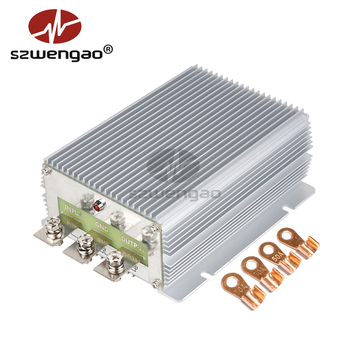
24V to 12V 85A/100A High-Current Buck Converter
- Input Nominal: 24V DC (18–36V)
- Regulated Output: 12V DC ±1%
- Current Output: 85A – 100A Continuous
- Protection: IP68 Potted / Overload
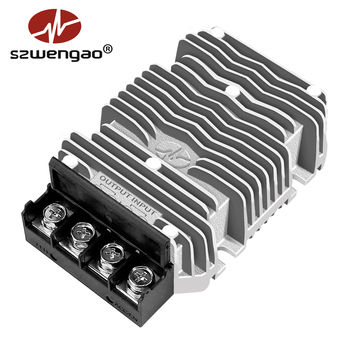
48V to 24V 40A 1000W Step-Down Module
- Input Range: 38V – 60V DC
- Output Voltage: 24V DC Fixed
- Continuous Power: 1000W Maximum
- Peak Efficiency: > 96.5% Synchronous
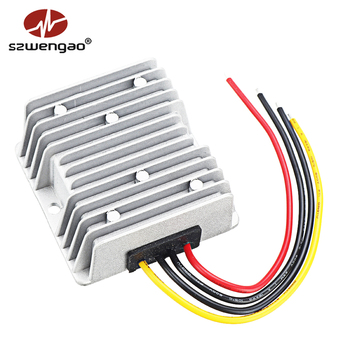
30–60V to 12V 50A/60A Step-Down Regulator
- Input Flexibility: 30V – 60V (48V Bank)
- Output Voltage: 12V DC (600W–720W)
- Enclosure: Extruded Aluminum Fin
- Safety Certs: CE Class B / RoHS
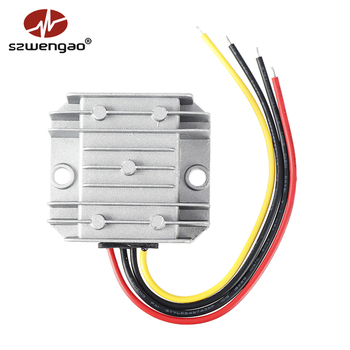
72V to 24V 10A/20A Wide-Input Step Down
- Input Dynamic: 30V – 90V DC Range
- Traction Pack: 60V / 72V / 80V Support
- Output Bus: 24V Auxiliary (480W)
- Potting: Dielectric Thermal Resin
18–90V Universal to 12V 5A/10A Buck Module
- Ultra-Wide In: 18V – 90V DC (1:5 Ratio)
- Standard Out: 12V DC Clean Rail
- Cooling: Natural Convection
- Certifications: ISO 9001 / CE Mark

Smart 36V LiFePO4 Charger 12V to 43.8V 13A
- Input Source: 12V DC Vehicle Bus
- Charge Profile: 43.8V CC/CV 13A
- Application: e-Bikes & Light AGVs
- Form Factor: IP67 Ruggedized
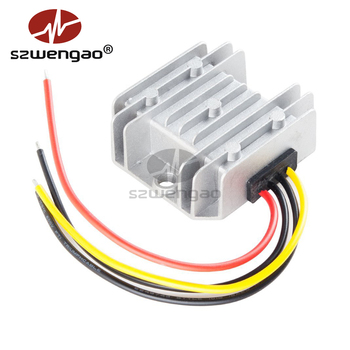
8–40V to 12V 6A Stabilized Buck-Regulator
- Swing Input: 8V – 40V DC Transient
- Clamped Rail: 12V DC Steady State
- Use Case: Telematics & ECUs
- No-Load Loss: < 15mA Ultra-Low

1500W Intelligent Step-Down with RS485 Control
- Input Spectrum: 10V – 60V Wide Bus
- Output Voltage: 12V / 24V / 28V / 48V
- Telemetry: RS485 Modbus Telemetry
- Current Limit: Programmable Constant
Architectural Superiority of Non-Isolated Buck Topologies
A deep dive into why non-isolated step-down converters dominate modern mobile electrification, vehicle telematics, and compact DC microgrids throughout Western Europe.
In modern industrial electrical architecture, selecting between galvanic isolation and non-isolated topologies represents an essential tradeoff between power density, thermodynamic efficiency, and bill-of-materials optimization. When designing auxiliary sub-systems for electric buses operating through Luxembourg City’s Ville de Luxembourg (VDL) network, autonomous material handling vehicles at the Bettembourg Intermodal Logistics Terminal, or decentralized telecom node repeaters across the Grand Duchy, non-isolated synchronous buck converters provide distinct engineering advantages. By maintaining a common negative ground plane (Common GND) between input and output, the power circuit eliminates bulky, lossy planar isolation transformers. This configuration dramatically reduces equivalent series resistance (ESR) and leakage inductance, allowing our converters to deliver steady-state thermodynamic efficiencies exceeding 96.5%.
Standard isolated DC-DC modules necessitate complex optical feedback couplers, isolated secondary-side gate drivers, and dedicated safety creepage margins mandated by IEC 62368-1. In contrast, Shenzhen Eltrum Electronic Co., Ltd.’s synchronous buck architecture incorporates high-side and low-side N-channel MOSFET switching stages with sub-5 milliohm $R_{DS(on)}$ ratings. This directly drives down conduction losses ($I^2R$) and thermal dissipation overhead. Consequently, system architects can scale up current delivery—reaching up to 100A continuous output on 24V-to-12V lines—within compact extruded aluminum enclosures sealed to IP68 standards without requiring active cooling fans.
| Engineering Parameter | Eltrum Non-Isolated Buck Series | Standard Galvanic Isolated Modules | Luxembourg Operational Impact |
|---|---|---|---|
| Conversion Efficiency | 94.0% – 97.2% (Synchronous Rectification) | 84.0% – 89.5% (Transformer Core Losses) | Preserves EV traction battery pack range in winter |
| Gravimetric Power Density | High (> 420 W/dm³) — Compact Aluminum | Moderate (< 210 W/dm³) — Bulky Core | Facilitates retrofits into tight transit & AGV chassis |
| Ground Plane Configuration | Common Negative Ground (Input GND = Output GND) | Galvanically Separated (True Ground Loop Breaking) | Simplified wiring in negative-chassis vehicles |
| Thermal Dissipation | Direct conduction to chassis via thermally potted resin | Higher internal heat generation across magnetics | Ensures thermal survivability inside sealed cabinets |
| Mean Time Between Failures (MTBF) | > 250,000 Hours @ 40°C (MIL-HDBK-217F) | ~140,000 Hours (Optocoupler degradation risk) | Reduces service calls across remote telecom sites |
Localized Application Scenarios Across Luxembourg City
Direct OEM and Tier-1 hardware integrations solving real-world electrical distribution challenges within the unique industrial landscape of Luxembourg.
VDL Municipal Bus Electrification
Luxembourg City has pioneered fully zero-emission public transport. Our 24V-to-12V (85A/100A) non-isolated buck regulators drop high-capacity auxiliary chassis lines to feed legacy 12V onboard fare ticket validators, CCTV security cameras, passenger Wi-Fi modules, and interior LED matrix panels without introducing electrical noise.
Bettembourg Logistics Multimodal AGVs
The Eurohub Sud multimodal terminal relies heavily on automated guided vehicles (AGVs) and electric warehouse forklifts operating on 48V, 72V, or 80V LiFePO4 traction batteries. Eltrum's 72V/48V-to-24V industrial step-down modules reliably power industrial PLCs, LiDAR sensors, and hydraulic electro-valves.
Kirchberg & Cloche d'Or Smart Grid IoT
Luxembourg's premier business districts implement extensive smart streetlighting and environmental sensor networks. Wide-input non-isolated buck converters convert 48V DC microgrid distributions to clean 5V and 12V rails powering LoRaWAN edge computing nodes, environmental particulate counters, and radar vehicle monitors.
CFL Railway Traction Auxiliaries
Within national railway (CFL) auxiliary maintenance vehicles and wayside signaling shelters, wide-swing DC rails require ruggedized down-conversion. Our fully potted, vibration-proof aluminum housings endure continuous ballast vibration and broad thermal swings, delivering stable DC power to control relays.
Luxembourg Clean Tech & Electrification Trends
Alignment with the Grand Duchy’s Integrated National Energy and Climate Plan (PNEC 2030) and the accelerating adoption of lithium microgrids.
Aggressive Fleet Modernization
Under national decarbonization mandates, Luxembourg is transitioning municipal and commercial transport fleets entirely to pure electric drive systems. As commercial vehicles adopt 48V auxiliary systems and higher battery voltages (72V/80V), high-efficiency non-isolated buck converters are essential to interface with standard 12V and 24V automotive components without bulky inverters.
Harsh-Weather Resilient Hardware
The Luxembourg climate features frequent Atlantic weather fronts with high relative humidity, winter road salting, and rapid freeze-thaw cycles. Bare open-frame PCBs suffer rapid electrochemical dendrite growth. Eltrum's IP68 vacuum-potted silicone elastomer potting eliminates condensation risks, ensuring long-term operational reliability across outdoor utility assets.
Decentralized DC Microgrids
Commercial logistics rooftops across Contern and Bettembourg are increasingly pairing rooftop PV solar arrays with on-site commercial battery storage (BESS). Step-down buck converters facilitate direct DC-to-DC bus coupling, bypassing double AC-DC-AC conversion losses and significantly elevating overall system round-trip efficiency (RTE).
Why European Engineers Partner with Shenzhen Eltrum
Backed by over a decade of dedicated power supply manufacturing, precision surface-mount lines, and direct factory technical support.
Established in 2015 in the Hangcheng industrial cluster of Shenzhen, Shenzhen Eltrum Electronic Co., Ltd. has grown to operate modern production facilities covering up to 3,000 m². Supported by a dedicated workforce of 51 to 100 experienced electrical engineers, technicians, and SMT operators, our facility produces more than 500 standardized models spanning step-down buck regulators, boost converters, wide-range buck-boost modules, and IP65/IP67 lithium battery chargers.
Our competitive advantage for the Luxembourg and broader Benelux market rests on three operational pillars:
- Strict On-Site Quality Assurance: Every production batch undergoes automated optical inspection (AOI), complete high-potential dielectric stress validation, and 100% full-load thermal burn-in screening. We operate under a certified ISO 9001 quality management framework, ensuring our products strictly adhere to European CE and RoHS standards.
- Comprehensive OEM & ODM Engineering: Rather than limiting buyers to rigid off-the-shelf specs, our design engineering team actively supports custom PCB form factors, customized input voltage brackets (such as 18–90V or 36–120V), specialized output current clamp ratings, military-grade conformal potting, custom wiring harnesses with TE/Deutsch connectors, and digital RS485 communication protocols.
- Agile Prototyping & Flexible Logistics: We support engineering validation with sample batch sizes starting from just 5 units, helping design teams complete prototyping rapidly before committing to high-volume production. Volume shipments are dispatched seamlessly via Frankfurt Airport (FRA) or Findel Airport (LUX), as well as ocean freight routes through Antwerp and Rotterdam.
Frequently Asked Questions: Technical Procurement for Luxembourg
Detailed responses to common engineering, regulatory, and procurement inquiries from systems integrators across Western Europe.