
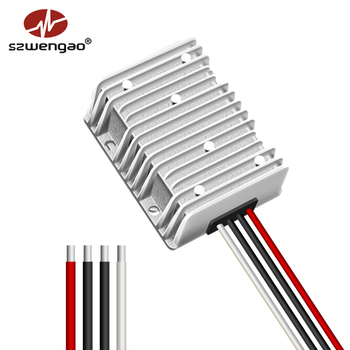
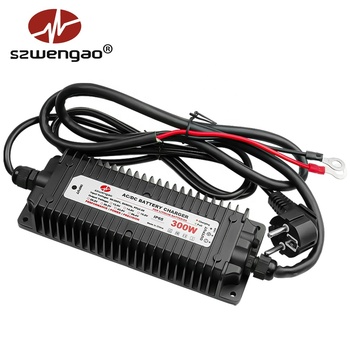
Smart 36V Lithium Battery Charger DC 12V to DC 43.8V 13A
- TopologyDC-DC Step-Up CC/CV
- Input / Output10-16V DC / 43.8V 13A
- ProtectionIP67 Fully Sealed Potted
Engineered by Shenzhen Eltrum Electronic Co., Ltd. for seamless deployment across Cambodia's commercial electric mobility, solar microgrids, and industrial dual-battery installations.

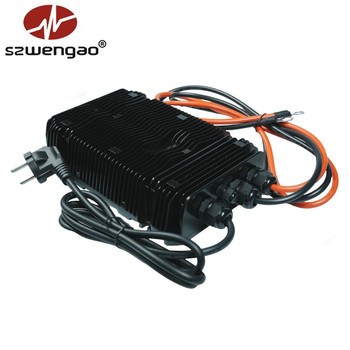
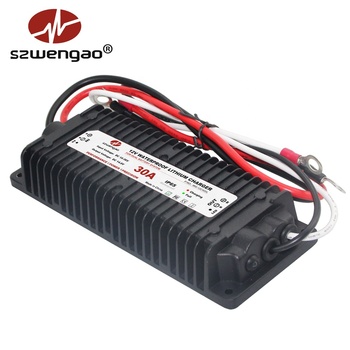
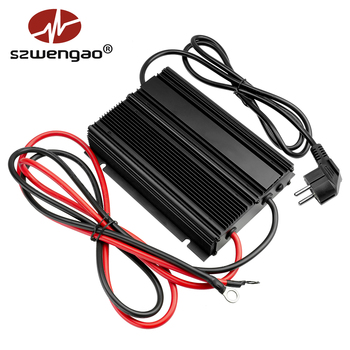
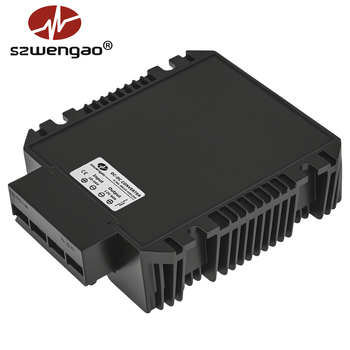
A comprehensive examination of synchronous rectification, bidirectional DC-DC flux linkage, and closed-loop thermal mitigation necessary for mission-critical operations in Cambodia.
Bidirectional battery chargers serve as the critical conduit between dynamic energy storage reservoirs (traction lithium-ion packs, high-voltage battery arrays) and low-voltage auxiliary systems or microgrid buses. When deploying within Southeast Asian infrastructure—specifically the Cambodian market—power engineers face unique architectural trade-offs between continuous non-isolated synchronous buck-boost architectures and galvanically isolated Dual Active Bridge (DAB) converters.
Shenzhen Eltrum Electronic Co., Ltd. incorporates wide-bandgap semiconductors (Gallium Nitride - GaN and Silicon Carbide - SiC MOSFETs) across its high-power bidirectional conversion stages. In a four-switch buck-boost topology, our units operate seamlessly across buck, boost, and buck-boost switching modes without dead-time anomalies. When power flows forward (e.g., absorbing 36V–72V solar/traction power to float a 12V auxiliary bus), synchronous buck switching yields conversion efficiencies up to 96.5%. When reverse flow is commanded via digital supervisory logic (RS485 or CAN bus), the circuit switches role: the 12V bus steps up to replenish the primary pack or balance high-voltage DC nodes, providing immediate Vehicle-to-Load (V2L) or Battery-to-Battery (B2B) stability.
Cambodian ambient dry-bulb temperatures frequently reach 38°C to 43°C in industrial hubs like Phnom Penh and Bavet, pushing internal enclosure junctions past 95°C without optimization. Eltrum's high-grade thermally conductive epoxy potting compounds (thermal conductivity k > 1.5 W/m-K) establish direct heat conduction channels from magnetics and MOSFET tabs to external finned cast-aluminum enclosures, eliminating localized thermal hotspot runaways.
Lithium Iron Phosphate (LiFePO4) has emerged as the definitive chemistry for commercial operations across Cambodia due to its intrinsic thermal stability and superior cycle longevity compared to NMC or traditional flooded lead-acid batteries. However, charging LiFePO4 packs via bidirectional converters demands strict voltage inflection control. Unlike lead-acid batteries, which tolerate wide continuous float deviations, LiFePO4 cells demonstrate an exceptionally flat charge/discharge voltage plateau between 10% and 90% State of Charge (SOC), followed by a sharp exponential voltage knee around 3.45V–3.65V per cell.
Eltrum's proprietary microprocessor firmware executes a continuous three-stage CC/CV/Float algorithmic routine with bidirectional safety handshakes:
| Performance Metric | Eltrum Bidirectional Series | Conventional Unidirectional Buck | Standard AC Industrial Charger |
|---|---|---|---|
| Power Directionality | Bidirectional (B2B, V2L) | Unidirectional Step-Down Only | Mains AC to DC Only |
| Input Voltage Tolerance | 8V–90V Continuous (Ultra-Wide) | Narrow ±15% fixed input | 180V–240V AC strict window |
| Peak Efficiency | 94.5% – 96.8% | 86% – 90% (linear/buck) | 82% – 88% |
| Ingress Infiltration | IP67 / IP68 Fully Potted | IP20 Vented (Fan Required) | IP21 Sheet metal ventilated |
| Communication Protocol | RS485 / CAN bus / Modbus RTU | None (Analog feedback) | Basic Relay Contact |
| Ambient Operating Range | -25°C to +75°C (Chassis Base) | 0°C to +40°C max | -10°C to +45°C |
Decentralized solar microgrids, rapid e-tuk-tuk adoption, and manufacturing SEZ resilience demand rugged power electronics tailored to regional tropical operating realities.
High-volume logistics facilities in Special Economic Zones utilize 48V-to-12V/24V bidirectional chargers across Automated Guided Vehicles (AGVs) and electric warehouse forklifts to maintain buffer loads and eliminate auxiliary battery degradation.
Conversion from noisy two-stroke engines to 60V/72V LiFePO4 battery e-rickshaws. Eltrum's buck-boost DC chargers provide continuous 12V 30A power for LED navigation, telematics, and passenger USB charging while preserving traction energy.
Off-grid river communities and aquaculture farms rely on distributed battery storage banks. Our bidirectional converters bridge 24V marine starting banks with 48V solar home systems, routing power dynamically between daily storage and nighttime emergency loads.
Remote telecommunication towers throughout Battambang and Kampong Cham encounter grid dropouts. Potted isolated DC-DC converters safeguard sensitive radio transmission nodes against ground loop transients and lightning surges.
Commercial fishing vessels and port transport equipment exposed to high saline atmospheres benefit from IP67 anodized aluminum enclosures that resist salt mist corrosion, maintaining reliable LiFePO4 battery cycle lives.
Manufacturing plants along National Road 4 install secondary dual-battery emergency banks. Bidirectional buck-boost stabilizers preserve critical PLC controller state memory during brownouts and automated generator cutovers.
An authoritative analysis of governmental energy directives, utility tariff shifts, and cross-border logistics supporting high-spec power equipment adoption.
Electricite du Cambodge (EDC) industrial tariffs motivate factories to implement BESS (Battery Energy Storage Systems) to offset peak pricing brackets. Bidirectional chargers allow seamless arbitrage by routing battery power back into 24V/48V facility networks during expensive peak windows.
The Ministry of Public Works and Transport (MPWT) has committed to escalating EV adoption to 40% for light electric vehicles and 70% for two/three-wheelers by 2050. This surge creates direct procurement demand for ruggedized China-manufactured on-board bidirectional chargers and converters.
The Phnom Penh-Sihanoukville Expressway and direct cross-border trade mechanisms (via land routes from Guangdong through Vietnam or maritime direct routes from Shenzhen Port to Sihanoukville Autonomous Port) cut component delivery transit times to under 7-10 business days.
Over a decade of precision power electronics manufacturing, on-site verified production facilities, and worldwide OEM/ODM engineering integration.
Standard Power Models
Countries & Regions Served
Established Year in Shenzhen
Flexible Prototype MOQ
Rigorous quality management workflows govern every SMT line, vacuum potting station, automated solder bath, and continuous 100% full-load burn-in chamber.
Custom input voltage profiles (from 8V up to 90V), tailored multi-stage CC/CV cutoff voltages, custom wire harness pigtails (Anderson, XT90, Amphenol), and CAN/RS485 integration.
Our signature vacuum potting technology envelops internal magnetic components and PCBs with high-grade elastomeric silicone, guaranteeing true IP67/IP68 water, dust, and humidity resistance.
Legally registered and inspected by independent international certification bodies. We ship directly from our Bao'an District, Shenzhen facility to global OEM engineering partners.
Everything procurement officers, solar EPC contractors, and electric fleet builders in Cambodia need to know about purchasing directly from China.
Developing an electric mobility platform, microgrid storage project, or specialized industrial vehicle in Cambodia? Request detailed datasheets, custom charging curve configurations, or volume OEM quotation pricing within 24 hours.