
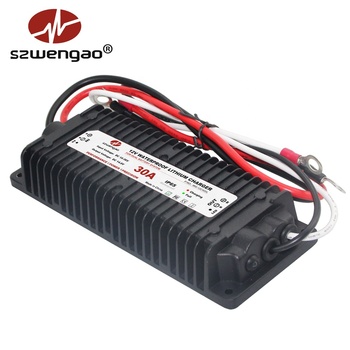
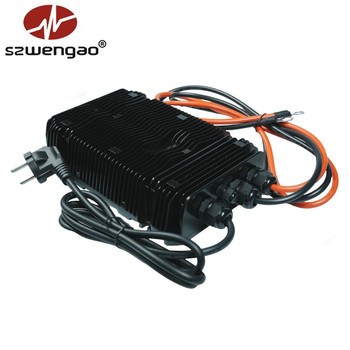
Smart 36V 13A Waterproof LiFePO4 Battery Charger
- TopologyDC-DC Step-Up Boost
- Input VoltageDC 12V (9–18V Range)
- Output RailDC 43.8V @ 13A (570W)
- ProtectionIP67 Fully Potted
Engineered by Shenzhen Eltrum Electronic Co., Ltd. for fleet electrification, mobile auxiliary systems, and Ohio Valley commercial power stabilization.



Strategic analysis of bidirectional charging, energy arbitrage, and localized electrical harshness across the Louisville-Jefferson County metropolitan region and the broader Ohio Valley corridor.
Louisville represents an extraordinary node in North American commerce. Anchored by the world’s largest automated package handling hub—the UPS Worldport at Louisville Muhammad Ali International Airport (SDF)—and flanked by major assembly plants such as the Ford Kentucky Truck Plant and Louisville Assembly Plant, Jefferson County commands unprecedented freight volume. With millions of tons traversing through intermodal rail hubs (CSX, Norfolk Southern), river barge terminals on the Ohio River, and the convergence of interstate freight arteries I-64, I-65, and I-71, the demand for continuous, uninterrupted electrification has surged exponentially.
In this high-throughput logistics ecosystem, battery power systems can no longer remain passive, uni-directional storage assets. Material handling automated guided vehicles (AGVs), class 4–8 electric delivery trucks, ground support equipment (GSE), and autonomous warehouse tugs require advanced bidirectional battery chargers and high-amperage DC-DC converters. Bidirectional charging topology allows vehicles to draw peak energy during low-tariff off-peak windows and discharge power back into depot microgrids (V2G/V2B) during local peak strain on the Louisville Gas and Electric (LG&E) grid, driving down utility demand charges while sustaining mission-critical logistics operations.
Field installations in Kentucky demand extreme electronic resilience. Louisville experiences harsh humid subtropical weather characterized by sweltering 95°F+ summer heat waves accompanied by high ambient humidity and freezing continental winter cold snaps dropping below 10°F. Electronic power converters and battery chargers mounted under-chassis on commercial delivery vans or deployed in unconditioned Ohio River industrial warehouses face rigorous thermal cycling.
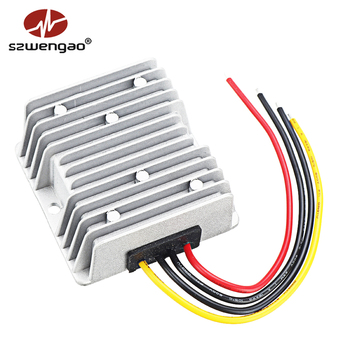
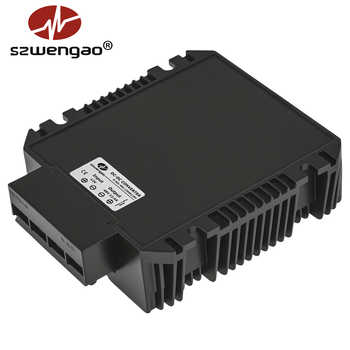
Standard open-frame consumer-grade chargers routinely suffer early component failures in this corridor due to internal condensation, salt-treated roadway corrosion, and mechanical stress from high-vibration heavy truck suspensions. Shenzhen Eltrum Electronic addresses these operational hurdles by designing our bidirectional and buck-boost modules with complete industrial polyurethane potting (IP65 to IP68 rating), aviation-grade die-cast aluminum heat-dissipation chassis, and wide operating temperature thresholds spanning -40°C to +85°C. Furthermore, with integrated galvanic isolation up to 1500VDC, our converters insulate sensitive CAN/RS485 sensor buses from destructive inductive voltage spikes caused by massive industrial induction motors and dock cranes operating across the Louisville industrial zone.
Serving autonomous tugs, scissor loaders, and automated sorting AGVs around the SDF airport corridor. Bi-directional buck-boost converters regulate battery-to-battery charging while allowing regenerative energy capture during repetitive brake-and-steer cycles.
Heavy commercial delivery trucks navigating I-65 and I-71 routes require stabilized CC/CV profiles to charge secondary LiFePO4 house banks from smart alternators without tripping truck ECU sensors or scorching alternator stators.
Decarbonized distribution centers leverage bidirectional battery systems to discharge stored energy into warehouse automation during regional peak demand charges, slashing commercial electric bills under LG&E commercial tariff rates.
A comprehensive roadmap of regulatory compliance, federal funding incentives, and technical shifts across the Kentucky EV supply ecosystem.
| Architecture Parameter | Conventional Uni-Directional Charger | Eltrum Bidirectional DC-DC Topology | Operational Impact for Louisville Fleets |
|---|---|---|---|
| Power Flow Flexibility | Simplex Grid/Alternator to Pack | Full Duplex (Charge & Invert Discharge) | Enables V2B / V2G peak load mitigation during SDF peak hours. |
| BMS Communication | Basic Analog Thresholds / None | Active RS485 / CAN Bus Telemetry | Real-time synchronization with LiFePO4 cells to prevent premature cell aging. |
| Voltage Translation Range | Narrow ±10% Fixed Ratios | Dynamic Buck-Boost (10V to 60V / 18V to 90V) | Absorbs heavy diesel engine cranking brownouts without resetting telemetry. |
| Thermal & Moisture Sealing | Perforated Fan-Cooled Casing | Hermetic Epoxy/Polyurethane Resin (IP67/68) | Impervious to road de-icing salts, mud, and intense Ohio River humidity. |
| Conversion Efficiency | 84% – 88% Average | 94.5% – 96.8% Synchronous Rectification | Minimizes internal thermal losses in enclosed battery compartments. |
The State of Kentucky is witnessing massive infrastructure capital infusion through the National Electric Vehicle Infrastructure (NEVI) formula program, allocating over $69 million along key alternative fuel corridors including I-65 and I-75. Simultaneously, federal Inflation Reduction Act (IRA) provisions—notably Section 30C Alternative Fuel Vehicle Refueling Property Credit—provide commercial fleet depots in qualified census tracts up to 30% in capital expenditure deductions for bidirectional charging infrastructure.
Procurement teams in Louisville must balance these funding criteria with rigorous equipment safety protocols. While grid-tied systems must conform to UL 1741-SA / SB and IEEE 1547 standards, secondary battery converters and industrial DC subsystems require ISO 9001 certified manufacturing, CE compliance, RoHS material safety, and UL 94-V0 flammability ratings. Shenzhen Eltrum Electronic supports OEM engineering integrators with complete documentation packages, schematics verification, and custom-tuned firmware to accelerate NRTL field certifications.
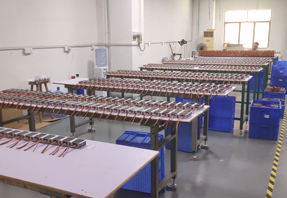
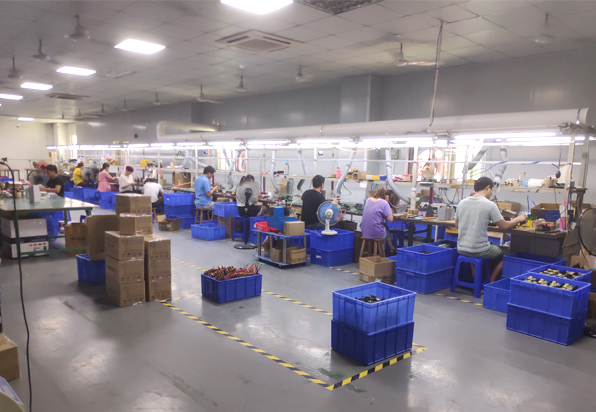
Founded in 2015, Shenzhen Eltrum Electronic Co., Ltd. has grown to become a benchmark manufacturer of advanced DC-DC converters, isolated power modules, and intelligent LiFePO4 battery charging platforms. Located in the heart of China’s electronics manufacturing center in Hangcheng, Shenzhen, our 3,000 m² factory operates under strict ISO 9001 certified quality control systems.
Our foundational engineering legacy began in transformer-isolated DC-DC architectures—a heritage of noise suppression, magnetic optimization, and high dielectric protection that directly informs our bidirectional battery charging topologies. From high-frequency planar transformer winding to vacuum epoxy potting and 100% full-load thermal burn-in testing, our production line eliminates the risk of field breakdowns.
Addressing engineering parameters, customs clearance, transit times, and warranty support for procurement managers in Louisville and the Mid-South region.